How Long Revenue Intelligence Tools Take to Implement: Aviso, People.ai, Avoma, Clari, Gong and Weflow (2026)
Learn implementation timelines and resourcing for Weflow, Aviso, People.ai, Avoma, Clari and Gong.


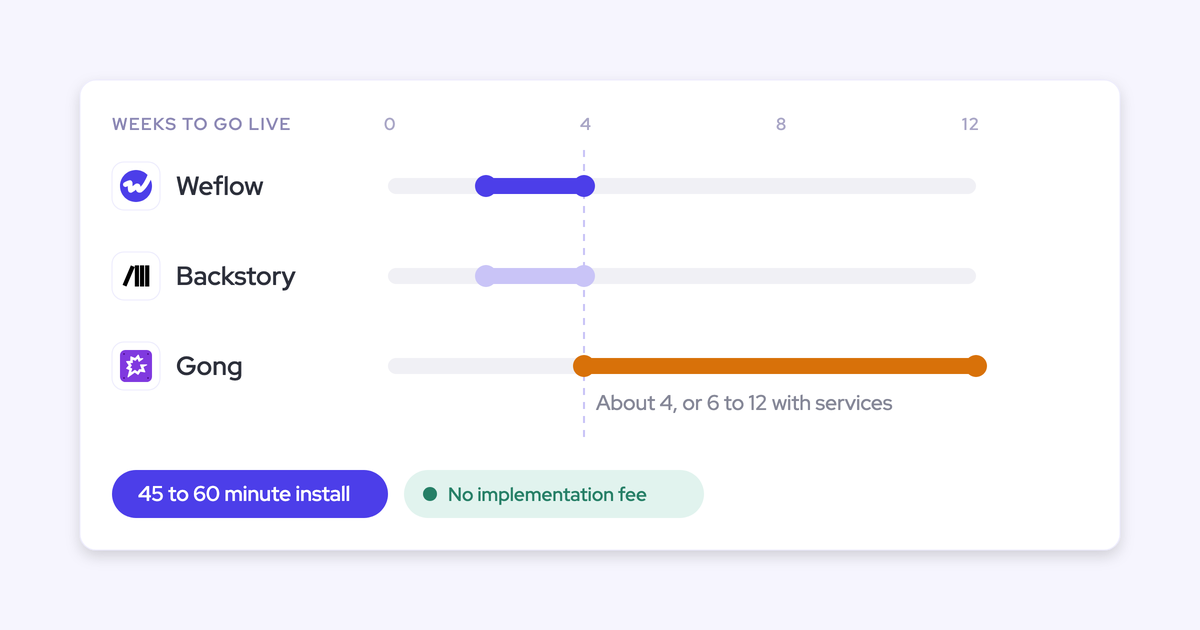

Capture and conversation intelligence can be live in about two to four weeks when one admin installs centrally and the vendor runs onboarding. Forecasting takes longer in every tool on this list, ours included. Whether a tool fits your renewal window depends on its architecture and on whose hours the project costs. Feature depth has little to do with it.
Vendor quotes run from 2 to 4 weeks up to 12 to 18 months "to genuinely running". Those figures measure different things: the install, the go-live, or the point where your business actually forecasts in the tool. That's why they don't line up when you put them side by side.
So we split each of the six tools into four phases: install, configuration, rollout, and a forecast you trust. For each phase, we show whose hours it costs.
We're the Weflow team, so read this knowing where we sit. Weflow is the Revenue AI Orchestration platform for sales, customer success, and RevOps teams. We've put our slow parts next to our fast ones, and we say plainly where another tool fits you better. If you want the full picture of what you'd be implementing, here's Weflow's Revenue AI Orchestration platform.
How long each tool takes to implement, side by side
Every figure carries its source. The next section explains the phases behind each one.
| Capability | Weflow | Aviso | Backstory (People.ai) | Avoma | Clari | Gong |
|---|---|---|---|---|---|---|
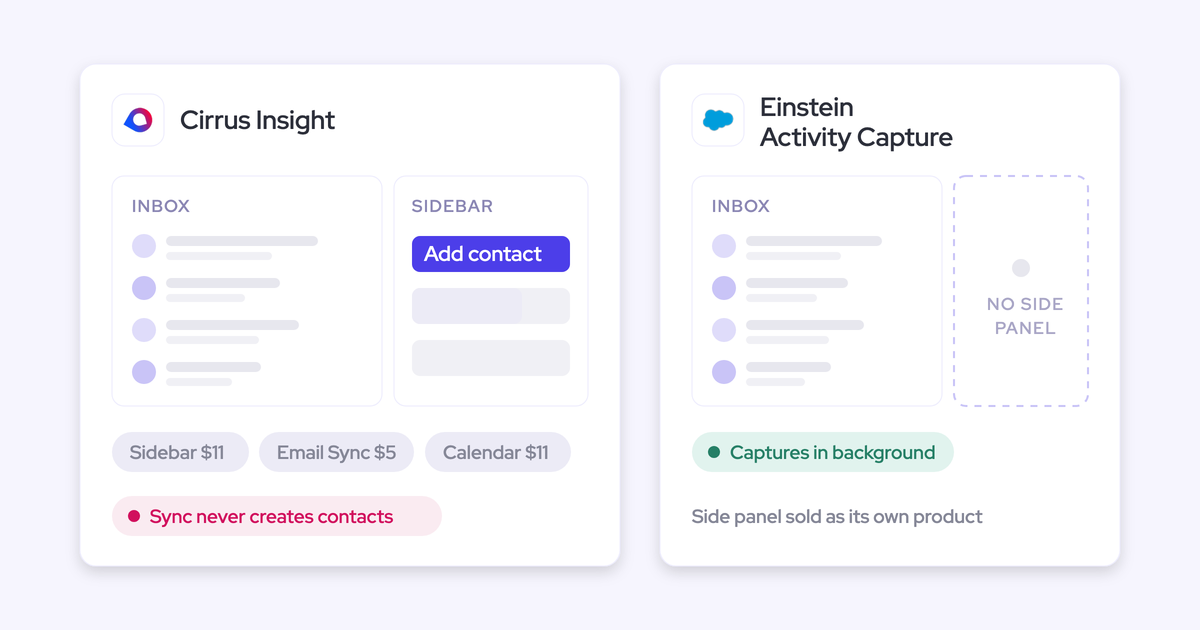
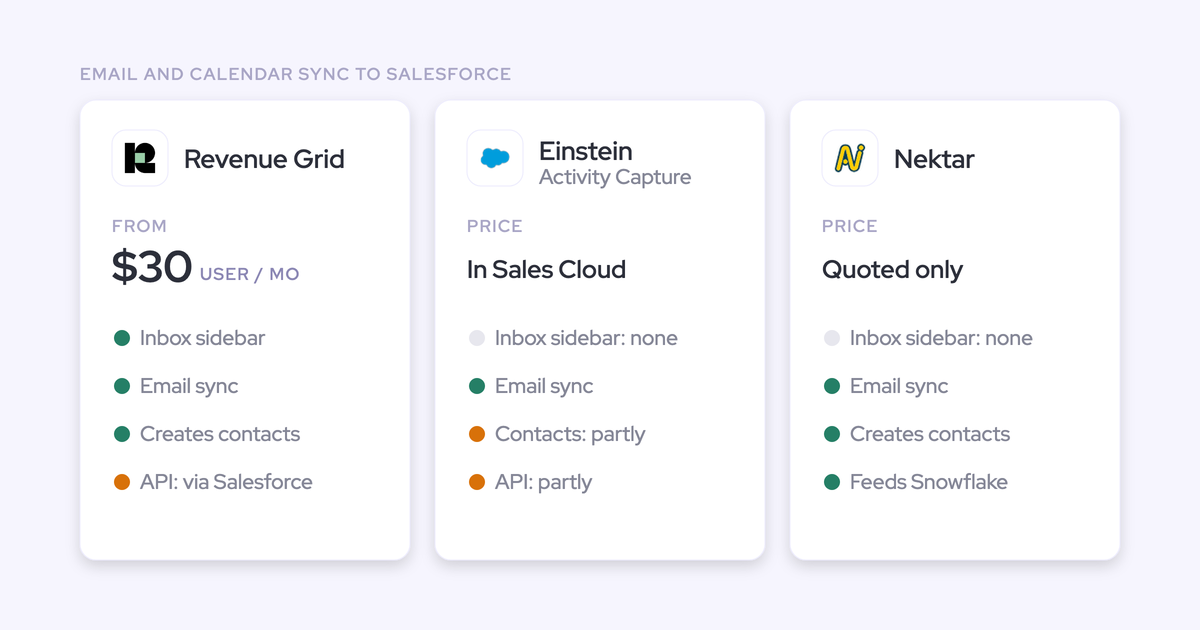
| Activity capture setup and rollout | One admin session of about 45 minutes. Central mail app, no rep action (Weflow). | Your admins build shared mailboxes and routing rules, then hand credentials to Aviso's team. | Central Microsoft or Google admin consent, no rep action. Go-live in 2 to 4 weeks (Backstory). | Admin connects Google or Microsoft once for everyone. Visibility "within days" (Avoma). | One connector user handles field sync. Email and call logging runs on each rep's own CRM connection. | Admin connects Google or Office 365 company-wide. Rollout sold as PS packages of 8 to 15 hours. |
| Conversation intelligence setup and rollout | Recording is set by team. Each user signs in once. Capture plus CI in about 2 weeks (Weflow). | Admin builds an app per conferencing platform and hands it over. Users validate their own accounts. | Doesn't record calls. Ingests transcripts. Google Meet needs Backstory support to switch on. | Google, Microsoft and Zoom connected once at org level. Each member records a voiceprint. | Each rep joins Clari Copilot: invite, sign-up, calendar, voice fingerprint, desktop app. | About 4 weeks average, 6 to 12 with PS (estimate). Needs an internal owner. |
| Deal intelligence setup and rollout | Configured centrally in onboarding. Deal score needs about 6 months of closed history. | Configured by Aviso's implementation team as a services project. | AI summaries run only on accounts and deals an admin selects. | Admin sets methodology and views. Scoring needs the Revenue Intelligence add-on. | Salesforce only. Every user connects their own Salesforce login. | Forecast Essentials PS: up to 12 hours in 45 days. You staff admin, PM and sponsors. |
| Forecasting setup and rollout | Slowest module. Needs sales-leadership cadence decisions. AI projection 48 to 72 hours after history import. | Aviso's team builds hierarchy and forecast screens from CRM access. | Hierarchy loads by CSV and doesn't sync from Salesforce. | One forecast configuration per org. Weighted amounts "coming soon". | Each user connects Salesforce to submit. 12 to 18 months to genuinely running (estimate). | Gong Forecast PS: up to 22 hours in 60 days. Multi-motion setups cost RevOps many hours. |
| Integrations with other tools | Salesforce, Google, Microsoft, Zoom, Meet, Teams, Slack, Outreach dialer. No native warehouse connector. | Claims 200+ connections, mostly set up by credential handoff. | Email, calendar, five meeting platforms, Gong, Slack and a Transcript API. | 26 native integrations plus Zapier. | Salesloft data layer including Snowflake and Databricks. Zoom, Teams, Meet, Webex. | About 450 listed integrations and partner solutions. |
| Access from AI assistants (MCP) | Read-only MCP connector. Admin toggle decides whether assistants read full transcripts. | No MCP for external assistants. | MCP for Claude, ChatGPT, Copilot, Gemini and n8n. | MCP for Claude and ChatGPT on Organization plan or API add-on. | Salesloft MCP is read-only, in beta and a paid add-on. Separate Copilot and Forecast MCP servers. | Three record-scoped tools. AI insights only, no transcripts. Metered credits. |
| Raw data access outside the tool | REST API bulk export in JSON or CSV. Recordings export to your storage. | No public API. File downloads only. | API for data delivery, export and deletion. | REST API and webhooks, 60 requests a minute, Organization plan and up. | REST, Export and Copilot APIs. Forecast history as CSV. | API capped at 10,000 calls a day. Warehouse delivery needs Data Cloud. |
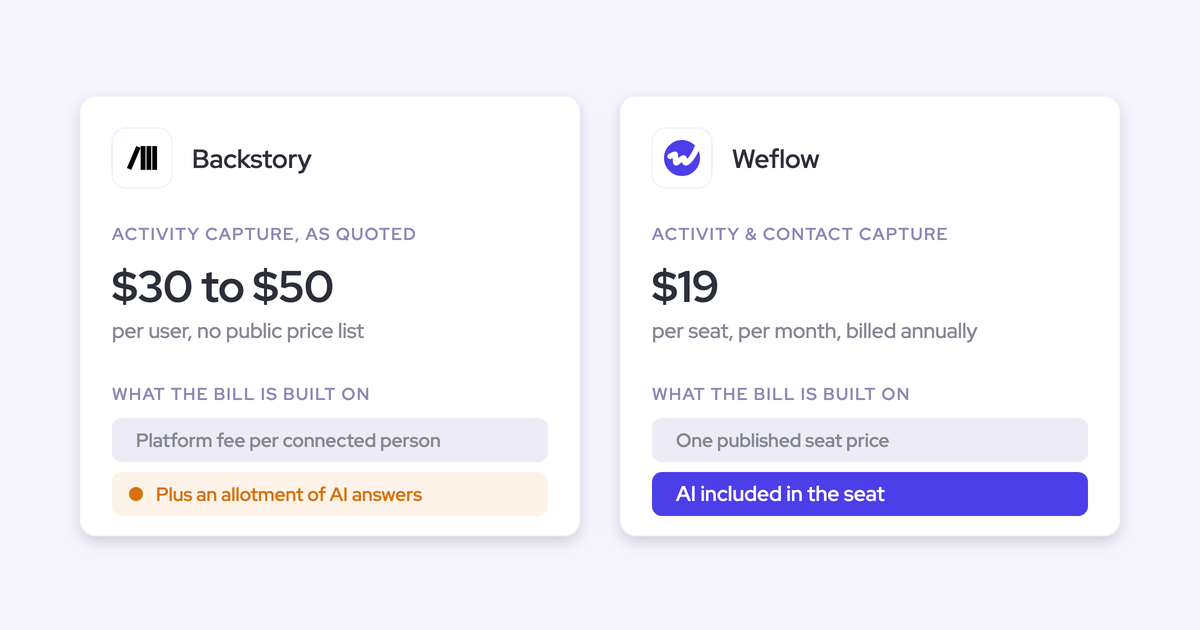
| Pricing | Published: $19 to $39 per product, $49 to $79 per bundle. No implementation fee. | Quote only. Free migration and onboarding offered. | Pricing model published, no figures. | Published: $19 to $39 per recorder seat, add-ons at $29. | Quote only. PS estimated at $15k to $50k. | Quote only. Per user plus platform fee. PS sold separately. |
Why vendor timelines don't compare, and how we split them
Most of the confusion comes from vendors counting different finish lines. Once you know which line each number counts, the spread from weeks to a year and a half makes sense.
What each vendor's quoted timeline actually measures
One vendor quotes the technical install, another the go-live, another "genuinely running", and some review-site numbers are years old.
| Tool | Figure quoted | What it measures | Source and date |
|---|---|---|---|
| Weflow | About 2 weeks for capture and CI. 2 to 4 weeks typical full rollout, 4 to 6 for a large org. | Install through role-based rollout. Forecasting runs on its own track. | Weflow onboarding records, 2026 |
| Aviso | 10 weeks | Implementation | G2 Fall 2023 Report (dated) |
| Backstory (People.ai) | 2 to 4 weeks, against 13 weeks in 2023 | Go-live for most teams | Backstory, 2026. G2 Fall 2023 Report for the 13 weeks. |
| Avoma | "Within days" for capture. 4 to 6 weeks full rollout. | Activity visibility versus full rollout | Avoma for "within days". 4 to 6 weeks is a medium-confidence estimate. |
| Clari | 8 to 12 weeks for the install. 12 to 18 months to genuinely running. | Technical install versus the business forecasting in the tool | Estimates from teams who have run Clari |
| Gong | About 4 weeks average. 6 to 12 weeks with professional services. | The implementation project | Estimates |
Where a figure is dated, we label it and put it next to the vendor's current number instead of dropping it.
The four phases we time, and whose hours each costs
Implementation splits into four phases, and each one has a different owner. Configuration is where the real time goes.
| Phase | What happens | Who from your side |
|---|---|---|
| Install | Connect the CRM, mail tenant, calendar and conferencing tools | A Salesforce admin and a mail or IT admin |
| Configuration | Team structure, hierarchy, methodology, which fields AI fills, warnings, templates | RevOps plus whoever owns the sales process |
| Rollout | Role-based training for leadership, managers and reps | Sales managers and enablement |
| Forecast you trust | Submission cadence agreed, a cycle run, predicted compared with actual | Sales leadership |
In our experience, the product is rarely what stretches the timeline. Internal alignment is:
- Getting the two admins into the same call. They usually sit on different teams, and that alone can turn a one-hour job into two weeks.
- Agreeing which methodology to score against and which fields to write. That's a change-management conversation, not a configuration task.
- Waiting on IT consent for the mail tenant, which sets your earliest possible go-live on Microsoft.
Five questions that decide if a tool fits your window
These are the root causes of implementation time. Ask each one on a vendor call before you look at a single feature.
Who does the install: one admin, every rep, or the vendor?
There are three install architectures, and they carry different rollout risk:
- A central admin install needs nothing from your reps.
- Per-rep connections depend on rep behavior, and reps don't do setup steps.
- Credential handoffs move the work onto your admins first and then onto the vendor's team.
We hear this on almost every evaluation call:
"A lot of the other ones are like, oh, like get them to like install the thing and do the setup. But I'm like, they're not going to. They're not going to do it. It's just like herding cat."
| Tool | Install model | What a rep has to do before data flows |
|---|---|---|
| Weflow | Central admin install in Salesforce and Entra or Google Workspace | Nothing for capture. Sign in once before the notetaker joins. |
| Aviso | Credential handoff to Aviso's implementation team | Validate their own conferencing account, for example Teams |
| Backstory (People.ai) | Central admin consent for Microsoft or Google | Nothing for capture |
| Avoma | Central admin connection for Google, Microsoft and Zoom | Quick start, including a 30 to 40 second voiceprint |
| Clari | Per-rep connections for Copilot, Deals and forecasting | Sign up, connect calendar, record a voice fingerprint, install the desktop app, connect Salesforce |
| Gong | Company-wide admin connection to Google Workspace or Office 365 | Nothing for capture, once an admin provisions them in Gong |
How to assess it: ask the vendor what a rep has to click before any data reaches Salesforce.
Who owns onboarding, and how many RevOps hours it takes
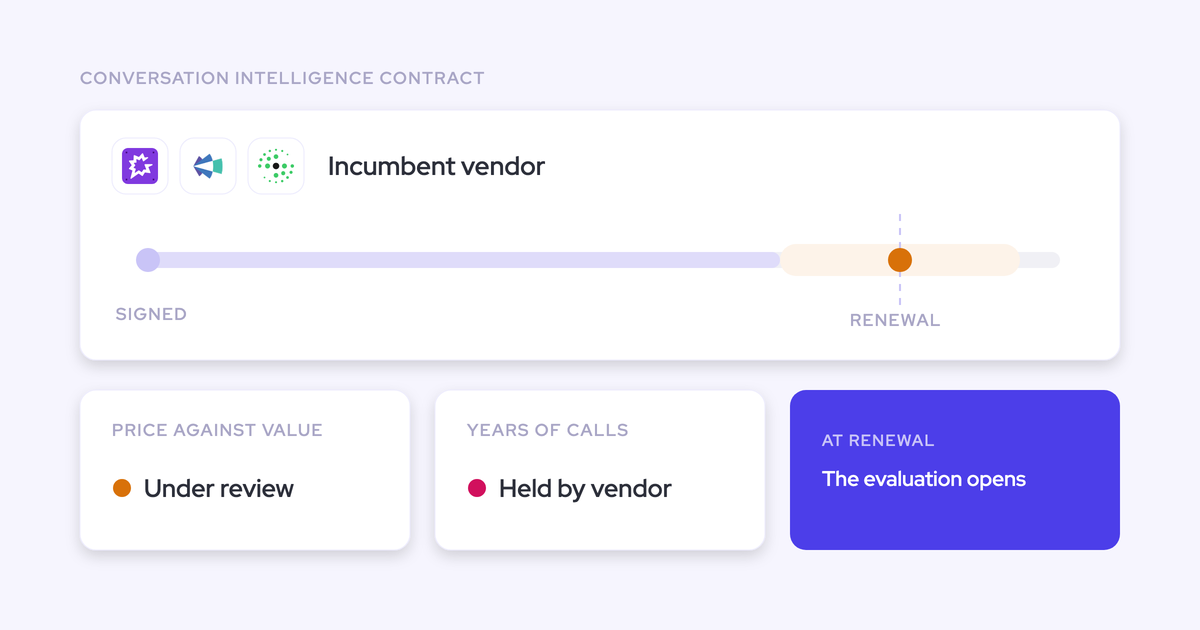
A tool swap doesn't compete with your incumbent. It competes with your RevOps delivery backlog. It gets approved when it arrives as a managed service with a fixed timeline and a price, and it stalls when it arrives as a co-project that needs your hours in a busy quarter.
The six tools use five onboarding models:
- Vendor-run at no charge: Weflow, with a managed-service option where RevOps only answers questions and unlocks access.
- Paid PS packages with expiring hours: Gong, 8 to 22 hours per package.
- Partner-routed: Gong, for some smaller and mid-sized customers, with a separate implementation fee.
- Vendor implementation team, after customer credential handoffs: Aviso.
- Optional paid expert onboarding: Avoma, at $1,000.
Clari's professional services are estimated at $15,000 to $50,000. Clari publishes no PS pricing.
"I made a deliberate choice to let Weflow own end-to-end onboarding rather than pull my team off revenue-generating work. That's exactly the kind of partnership leverage I was looking for."
Scott Jones, SVP of GTM Revenue Intelligence & Enablement, KORE Wireless
How to assess it: ask for a mutual action plan with named owners on both sides, and count the hours on your side.
Which module goes live first, and why forecasting comes last
Revenue tooling adopts in data-foundation order. Rolling it out in reverse is how tools end up unused.
- Activity capture: it asks nothing of reps, works the day it's enabled, and everything downstream reads from it.
- Conversation intelligence: it gives reps a personal win in summaries and notes, which drives adoption.
- Deal intelligence: its signals only mean something once activity sits on the right opportunities.
- Forecasting: it encodes an operating cadence and needs sales leadership in the room. By the time you've agreed the design, capture has given you weeks of clean data.
How to assess it: ask the vendor which module they switch on first, and why.
Whether day-two changes need a professional services ticket
If adding a quarter target or a forecast column needs professional services, your forecast freezes at whatever was configured at implementation. Every reorg then becomes a project. One RevOps lead described their old setup like this:
"if you want to, you know, create a new quarter target, or you want to create a new forecast call, or you want to change the rollout forecast, right? In the product, you want to adjust the columns here, you have to go via professional services."
We built Weflow's admin console so your team makes those changes. Of everything customers underestimate before buying, self-service admin configurability is the one they mention most once they're live.
How to assess it: in the trial, change a roll-up or a forecast column yourself.
Whether marketing, CS and AI assistants keep transcript access
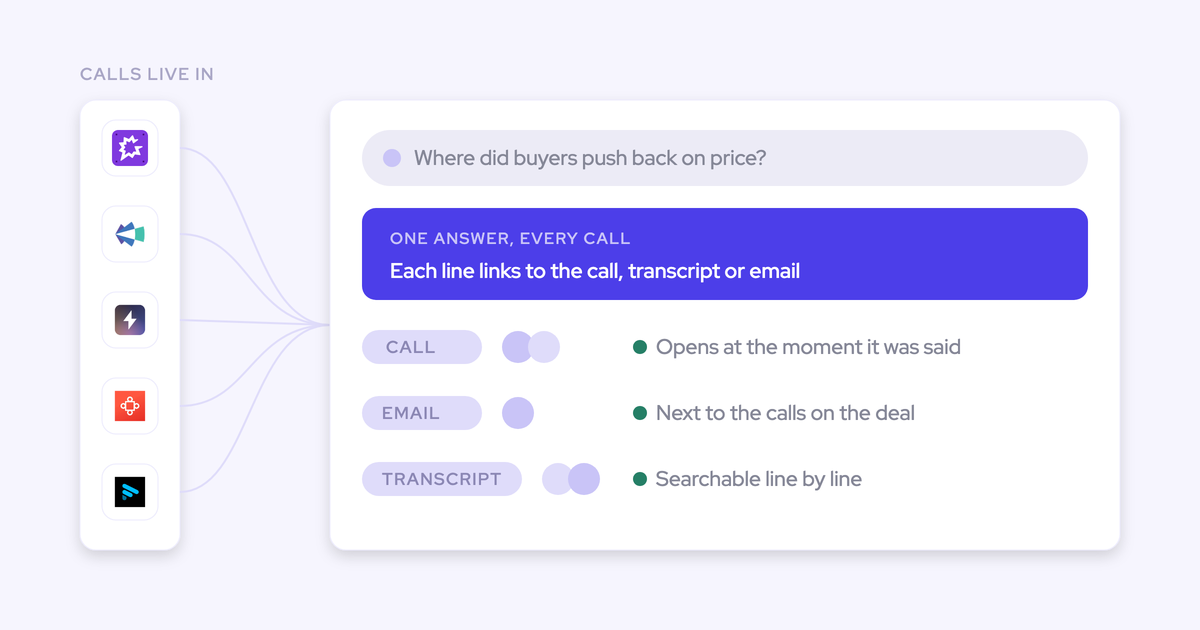
Your transcript archive is a shared company asset. Marketing, sales and CS all read it, and none of them bought the tool. A switch has to keep every consumer's access path: an MCP connector for assistants, and an API or export for BI and warehouses.
"The gold for us is in the transcript of calls, and we use that across all teams. Marketing figures out why somebody inbounded, sales figures out their next steps after a demo, customer success uses it for feature requests."
How to assess it: ask what an assistant can read (raw transcripts or only summaries), and what bulk export exists.
Weflow: one 45-minute admin session, then a guided rollout
What it is: Weflow automates activity, contact and conversation capture into Salesforce and uses AI for deal intelligence, forecasting, Ask Weflow AI and agents. It's built for Salesforce teams and works only with Salesforce.
Quick specs
- CRM: Salesforce only.
- Timeline: about 2 weeks for capture and conversation intelligence, 2 to 4 weeks typical full rollout, 4 to 6 for a large org (Weflow onboarding records).
- Onboarding: run by our customer success team at no charge, with a managed-service option.
- Trial: 14 days with white-glove implementation included, plus a 3-month paid pilot for forecasting.
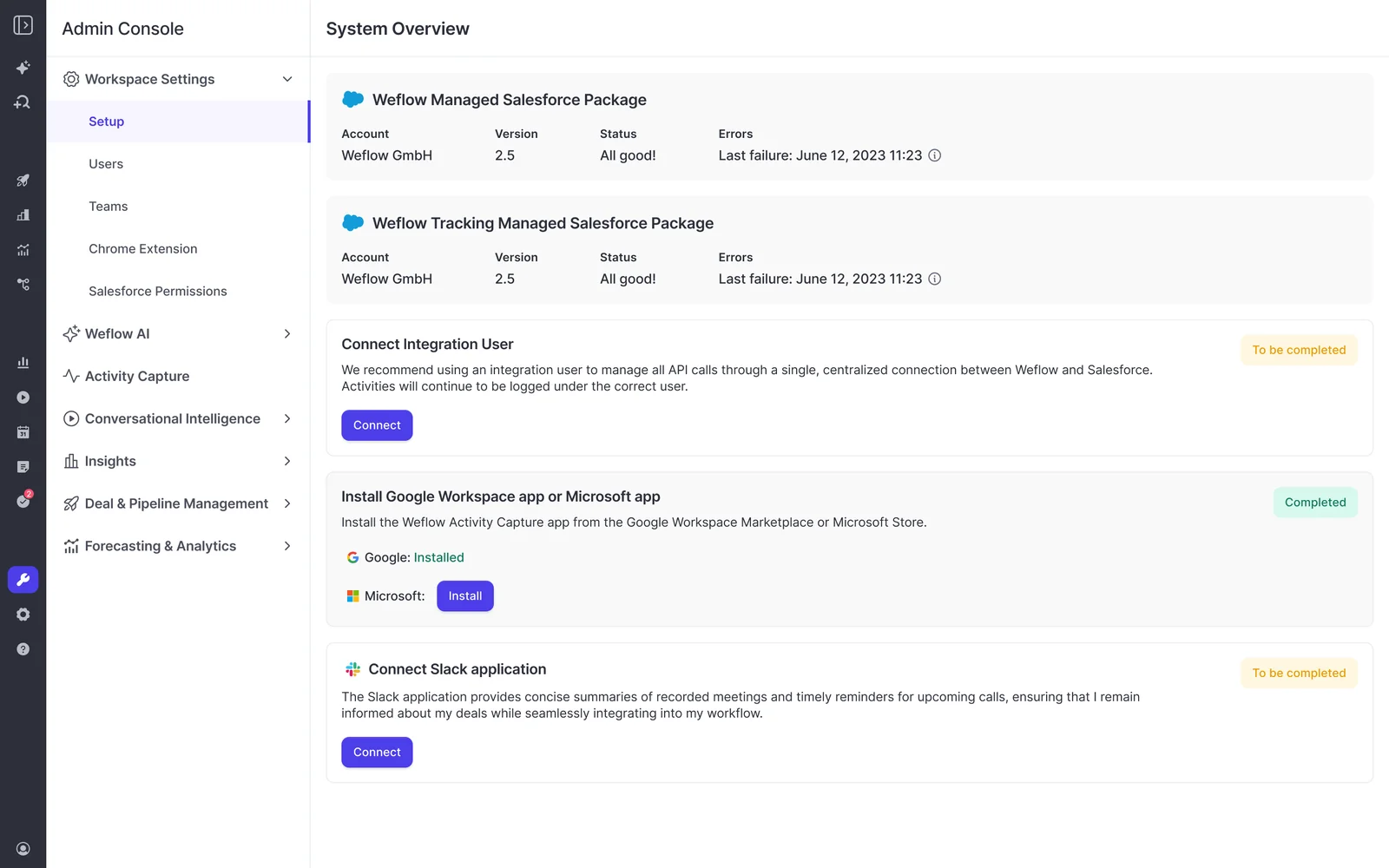
The install is two Salesforce managed packages, one integration user with a dedicated permission set, and one mail app installed centrally in Microsoft Entra or Google Workspace. There's no code. Your Salesforce admin and your mail admin sit in one session of about 45 minutes, and one prerequisite applies: IP restrictions on the connected app have to be relaxed for the install.
| Capability | What it takes |
|---|---|
| Activity capture setup and rollout | Weflow Activity & Contact Capture runs server side from the central mail app, so every email and meeting is logged with no rep action. Google environments move faster than Microsoft ones. |
| Conversation intelligence setup and rollout | Weflow Conversation Intelligence records by team, and coverage follows team membership as people join. It schedules from the calendar connection, so capture has to be configured first. |
| Deal intelligence setup and rollout | Workspace configuration takes about an hour after install. The AI deal score needs about six months of closed history, then trains within a few days. |
| Forecasting setup and rollout | Weflow Deal Intelligence & Forecasting takes longer because your team decides who submits, how often and against which quota. The AI projection is ready 48 to 72 hours after history import. |
| Integrations with other tools | Native to Salesforce, Gmail, Google Calendar, Outlook, Zoom, Teams, Meet, Slack and the Outreach dialer. BI tools such as Tableau and Looker connect through the API. |
| Access from AI assistants (MCP) | A read-only MCP connector serves playbooks, call summaries, transcripts, forecast calls and pipeline metrics. An admin switches it on per workspace and decides separately whether assistants can read full transcripts. |
| Raw data access outside the tool | The REST API bulk-exports transcripts, metadata, scores and signals as JSON or CSV. Recordings export to your own cloud storage. |
| Pricing | Published per seat. See the pricing section. |
Where it's strong on implementation
- One admin session connects everything, and reps don't install anything for capture to start.
- We run onboarding ourselves against a mutual action plan, at no charge, instead of selling it as professional services or handing it to a partner.
- Our fastest recorded rollout was three days for a 120-seat conversation intelligence replacement. We don't recommend that pace, but it shows how little of the timeline the product itself takes.
KORE Wireless rolled out in five phases across four regions (Europe, Americas, Brazil and APAC) with zero adoption friction. We ran the live training for the Brazil team with a real-time Portuguese translator.
"It's probably been the most flawless rollout of any product I've ever been involved with."
Scott Jones, SVP of GTM Revenue Intelligence & Enablement, KORE Wireless
Where it falls short
- Forecasting is our slow module. Your existing Salesforce forecast configuration doesn't carry over, so you set it up in Weflow.
- Forecasts built on non-standard Salesforce objects may not be feasible. We test that during the trial.
- There's no sandbox promotion. Production is a fresh connection, though our team copies teams and templates across from the sandbox workspace.
- Each user has to sign in once before the notetaker joins their meetings.
- Weflow has no native Snowflake, Databricks or BigQuery connector. Teams move data to the warehouse through the API.
- Forecast submissions, targets and roll-ups live in Weflow, not in Salesforce. Everything else lands in Salesforce objects.
- At 1,000+ reps, Clari's enterprise roll-ups are more mature than ours.
Choose it if: you're a mid-market to enterprise Salesforce team that needs capture, conversation intelligence and forecasting live inside a renewal window without spending RevOps hours.
Aviso: your admins build, Aviso's implementation team configures
What it is: Aviso is a forecasting-led enterprise revenue platform. It copies your CRM into its own platform and adds deal scoring, pipeline analytics, conversation intelligence, relationship intelligence, the MIKI assistant and a library of AI agents.
Quick specs
- CRM: Salesforce, HubSpot, Dynamics, Oracle, SAP and Siebel, and it can merge several CRM instances into one view.
- Timeline: 10 weeks (G2 Fall 2023 Report, dated).
- Onboarding: Aviso's implementation team, with white-glove onboarding offered.
- Trial: no trial in our evidence. Every deal is a custom proposal.
| Capability | What it takes |
|---|---|
| Activity capture setup and rollout | On Microsoft, your admin creates a shared mailbox, an Exchange rule that Bcc's sales email to it, an Azure app and a distribution group. On Google, your admin creates a shared mailbox, sets Gmail routing and gives Aviso the address and password. |
| Conversation intelligence setup and rollout | Each conferencing platform needs an app your admin registers, for example a Zoom General App with locked cloud recording. Credentials go to Aviso's team, and users then validate their own accounts. |
| Deal intelligence setup and rollout | Aviso's implementation team configures deal views, scoring and screens. Custom screens and reports go through the implementation team or your CSM. |
| Forecasting setup and rollout | Aviso's team builds the hierarchy and forecast screens from CRM access. Hierarchies can differ from Salesforce's. |
| Integrations with other tools | Aviso claims more than 200 connections across conferencing, telephony, engagement, support, learning and marketing tools. Most are set up by credential handoff. |
| Access from AI assistants (MCP) | Not offered. Aviso has no MCP server for Claude, ChatGPT or other assistants. MCP runs only inside its own Agent Studio. |
| Raw data access outside the tool | No public API or warehouse feed. Deals, reports and the forecast audit trail leave as file downloads. |
| Pricing | Quote only, with published agent pricing. See the pricing section. |
Where it's strong on implementation
- Aviso consolidates forecasting across several CRMs, which none of the other tools here do in the same way.
- Aviso offers to buy out your existing vendor contract, migrate you for free and include white-glove onboarding.
- It can backfill Gong call history through Gong's API.
Where it falls short
- Your IT admins build shared mailboxes, routing rules and one app per conferencing platform before Aviso's team can start.
- Assistants, BI tools and warehouses can't reach Aviso data directly, because there's no public API or external MCP.
- The only timeline figure available, 10 weeks, dates from 2023.
Choose it if: you're a large enterprise consolidating forecasting across several CRMs and you're comfortable handing the build to Aviso's team.
Backstory (People.ai): central admin capture, live in 2–4 weeks
What it is: Backstory, which rebranded from People.ai in 2026, is an enterprise revenue intelligence platform built on automatic email, calendar and CRM activity capture for Salesforce. It adds AI deal summaries, forecasting and an MCP server. It doesn't record calls; it ingests transcripts from Zoom, Teams, Meet, Webex and Gong.
Quick specs
- CRM: Salesforce through a managed package. Dynamics 365 and Oracle through API connections Backstory calls compatible rather than native.
- Timeline: 2 to 4 weeks for most teams (Backstory, 2026), against 13 weeks in the G2 Fall 2023 Report.
- Onboarding: central admin configuration, with Backstory support and CSM involved for some steps.
- Trial: none in our evidence.
| Capability | What it takes |
|---|---|
| Activity capture setup and rollout | A Microsoft 365 admin with Exchange rights consents once for read-only Graph access, or a Google super admin installs the Marketplace app for the domain. No rep authorizes anything. |
| Conversation intelligence setup and rollout | Transcript ingestion is set up centrally, but Google Meet ingestion needs Backstory support to switch on. Gong needs an admin in both tools, and Teams needs a Microsoft admin to enable Graph transcript access. |
| Deal intelligence setup and rollout | AI summaries run only on the accounts and opportunities an admin selects with filters, re-evaluated daily to stay within your usage allotment. |
| Forecasting setup and rollout | Admins load the forecast hierarchy by CSV on a template from Backstory support or your CSM, and Salesforce hierarchy changes don't sync. Activating a forecast type locks its core settings. |
| Integrations with other tools | Native email, calendar, five meeting platforms, Gong, Slack and LinkedIn Sales Navigator. It reads any dialer that logs calls to Salesforce, and has a Transcript API. |
| Access from AI assistants (MCP) | Backstory's MCP server connects Claude, ChatGPT, Microsoft Copilot, Google Gemini and n8n, authenticated with Backstory credentials. |
| Raw data access outside the tool | An API delivers Backstory data and analytics to other systems and exports or deletes activity data. |
| Pricing | Model published, no figures. See the pricing section. |
Where it's strong on implementation
- Capture is central on both Google and Microsoft, so reps don't install or approve anything.
- Backstory analyzes about two years of activity history at onboarding to set engagement benchmarks.
- Its MCP server reaches more assistants than any other tool in this set.
Where it falls short
- Backstory doesn't record calls, so you still need a recorder, and it never backfills meeting transcripts from before the integration date.
- The forecast hierarchy lives in a CSV, so every reorg means a re-import or manual edits.
- Backstory recommends giving its Salesforce integration user the System Administrator profile, which security reviews tend to push back on.
Choose it if: you're an enterprise of roughly 1,000 to 10,000 employees that wants central capture and an MCP context layer for agents, and you already have a call recorder.
Avoma: connects org-wide in minutes, rolls out in weeks
What it is: Avoma is a meeting-first conversation intelligence tool that records, transcribes and summarizes calls. It has added Salesforce sync, coaching, deal and forecasting features on top, and sells mainly to small businesses and solo operators.
Quick specs
- CRM: Salesforce, HubSpot, Pipedrive, Zoho, Copper and Zendesk Sell, one CRM per organization.
- Timeline: capture visibility "within days" (Avoma). Full rollout 4 to 6 weeks (medium-confidence estimate).
- Onboarding: self-serve, with optional expert onboarding at $1,000. Enterprise includes concierge onboarding.
- Trial: 14 days of the Organization plan with all add-ons, no credit card.
| Capability | What it takes |
|---|---|
| Activity capture setup and rollout | An admin connects Google Workspace or Microsoft 365 once for the whole organization and connects the CRM once for everyone. Email sync needs the Revenue Intelligence add-on. |
| Conversation intelligence setup and rollout | Admins connect Google, Microsoft and Zoom at org level and set recording rules centrally. Each member runs a quick start that includes a voiceprint. |
| Deal intelligence setup and rollout | An admin configures the deal methodology and views in settings. Deal scoring runs for deal owners with the Revenue Intelligence add-on, and methodology evidence backfills 90 days. |
| Forecasting setup and rollout | Connecting the CRM syncs deal data and stage history, so the forecast dashboard reflects pipeline from day one. Admins configure one forecast per organization, and weighted amounts are "coming soon". |
| Integrations with other tools | 26 native integrations across conferencing, CRMs, dialers and sales engagement tools, plus Slack, Teams chat, ClickUp and Zapier. |
| Access from AI assistants (MCP) | An MCP connector lets Claude and ChatGPT read meetings, transcripts, notes and scorecards, and set a meeting's outcome. It needs the Organization or Enterprise plan or the API Access add-on. |
| Raw data access outside the tool | A REST API and webhooks cover meetings, recordings, transcripts, notes and scorecards, at 60 requests a minute, on the Organization plan and up. |
| Pricing | Published per recorder seat. See the pricing section. |
Where it's strong on implementation
- Avoma is fast to connect. One admin links Google or Microsoft, Zoom and the CRM for the whole organization.
- Prices are public and there's no setup or platform fee, so you can size the deal before a sales call.
- You can trial the full product for 14 days on your own data.
Where it falls short
- Avoma is built outward from the meeting, so CRM depth arrived later and the center of gravity stays on the call.
- One forecast configuration per organization won't hold separate new-business and renewal forecasts.
- Deal scoring, email sync and forecasting all sit behind the Revenue Intelligence add-on.
Choose it if: you're a small, meeting-first team that wants a fast org-wide connection and published prices.
Clari: each rep connects separately, and forecasting takes longest
What it is: Clari is a revenue platform built around roll-up forecasting and pipeline inspection, with Clari Copilot for conversation intelligence. Since the Clari–Salesloft merger closed in December 2025, it's sold under the Salesloft brand, and Salesloft supplies activity capture, engagement and deal management.
Quick specs
- CRM: Deals and forecasting run only on Salesforce.
- Timeline: 8 to 12 weeks for the technical install. 12 to 18 months to genuinely running (estimates).
- Onboarding: professional services, estimated at $15,000 to $50,000.
- Trial: none. Pricing is quote-only.
| Capability | What it takes |
|---|---|
| Activity capture setup and rollout | Salesloft syncs fields through one admin-configured connector user, but email and call logging runs on each rep's own CRM connection. Meetings log only when the rep turns on the Loft It toggle or books through Salesloft. |
| Conversation intelligence setup and rollout | Each rep joins Clari Copilot individually: they're invited, sign up, connect their calendar, record a voice fingerprint and install the desktop app. |
| Deal intelligence setup and rollout | Deals runs only on Salesforce, and every user connects their own Salesforce account to use it. |
| Forecasting setup and rollout | Every user connects their own Salesforce account to submit a forecast. Salesloft switches AI Forecast on per team after an engineering evaluation of your data. |
| Integrations with other tools | Salesloft's data layer syncs with Salesforce, Dynamics, Snowflake, Databricks, Gmail, DocuSign, ZoomInfo and LinkedIn. Recording integrates with Zoom, Teams, Meet and Webex. |
| Access from AI assistants (MCP) | The Salesloft MCP server is read-only, in beta and needs the paid Agentic add-on. It returns call summaries but no raw transcripts, and the Copilot MCP server reaches call data only. |
| Raw data access outside the tool | Clari has REST and Export APIs plus a Copilot API. Forecast history exports as CSV, and Salesloft syncs data to Snowflake and Databricks. |
| Pricing | Quote only. See the pricing section. |
Where it's strong on implementation
- Clari's enterprise roll-ups at 1,000+ reps are the most mature in this set.
- Leaders who've used it for years value seeing and editing the whole forecast inline.
- Warehouse delivery to Snowflake and Databricks comes through the Salesloft data layer.
Where it falls short
- Per-rep connections mean coverage depends on every rep finishing their setup. One team we spoke with found its Clari license usage at about 8%, with many reps' calendars never synced.
- The year-plus gap between install and genuinely running comes from agreeing the hierarchy, building the Salesforce fields the views depend on and getting managers to submit.
- Changing the forecast later is a project rather than a setting, often routed through professional services.
Choose it if: you run roll-up forecasting across 1,000+ reps. If a PE sponsor has standardized Clari across the portfolio, keep it and let Weflow Activity & Contact Capture write clean activity into Salesforce for Clari to read. Just don't run two capture engines at once.
Gong: admin-side capture, rollout sold as professional services
What it is: Gong is a conversation intelligence platform that records and analyzes sales calls in its own cloud. It's sold as a mandatory Foundation core licence with coaching, forecasting, sales engagement and data export applications on top.
Quick specs
- CRM: Salesforce, HubSpot and Dynamics.
- Timeline: about 4 weeks on average, 6 to 12 weeks with significant professional services (estimates).
- Onboarding: fixed-hour PS packages whose hours expire. Some smaller and mid-sized customers go to partners.
- Trial: none in our evidence. Pricing is a custom proposal.
| Capability | What it takes |
|---|---|
| Activity capture setup and rollout | An admin connects Google Workspace or Office 365 company-wide, and the Google connection completes within 24 hours. Rollout is sold as PS: Foundation Quickstart gives up to 8 hours in 30 days, and Call Intelligence up to 15 hours in 45 days. |
| Conversation intelligence setup and rollout | Recording goes live in weeks. Use cases beyond recording, such as field updates or deal analysis, need someone on your team to configure them. |
| Deal intelligence setup and rollout | A business admin builds deal boards from CRM fields imported into Gong. Forecast Essentials PS gives up to 12 hours in 45 days, and you staff a Gong administrator, a PM, sales process leaders, executive sponsors and system admins. |
| Forecasting setup and rollout | Gong Forecast PS gives up to 22 hours in 60 days. Multi-motion setups cost RevOps many hours, and a reporting structure that differs from the Salesforce hierarchy needs a placeholder structure. |
| Integrations with other tools | The Gong Collective lists about 450 integrations and partner solutions. Gong imports calls from about thirty dialers and records on eleven meeting platforms. |
| Access from AI assistants (MCP) | Gong's MCP server connects Claude, ChatGPT and Copilot with three record-scoped tools. It returns AI insights rather than transcripts, is read-only and draws metered credits. |
| Raw data access outside the tool | The public API returns transcripts, participants, trackers and scorecards, capped at 3 calls a second and 10,000 a day. Warehouse delivery needs Data Cloud, a separate purchase. |
| Pricing | Quote only. See the pricing section. |
Where it's strong on implementation
- Gong has the deepest conversation analytics in this set, and its deal boards are a genuine favorite with reps and managers.
- Capture connects company-wide from the admin side, with no rep install.
- It's the safe purchase. Few sales leaders expect to be blamed for choosing Gong, and its compliance certifications are extensive.
Where it falls short
- PS hours expire, and the customer staffs the project with five roles. Without a dedicated owner, teams end up using recording and little else.
- Forecasting for several motions often drifts back to spreadsheets.
- Getting data into your warehouse, or into assistants beyond AI insights, costs extra through Data Cloud and credits.
Choose it if: you want the deepest call analytics and the safe choice, and you have the internal staff to run the PS project.
Why the forecast you trust takes longer than go-live
Forecasting encodes an operating cadence: who submits, how often, at deal or manager level, and against which quota and budget. Those are sales-leadership decisions, not tool settings. A vendor that promises a fast forecast is promising those decisions will be quick, and you know your leadership team better than they do.
The second clock is history. An AI projection is only as believable as the history it learns from, so ask any vendor how much history it needs and where that history comes from.
Even a well-resourced team can lose this phase:
"Our RevOps team spent too many hours building it out and trying to get it to work super well. So we ended up actually doing most forecasting back in spreadsheets."
Chris Nethercote, Head of Sales at Weflow, former Gong enterprise customer
| Tool | What forecast setup requires | History the projection needs | When it's usable |
|---|---|---|---|
| Weflow | Cadence decisions from sales leadership, configured in Weflow. Salesforce forecast configuration doesn't carry over. | At least six months of opportunity history, imported from Salesforce at install (12 months by default) | Projection ready 48 to 72 hours after import. The roll-up proves itself over a 3-month paid pilot, because two weeks can't show predicted against actual. |
| Aviso | Aviso's team builds the hierarchy and forecast screens from CRM access | CRM history that Aviso copies into its own platform | As part of Aviso's implementation, 10 weeks per G2 Fall 2023 |
| Backstory (People.ai) | CSV hierarchy. Activating a forecast type locks its core settings. | About two years of activity analyzed at onboarding | Within its 2 to 4 week go-live. Its forecasting product launched in October 2025. |
| Avoma | One forecast configuration per org, with targets set by admins or managers | Deal data and stage history synced from the CRM | Dashboard reflects pipeline from day one. No weighted forecast yet. |
| Clari | Hierarchy, Salesforce fields the views depend on, managers submitting. AI Forecast enabled per team after evaluation. | AI Forecast needs four prior quarters with at least 50 closed opportunities each | 12 to 18 months before RevOps teams find the projection useful (estimate) |
| Gong | Gong Forecast PS of up to 22 hours in 60 days. Roll-up follows the Salesforce hierarchy. | Deal likelihood scores need 50 closed-won and 150 closed-lost deals from the last two years | First scores can take up to two weeks to process |
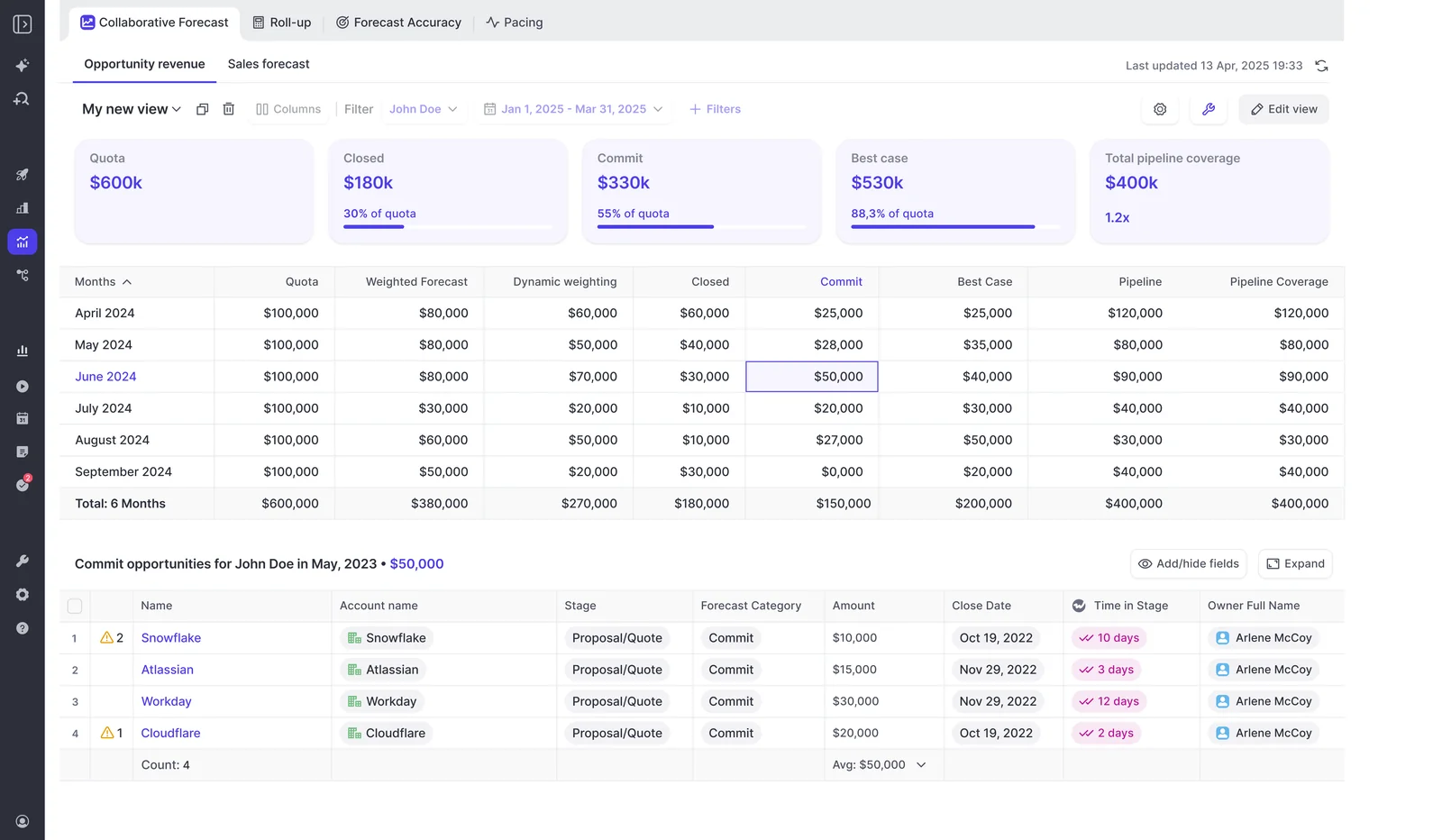
Weflow's roll-up shows quota, commit, best case and pipeline coverage on one page, so the forecast review runs deal by deal.
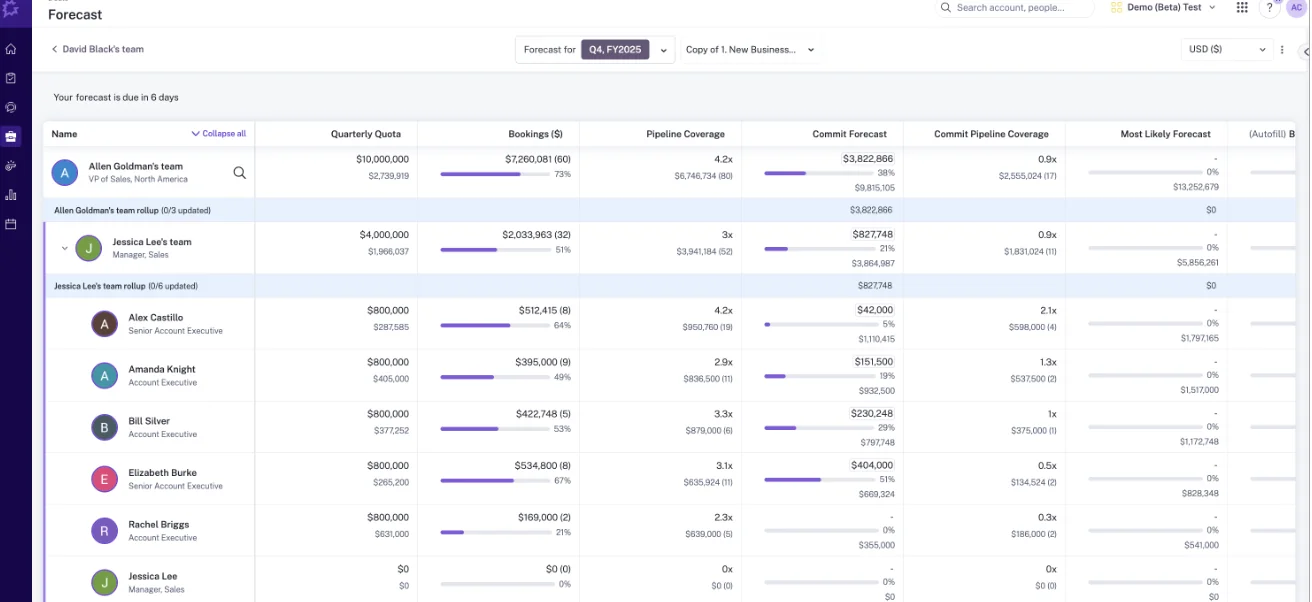
Gong's forecast rolls up from VP to manager to rep along the Salesforce hierarchy, which works well when your reporting lines match the CRM.
How your Gong recordings, Clari forecast calls and history move
The archive is often the real reason teams stay. History can arrive in days or a week rather than quarters, but the mechanics and the cost differ by tool.
| What migrates, and where | How | How long and what it costs | Limits |
|---|---|---|---|
| Gong recordings into Weflow | Gong API key. We re-link each recording to its Salesforce account, opportunity or contact. | About one to two weeks depending on volume. Free. | Transcripts are reused where possible, otherwise retranscribed. A raw file export works if no API key is available. |
| Gong recordings into Aviso | Gong API backfill from a chosen start date | Free migration is part of Aviso's offer | Aviso's team creates a deal room per deal |
| Gong transcripts into Backstory (People.ai) | Native Gong integration for ongoing transcripts | No backfill | Transcripts arrive only from the date the integration is switched on |
| Past recordings into Avoma | Uploads one file at a time, or a bulk import | Bulk import may carry a one-time fee depending on volume | Uploads are capped per user per month by plan |
| Clari forecast calls into Weflow | Clari's API or a CSV | Doesn't hold up the AI projection, which runs on Salesforce opportunity history | The forecast setup itself is rebuilt as forecast configurations |
| Past activity into Weflow | 24-month sync-back of emails, meetings and contacts as standard, up to 3 years custom | Capped at 50,000 Salesforce API calls a day, so heavy history runs over several days, up to about a week | The cap protects your other integrations' API allowance |
What each tool costs, including implementation and services
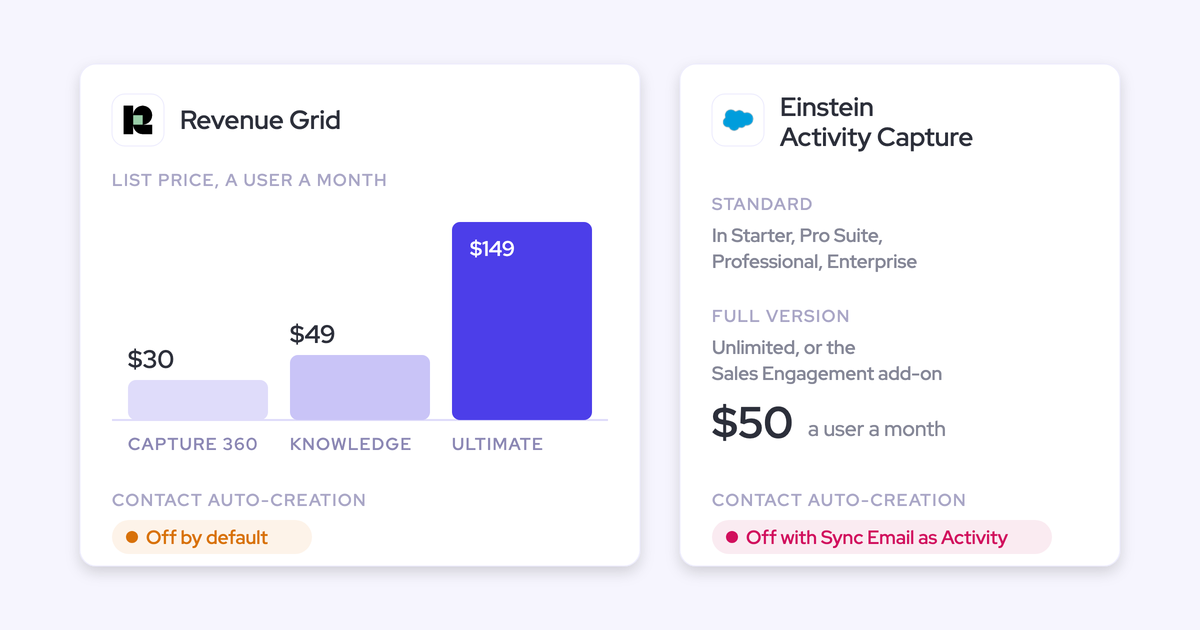
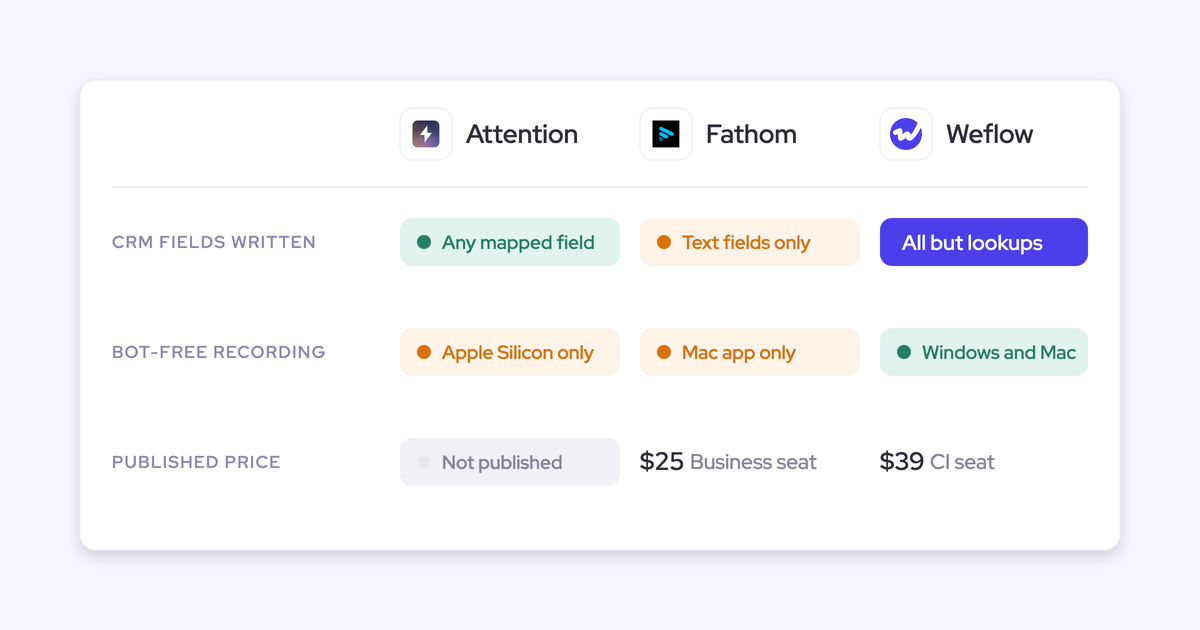
Implementation is part of the price. Free vendor-run onboarding, expiring PS hours, estimated PS fees and optional paid onboarding all change what you actually pay to get live. Four of the six tools publish no seat price.
| Tool | Pricing model and list prices | Implementation and services | What costs extra |
|---|---|---|---|
| Weflow | Published per seat, billed annually, 10-user minimum. Weflow Activity & Contact Capture $19, Weflow Conversation Intelligence $39, Weflow Deal Intelligence & Forecasting $39. Bundles: Revenue AI Foundation $49, Revenue AI Business $59, Revenue AI Enterprise $79. | Onboarding included at no charge, with a managed-service option | Agent Builder beyond the free 25 actions a month: $299 for 500, $999 for 2,500, or a custom Enterprise package. Ask Weflow AI, summaries and field updates are in the seat. |
| Aviso | No published prices. Every deal is a custom proposal. Aviso positions its licenses and onboarding at about half of Gong's. | White-glove onboarding, free migration and contract buyout offered | Agent work at $1 to $1.50 per outcome |
| Backstory (People.ai) | Model published, no figures: a platform fee per connected customer-facing person plus pre-packaged AI answers. Viewers are free. Capture has been quoted at about $30 to $50 per user (low confidence). | Backstory offers its own team to build custom parts with you. No published services price. | AI answers beyond the allotment, resized at renewal rather than back-billed mid-term |
| Avoma | Published per recorder seat, billed annually: Startup $19, Organization $29, Enterprise $39, 10-seat minimum. Viewers are free. | No setup fee. Optional $1,000 expert onboarding. Enterprise includes concierge onboarding. | Revenue Intelligence and Conversation Intelligence add-ons at $29 a seat each. Bulk recording import may carry a one-time fee. |
| Clari | No published seat prices. Both pricing pages lead to a Salesloft sales call. Our estimate is $120 to $180 per user per month. | PS estimated at $15,000 to $50,000, with no public PS pricing. No free trial. | Salesloft add-ons for forecasting, agents and the dialer. MCP needs the Agentic add-on. |
| Gong | No published prices. Per-user licences plus a platform fee that scales with users. Foundation is mandatory. | PS packages of 8 to 22 hours with expiring hours. Some customers go to partners with a separate fee. | AI credits beyond the pooled 2,000 per paid seat a year. Data Cloud at about $5,000 a year. |
Which tool fits your renewal window
Best fit by team size, primary need and budget
Each tool has a situation it fits best, and for some readers the answer isn't Weflow.
| Your situation | Best fit | Why |
|---|---|---|
| Small, meeting-first team that wants published prices | Avoma | Org-wide connection in one admin step, public pricing and a 14-day trial |
| Large enterprise consolidating forecasting across several CRMs | Aviso | Multi-CRM forecasting, with the build handed to Aviso's team |
| Enterprise of 1,000 to 10,000 employees wanting an agent context layer, with a recorder already in place | Backstory (People.ai) | Central capture and the broadest MCP reach in this set |
| Roll-up forecasting across 1,000+ reps | Clari | The most mature enterprise roll-ups |
| PE sponsor has standardized Clari | Clari, with Weflow Activity & Contact Capture | Coexist: one capture engine writes to Salesforce, and Clari reads the cleaner activity |
| You want the deepest call analytics and can staff a PS project | Gong | Deepest conversation analytics and the safe purchase |
| Your CRM isn't Salesforce | Aviso, Avoma or Backstory | Weflow works only with Salesforce |
| Mid-market to enterprise Salesforce team needing capture, CI and forecasting inside a renewal window without spending RevOps hours | Weflow | One admin session, vendor-run onboarding at no charge, and an honest separate track for forecasting |
How we'd plan select, implement and roll out before year end
Prove capture and conversation intelligence on your own org in Q3, implement those first in Q4, and give forecasting its own pilot cycle instead of forcing it into launch week. Here's how that looks with Weflow, and what to ask any vendor at each step.
- Q3: run the evaluation on your own org. Our 14-day trial includes white-glove implementation and typically covers one team of five to ten people, with a sync-back so you see months of real history on day one. Ask any vendor: does the evaluation run on our Salesforce and our mailboxes, and who does the setup?
- Book the two-admin session early. Get your Salesforce admin and mail admin into one 45-minute call, and on Microsoft, start the consent from our admin console as soon as you've signed. Ask any vendor: which of our people need to be in the room, and for how long?
- Q4, first weeks: install and import history. The 24-month activity sync-back runs over up to a week, and a Gong migration takes about one to two weeks. Ask any vendor: how long will our history take to arrive, and what does it cost?
- Weeks two to four: role-based rollout of capture and CI. We run separate leadership and rep training, against a mutual action plan with named owners. Ask any vendor: who runs training, and who owns each task on our side?
- Forecasting on its own track. Agree the cadence with sales leadership while capture builds clean data, then run a 3-month paid pilot that's contractually the first three months of a multi-year term, with an opt-out. Ask any vendor: how many forecast cycles before we can judge predicted against actual?
- Cut over at contract end. Switch off the incumbent's capture the day yours goes live, so two engines never write duplicate activity. Ask any vendor: what's the cutover sequence, and how do you prevent duplicates?
See how Weflow captures activity, updates Salesforce fields from calls, and rolls up your forecast. Book a 30-minute demo.
What changed for these six tools in 2026
Several of these tools changed structurally, so older reviews and timelines may describe products that no longer exist in that form.
- People.ai rebranded to Backstory in 2026. The Salesforce package and fields still carry the peopleai prefix.
- The Clari–Salesloft merger closed in December 2025. Clari, Clari Copilot, Salesloft and Groove now ship one monthly release, and Clari is sold under the Salesloft brand.
- Gong introduced AI credits on top of per-seat pricing, with allocation details sent to customers in late May 2026.
- Backstory MCP moved to Backstory credentials in August 2026, so it no longer needs a Salesforce login.
- Clari launched a Copilot MCP server and a Forecast MCP server in 2026, and Salesloft removed transcript retrieval from its own MCP server.
The G2 Fall 2023 timelines for Aviso and People.ai predate all of this.
How we built this comparison, and where we're biased
We wrote this, and we sell one of the six tools. We've tried to make the bias visible instead of hiding it, by sourcing every figure and putting our own limits in the same table as everyone else's.
- Vendor documentation: help centers and setup guides for who installs what, and where.
- Vendor-stated figures: marked with the vendor's name, such as Backstory's 2 to 4 weeks.
- Third-party reports: the G2 Fall 2023 Report, always labeled with its date.
- Estimates: figures from teams who've run these tools, such as Clari's 12 to 18 months, labeled as estimates. Low-confidence figures say so.
- Our own onboarding records: the source of Weflow's phase timings.
Questions RevOps teams ask us about implementation timelines
How much does implementation cost, and who pays for professional services?
Weflow doesn't charge for implementation. Our customer success team runs it. Gong sells fixed PS packages of 8 to 22 hours whose hours expire, and Clari's professional services are estimated at $15,000 to $50,000. Avoma's expert onboarding is an optional $1,000, and Aviso includes white-glove onboarding in its proposal.
Who from our team needs to be in the room, and for how long?
For Weflow, a Salesforce admin and a mail or IT admin attend one technical session of about 45 minutes, and RevOps joins the configuration decisions. Gong's PS packages ask you to name a Gong administrator, a project manager, sales process leaders, an executive sponsor and system administrators. With Aviso, your admins build mailboxes and conferencing apps before handing over credentials.
Can the vendor run implementation as a managed service?
Weflow offers a managed-service option where we do the heavy lifting and your RevOps team only answers questions and unlocks access. Aviso's implementation team also does the build, after your admins complete the credential handoffs. Gong's packages put configuration ownership on a named Gong administrator from your team.
Does Google Workspace or Microsoft 365 change the timeline?
Yes. Google environments move faster with Weflow. On Microsoft, the install only completes when a Microsoft admin starts it from the Microsoft section of Weflow's admin console and consents there. A Salesforce admin can't do it for them, and approving the app in the Microsoft 365 admin center alone doesn't connect it. A temporary Salesforce license or a screen-share gives the Microsoft admin access, and IT's approval sets your earliest go-live.
Can we test in a Salesforce sandbox before going live?
Yes. A Weflow sandbox workspace is a separate instance pointed at your sandbox org, with its own packages, integration user and mail connection. Production is a fresh connection rather than a promotion, but our team copies teams and templates across, and sandbox recordings can move to production. You switch off capture and conversation intelligence on the sandbox before production goes live.
Can we run the new tool alongside Gong or Clari during cutover?
Running two capture engines at once writes duplicate activities into Salesforce, so turn the old one off at go-live. Clari reads activity from Salesforce, so Weflow Activity & Contact Capture can feed Clari permanently if Clari stays for forecasting. With Outreach or Salesloft sequencing alongside, Weflow's compatibility mode skips emails the sequencer already logs.
What contract terms apply: minimum term, seats, opt-out pilot?
Weflow's standard contract is 12 months, with a 10-seat minimum and annual billing. Seats added mid-term are charged pro rata, and there's no contractual right to reduce seats mid-term, though you can reassign them when someone leaves. For forecasting, our 3-month paid pilot is the first three months of a multi-year agreement with an opt-out at the end.
What do IT and security need to approve before go-live?
Weflow holds SOC 2 Type II, is GDPR compliant, uses Zero Data Retention for AI processing and never uses customer data to train models. Your Weflow data sits in the same region as your Salesforce instance, and our models run primarily on Google Gemini. We're working toward ISO 27001 with a target date of December 2026; that's a commitment, not a held certification. Gong's certification set, including ISO 27001, is extensive, and new Gong customers choose US or EU storage at onboarding, with US as the default.
How do we get reps and managers to adopt without a fight?
Start with capture that asks nothing of reps. Weflow logs only emails and meetings with external participants and never internal-only threads, which answers the first objection that the company is reading their email. Then train by role, with separate leadership and rep sessions. Reps who like Gong usually want to hear how a team their size made the move, so bring peer proof into the room.
What breaks an implementation timeline: custom objects, validation rules, permissions?
Forecasts built on non-standard Salesforce objects can stall, which is why we test them in the trial. Weflow inherits permission sets, field-level security and role hierarchy, but not visibility enforced through list views or Lightning component visibility. That segregation gets rebuilt as centrally assigned views. Connected-app IP restrictions also have to be relaxed for the install, and validation rules and field dependencies are respected on every write.