Should Forecast Calls and Deal Reviews Be Separate Meetings? How Revenue Leaders Split Them
Decide when forecast calls and deal reviews should be separate, and how revenue leaders split them.


Yes. If your forecast rolls up through more than one layer of managers, the deal review and the forecast call should be separate meetings. They answer different questions, and each question needs its own inputs and its own room.
- "Is this deal real?" needs evidence on the deal and a small room.
- "What's the number?" needs a locked snapshot and a submitted call.
- "How do we build more pipeline and better reps?" needs time that the current quarter can't take over.
There's one honest exception. If your quarter rests on a handful of material deals, the forecast is a deal-by-deal judgement anyway, and one well-run meeting can carry it.
Whichever design you pick, the order of the week matters more than how many meetings you run: deal review, then lock, then submission, then the forecast call.
We know the objection to splitting. More meetings, more calendar load, and the same wrong number at the end. We'll put that cost on the table instead of waving it away.
The split only pays off when deal truth is settled before anyone calls a number. That's the job we built Weflow Deal Intelligence & Forecasting to support, but most of what follows needs no tool at all.
What the forecast call, deal review and sales meeting each answer
A deal review is a working session where a manager and their reps test whether a specific deal is real and work out how to win it. A forecast call is where the committed numbers roll up and leadership settles what the team will land.
The sales meeting is the third job, and the one that disappears first. It works on the rep, not the deal.
Most broken cadences cram all three into one hour. Each one gets answered badly, so none of them gets answered.
| Deal review | Forecast call | Sales meeting or pipeline meeting | |
|---|---|---|---|
| The question it answers | Is this deal real, and how do we win it? | What's the number, and what changed since last week? | How do we build more pipeline and better reps? |
| The input it needs | Evidence on the deal: activity, contacts, next step, qualification against your methodology | A locked pipeline snapshot and a submitted call tied to named deals | Pipeline generation against plan, and one skill or tactic to work on |
| What it should produce | Deals fixed, re-staged or killed, with actions per deal | A called number, the gaps explained, and the risk leadership carries to the board | Pipeline actions for the coming periods and a rep who's better at the job |
| Who's in the room | First-line manager and the team | Managers, RevOps and the CRO | Manager and team |
Richard Harris draws the last line hard: a weekly review of the deals is a pipeline review, even if you call it the sales meeting.
Why your forecast call keeps turning into a deal review
Your forecast call turns into a deal review because it's the only place where anyone can check whether a deal is real. Inspection moves into the forecast call by default, and it moves through a chain of causes:
- Deal truth isn't on the record, because activity isn't captured, the next step is blank and the buying committee isn't mapped.
- So the only way to find out whether a deal is real is a live conversation with the rep who owns it.
- The forecast call is the one meeting where every rep and manager is already present, so the checking happens there.
- The call then spends its time on reconciliation ("are these ten deals real?") instead of judgement ("what's the number?").
- Coaching and pipeline generation get pushed out, because the current quarter always wins the slot.
Julien Cerutti describes what that produces better than anyone:
"The forecast call turns into, hey, so what's up with that deal? Okay. And what's the next? Okay. Great. Next. Right? There's no real inspection. There's not the time nor the calmness, and then the room is too full. And everyone is sitting silently on the side waiting for their turn, looking at the pool and typing away."
Moving the deal review to a different day doesn't break this chain. Changing where deal truth comes from does.
Three meeting designs revenue leaders actually run
There are three designs worth taking seriously, and each has an operator behind it who ran it on purpose. Here's what happens in each one and the logic behind it. When each one fits comes in the next section.
One combined meeting: inspect and forecast in the same call
One meeting can carry both jobs if the deal reviewing inside it is strong. Even Andy Smidmore, who argues hardest for the split, concedes the point:
"If the business does such a good job of deal reviewing, that almost takes care of the forecast anyway, because you have really peeled back the layers of a deal. By the time you get into the forecast, the rep hasn't got to sit there and justify where the deal is, because you have already taken care of that in the deal review."
The version of the combined call we've seen hold up uses two people from leadership:
- One person runs the conversation with the rep.
- The other checks each committed deal against its last activity date and stage while the rep is still talking.
"Why is this in commit when nobody has spoken to them since January?" gets asked while the answer still matters. The checker turns a ritual into an inspection, and it costs one extra person and a live view.
Two meetings: run the deal review before the forecast call
The classic split puts a deal-health meeting first and the forecast call after it. Smidmore is blunt about why:
"I personally don't think we should mix the forecast call with deal reviews. They need to be completely separate. There's a different criteria and a different type of conversation that needs to take place in each. When you use the forecast call as a deal review, it just does not work."
Here's how the two meetings divide the work:
- The deal-health meeting: first-line managers go through the deals with their reps, find what's missing or stale, and the reps fix it.
- Submission: forecast calls come in after that meeting, typically on Thursday or Friday.
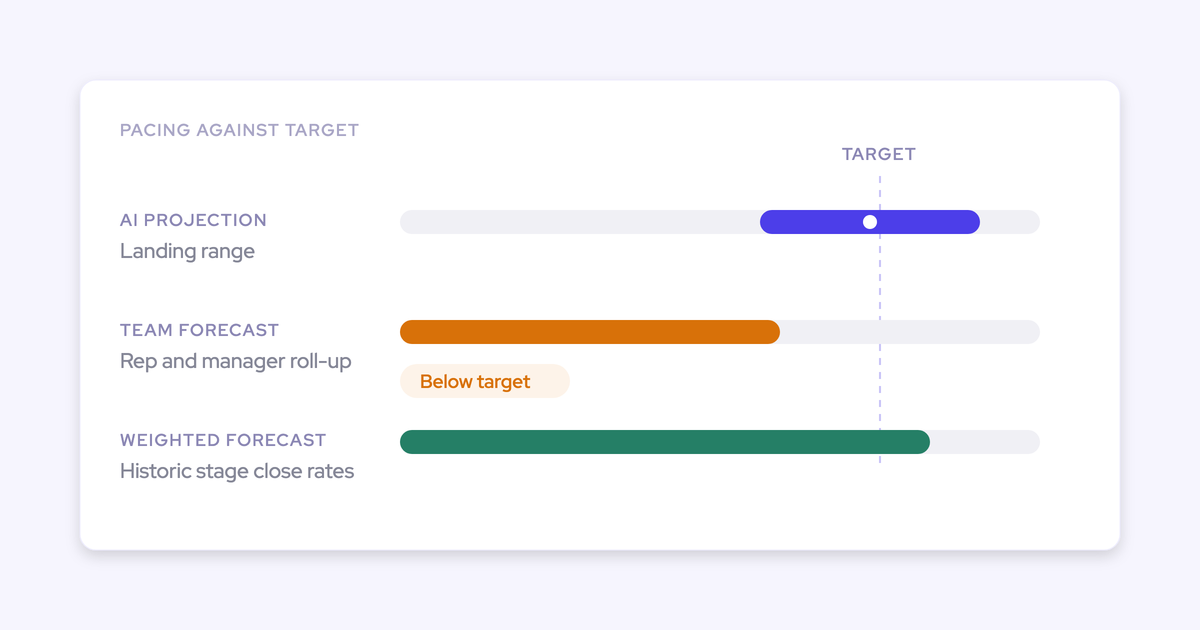
- The forecast meeting: it starts from pacing and the pipeline waterfall (where the team stands against target, what moved in and out of the period, whether the commit has enough pipeline behind it).
The forecast meeting no longer argues about whether the data is right. The deal review already settled that.
Three meetings: give pipeline generation and coaching their own room
The fullest design adds a third meeting, because closing this quarter's deals and building next quarter's pipeline are different conversations with different owners. Robert Gimbel kept them apart on purpose:
"I was a big fan of not mixing up these two discussions because that would typically lead to unfocused discussions. So it was either about how do we close what we have or how do we go about the fact that it's not enough and we need more pipeline."
Harris adds the coaching side. The weekly deal walkthrough most teams call a sales meeting isn't one:
"But that's not a sales meeting. That's a pipeline review. There's a big difference. A sales meeting is a place where I'm trying to get someone to get better at what they do. I'm trying to make them better at life. A sales meeting is where I can show I care more about them than just the number that they represent. I think every sales meeting should have ten minutes on a tactic."
Richard Harris, Sales advisor, trainer, and founder of the Harris Consulting Group
So can the sales meeting share a slot with the pipeline review? Harris allows it, with one condition: the ten minutes of tactic work are protected. Once the pipeline conversation eats the whole hour, the coaching is gone, and that's your signal to give it its own room.
How to choose between one, two or three forecast meetings
The shape of your pipeline and your org decides the design, not how much the number matters. A $50M quarter on eight deals and a $5M quarter on four hundred deals need different weeks.
| Criterion | Points to one combined meeting | Points to splitting |
|---|---|---|
| Material deals per quarter | About ten, so the call is whether each one lands | Dozens or hundreds, more than one meeting can inspect |
| Roll-up layers | One manager layer between reps and the CRO | Reps to first-line managers to VPs to the CRO |
| Reps per manager | A small team where every deal gets airtime | Enough reps that most sit on mute waiting for their turn |
| Coaching time | A real sales meeting still happens every week | The pipeline review has swallowed it |
| Pipeline generation | Discussed somewhere else, on its own cadence | Keeps taking over the forecast call with lead-flow complaints |
| Regional consistency | One leader runs every review the same way | One region reviews weekly, another only when there's bad news |
| Deal truth on the record | Activity, contacts and next steps are captured, so a checker can verify live | The only account of a deal lives in the rep's head |
When one combined forecast meeting still works
Stay combined if most of these describe you:
- Your quarter rests on about ten material deals, so the forecast is a deal-by-deal judgement and there's nothing to aggregate.
- One roll-up layer sits between the reps and the person calling the number.
- The team is small enough that every committed deal gets discussed without anyone waiting on mute.
- You run the call with a checker who verifies activity and stage while the rep talks.
- Coaching and pipeline generation already happen somewhere else on a protected slot.
When splitting the deal review out becomes mandatory
Split as soon as any of these is true:
- Your forecast rolls up through more than one layer of managers, so every layer needs settled deals before it can call its own number.
- You have more reps than one meeting can inspect, and the call has become a round robin of status updates.
- Reps are hiding risk because the call feels like a public interrogation in front of the CRO.
- Coaching has disappeared because the deal walkthrough takes the whole hour.
- Regions run reviews differently, so the roll-up adds together numbers produced by different standards.
- The board keeps asking why the same deals have been "closing" for 90 days, and you have to go back to the team to find out.
What a split costs your team in hours
A split doesn't add a cost you aren't already paying. It moves the cost. Jeff Ignacio's point is that the forecast call was never a one-hour meeting in the first place:
"So whenever you bring in an operating cadence, some folks mistakenly think, okay, we do forecasting and we do it once a week. It's a one hour meeting. Now that's false because you actually are burning a lot of calories throughout the entire organization."
Reps chase updates, managers prep, ops builds the pre-read, and every one of those hours is billed against the whole revenue org. A combined call adds the most expensive hour of all: the CRO and every manager listening to deals get reconstructed one at a time.
Our CEO puts it plainly:
"You don't want the reps coming into the forecast call, which is really not meant to be a deal review, and then getting asked by the CRO, oh, this is actually in the wrong stage. It's just a waste of time. It's a very expensive meeting if you think about it, and it doesn't really help anyone."
A split moves the inspection earlier and into smaller rooms, where a first-line manager and their team do it without an audience. It earns its keep only if the forecast call gets shorter and sticks to the number.
If you split and the forecast call still runs long, you've added a meeting. That's the test to apply after the first month.
Why the order of the week matters more than the meeting count
Our recommendation: run the week in a fixed order, whatever the meeting count, so deal truth settles before anyone calls a number.
- Deal review. Managers and reps inspect the selected deals and fix, re-stage or kill them.
- Pipeline lock. Deal updates close at a set time, and anything not updated by then isn't discussed.
- Submission. Reps submit their call against the locked pipeline, and managers submit their own call beside it.
- Forecast call. Leadership reads the number and asks what changed since last week, and why.
Get the order right and the forecast call changes character.
Most teams with multi-level roll-ups should run two meetings in this order. Add the third once pipeline generation or coaching keeps getting pushed out, which is the moment Gimbel and Harris describe.
There's one condition. Each meeting has to have its own input. Without evidence on the deal for the review and a locked snapshot for the call, the split drifts back into one meeting within a quarter, because the forecast call becomes the only place left to check anything.
A split forecast week from Thursday to Tuesday, room by room
Here's one concrete rhythm, built from the cadences Ignacio, Smidmore, and our own co-founders describe. The CRO joins the forecast call, not the first-line deal reviews.
That's deliberate. A CRO in every deal review brings back the public interrogation that makes reps hide risk in the first place.
| Day | Meeting or step | Who's in the room | What goes in | What comes out |
|---|---|---|---|---|
| Thursday | Deal review per team | First-line manager and their reps | Deals selected against stated criteria, with activity, contacts and qualification on the record | Deals fixed, re-staged or killed, next steps set |
| Friday, 4 pm | Pipeline lock | No meeting; reps finish their updates | The deal changes agreed on Thursday | A stable snapshot that every later step reads from |
| Friday after the lock | Rep submission | Each rep, on their own | The locked pipeline | A baseline and a best case, tied to named deals |
| Monday morning | Manager submission | Each manager, on their own | The team's submitted calls | An independent manager call alongside the reps' calls |
| Monday | Pre-read | RevOps | Submitted calls, the snapshot, week-over-week movement | The questions worth asking on Tuesday |
| Tuesday | Forecast call | Managers, RevOps and the CRO | The roll-up, the pre-read, the gap between called number and pipeline | The number, the risks, and what leadership takes to the board |
| Wednesday | Sales meeting and pipeline-generation slot | Manager and team | Pipeline creation against plan, one tactic to drill | Pipeline actions for the coming periods and ten minutes of skill work |
Teams move the days around. Some submit on Thursday and call the number on Monday. The order holds either way: inspect, lock, submit, call.
Free Guide: Getting started with Bottom-up Forecasting
How to keep deal-by-deal questions out of the forecast call
The split survives on a few rules everyone knows before the first call. Ignacio's lock is the one the rest depend on:
"Then on Friday, the week before, you might have like a pipeline snapshot lock, meaning that if you don't get your updates in by Friday at four pm, wherever your time zone is, we're not going to talk about it because you missed your chance to update."
- The lock rule: a deal update that misses the lock waits until next week. The meeting doesn't do the rep's data entry.
- One question in the call: "This was committed last week, where is it now, and what did we learn?" Anything deeper goes back to Thursday's review.
- Catch unhealthy deals before they enter the number: a deal with no activity, one contact, or a close date pushed twice gets flagged at submission, not discovered on Tuesday.
- A fixed format and attendee list: when the agenda and the people stay the same, reps build prep habits around them. Changing the structure without explanation degrades the forecast.
- A norm that rewards early bad news: if surfacing risk gets a rep punished, they stop surfacing it and the deals slip at quarter end.
How to get every manager running deal reviews the same way
When one region reviews weekly and another only reviews when there's bad news, you don't have a roll-up. You have numbers produced by different standards added together. Standardize four things:
- Select deals against stated criteria. Pick the deals and reps for each review by rule (close date pushed, single-threaded, stuck in stage, above a size threshold) rather than going round the table.
- Test every deal against one qualification framework. MEDDIC, MEDDPICC or SPICED gives every manager the same questions, so two managers inspecting the same deal reach the same answer.
- Run the review as team coaching, with the manager speaking last. Cerutti teaches this as "Three and Me": the manager asks two or three colleagues what they'd do before giving their own view, which stops the manager playing the savior.
- Frame questions as "how do we win this". Smidmore's rule is to ask questions rather than question the rep. "Why is this close date wrong?" makes reps defensive, and defensive reps hide risk.
Consistency is what makes the forecast call worth chairing. When every first-line manager selects, tests and coaches the same way, a commit from one region means the same thing as a commit from another.
How to tell whether your new forecast cadence is working
You know the split is working when forecast accuracy improves at a fixed point in the quarter, not just when the meetings feel calmer. Gimbel made predictability a measured priority:
"Don't just talk about it, but lead by example and measure predictability and celebrate when you're doing it well. So we had a clearly defined process for forecast accuracy. Like, we would take the fourth forecast of a quarter, like week four, everyone got logged in, we put it onto a Confluence page, and towards the end, we wouldn't punish publicly the people who got it wrong. There's multiple reasons for that, right? But we would celebrate the teams and people who got it right."
The signals to watch:
- Locked submissions at fixed points. If "submitting" just means reps updating fields by Friday, nothing records what the forecast said at that moment, and you can't measure variance.
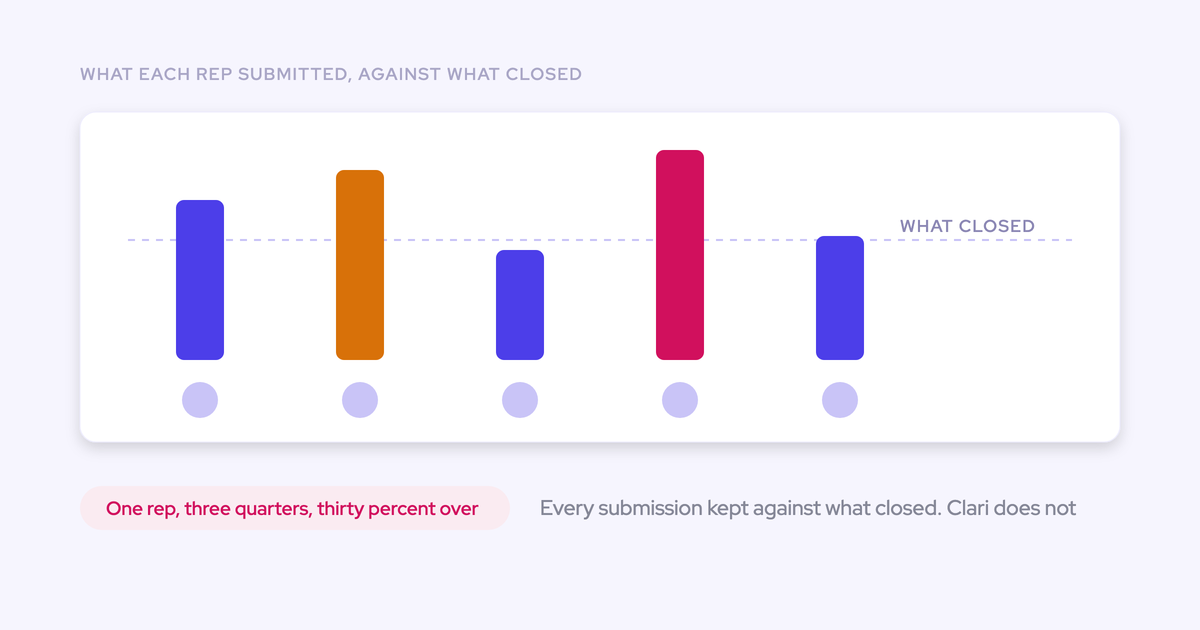
- Accuracy per rep and per manager. Compare each person's locked call with what closed. Habitual sandbagging and habitual optimism become visible, and you can coach them.
- A fixed early-quarter snapshot. Week 4 tells you whether the cadence works. Quarter-end accuracy mostly tells you who was good at hindsight.
- The length of the forecast call. If it isn't getting shorter, deal questions are leaking back in.
- Public recognition for the accurate teams. Celebrate the right calls, and don't shame the wrong ones in public.
For a benchmark: in our experience the strongest revenue teams reach about 95% forecast accuracy, and the average sits nearer 85%. A better model doesn't close that gap. A cadence that repeats often enough to be judged does.
Can you run the split on Salesforce or Gong's deal board?
Yes, for many teams. The split is a process decision, and the process needs no tool.
If your quarter rests on about ten material deals, native Salesforce forecasting and pipeline inspection can carry it, because nothing needs aggregating.
Gong teams often do fine too. Gong's deal board makes deal momentum easy to read at a glance, and many teams run their forecast call from it without buying Gong's Forecast module. Gong Forecast adds a per-person accuracy report once the process gets more sophisticated.
The strain shows up as deals, managers and roll-up layers grow. Native Salesforce forecasting shows the pipeline as it stands now. It doesn't keep a history of how the pipeline moved, so recreating week-over-week change takes snapshots and usually a warehouse.
| Need | Carries it fine | Starts to strain |
|---|---|---|
| Material deals | About ten a quarter, each discussed on its merits | Hundreds across many reps, where a person can't select deals by hand |
| Roll-up layers | One manager layer | Rep, first-line manager, VP and CRO each calling a number |
| Locked snapshots | A checker on the call is enough | You need a fixed record of what each person called, every week |
| Week-over-week change | A manager remembers what moved | You need pipeline movement without screenshots or a warehouse |
| Deal selection for reviews | The manager knows which deals matter | Every region has to select against the same rules |
| Accuracy tracking | An informal read at quarter end | Per-rep and per-manager variance across consecutive quarters |
How Weflow Deal Intelligence & Forecasting supports a split forecast week
Weflow is the Revenue AI Orchestration platform for sales, customer success, and RevOps teams. It's built for Salesforce teams, and in this setup it does two things: it keeps the deal review on evidence, and it keeps the forecast call on the number.
It doesn't replace the cadence. We tell every prospect that forecasting is a muscle, not a silver bullet. Our co-founder says it in one line:
"If you don't run an operating cadence, the best tool in the world won't help you."
Run deal reviews on the Weflow deal record, not the rep's story
Most deal reviews start with the manager asking the rep to describe the deal and then taking their word for it. Weflow puts the description on the record, so the review starts from evidence.
The deal-level AI summary reasons across every meeting on the opportunity, not one call at a time. Your managers open the deal board and see:
- Opportunity, account and contact fields side by side in one view, which a standard Salesforce opportunity report can't show.
- Last email, last and next meeting, and the full activity timeline.
- Communication velocity computed from the emails actually sent and received, plus every person involved in the deal.
- Days inactive, close-date pushes and time in stage, derived from captured activity rather than typed by a rep.
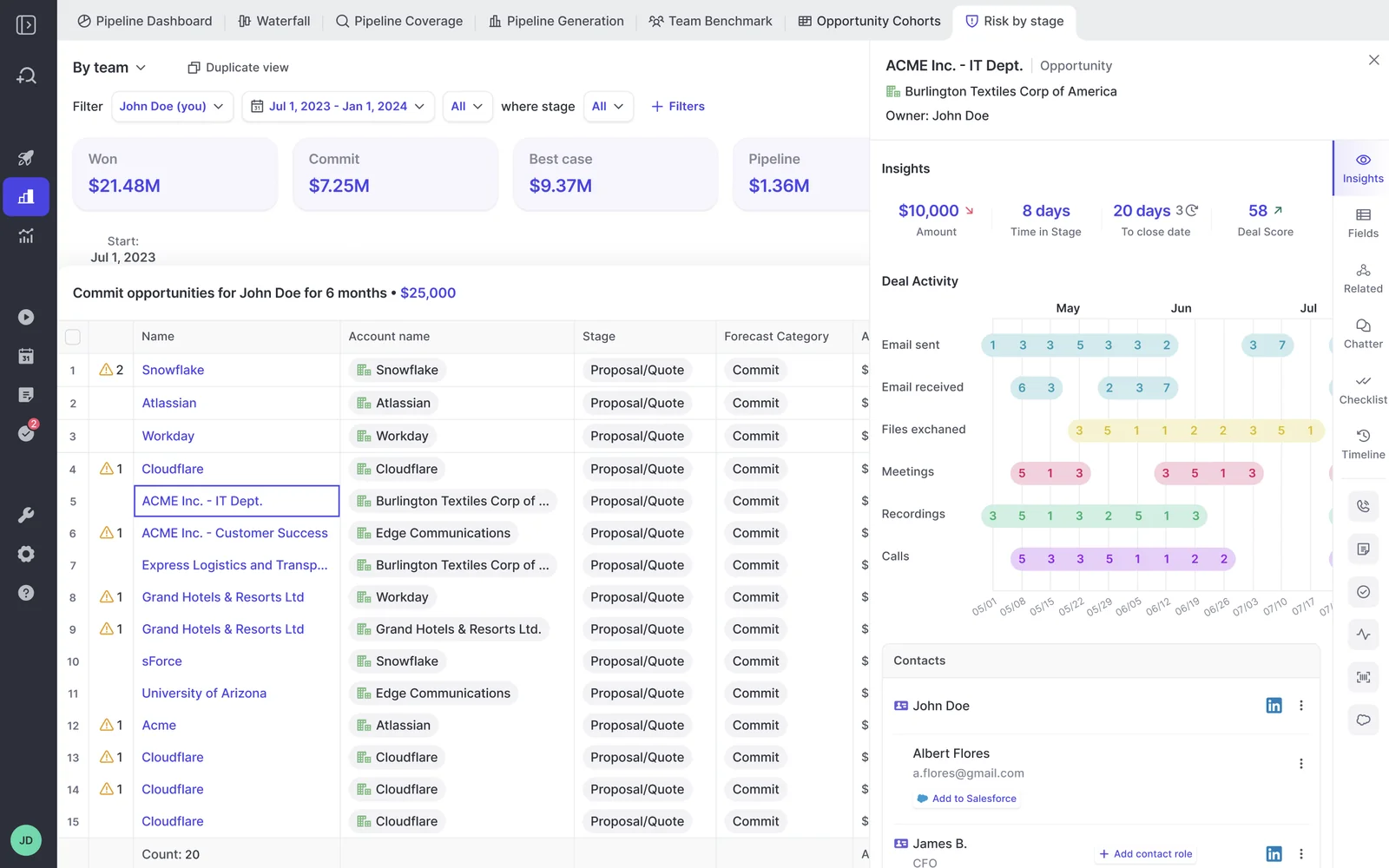
Every field on the board stays editable and writes back to Salesforce, so the fixes agreed on Thursday land on the opportunity itself.
AI Playbooks add the methodology view. They score the whole opportunity against MEDDIC, MEDDPICC or SPICED by reading every email, meeting, transcript and CRM field on the deal.
That turns the score into a deal-review signal. A deal forecast to close this quarter that still has no identified economic buyer shows up without anyone asking the rep.
Let Weflow deal warnings choose which deals get inspected
Cerutti's rule is to select deals against criteria, not by going round the table. Weflow deal warnings make that selection automatic. Your team writes the warnings as rules on any Salesforce field or any of Weflow's computed fields.
Typical triggers:
- A close date pushed more than twice.
- Only one contact on the deal.
- A missing methodology field.
- Too many days in the current stage.
- No activity in a set number of days.
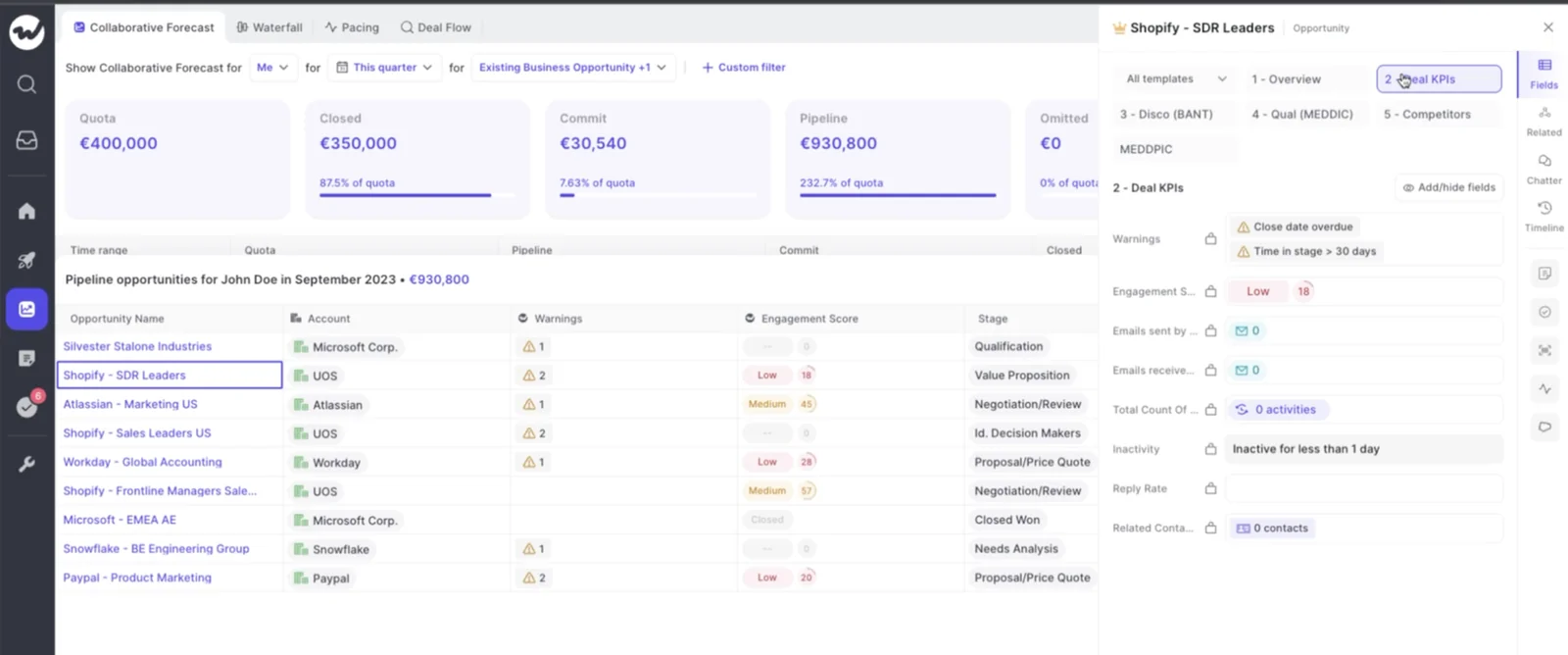
We ship warnings as rules you author, not fixed models, because slippage looks different in every business. A team with a 60-day cycle can treat 14 days of silence as a warning. A team with a 12-month cycle wouldn't.
Keep the forecast call on what changed since last week
Weflow warnings also appear inside the forecast submission screen, at the moment a rep picks which deals to commit. Unhealthy deals get caught before they enter the number, instead of in a report after it's already wrong.
Each rep submits a baseline and a best case, tied to the named opportunities behind each figure, with a comment. Weflow keeps every version, so the history of a rep's call exists across the quarter.
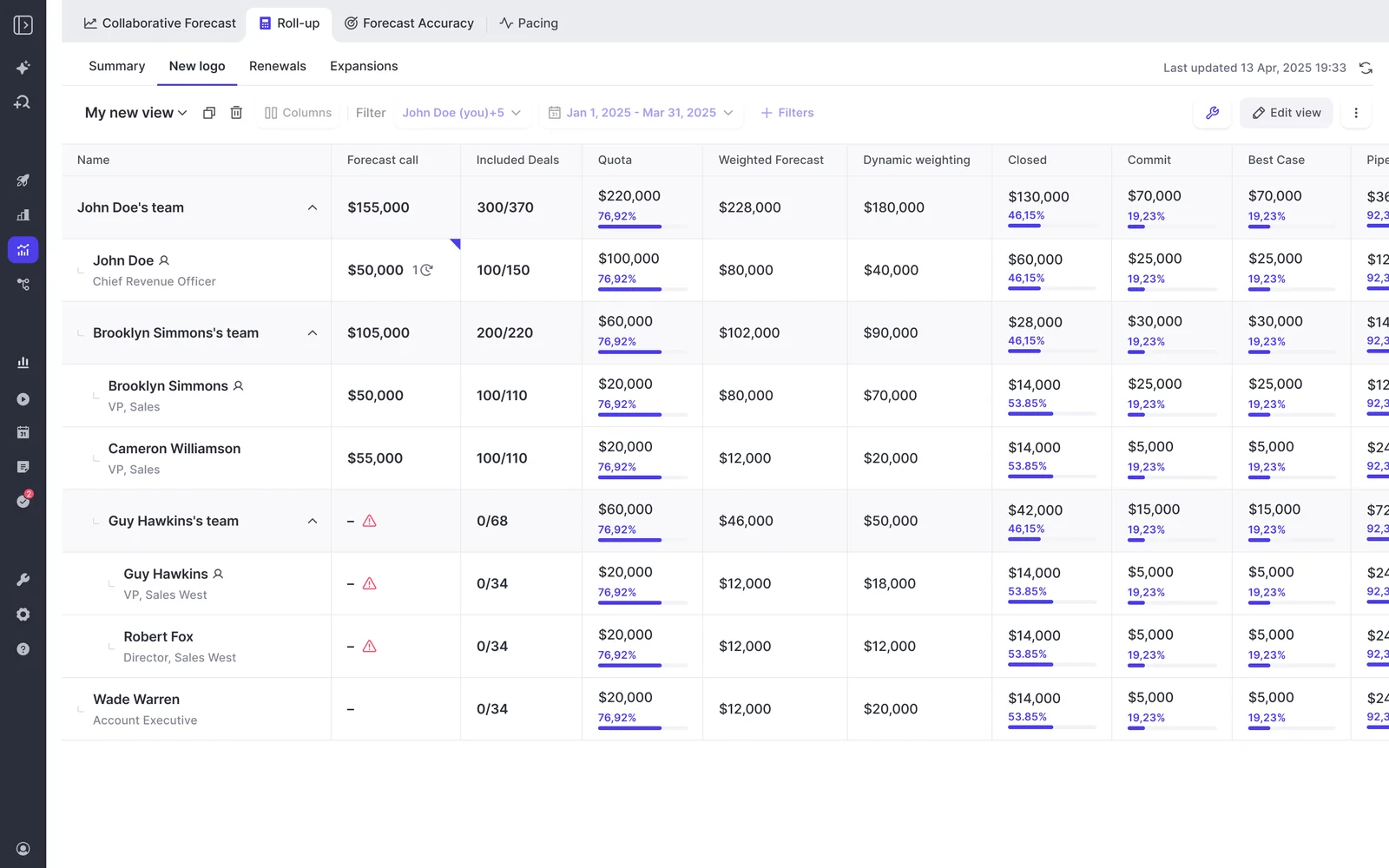
Managers submit their own independent call alongside their reps' calls, built deal by deal from the team's opportunities. Both numbers sit side by side in the roll-up.
On Tuesday, the gap between what the reps called, what the manager called and what the pipeline supports becomes the agenda. You're no longer reconstructing deals one at a time.
Lock the cadence with Weflow forecast deadlines and overrides
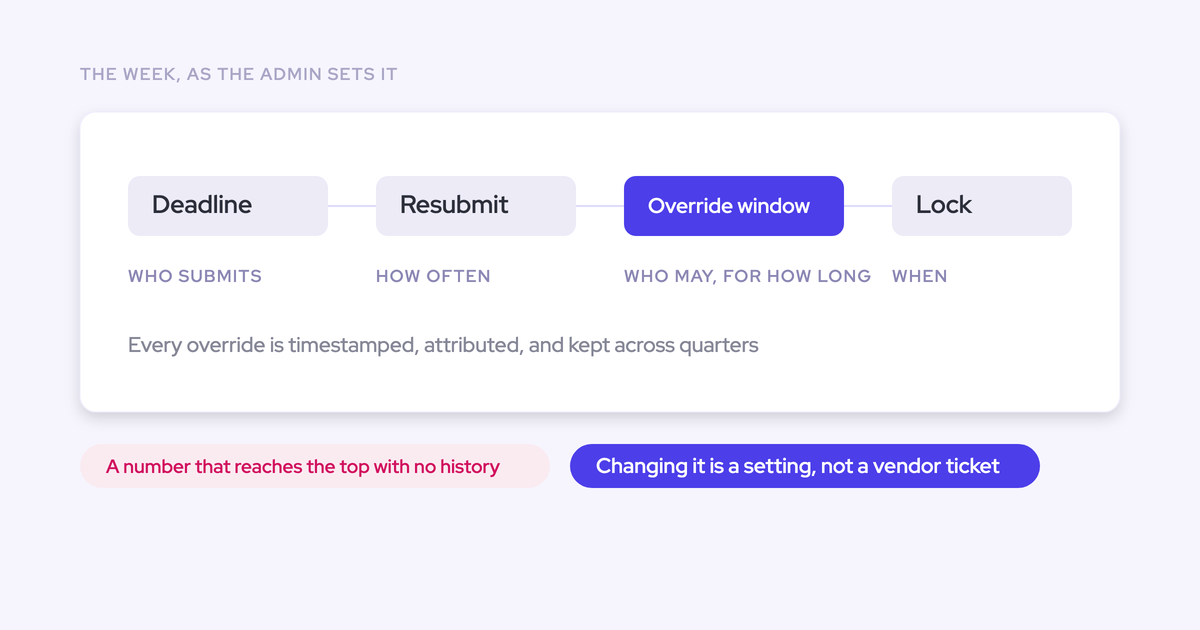
Weflow's cadence settings encode the order of the week, so the sequence doesn't depend on someone chasing people in Slack:
- Submission deadlines fix when the Friday submission is due. A reminder email deep-links reps into it, and a missing submission shows as a warning.
- How often reps resubmit sets the weekly rhythm across the quarter.
- Who may submit decides whether opportunity owners, managers or both call a number.
- Who may override, and how long an override stays open lets managers adjust in a set window around Monday. Each override is timestamped, attributed and logged with its rationale.
- When the forecast locks fixes the call before Tuesday's meeting.
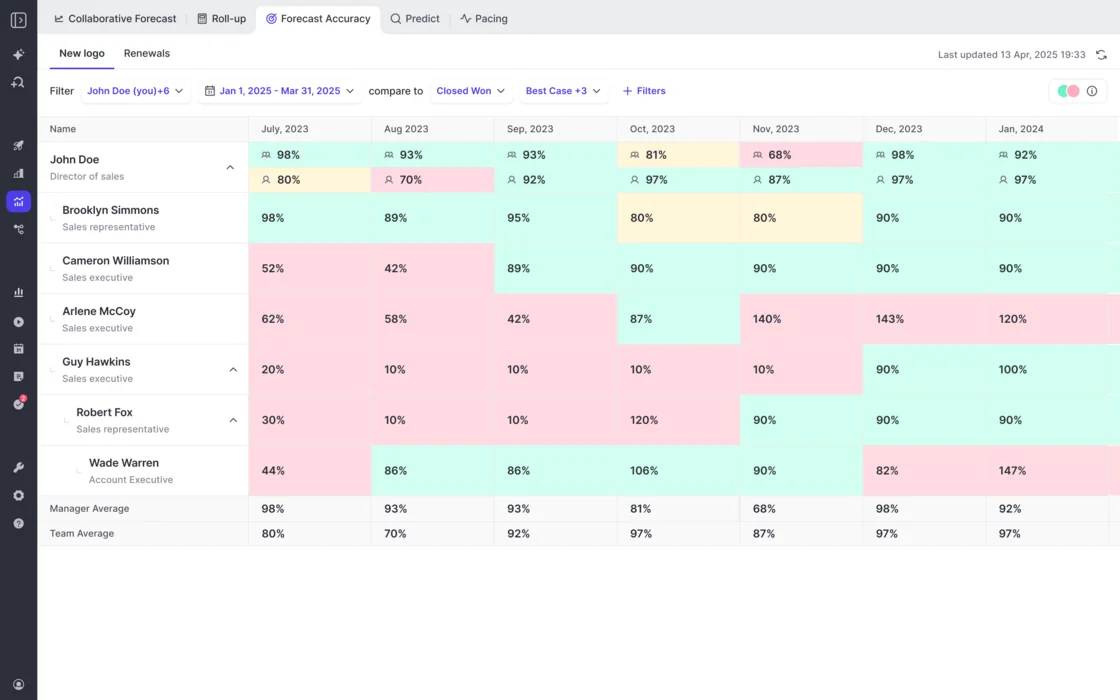
Locking is what makes accuracy measurable. Weflow records each locked submission against the closed amount, which gives you variance per rep, per manager and by segment over consecutive quarters. That tells you whether the split is working.
What Zeotap and KORE Wireless changed with Weflow
Zeotap had a tight weekly, monthly and quarterly cadence before Weflow, and the forecast still missed. AEs updated opportunities partially, next steps went unfilled, and leading indicators like stage duration and multi-threading were missing. Zeotap now runs its weekly sales meetings and pipeline inspections on Weflow views and templates.
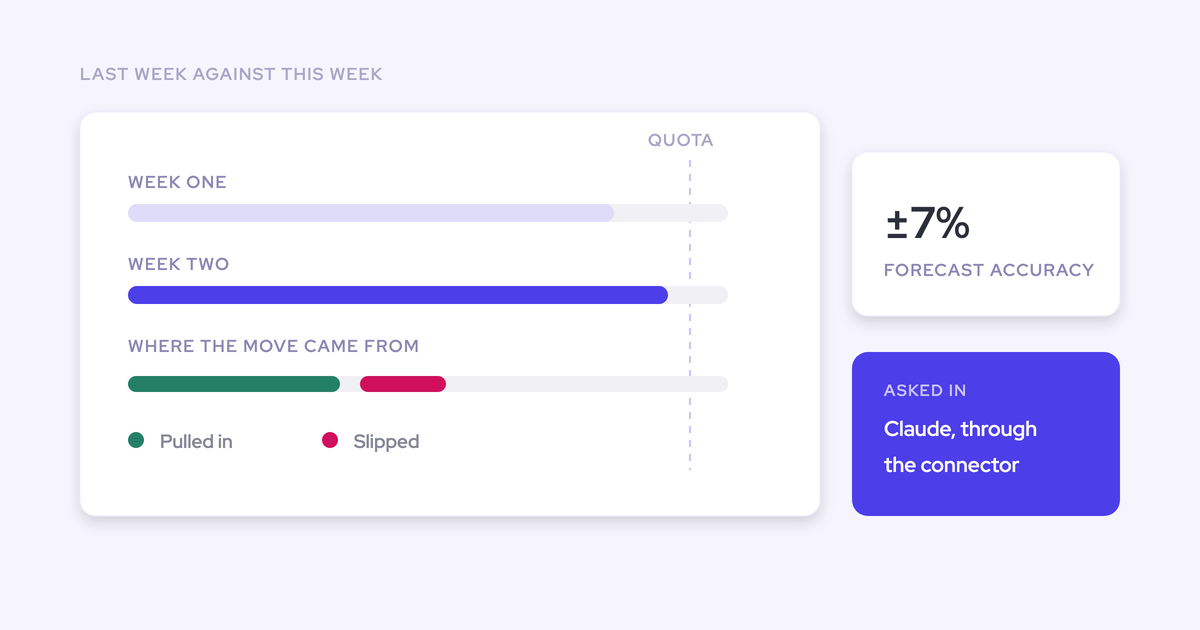
"With Weflow, we forecast within 7% by week 4 of the quarter."
KORE Wireless came in with sellers over-inflating deal values. Its deal reviews now start from what's on the deal, not what the rep says about it.
"It's no longer third-party hearsay from reps or sales leaders. It's now proof in front of us – AI summaries that tell us we're not talking to the economic buyer, that we're single-threaded, whatever it might be."
Scott Jones, SVP of GTM Revenue Intelligence & Enablement, KORE Wireless
Where Weflow Deal Intelligence & Forecasting falls short
These are the gaps that matter for a split forecast week:
- Forecast submissions live in Weflow, not in Salesforce fields. Activity, transcripts, summaries and AI field updates all land in Salesforce, and opportunity edits write straight back. The submitted forecast is the exception. If your rule is that everything lives in Salesforce, roll-up submission breaks it. The weighted forecast and AI projection still work for you, and you can read submitted calls over our MCP connector.
- Submissions can't be made from a phone. Reps and managers submit in the web app. First-line managers feel this most, because they're the people most likely to be with a customer on the day the forecast locks.
- Opportunity splits aren't supported. A deal shared between sellers counts in full for its owner. If you credit split quota, this matters to you.
- Consumption forecasting isn't supported. Weflow forecasts deal-based revenue. Usage-based revenue needs a different method.
- Playbook results don't cite their sources. A playbook element shows a filled answer and a completeness score, not the email or call it came from. Reviewers who want the evidence ask Ask Weflow AI, whose answers list their sources.
- The collaborative forecast shows only the latest value of each call. Every version is kept, but there's no table laying out how one rep's call moved week to week, and the monthly split inside a quarterly call is visible only in the edit dialog.
What Weflow Deal Intelligence & Forecasting costs
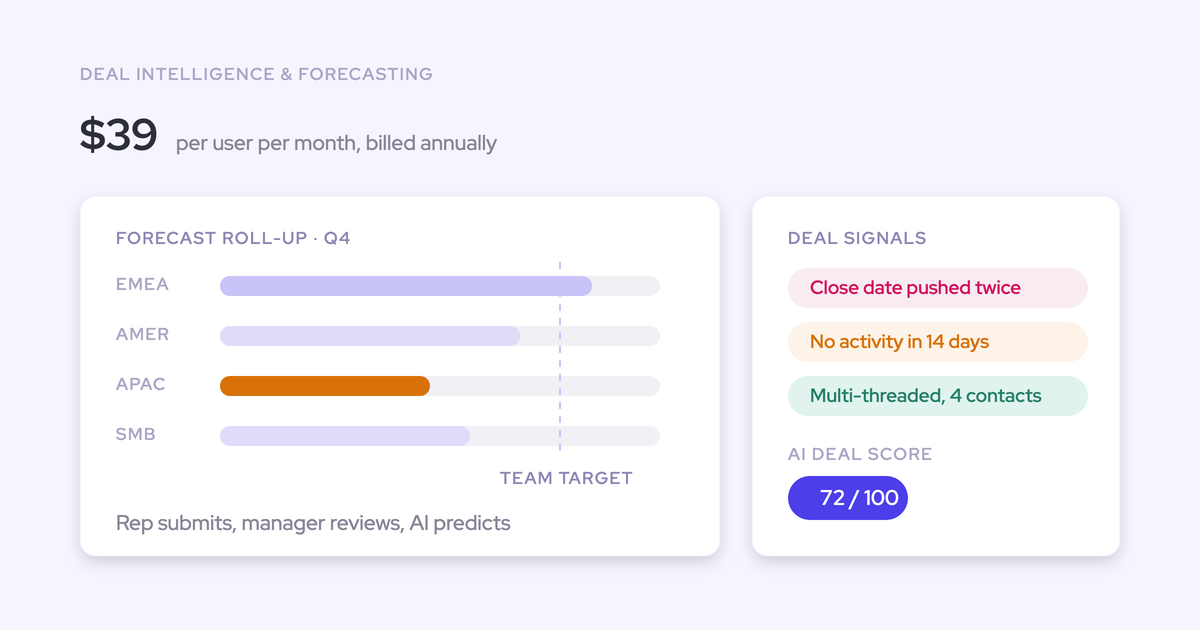
Weflow Deal Intelligence & Forecasting costs $39 per user per month standalone. There's one bundle detail that matters here: Revenue AI Business covers the deal review side, and only Revenue AI Enterprise adds forecasting.
| Plan | Price per user per month | What it covers for a split week |
|---|---|---|
| Deal Intelligence & Forecasting (standalone) | $39 | Deal views, warnings and the full forecasting layer |
| Revenue AI Foundation | $49 | Activity & Contact Capture and Conversation Intelligence, the data layer under the deal review; no deal intelligence or forecasting |
| Revenue AI Business | $59 | Foundation plus Deal Intelligence (table and Kanban views, AI deal and account scoring, warnings, buying committee intelligence); no pipeline analytics or forecasting |
| Revenue AI Enterprise | $79 | Everything in Business plus the full forecasting layer |
Every plan has a 10-user minimum, is billed annually, and includes Ask Weflow AI Pro and Agent Builder Free with 25 agent actions.
Questions revenue leaders ask about splitting forecast calls and deal reviews
How often should reps submit a forecast in a split week?
Weekly, after the deal review and the lock. Each rep submits a baseline they're confident closes and a best case if timing goes their way, for the quarter broken down by month. The monthly split shows early whether a rep is pacing evenly or back-loading the quarter into month three.
Should renewals and expansion get their own forecast call?
Yes. Renewals involve different deals and often different owners, so run a separate retention forecast beside the new business one. A blended forecast lets a predictable renewal stream mask a volatile new-logo number. In Weflow you run them as parallel forecast setups, each with its own cadence, targets and revenue field.
Is a pipeline review the same thing as a deal review?
In the way most operators use the terms, yes: a pipeline review or deal-health review works the deals. A sales meeting is different, because it works on the rep. The mistake Harris warns about is running a pipeline review every week and calling it the sales meeting, so development never happens.
How does the meeting split change for consumption-based revenue?
Add a monthly realization review after the books close, run beside the regular pipeline cadence rather than in place of it. RevOps and FP&A compare each booked customer's actual revenue with its ramp forecast and sort it into on track, behind with a path, or written down. Weflow doesn't forecast consumption revenue, so that review runs outside Weflow.
Does Weflow forecasting need Weflow Activity & Contact Capture in place first?
Forecast quality depends on the data layer underneath it. Standalone forecasting without Activity & Contact Capture and Conversation Intelligence produces weaker roll-up results, because the deal review has less evidence to work from. When activity tracking is unreliable, reps can always blame a missing email on a tracking glitch, and you can't hold them to their number.
How long does it take to roll out Weflow Deal Intelligence & Forecasting?
Longer than capture, because forecasting encodes your operating cadence: who submits, how often, at deal or manager level, against which quota. Typical time to live is two to four weeks, or four to six weeks for a large org. Capture and Conversation Intelligence usually take about two weeks, and Weflow doesn't charge for implementation.