#116 Sales Forecasting in the Age of AI
May 4, 2026
·
37
min.


Key Takeaways
- Forecasting accuracy is a lagging indicator of sales org health. If you're hitting 95–98% forecast accuracy, it means you've built a world-class sales organization — accurate forecasting is the output of good hiring, ramping, and methodology execution, not a standalone discipline to optimize in isolation.
- AI forecasting models are only as good as the data foundation underneath them. Janis and Philipp learned this the hard way — they launched an AI prediction model before automating Salesforce data capture and found it wasn't accurate. Clean, automated activity and conversation data is a prerequisite, not a nice-to-have.
- Run three forecast methodologies in parallel, not just one. The strongest forecasting setups combine a dynamically weighted forecast (stage conversion rates over last 3/6/12 months), a bottom-up roll-up, and an AI prediction model — then present a corridor (base, mid, high) rather than a single number, because a single number creates false precision.
- Dynamic stage probabilities should be calculated at the rep or team level, not org-wide. A ramped rep with two years of tenure may have a 40% stage-one conversion rate while a new hire sits at 20% — applying a single blended probability across all opportunities systematically distorts your weighted forecast and masks performance gaps.
- Roll-up forecasting breaks down in spreadsheets for three specific reasons. Reps almost never self-report into a spreadsheet (so you only get manager estimates), deal-level forecast calls become unmanageable at scale, and you lose the ability to inspect deal context — risk signals, push history, multithreading — directly from the roll-up view.
- Managers must submit an independent forecast call, not just a roll-up of their reps. The best companies require managers to make a separate estimate — which can be higher or lower than the sum of their team's submissions — and justify it. This surfaces conviction gaps and prevents managers from rubber-stamping rep numbers without scrutiny.
- Segment your forecasts before you aggregate them. New logo, expansion, and renewal have fundamentally different conversion rates, deal sizes, and velocity profiles. Collapsing them into a single revenue forecast before understanding each motion individually is one of the most common reasons aggregate forecasts are unreliable.


Full Transcript
Philipp Stelzer: Hello, and welcome to another edition of the RevOps Lab Podcast. My name is Filip, and I'm here together with Janis. Hello, Janis.
Janis Zech: Hey, Philipp. How's it going?
Philipp Stelzer: Yeah. It's going well. It's going well. It's just the two of us today. It's a special episode where we just want to use the opportunity and reflect a little bit on forecasting and more specifically on forecasting in the age of AI. Has AI fundamentally changed in the last, I don't know, three to twenty four months, I guess, you could say? How you do forecasting? What forecasting means for sales? Or is it all still like a big fad?
Janis Zech: No. I don't think so. But what has been the impact of AI, and what are some of the lessons learned based on, you know, many of the conversations that we have with customers, prospects, and that are using Weflow or not using Weflow. Right? I think we spend a lot of time talking to, you know, sales leaders, operators, revenue operation teams, CROs that are all, like, you know, haunted by that same question of how do I get to a reliable, repeatable, and accurate forecast number for the end of the quarter, for the end of the year that they need to present to the board. And I think what we're trying to do here in this episode is to sum up these conversations and add our own thoughts to that and, yeah, just have a good, nice discussion about it. Does that sound good to you?
Philipp Stelzer: That sounds awesome. So, yeah, very excited about diving into the topic. I mean, I think it's fair to say that we've been building a forecasting tool now for three years, and there's a lot of learnings that went into that. So I would say maybe going into the topic, right, like, what we typically say is, like, if you don't run an operating cadence, the best tool in the world won't help you. Right? So it's really important that you look at the forecasting process as a holistic process that has various ingredients to make it successful. And I think one takeaway from hundreds of conversations is, a, it's really hard to do. And we've actually found just very few companies that are very good at it. And the reason being, it is very much an alignment topic. It's a executive stakeholder topic. It is a process, and it's fundamentally an operating cadence. And so let's maybe do a quick deep dive. What do we mean when we talk about an operating cadence? And the reality is almost every one of you already runs one. Right? So it's the process of doing specific sets of meetings and deliverables throughout the quarter or monthly periods, depending on what your cadence is. And typically, those are weekly or biweekly cadences. I give a very specific example. Like if you run a roll up forecast, rep needs to submit on a Thursday. The manager reviews the deals, but also the rep submission might do a manager forecast, might do an adjustment to the rep forecast, then the forecast call gets locked. On a Monday, there's maybe, like, some preparation for the forecast meeting with some questions, and on a Tuesday, there's a forecast meeting. Typically, you also have, like, you know, top of funnel or, like, renewal expansion, new logo forecast meetings. Right? So there's different type of meetings that are happening and different people and stakeholders that attend those different meetings and different deliverables that are happening. We had a variety of shows on this topic, operating cadence. We actually have a master deck on that. So if anyone is interested, just hit us up on LinkedIn. I'm happy to share that. But that's something that almost everyone runs. And then the question is really like, what do you need to do to build a system that allows you to forecast a number accurately? And so let's maybe dive a bit into these different foundations that are needed to actually make that operating cadence really fruitful. So let's start with maybe one that is a bit unintuitive, but it's very, very important, the data foundation. Right? So, Philipp, what do we mean with data foundation?
Philipp Stelzer: Yeah. I think I mean, one of the key things so if you talk about this operating cadence, one of the things you mentioned is these weekly meetings or, you know, just like cadences of meetings that you have spread throughout the quarter, throughout the week, throughout the month where you just discuss your sales pipeline. And in order to discuss your sales pipeline, right, you need to kind of, like, anchor those conversations on specific data points because otherwise, like, it's all super subjective. And that's very hard to do to have, like, fully subjective conversations about deals. Yes. There is something like a gut feeling that you can have around the deal. But, like, realistically, if you run, like, a sales organization with dozens or hundreds of sales reps, right, like, you don't wanna rely on gut feeling. You wanna rely on, like, a very steady, reliable ramp up process where you train reps to really understand and learn, okay, you know, how do I go into a deal? What kind of questions do I ask to qualify? What kind of, like, you know, signals, key events, critical events, whatever sales methodology you're using. Right? Like, do I need to collect and work through in order to have, like, as high a likelihood as possible to actually, you know, turn that, like, first conversation, like, the qualification into a demo, from a demo, maybe into a POC, then from a POC into a procurement process, and then to a closed won tier. Depending on what, like, stages you have, but I think, realistically, this is what most of you will be going through. And attached to each of these different stages that a deal can be in, right, there's different metrics that you want to take a look at. So you need to collect, like, information around these metrics. It can be a number. Right? It can be something as simple as the number of engineers that is working in that company. But it can also be something like a critical KPI that they need to hit. It can be, I don't know, like, literally anything. It can also be like a contract end date of, like, a competitor or something when, like, a contract is ending soon. So lots of different KPIs and metrics that you are collecting. And you wanna have those meetings that you're having, you wanna center those around those conversations. So if you use, for example, let's use SPICED. Right? Like, one of the key things that you wanna collect in the beginning is you wanna understand their situation and how that situation translates into certain pain points that need to be solved for them. And if you now have, like, a weekly sales meeting where the rep cannot actually, like, you know, reliably and, like, trustworthily, like, talk about the situation of that deal and the pain points that they are hitting, then that's already, like, a big red flag. Like, you know, basically meaning, okay, the rep doesn't have, like, a good understanding of where that deal is coming from, what the problems are that this potential customer is facing. And meaning that, so they also cannot kind of like work with that customer on resolving those pain points, and then they cannot really actually sell into that customer. So I would say so cadences, like, before you can do, like, a proper cadence, I mean, I think you should always, like, try to start having a cadence. But I think what you need to align on first is sort of like, okay. What is sort of, like, the methodology? What is sort of, like, the framework that we're gonna use within these cadences to discuss the deals? What are, like, the questions that we need to ask to get to sort of, like, the answers around the metrics that we want to collect, and how can I align with the rest of the company on a shared terminology and a shared set of, like, understanding on how we are working with these deals? And I think this is something where AI can be extremely impactful and helpful because it can add this objective layer to everything, where if you have an AI that automatically collects emails, automatically records your meetings, automatically captures all those touch points that you're having, it can give an objective summary of these conversations and then help you fill in, like, information around these metrics that then the rep can use to, you know, really, like, talk about the deal, but also the manager and the RevOps team can use to really evaluate whether the deal is in a good state or not. That's sort of, like, I think, for me, always the starting point.
Janis Zech: Now maybe just to add there. Right? So it's basically the question of like, what is a sales qualified opportunity? So if you have a, you know, unaligned definition of that, you basically compare, you know, apples with pears and you just don't have a comparison. So that's really the starting point. So what is the sales qualified opportunity? What is the stage entry criteria? And then what are the stage gates for each of the stages? So stage exit, stage entry criteria, and being really aligned on that. You then have different type of deal signals that basically give you an understanding of deal health. And I think we've all been in that world where you look into deals and, a, they're poorly qualified. They are stalling at stages. They're being pushed or there's no velocity in terms of communication. So basically, to build a system that is less error prone and more automated, you have to automate activity capture. So emails and meetings. You have to automatically capture whether you're multi threaded. So if people are being added to email threads or calendar events, you have to automatically capture those. You have to make sure that those actually are mapped to the right opportunities, which is a lot more challenging than it sounds. And then you have to make sure that you record as many conversations as possible, including all the conversations that are happening in the field on conferences. And you need to then basically tie back those conversations where you have a lot of insightful data points to essentially fill in your qualification criteria, right? Like situation, pain identified, critical event, and the decision criteria, decision process, champions, and so on. These are all there in the conversations. So you can basically use that data. And that's really where AI shines to have a CRM autofill to automatically map CRM fields to AI prompts to then update those either automated or with a human in the loop. Right? Like, that really depends. But that's obviously like table stakes these days. To then when a manager does a deal review, they can see how long has the deal been in this stage. What was the velocity of the last thirty days? What were the touch points? Has it been pushed multiple times? Like, what is the real pain identification? How strong is that pain? Right? Like, who is involved in the deals? Are we multithreaded? Like, so these, like, typical questions that managers ask, they ideally need to be fully automated. And then you can start really comparing the different deals and the different deal health and can actually look at AI scoring and warnings. You can have AI summarization across all the different data. And so I think when I think of data foundation, one of the biggest challenges to data foundation is that the CRM is supposed to be the system of truth, but more often than not, it's not. And so you have to basically unify the activity, contact, CRM, conversation data into one layer that is queryable and that you can use to basically extract those insights, whether these are in a pipeline view, right, where you just go through the deals one on one or whether it's an AI chat based system that allows you to query all the data and ask, hey, which deals are at risk or flag de-risk and act against those. So I think that's all things that weren't possible three years ago. That's very much possible. It's basically something everyone uses in Weflow these days, and it's pretty much table stakes. And at the same time, we also meet a lot of companies that are not doing it that way just yet. So this is essentially, I'd say, the first layer — the data foundation leads into the deal intelligence and deal hygiene. That is kind of the first layer of this forecasting motion because ideally, the forecast should be based on deals that are qualified and comparable. And that then feeds your pipeline metrics and your forecast metrics. So I'd say those are the foundations we typically see and work towards. Anything to add from your side, Philipp?
Philipp Stelzer: No. I think the comparable, I think, really, like, hits the mark there. I think that's super critical. Right? That's also what I meant with, like — I think the problem is like, the problem we're talking about here is not like you have, like, a sales team of, like, two, three people or five people, and then you align on it internally. Right? Like, what is, like, a good deal or not. I think that's a different motion. I think we're talking about, like, you have, like, fifty reps working in different territories, you know, spread across the globe or even if they're sitting all on the same team. It's about giving them a consistent ramp experience and making them successful. I think and I think this is very critical. Like, everything we talk about here, forecasting is just the end result. Like, have we said this many times before?
Janis Zech: Yep. Right? Yep.
Philipp Stelzer: Forecasting is just the end result. But I think it's really something super important to constantly think about because, like, what it basically means is if you become very good at doing accurate forecasting, that means that you've become good as an organization at building a good team and helping them become good sellers with the product that you're trying to sell. That's the end result of an accurate forecast in a nutshell. So the forecasting is always just like this, you know, ideal end state that you want to work against. Right? I think if you're, like, an eighty percent accurate forecast, great. Right? Then try to work against, like, eighty five percent accurate forecast, ninety percent, and so on and so on and so on. Hundred percent will always be tough, but I think if you become, like, ninety five to ninety eight percent accurate, that means you are, like, working in a world class sales organization.
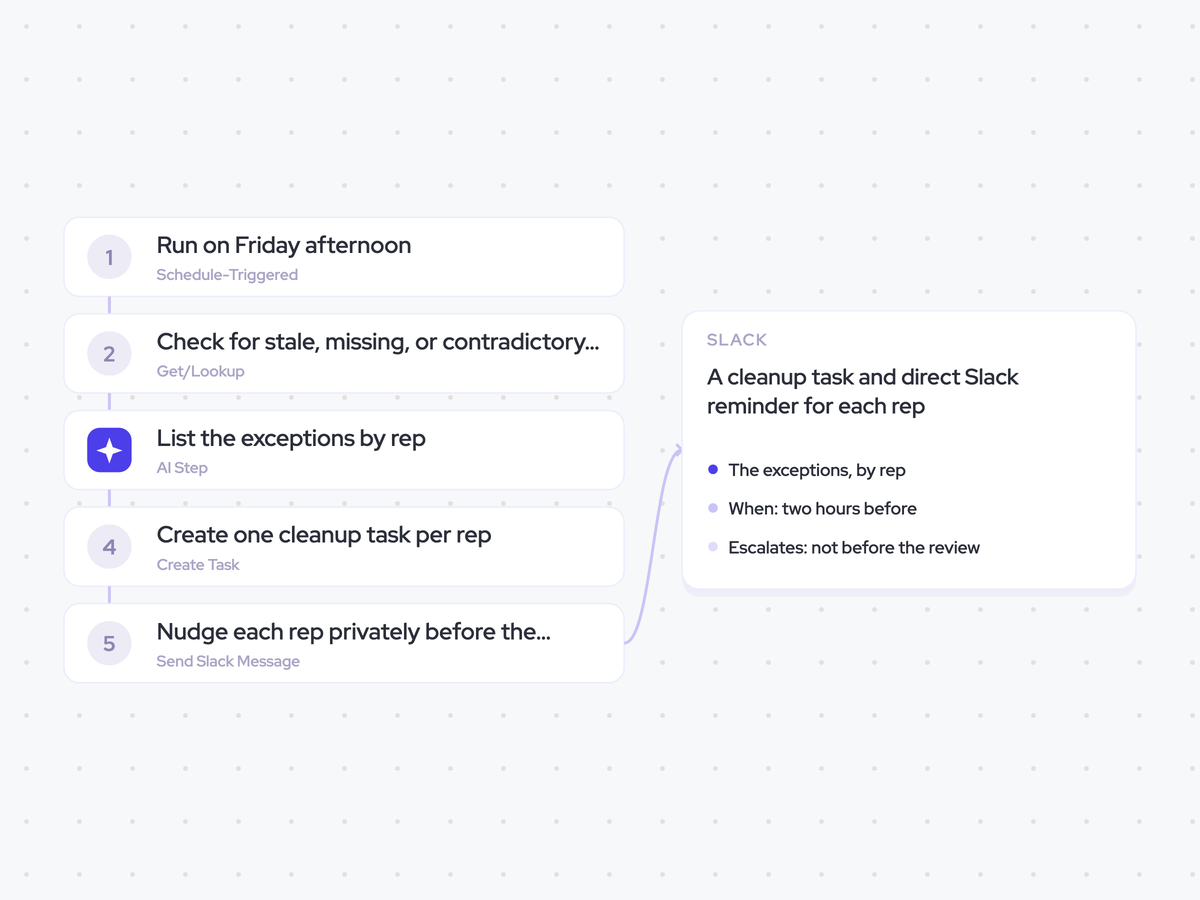
Janis Zech: That's so so important to mention. Right? Like, because the board is looking at you, and forecasting is obviously not a number. It's a process. And that process should also enable you to execute better. So there's the actionability. Right? Like, let's say you have full visibility on all the deal risks. That means you can take action. You can mitigate those risks. You can win more. So you can execute against your forecast better. So that has basically the actionability. And then there's the predictability piece, which is another process that is then laid out on top of the deal reviews and deal intelligence, which is typically what we typically recommend is to break it out into multiple forecasts. So what we see a lot happening in, for example, software is you have forecasts for new logo business, you have forecasts for expansion business, and you have a forecast for your renewal business, and that then summarizes to your revenue forecast. There's obviously a separation between bookings forecast and consumption forecast, so that is very different. There's different challenges with consumption forecasting because you often have a bigger challenge in knowing the deal size, and you also don't know how it's spread throughout the period. Right? So if you buy workloads from Snowflake, you don't know how fast you spend those within a year, right, even if you have a clear number for the year. But, like, these are all separations. But typically, you set up these multiple forecasts. And then you run a forecasting motion against those forecasts, which often combine multiple numbers to forecast the quarter or the month. And, you know, what I'm a big fan of is, like, combining three main metrics to keep it simple. A dynamically weighted forecast. So this is basically just a very simple model to look at last six months, last twelve months of your kind of stage conversion rates and just apply those and say, hey, you know, we have like three numbers — last three months, last six months, last twelve months. And we just look at the number as an input factor. The second is a bottom up forecast, which is typically a roll up forecast. We'll talk more about this in a second. And the third one is basically an AI prediction that is based on the data foundation, the deal foundation, which, you know, like, tools like Weflow or Clari, they all, you know, have those, right, like, to essentially basically do AI prediction. And then it's not about, like, okay, there's, like, one number, but it's like you have basically different corridors. Right? The AI prediction in Weflow, it doesn't — it's not one number. It's actually, like, mid, high, and, like, base case forecast. Right? So you have basically a corridor because the reality is, like, it is a corridor, and a lot of things can happen. Right? So I'd say, you know, like, set up multiple forecast motions for the different, right, like, new logo expansion renewal, and this can be different for different businesses. Think about not just one methodology, but multiple forecast methodologies to get to the different numbers and to get to the corridor. And then let's maybe talk a little bit more about roll up forecasting because I think that's a process that's often run in spreadsheets, and it's really bad to do it in spreadsheets. But, yeah, maybe we can jump into that, or maybe you have something to add to what I just said for the panel.
Philipp Stelzer: No. No. I think let's move on. I think it's clear. I think roll up is such an interesting topic because, again, it requires rigor. Right? Like, we sometimes have these conversations, and this is also something I shared before in other episodes, but we sometimes have these conversations with customers or prospects where, basically, they want to move into a roll up, but just in terms of, like, their current cadence, they're actually not ready for it, because they're not, like, in a position where they could, you know, trust their reps to make these, like, objective estimates on their forecast calls. That being said, I think it's good to start with, like, a roll up motion relatively early in the process of your company because that's like a a good vehicle to basically train that muscle of getting to an accurate forecast. So the best companies that we work with, the way that they currently do a forecasting with a roll up motion is they basically have something that they typically call a baseline forecast, which is what you could translate into, like, a worst case, and then they have, like, a best case forecast. Right? So sort of like the best case outcome in that given month, quarter, or however they are forecasting. So they have two forecast calls. And so they basically let their reps forecast both of these numbers for each month, and then they do it, basically, on a weekly basis. So every week, all the reps in the company need to forecast on the current month and on the next upcoming two months on how — you know, what they think they will achieve based on the current pipeline that they have. Right? And the results of that could be, you know, not that great. Right? Like, you could find out, oh, okay. Actually, I don't have enough pipeline in, like, two months to actually reach my quota. Like, that could be an outcome of that. Right? Like, you could have not enough pipeline based on your current coverage to actually reliably get to, like, a good forecasting number in the sense of, like, being close to your quota target or your target that is defined. But that also is an important outcome. So the best companies do it on a weekly basis, and they forecast for the current month and the next upcoming months. And they both let their reps make a forecast call, and then they let their managers make an independent forecast call. A forecast call that is not just a roll up of the, you know, the reps that report into them, but a separate one where the manager is also required to just make an independent estimate of what they think their team can achieve. And that can be lower, that can be higher than the, you know, sum of the roll up of the reps that report into them. Right? But they need to, you know, give out their own number and add their own justification to it. And then you have all these numbers, right, next to each other. You see the number from reps. You see the number from the managers. And then a good tool like Weflow would then also let you select the individual deals. So not just like a forecasting number, but also like, not just like an amount, right, but also like, okay, I'm gonna handpick those ten deals, you know, and those ten deals are basically what that number is made up of. And then you have that number, you have those deals, and then you have it in one table view, basically, where you look at it next to the overall value that you currently have in your different forecast categories. For example, commits, best case, pipeline — those are the most common ones that everyone is using. And that in itself will already give you, like, a very good idea of where you're currently standing with your, like, you know, kind of, like, roll up overall, how likely it is that you're gonna hit your targets, your quota, and where the gap is. So this is the most basic roll up I think we typically see and one that already really enables you to have really good conversations. And then you can become, like, you know, more crazy, and you can then, you know, add more metrics to it. Like, you know, okay. What is the average deal size? What is the historical win rate of that rep? How many deals are actually included in here? You can add, like, a deal score to each individual deal in there. Look, there's a bunch of different things that you can add in there that just help you quickly evaluate from a leadership perspective that is maybe a bit more detached, you know, from the day to day operations. So they when they look at that roll up, also quickly understand, hey. Is this realistic or rather unrealistic?
Janis Zech: Yep. Yeah. Maybe just a few things to add here. Like so for everyone who doesn't know what a roll up is, it's basically that you have basically like, values are being rolled up throughout the hierarchy. Right? So you can set up your own hierarchy. So VP East has five AEs, reports in the CRO, VP West, and international. And so you see basically all these roll up numbers. It's the base case, best case. And then typically, what you also put in there is the goals. Right? So the targets, which could be the quota goals of the reps, could be manager goals. Sometimes the reps should not see the manager goal because it's lower than the rolled up values of the quarter targets. You can also add the budget number into this. So you can compare basically. Okay. This is my base case, best case. This is the manager view. These are the deals that are included in driving this. This is basically our goals, and this is to get to the goals. Gap to quarter, gap to manager target, gap to budget. Then you typically look at what is already closed won. What is an open pipeline? This could be forecast categories. This could be stages. And then you look at the pipeline coverage. Because then you really have a good tool to get a very quick understanding of what's going on. And you will see that there are specific teams that have too low pipeline coverage. There are specific teams that have really good pipeline coverage. And then you can add more like these analytic metrics. So for example, kind of deal size. And then you might see, oh, pipeline coverage is one point five, deal size is only thirty k, and all the other teams have, like, two point five, and the deal size is actually sixty k. Right? And so it's a very good tool to quickly understand what's going on. And then all these numbers basically reconcile into what we call, like, snapshot pacing or pulse. Right? Like, basically, views that you can then look at those numbers together, and you see the pipeline progression over time, and it predicts out with the AI prediction, the team forecast, the manager forecast, the weighted forecast being all in one. So you basically see, okay, what are the differences and what do you wanna report back to the board. But, like, going back to that, right, like, what we see a lot is, like, this being done in a spreadsheet. And so what you then miss is three main things. Number one, typically reps don't go in a spreadsheet and report their numbers. That's almost never happening. So it's only a manager forecast. The second, you cannot do a deal by deal forecast call because it's very, very complicated. Yeah. As if you have, like, fifty reps, you know, each rep has, like, ten to fifty deals a quarter. Right? Like, it's just too complicated. And then the third one is you can also use, like, in tools like Weflow or like others. Right? Like, you can basically just inspect those deals right from any pipeline analytics or roll up view. So you can basically dive into that, and you can see which deals are slipping or stalling, where's risk. Right? So that is often something that is very hard to see when you're in a spreadsheet because a lot of context is missing. So basically, what you do in a roll up is you basically click on, okay, these are deals that are driving this. These deals are at risk. You dive into those and then you see, okay, these are basically the risky deals and this is what the AI summarizes. And then you can take action again. Right? So it basically closes the loop of, like, the data foundation, the deal foundation to the forecast foundation, which is, I think, really, really important.
Philipp Stelzer: Hundred percent. Hundred percent. Yeah. If you haven't seen a roll up, just go into Google search or just ask Claude to mock up a roll up for you.
Janis Zech: Yeah, that would also — or ping us on LinkedIn.
Philipp Stelzer: Yeah. Oh, exactly. Ping us on LinkedIn. I think we also have some cheat sheets and documentation on that.
Janis Zech: Hundred percent. Yeah.
Philipp Stelzer: I think the other, like, super interesting topic — I mean, there's, like, the AI, like, sort of, like, projection forecast, which basically is, like, a hyped up machine learning model. Right? That just takes, like, your seasonality, all your existing deal data, and then basically makes a projection into the future, where I would say, like, the main question here is just how does it work? Right? Like, does it just look at the aggregate? Does it look at each individual deal? Does it score each deal? Therefore, it takes it into account. Right? The good models do that. The bad models just look at the aggregate. So that's, like, a question you should always ask when you are in a conversation about, like, a tool like that. But that's just like in most cases, you know, like a a black box machine learning model. And then the other, like, really interesting one, I find, that also is, like, very tangible and something that is always worth looking at is the dynamically weighted forecast that Janis mentioned earlier, where basically you look at the probability rates attached to the different stages that you have for the deals in your pipeline. And, like, in tools like Salesforce, right, like, attached, like, hard coded probability to each stage. I mean, you can change it, but it's not gonna dynamically change. So what you would have to do with a tool like Salesforce is you would have to go in on a regular basis, and you would have to recalculate, like, the probability rates for the different stages. You would have to repeat that process every couple of months, at least once a quarter, but then you would still have the same probability across all of the stages or for all of the opportunities. And I think where it then becomes a lot more interesting is if you do that on a rep by rep basis or at least on a team by team basis. Right? It always depends sort of, like, on then, like, how many deals do you have? Obviously, if you have a velocity, like, sales motion, each rep has, like, ten deals. That's very hard to do to get to a reliable number on a rep by rep basis, but at least you could do it on a team basis if you have enough people in there. And then it becomes a lot more interesting. Right? Because then you see, okay. Like, I have, like, a rep, like, let's say after three months, like, the probability for the different stages is, you know, twenty percent in the beginning, and then, like, for a more ramped up rep that has, like, two years under the hood selling that product, maybe it's, like, forty percent or thirty percent. Right? And looking at that on that granular level can be really valuable. If you're not able to do that, then at least it's worth, like, defining, like, a cutoff point where you're saying, hey. I'm gonna look at, like, the probability rates for reps, you know, who have been with us less than six months, and I'm gonna look at those who have been with us more than six months or like twelve months. So whatever makes sense for you. Right? I think that's sort of like a deep dive that you have to do. It very much depends on your sales motion, the size of the organization, etcetera.
Janis Zech: Yeah. But this is also — great point, actually.
Philipp Stelzer: Yeah. And but this is also where a tool can help you. Right? And, again, I wanna plug Weflow, but, like, this is also where a tool can help you and just to automate these calculations because that's super tedious and time consuming. So that's something where I would say, like, a tool can be really helpful. And, yeah, just automate that for you. That's what a good tool should be doing.
Janis Zech: I mean, you obviously need these, like, kind of opportunity snapshot data. Right? If you wanna do it yourself, it's very crucial. I think most of you are probably familiar with that concept. And then, you know, I think you're actually stressing a really good point. I think there's, like, a variety of folks we met in the past that, you know, have not just the dynamically weighted and, you know, the AI forecast and the roll up forecast, but they actually create their own RevOps model. And then they basically, you know, run that against it. And I think in the end, what you should use is essentially a combination, but you should also learn over time what's the best model and how can you tweak it further, right, like, to become more accurate. And obviously there's a lot of dimensions — the segment, mid market, SMB, mid market enterprise has huge differences. The ramp time of the team has huge differences. The geos have huge differences. Obviously, the motion, new logo, expansion, renewal have huge differences in the conversion rates. You need to take those into account. But whatever you're going to do, and I think maybe just one comment on this AI prediction topic. The best models, obviously, they are based on the data foundation. So if you don't automate that process of, like, good data quality on an opportunity by opportunity basis, like, it will be very, very hard to have, like, accurate, like, prediction models. And this is something that we run into. We actually launched a prediction forecast before we had automated Salesforce data capture and all the capabilities we have today, and we found that it wasn't that accurate. So it's often something that made us realize, okay, you actually have to solve it end to end. You need to go from automated data capture to the roll up forecasting capabilities where flexibility and adjustment to your process is crucial. And it's very, very important that you can adhere to what you want to do. But it's essentially all one overarching operating cadence that you run and that every business is running. And then the question is, how good is that and how good is the quality of all these different sub processes you're running? And that's essentially what we wanted to spark here today. So with that said, Philipp, what's a book you would recommend?
Philipp Stelzer: Oh, no. Oh, no. Okay. Didn't get a little scrub. Okay. Damn. You're putting me in the hot — no. No. No. Look, I just posted this on LinkedIn actually, like nine books that I would recommend. So just follow me on LinkedIn, and then you will see my recommendation. That's what I'm gonna do now.
Janis Zech: Oh, that's a great answer, actually. Okay. Good. Alright. Thank you. This has been great. Hopefully, it was useful for you as well. As mentioned, right, like, at Weflow dot com slash RevOps, we have a lot of resources that help you become better at building out cadences, defining different field signals, defining your forecasting motion. We put a lot of effort into it, we continuously build it out. So definitely take a look at that. And with that said, thank you for listening, and, yeah, see you all soon.
Philipp Stelzer: Thank you. See you soon. Thank you so much.
Learn more about GTM & revenue operations
RevOps Lab Podcast


Free Forecast Cheat Sheet

AI Agent Templates