Weflow Deal Intelligence & Forecasting pricing: What $39 includes (2026)
See what Weflow Forecasting $39 includes and whether Foundation, Business, or Enterprise fits.


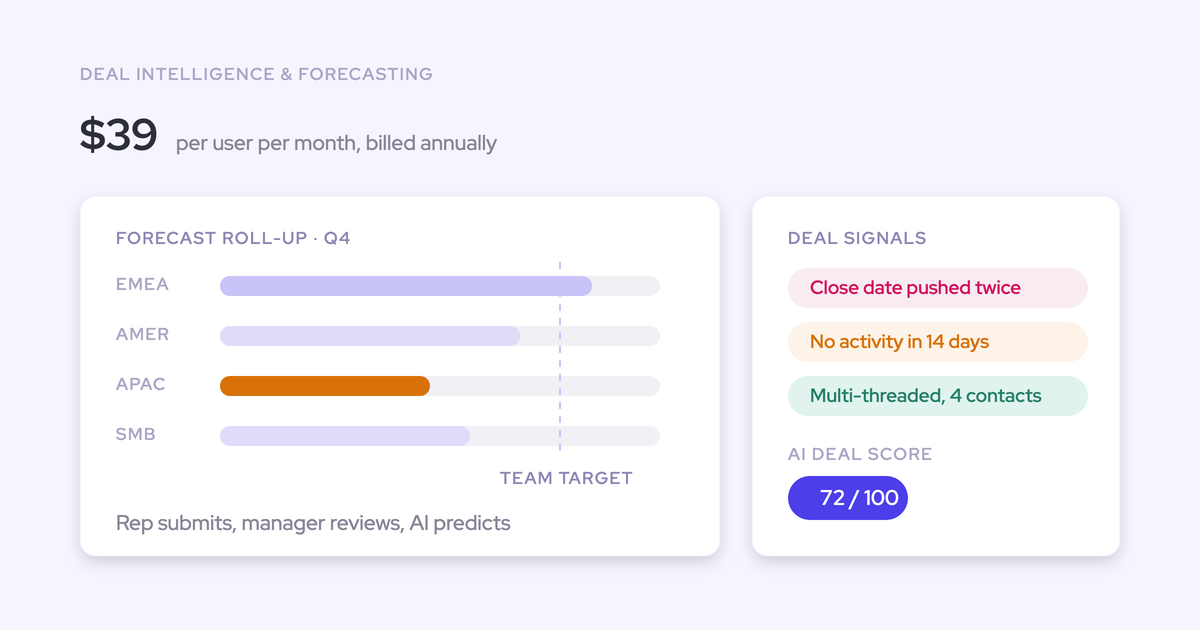

Weflow Deal Intelligence & Forecasting costs $39 per user per month, billed annually, with a 10-user minimum. That makes the minimum annual subscription $4,680. The standalone product includes deal intelligence, pipeline analytics, and forecasting.
To build your budget, start with the people who’ll review deals, submit forecasts, and manage roll-ups. Then confirm their access requirements and any contract-specific charges. The subscription calculations below aren’t all-in quotes.
Weflow is the Revenue AI Orchestration platform for sales, customer success, and RevOps teams. We work exclusively with Salesforce. You can buy forecasting separately or combine it with activity capture and conversation intelligence, without giving every user the same package.
What does Weflow Deal Intelligence & Forecasting include?
Weflow Deal Intelligence & Forecasting connects opportunity reviews, historical pipeline analysis, and forecast submissions. You can inspect the deals behind a number, see what changed, and compare the team’s submission with weighted and AI forecasts.
Use deal intelligence to guide your pipeline reviews
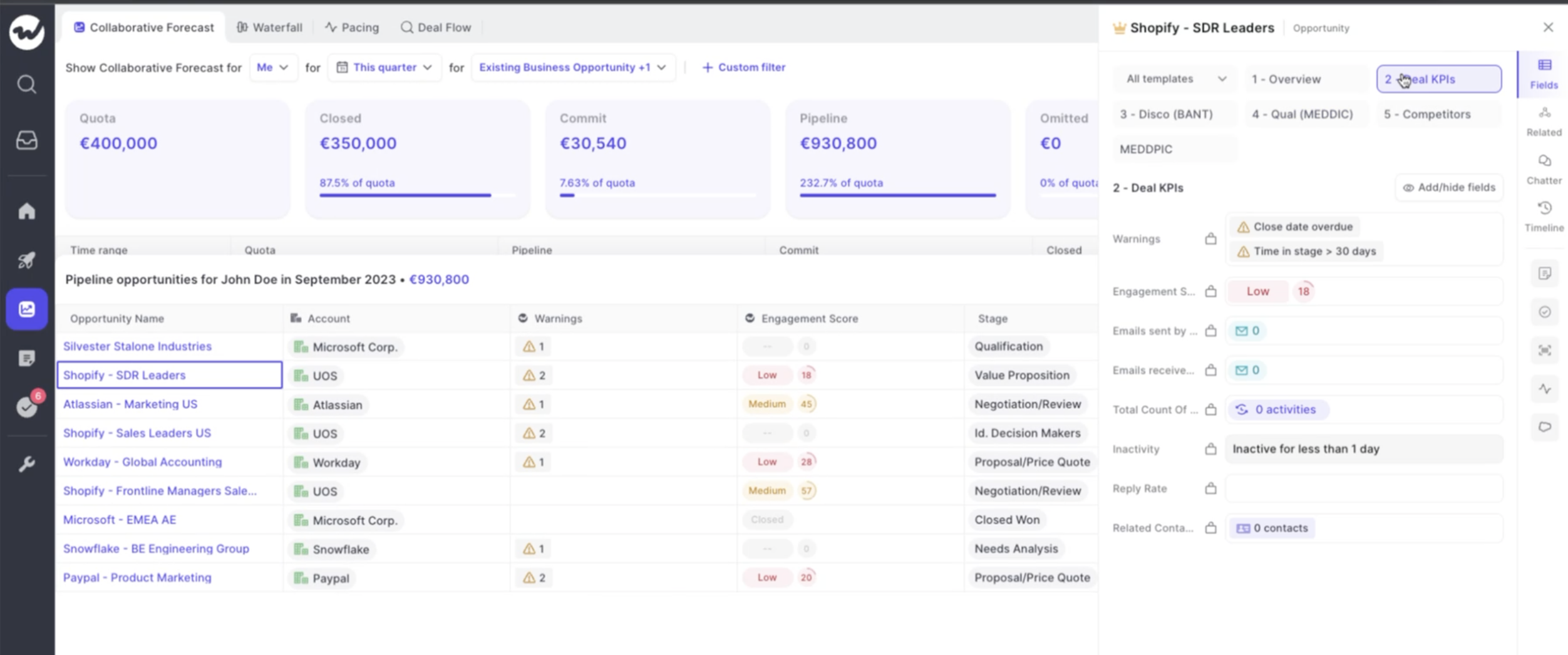
Weflow gives reps and managers editable pipeline views, deal-health signals, and opportunity context in one review workflow. You can work through the deals that need attention and update Salesforce as you go.
- Review and update opportunities. Use table or Kanban views, with inline and bulk edits that sync bidirectionally with Salesforce.
- Find the deals worth discussing. Configurable warnings flag conditions such as overdue close dates, inactivity, or excessive time in stage.
- Challenge qualification. Use AI playbooks and methodology scoring to examine gaps in MEDDPICC or your own qualification criteria.
- Inspect buyer engagement. Review the activity timeline, communication velocity, and people involved to assess momentum and multithreading.
- Prepare for a deal review. AI deal summaries bring together available opportunity context so managers don’t have to reconstruct the deal from individual records.
The data underneath matters. An activity timeline needs logged activity; a summary that reasons across meetings needs accessible conversation data. Buying forecasting alone doesn’t switch on Weflow’s email capture or call recording.
Track pipeline changes with opportunity snapshots
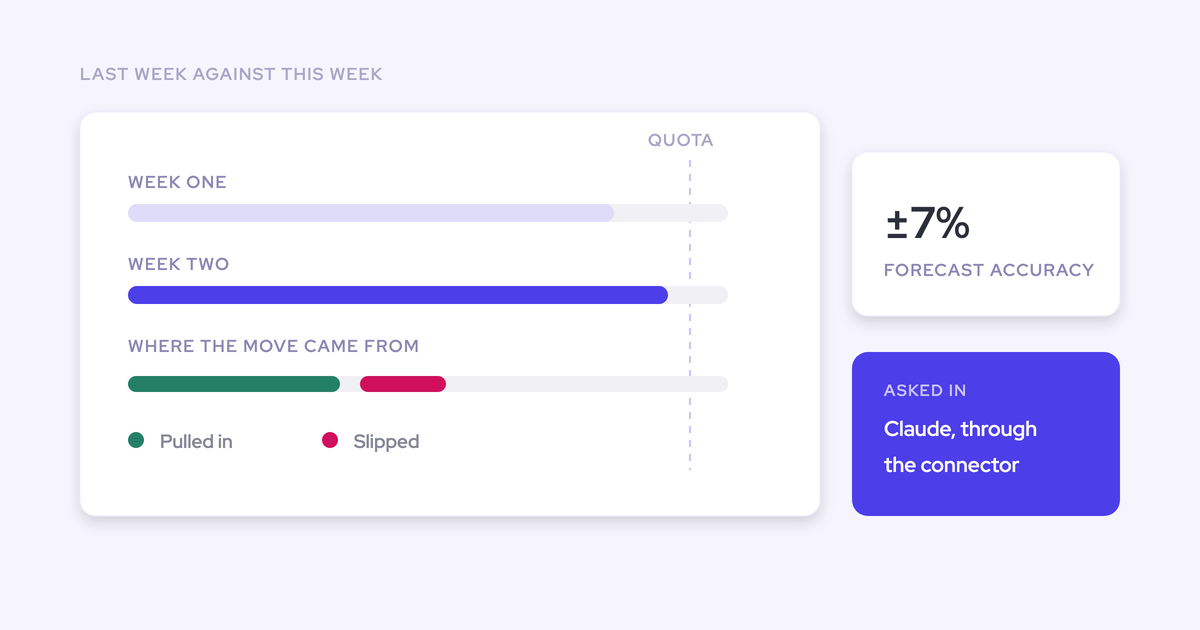
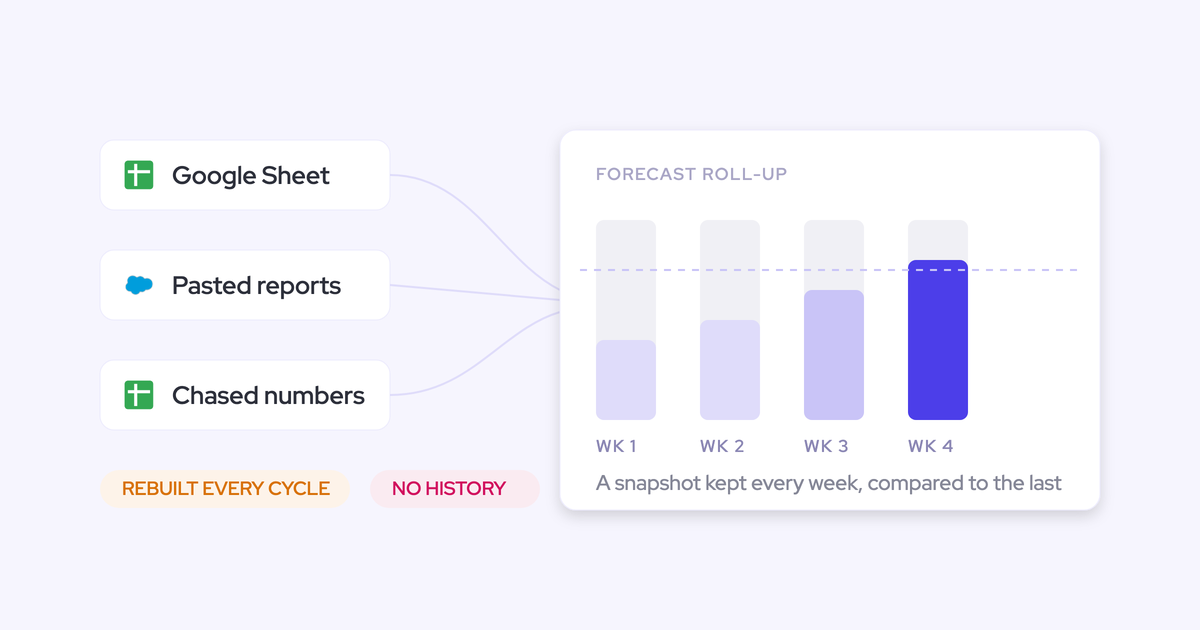
Weflow stores hourly opportunity snapshots to show how your pipeline changed, rather than only where it stands now. That history supports waterfall analysis, close-date push counts, and amount-change analysis.
| Capability | Question you can answer |
|---|---|
| Pipeline waterfall | Which movements explain the change between our starting and current pipeline? |
| Close-date push tracking | Which opportunities keep slipping into later periods? |
| Amount-change tracking | Which deals increased or decreased in value? |
| Pacing and historical comparisons | How does this quarter compare with earlier quarters at a similar point? |
| Pipeline coverage and generation | Do we have enough pipeline against target, and are we creating enough new opportunities? |
Check historical coverage during evaluation. Weflow-held snapshots support pipeline analytics, but you shouldn’t assume that connecting Salesforce reconstructs every past pipeline state.
Run weighted forecasts, team roll-ups, and AI projections
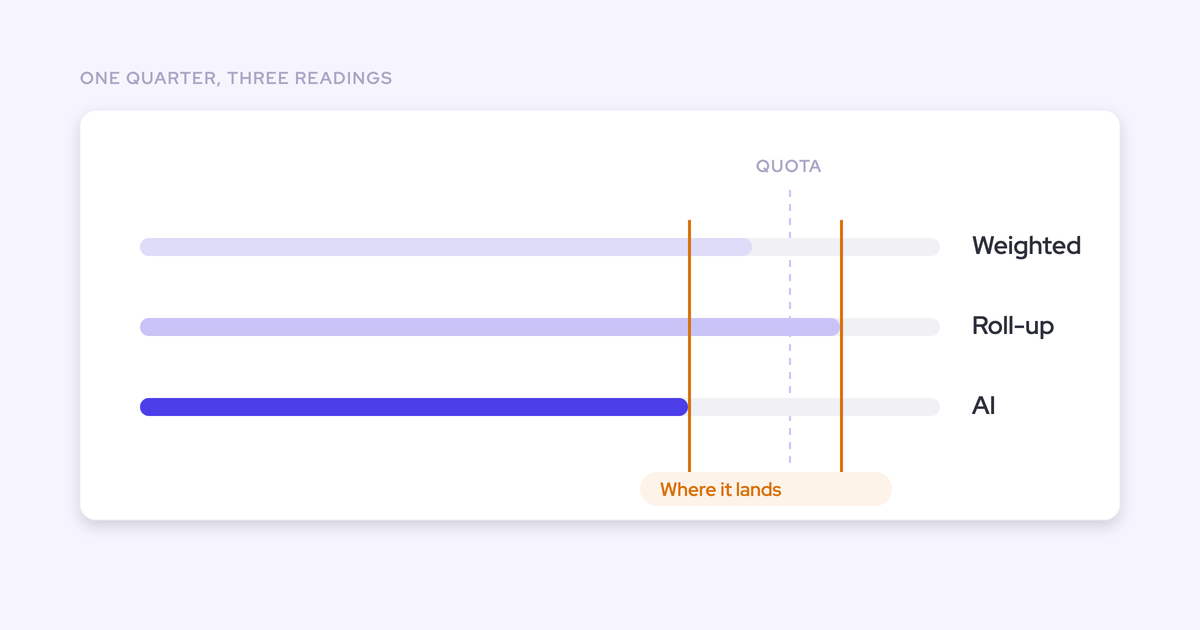
Weflow runs three forecast methods side by side so you can compare what the pipeline supports with what your team expects.
| Forecast method | How it works | How to use it |
|---|---|---|
| Weighted forecast | Applies historical stage close rates to the pipeline. | Check the team’s submission against historical conversion. |
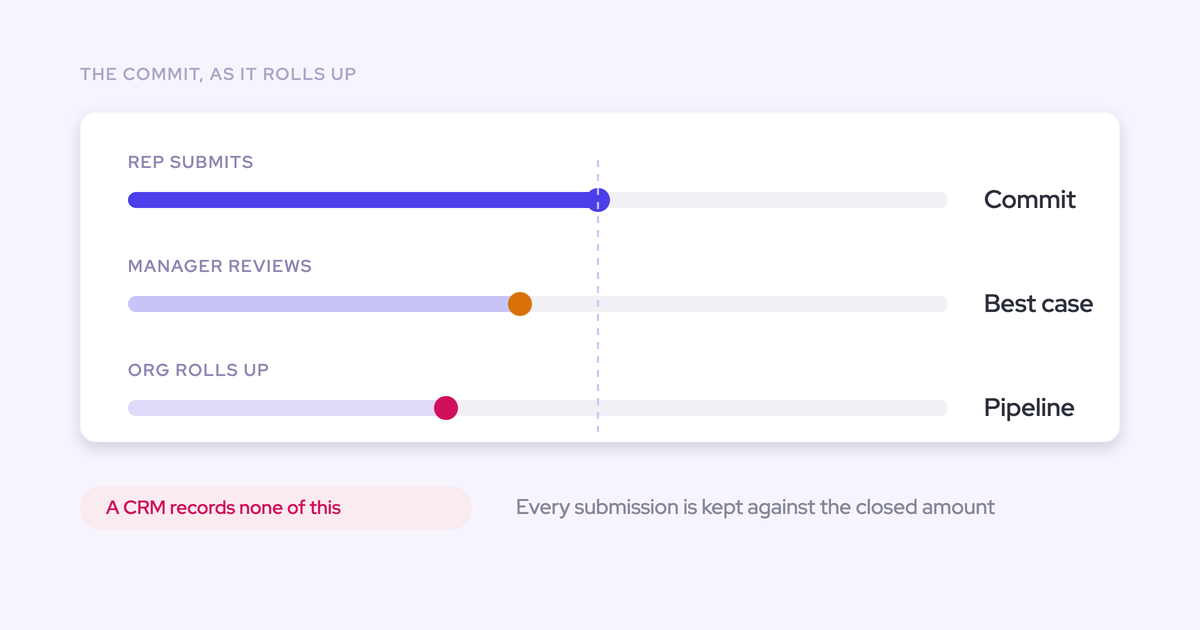
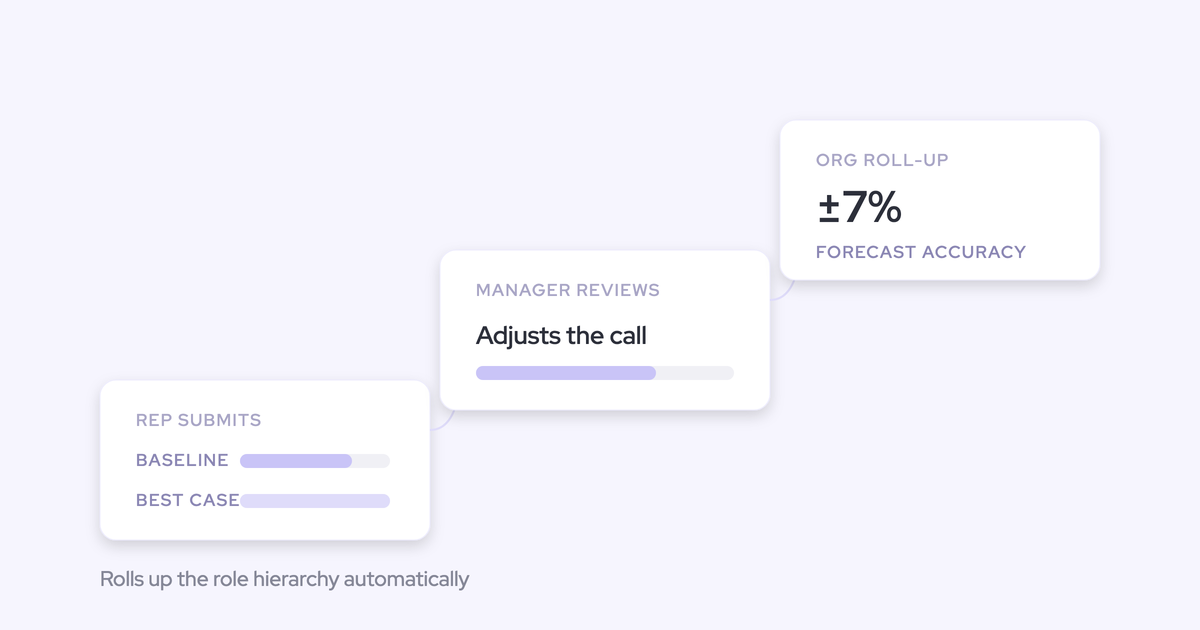
| Rep and manager roll-up | Combines submissions through the forecast hierarchy. | Capture the judgment of the people working and managing the deals. |
| AI projection | Uses more than 50 deal-level signals and up to two years of history to produce a projected landing range. | Compare the team’s judgment with deal behavior, engagement, and historical patterns. |
The differences give your forecast call an agenda. If a rep’s commit sits above both other views, you can inspect the opportunities behind that judgment.

You can configure the operating cadence around those views:
- Set submission deadlines, eligible submitters, and resubmission frequency.
- Control who can override a forecast and how long the override window stays open.
- Lock submissions so you can compare a fixed forecast with the eventual result.
- Track forecast-versus-actual accuracy by rep and manager.
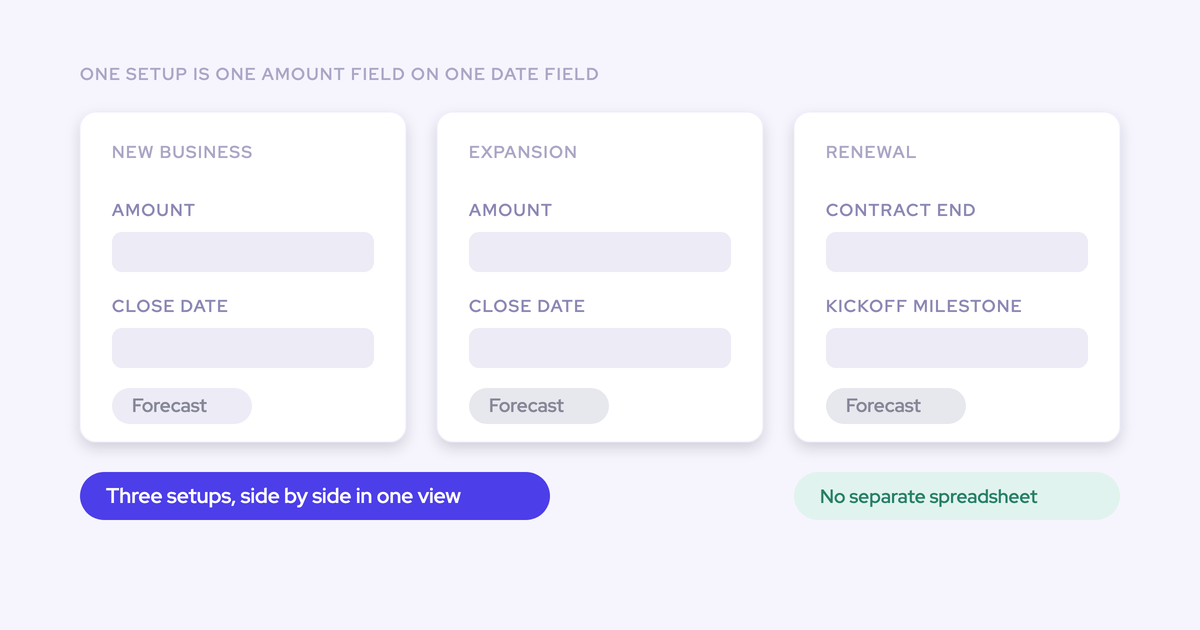
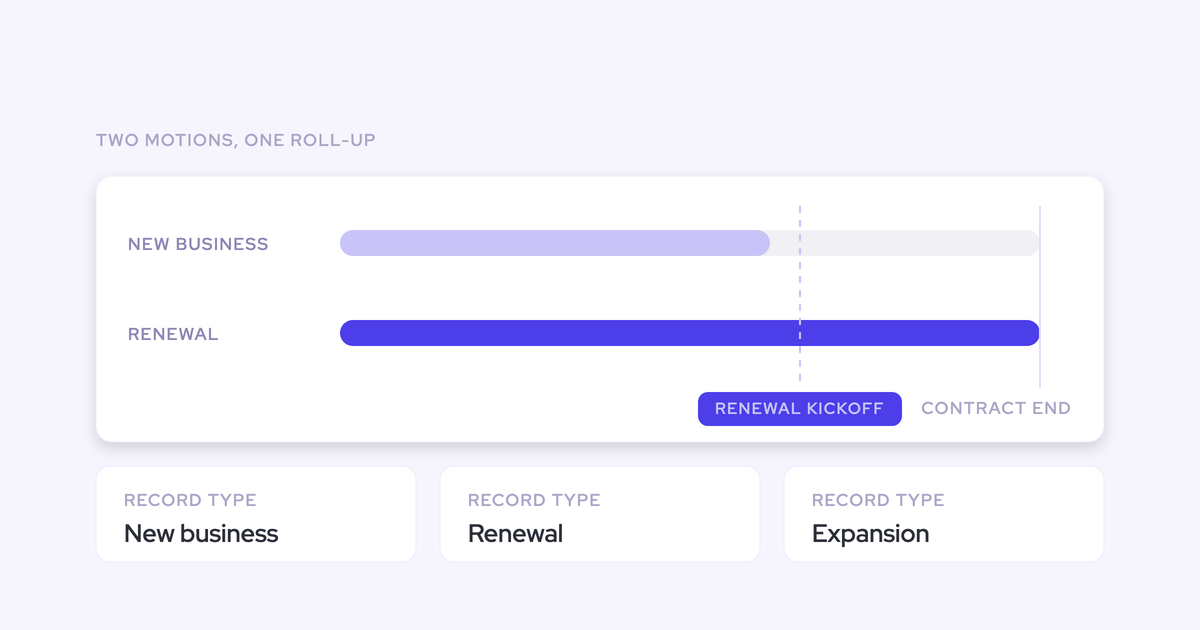
- Run separate new-business, expansion, and renewal targets alongside a combined target and view.
Scope boundary: the $39 standalone product doesn’t include Weflow Activity & Contact Capture or Weflow Conversation Intelligence. Ask Weflow AI Pro and Agent Builder Free are included, but they don’t grant access to separately purchased capabilities. Weflow doesn’t support consumption forecasting.
What will Weflow Deal Intelligence & Forecasting cost?
Your annual subscription starts with paid seats × $39 × 12. Keep that subtotal separate from any contract-specific fees and paid Agent Builder tier.
We recommend asking for two totals in your proposal: the first-year commitment and the recurring annual commitment. Each should show the seat mix, discounts, and any other charges explicitly.
Check Weflow billing commitments and contract fees
Weflow’s $39 price is a monthly equivalent under annual billing, not a month-to-month forecasting plan.
| Term | Application | Budget consequence |
|---|---|---|
| Seat price | $39 per user per month at list price. | $468 per paid user annually. |
| Billing and commitment | Annual billing, with a minimum 12-month term. | Budget for the annual commitment; confirm payment dates in the order form. |
| Minimum seats | 10 users. | The minimum annual subscription is $4,680 before contract-specific adjustments. |
| Volume discounts | Available based on contract size; final pricing is quote-based. | Use list price until we confirm your discount. |
| Mixed products or bundles | Weflow supports modular purchasing. | Confirm minimums and commercial terms for your proposed user groups. |
Separate included AI usage from Weflow Agent Builder charges
Weflow includes Ask Weflow AI, AI summaries, and AI field updates in seat pricing where your purchased product provides those capabilities. Agent Builder is the consumption-priced exception.
| AI capability | Charging boundary |
|---|---|
| Ask Weflow AI Pro | Included with every standalone product and bundle, without prompt metering. |
| Recordings, transcripts, summaries, and call-based AI field updates | No separate usage charge when you purchase Weflow Conversation Intelligence or a bundle that includes it. The $39 forecasting product doesn’t include call recording. |
| Agent Builder | Every plan includes the Free tier. Paid tiers add a workspace-level charge for larger monthly action allowances. |
| Agent Builder tier | Price per workspace | Monthly agent actions |
|---|---|---|
| Free | Included | 25 |
| Growth | $299 per month | 500 |
| Scale | $999 per month | 2,500 |
| Enterprise | Custom pricing | Custom allowance |
The billing unit is agent actions per workspace, not per user. Ten forecasting seats don’t multiply the included allowance into 250 actions.
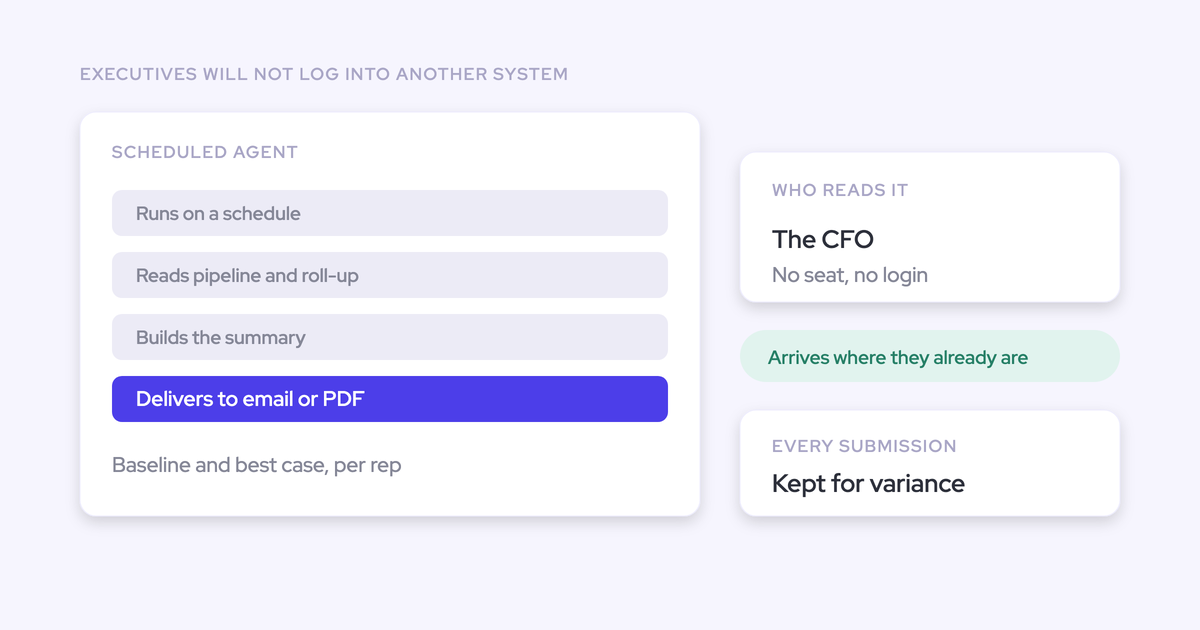
If you plan scheduled automation, have us estimate its action demand and confirm what happens at the tier limit.
Calculate costs for 10, 25, 50, and 100 users for Weflow's Deal Intelligence & Forecasting
At Weflow’s $39 list price, 50 standalone forecasting seats cost $23,400 annually before contract-specific adjustments.
| Monthly equivalent | Annual subscription | Fee treatment | First-year budget | Recurring annual budget | |
|---|---|---|---|---|---|
| 10 | $390 | $4,680 | Confirm in quote | $4,680 + confirmed fees | $4,680 + confirmed recurring fees |
| 25 | $975 | $11,700 | Confirm in quote | $11,700 + confirmed fees | $11,700 + confirmed recurring fees |
| 50 | $1,950 | $23,400 | Confirm in quote | $23,400 + confirmed fees | $23,400 + confirmed recurring fees |
| 100 | $3,900 | $46,800 | Confirm in quote | $46,800 + confirmed fees | $46,800 + confirmed recurring fees |
A full year of Agent Builder Growth adds $3,588 per workspace at the listed monthly rate.
Which Weflow package fits your forecasting requirements?
Choose Weflow Deal Intelligence & Forecasting standalone when your gap is deal review, pipeline analytics, and forecasting. Choose Revenue AI Enterprise when the same users also need activity capture and conversation intelligence.
Revenue AI Business excludes pipeline analytics and forecasting. Its deal-intelligence capabilities don’t make it a forecasting bundle.
| Purchasing boundary | Weflow Deal Intelligence & Forecasting | Revenue AI Foundation | Revenue AI Business | Revenue AI Enterprise |
|---|---|---|---|---|
| Price per user/month, billed annually | $39/user/month | $49 | $59 | $79 |
| Activity and contact capture | Separate purchase ($19/user/month) | Included | Included | Included |
| Conversation intelligence | Separate purchase ($39/user/month) | Included | Included | Included |
| Deal intelligence | Included | Not included | Includes table and Kanban views, AI deal and account scoring, warnings, and buying-committee intelligence | Included |
| Pipeline analytics | Included | Not included | Not included | Included |
| Forecasting | Includes weighted forecasts, roll-ups, AI projections, and accuracy tracking | Not included | Not included | Includes the full forecasting layer |
| Best-fit requirement | Forecasting and pipeline analysis without purchasing capture or conversation intelligence | Activity capture and conversation intelligence while keeping forecasting elsewhere | Capture, conversation intelligence, and deal reviews while keeping forecasting elsewhere | All three products for the same users |
All four options include Ask Weflow AI Pro and Agent Builder Free.
- Keep standalone when your existing data capture meets your needs. Validate that the activity and conversation context you want Weflow to analyze is accessible.
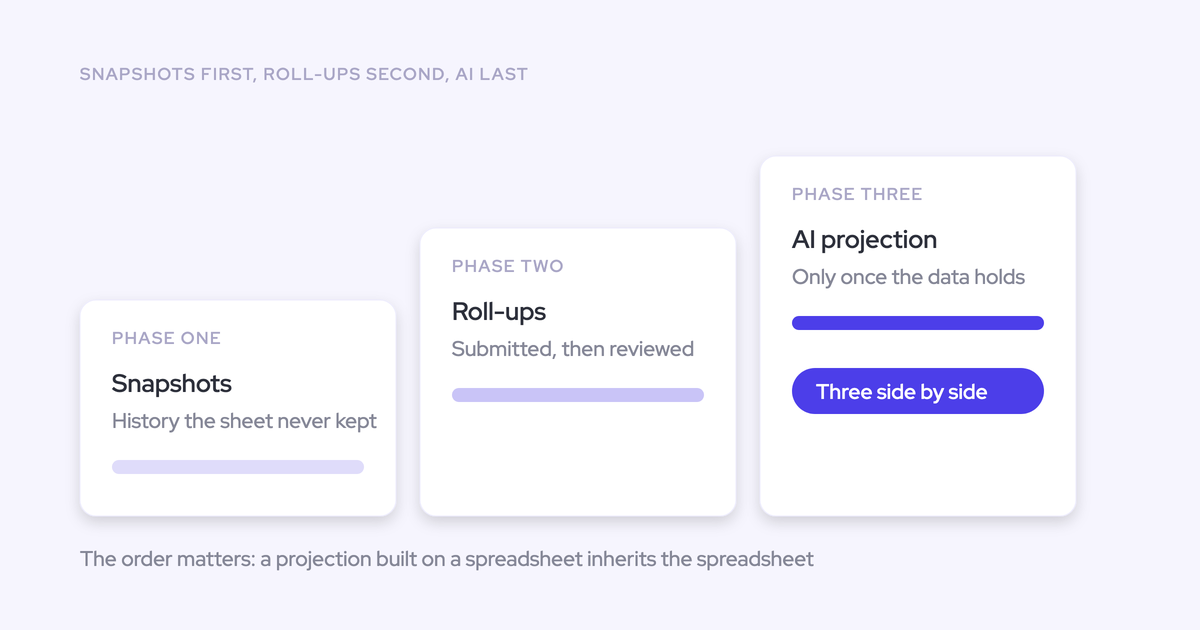
- Use Revenue AI Foundation when you need the data foundation first. You can retain your existing forecasting process while improving activity and conversation capture.
- Choose Revenue AI Business for users who need deal intelligence but not forecasting. Don’t assign it to forecast submitters expecting the full forecasting layer.
- Choose Revenue AI Enterprise for users who need all three products. The standalone prices total $97 per user per month; Revenue AI Enterprise costs $79.
For the same user, Revenue AI Foundation plus standalone Weflow Deal Intelligence & Forecasting totals $88 per month. Revenue AI Enterprise provides that combined scope for $79.
You can also price different groups separately. Here’s an illustrative allocation, subject to confirmation of mixed-package terms and minimums:
| User group | Package | Users | Monthly equivalent | Annual subscription |
|---|---|---|---|---|
| Users who need activity capture, conversation intelligence, and deal reviews | Revenue AI Business | 40 | $2,360 | $28,320 |
| Users who also need pipeline analytics and forecasting | Revenue AI Enterprise | 10 | $790 | $9,480 |
| Total | Mixed packages | 50 | $3,150 | $37,800 |
Putting all 50 users on Revenue AI Enterprise would cost $47,400 annually at list price. The mixed example saves $9,600 in subscription cost, but it fits only if those 40 Revenue AI Business users don’t need forecasting access.
See how Weflow captures activity, updates Salesforce fields from calls, and rolls up your forecast. Book a 30-minute demo.
Weflow Deal Intelligence & Forecasting pricing FAQ
Before signing, resolve the remaining questions about currency, access, rollout, and data retention in your written proposal.
Does Weflow offer EUR pricing and multi-year discounts?
Yes. Weflow offers EUR pricing and multi-year discounts. Use a written quote for your purchasing currency and contract term rather than converting the USD list price yourself.
- Confirm the EUR seat rate and total annual commitment.
- Ask us to state volume and multi-year discounts separately.
- Check payment dates, renewal terms, and any effect on fee waivers.
Can different teams use different Weflow products?
Yes. Weflow’s modular packaging lets you purchase different products or bundles for different teams. For example, one group can use Revenue AI Foundation while another uses Revenue AI Enterprise.
Confirm minimums and access rights for each group. A user’s enrollment in activity capture doesn’t establish their entitlement to forecasting.
Can I add Weflow Deal Intelligence & Forecasting later?
Yes. You can start with another Weflow product and expand into deal intelligence and forecasting later. For users already on a bundle, compare the relevant upgrade with Revenue AI Enterprise rather than assuming a historical add-on price applies.
Ask us to confirm proration, contract alignment, and configuration scope. Expanding product access still requires agreement on your forecast process.
Can Weflow forecast from custom Salesforce fields?
Weflow supports configurable forecasting, but you should validate your exact custom-field setup before committing. Don’t treat broad Salesforce integration support as confirmation of every forecasting edge case.
Test these requirements against your own records:
- The amount or ARR field finance uses.
- Currency conversion and any finance-approved converted-value field.
- Fiscal periods and forecast-category definitions.
- Deal-type filters for new business, expansion, and renewal.
Can I keep Clari during a phased rollout?
Yes, you can keep Clari for forecasting while using Weflow for activity capture. Clari reads activity from Salesforce, so this approach can improve the data feeding your existing forecast.
Assign capture ownership carefully. Running two capture engines against the same users can create duplicate activities. This coexistence pattern doesn’t establish that historical Clari submissions or pipeline snapshots will migrate into Weflow.
Can a two-week pilot validate my forecast process?
A two-week evaluation can test Weflow configuration and visible outputs. It can’t establish sustained forecast adoption or accuracy across a full operating cycle.
| What a short evaluation can establish | What needs longer observation |
|---|---|
| Whether selected fields and totals reconcile. | Whether forecast accuracy improves across comparable checkpoints. |
| Whether hierarchy, permissions, and submission controls work. | Whether reps and managers consistently follow the cadence. |
| Whether deal views and warnings support your review. | Whether the team acts on those signals over time. |
| Whether available data produces usable outputs. | How projections perform across your revenue cycle. |
Agree on the evaluation scope, commercial terms, and data-handling conditions with us before it starts. A suggested pilot structure isn’t a standard contractual offer.
What happens to forecast data if I cancel Weflow?
Weflow’s data-persistence answer depends on the data category. Activity records in Salesforce and forecast history held by Weflow don’t have the same storage or exit conditions.
| Data category | Storage location | Persistence and exit terms |
|---|---|---|
| Captured activity and contacts | Native Salesforce objects. | These records remain in your Salesforce after cancellation. |
| Hourly opportunity snapshots and pipeline history | Weflow. | Confirm export options, format, retention, and the export deadline before cancellation. |
| Forecast calls, submissions, and targets | Weflow. | Confirm export and retention terms; don’t assume Salesforce contains these records. |
| Recordings, if you purchase Weflow Conversation Intelligence | Weflow. | Confirm recording export and retention separately from Salesforce-held data. |
Put your exit requirements in the contract while you’re evaluating the product. Access through Salesforce alone won’t give you the Weflow-held forecast history.
Which Weflow security documents can procurement review?
Weflow’s trust center provides security assurance materials and controls. Our security commitments include SOC 2 Type II, GDPR compliance, Zero Data Retention for AI processing, and no use of customer data to train AI models.
- Request the SOC 2 Type II report and relevant control documentation for your review.
- Ask for penetration-testing materials and the evidence your security team requires.
- Review AI-processing terms, model providers, and data-retention boundaries.
- Confirm data residency, access controls, and contractual deletion requirements for your deployment.
- If procurement requires ISO 27001, note that certification is in progress, not currently held.
Start procurement alongside configuration testing. Bring us your proposed seat groups, forecast requirements, and security checklist so the written quote reflects the deployment you intend to run.