Why finance rebuilds the sales forecast in a BI tool (and how to close the trust gap)
Learn why finance rebuilds sales forecasts in BI tools and how to close the trust gap in Salesforce



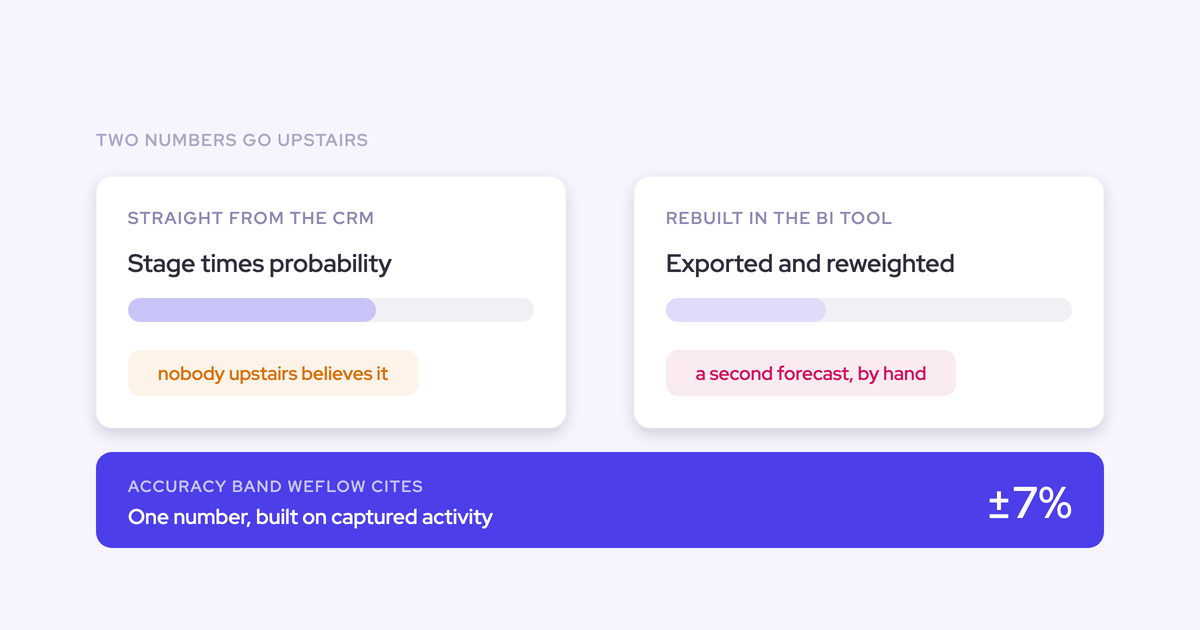

At some point finance stopped arguing with your forecast and just built its own. Someone exported the pipeline, applied their own weighting, and sent a second number upstairs. The uncomfortable part is that it's sometimes the more accurate of the two.
That instinct was correct. Finance wanted a number that owed nothing to rep optimism, and the sales system wasn't producing one, so they went and got it somewhere else. The mistake isn't the model. It's that the independent number now lives outside the system everyone works in, which means two forecasts run in parallel and nobody can say which is real.
So this isn't an argument for a better roll-up. It's a look at the four paths back to one number, and why the one that holds runs through the deal data underneath rather than the model on top, with an AI forecast prediction sitting next to the human call instead of in a separate spreadsheet.
Why finance rebuilds the sales forecast in a BI tool
Finance's parallel forecast is the rational endpoint of one unfixed problem, and it tends to arrive in the same order.
- Reps won't hand-log, so the fields the forecast reads are fiction: next step blank, close date pushed four times, last logged activity a meeting six weeks ago that half the team never logged at all.
- A forecast built on those fields is a mood, so leaders haircut it by gut, and the board number becomes two people's instincts stacked on each other.
- Finance sees the gap, exports the pipeline, applies its own weighting, and produces a number it trusts more.
- Two numbers now exist. The sales number gets ignored, and the sales org loses the authority to speak about its own business.
- The forecasting tool you already pay for isn't presentable to a CFO, so the worldwide consolidation gets rebuilt in Tableau or Power BI every cycle.
- Nobody ever fixed the data underneath. Every layer above it is a workaround for the same broken inputs.
Step five is the one that should sting, because it means the tool you bought to be the source of truth isn't the source of truth for the only forecast that matters. It costs somebody a week of every quarter.
We hear this a lot in our calls with prospects:
A lot of the business partners and RevOps are spending time trying to rebuild a forecasting dashboard based on the Salesforce data.
When RevOps quietly rebuilds the forecast off the raw CRM data, that's not a preference. That's a verdict on the tool.
What the finance model gets right, and where it breaks
Stop treating finance as the adversary here. Wanting a view that doesn't inherit rep optimism is exactly the right instinct, and any forecast process worth running has one built in.
The failure is structural, not motivational. Finance's model reads the same stale pipeline export sales reads, so it inherits the same inputs and adds a second system of record on top of them.
| What finance's model gets right | What it structurally can't fix |
|---|---|
| It produces a number independent of rep self-reporting | It reads the same pipeline export, so the inputs are identical and just as stale |
| It weights from history instead of from confidence | It can't see whether a deal is actually being worked, because activity and conversation data never reached the record |
| It's built by someone with no quota attached to the answer | It creates a parallel copy of the truth, so every leadership meeting starts with reconciliation instead of a decision |
| It arrives in a format the CFO and the board can read | It removes the pressure to fix the CRM, because a workaround already produces a number |
Winning the number back doesn't mean taking independence away from finance. It means moving that independence inside the system everyone works in, so the second opinion and the deals it's built on sit in the same place.
What it takes for one forecast to survive the CFO
Before you weigh any path, write the bar down. A number both the CFO and the CRO will be held to has to clear five tests:
- The inputs are verifiable. The forecast draws on what actually happened on the deal, the calls, emails and meetings, not on what a rep remembered to type.
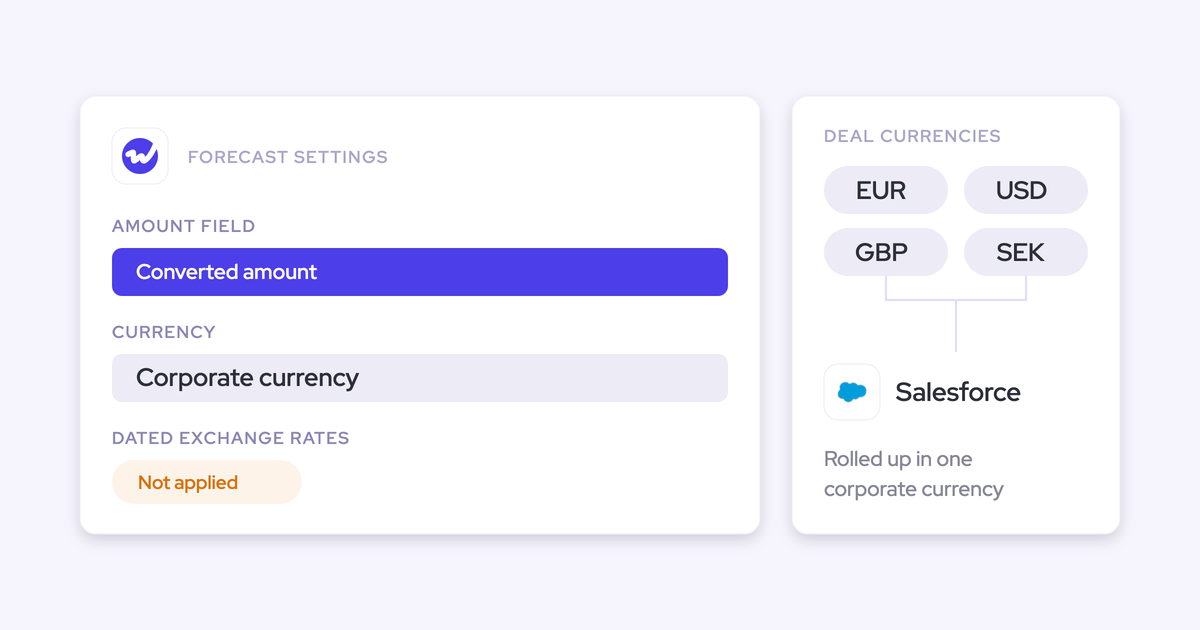
- There is one system of record. The data everyone argues about lives in Salesforce, owned by you, not in a vendor's cloud and not in a parallel finance workbook.
- An independent view sits next to the human call. Somebody in the room has a number that owes nothing to rep optimism, and the gap between the two is visible.
- Accuracy is a track record, not an anecdote. Every submission is stored against what actually closed, with variance per rep, per manager and per segment across consecutive quarters.
- It asks near-zero effort from reps. Every effort-based fix has already failed once at your company. Assume the next one fails too.
Take that list into any evaluation, including the ones where you buy nothing.
Four paths back to a single trusted sales forecast
Four paths are genuinely open to you right now, and each one fits somewhere real. The criteria above should decide, not instinct.
| Path | What it fixes | What it leaves broken | When it fits |
|---|---|---|---|
| Mandate rep discipline and a tighter forecast process | Cadence, stage definitions, commit criteria, the honesty norm in the forecast call | The fields stay as complete as reps have time to make them, which is not very | You have no weekly cadence, no locked snapshot and no deal review. Fix this first, always, and buy nothing until it runs |
| Replace the roll-up and reporting tool | Roll-up mechanics, submission history, prettier executive views | The inputs. A new model reading the same empty fields produces the same suspect number | Your deal data is genuinely clean and the tool itself is failing you on hierarchy, multi-forecast support or reliability |
| Let finance own the number permanently | Nothing, but it does give leadership one number to plan against | Sales never regains authority over its own pipeline, and the CRM stays untrusted forever | Honestly: as a stopgap while you fix something else. As a destination it's a slow surrender |
| Fix the deal data foundation and forecast on top of it | The inputs, the independent second opinion, and the accuracy track record | Board-grade presentation. You may still push the top-level consolidation into a reporting tool | Your fields are stale, reps won't maintain them, and leadership has stopped believing the number |
Most CROs reading this have already run paths one and two. The mandate produced a spike in field completion for six weeks. The new tool produced a nicer dashboard nobody trusted any more than the old one.
Path one is still worth doing, and it's free. If there's no weekly rhythm, no locked pipeline snapshot before the call and no defined deal review, a forecasting tool automates nothing, because nothing is running.
Do you actually have all the cadences set up already to actually do proper forecasting? How do you forecast today?
Janis Zech, CEO and Co-founder of Weflow
We ask that before showing anyone a product, because selling a forecast tool to a team with no forecast process is how a purchase ends up shelved in year one.
Why the fix is the data underneath, not the model
Once leadership stops believing the number, no roll-up and no prediction model wins it back, because the model was never what they stopped trusting. The inputs were.
This is also why forecast parity never decides a switch. A team running a mature forecast has years of accumulated configuration, and an honest evaluation of any replacement lands at roughly eighty percent of what they already have.
That buyer is telling you where the decision actually gets made. Not on the roll-up. On the layer the incumbent has nothing in.
Clari's roll-up mechanics and its process story are genuinely strong, which is why CROs who have to defend a number to a board like it. What sits underneath the roll-up is the gap: without reliable activity and conversation data on the deal, deal health can't be assessed, and the forecast is a well-organized opinion rather than an evidenced one.
We have so many customers that come to us and say, oh, we need to improve our forecasting. We need to improve our forecast accuracy. And, you know, then you peel back the onion and you see that data is missing, visibility is missing, understanding of what's going on is missing. And so it's not about then creating a roll up forecast or something. It's really fixing the root cause from a first principles perspective.
Janis Zech, CEO and Co-founder of Weflow
The thing finance's spreadsheet can't do is the same thing a new roll-up can't do: make the deal record reflect what actually happened. That's the only work that changes the number's credibility.
How Weflow puts an independent forecast inside Salesforce
Weflow is the Revenue AI Orchestration platform for sales, customer success, and RevOps teams, built for teams that run on Salesforce. For this problem the relevant part is the order it works in: capture first, forecast second, accuracy tracked on top.
Deal data captured from calls, emails, and meetings
Weflow captures emails, meetings and contacts automatically and writes them into native Salesforce objects, so the fields the forecast reads stop depending on a rep finding twenty minutes on a Friday.
Weflow Conversation Intelligence then extracts structured data from the conversation itself and writes it to the Salesforce fields you already track against, including picklists, dates and numbers rather than only free text. Your qualification fields fill from what was said, not from what somebody typed.
All of it lands in your Salesforce, owned by you, readable by your own reports and automations. That's what gives you one system of record to defend instead of a second copy for finance to maintain.
It's no longer third-party hearsay from reps or sales leaders. It's now proof in front of us – AI summaries that tell us we're not talking to the economic buyer, that we're single-threaded, whatever it might be.
Scott Jones, SVP of GTM Revenue Intelligence & Enablement at KORE Wireless
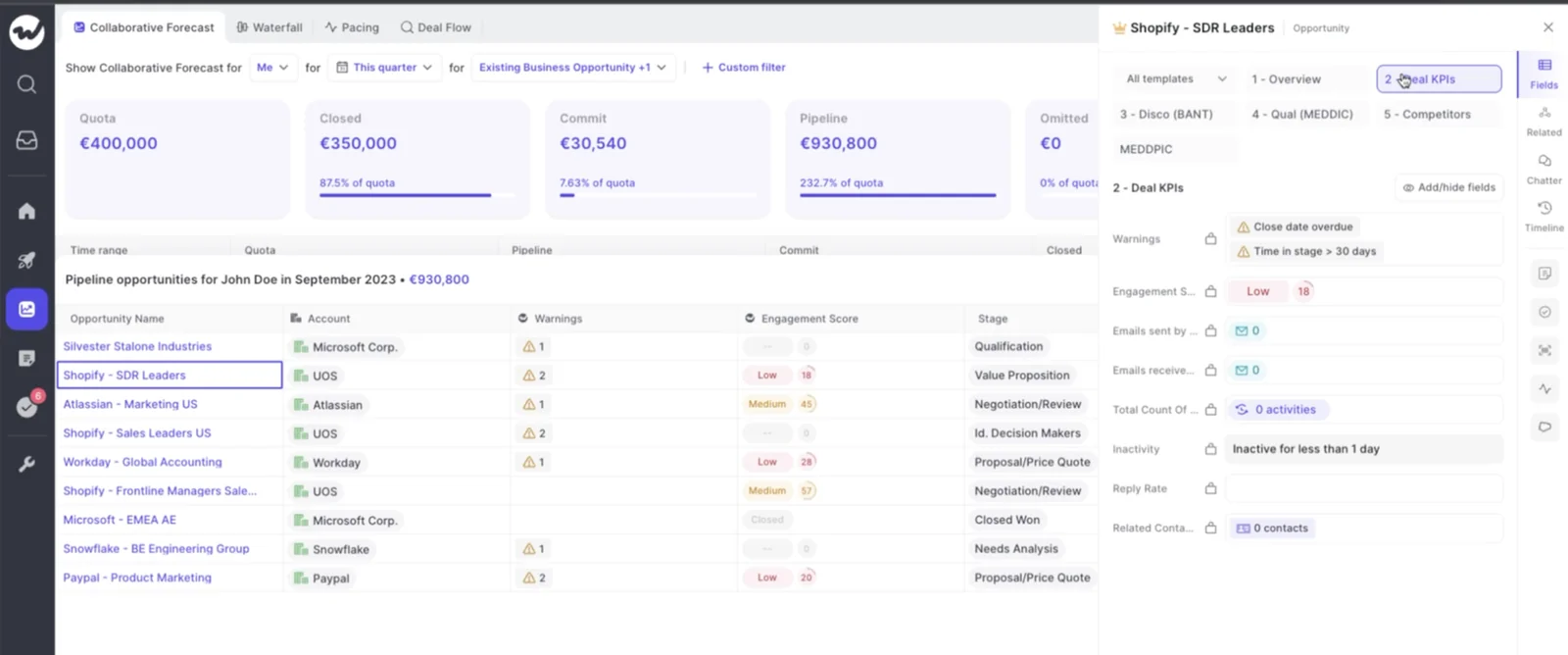
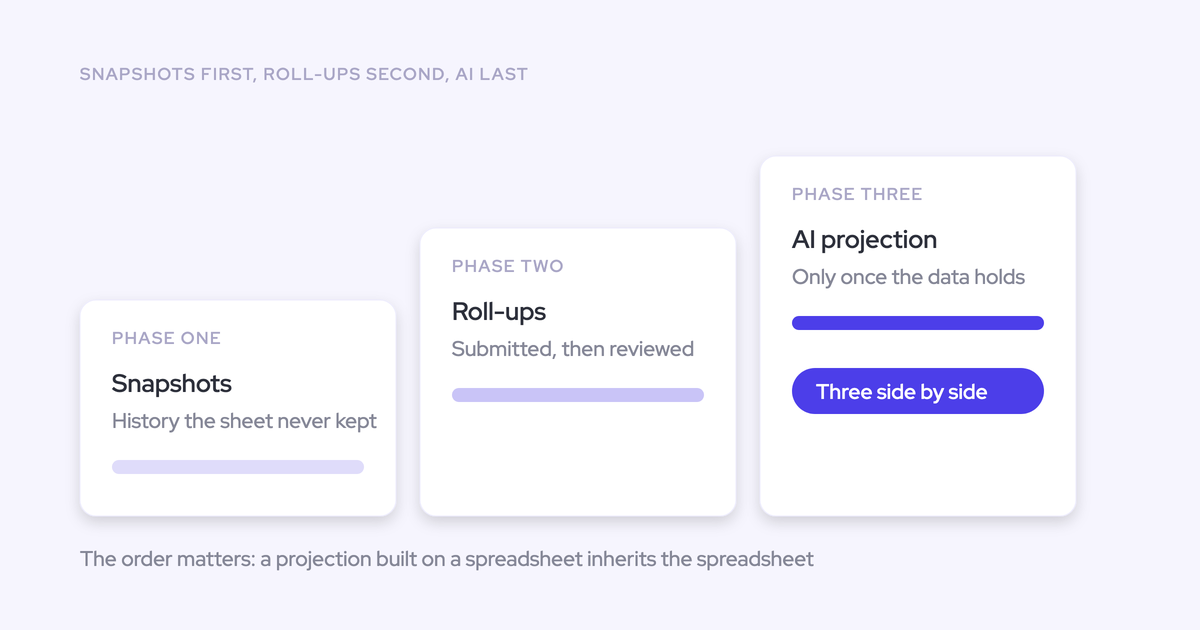
Weighted, roll-up, and AI forecasts run side by side
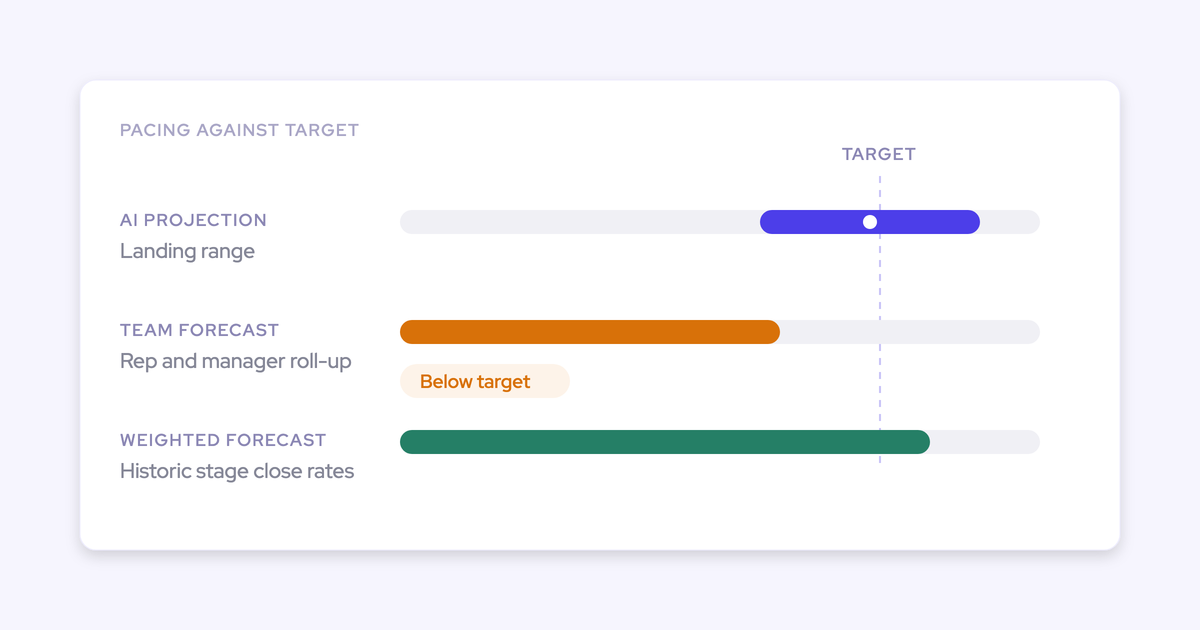
Weflow runs three forecast methods in parallel, which is how you get the independent second opinion inside the sales system instead of outside it.
| Method | What it reads | The question it answers |
|---|---|---|
| Weighted forecast | Historic stage conversion rates from recent months | What does the pipeline mathematically support? |
| Rep and manager roll-up | What the people closest to the deals submit each week | What does the team believe will close? |
| AI prediction | More than fifty deal-level signals and up to two years of history, scored deal by deal | What does deal behavior predict, as a landing corridor rather than one number? |
The AI prediction isn't stage probability wearing a new hat. It reads deal behavior: communication cadence, whether a next meeting is booked, rep performance, seasonality, whether the deal is healthy against your methodology. A large deal being worked badly gets projected down.
Where the three converge, you have a credible range. Where they diverge, you have the agenda for the forecast call. That gap is the conversation finance had to leave the system to have.
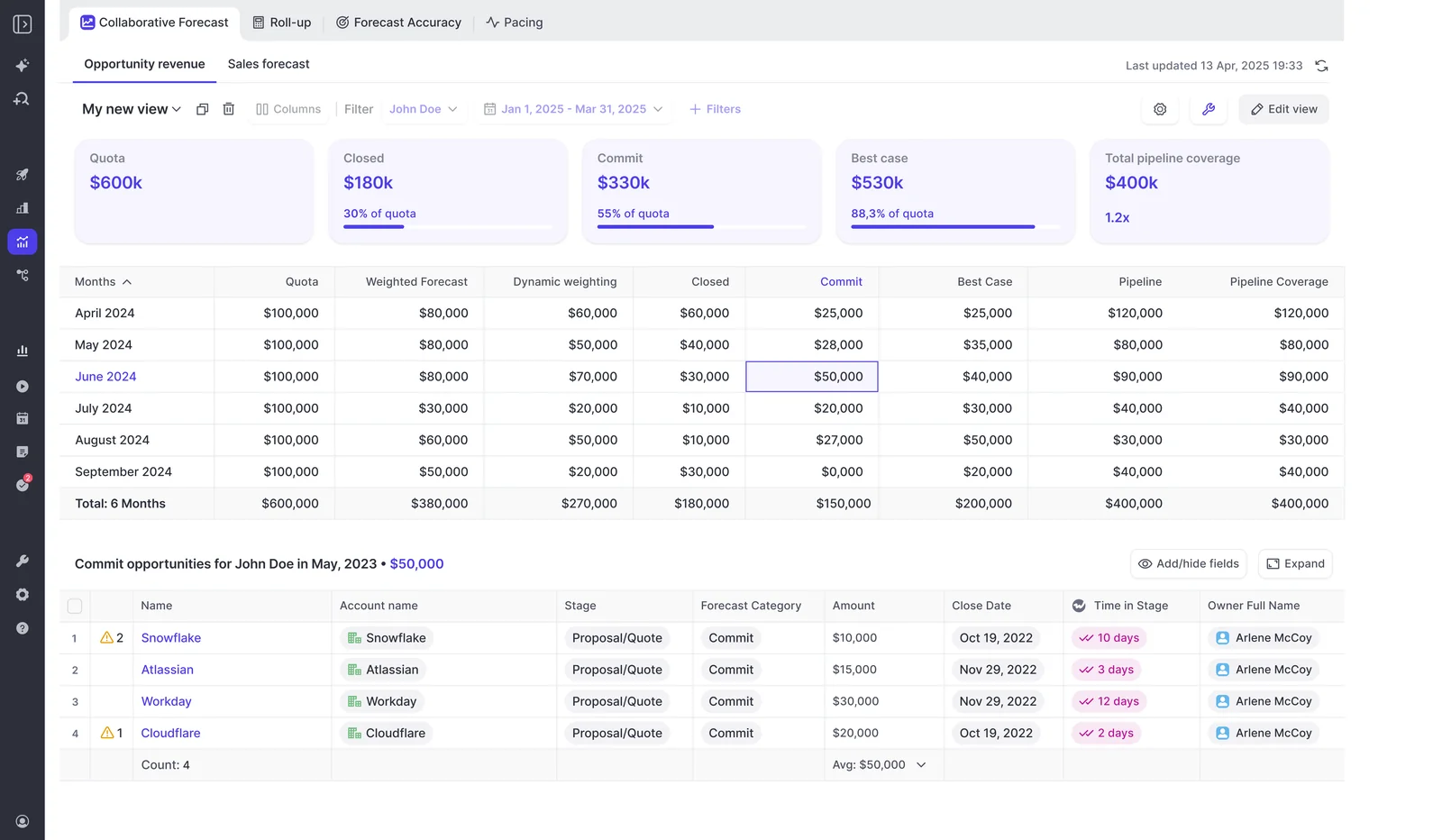
Forecast accuracy tracked against every closed quarter
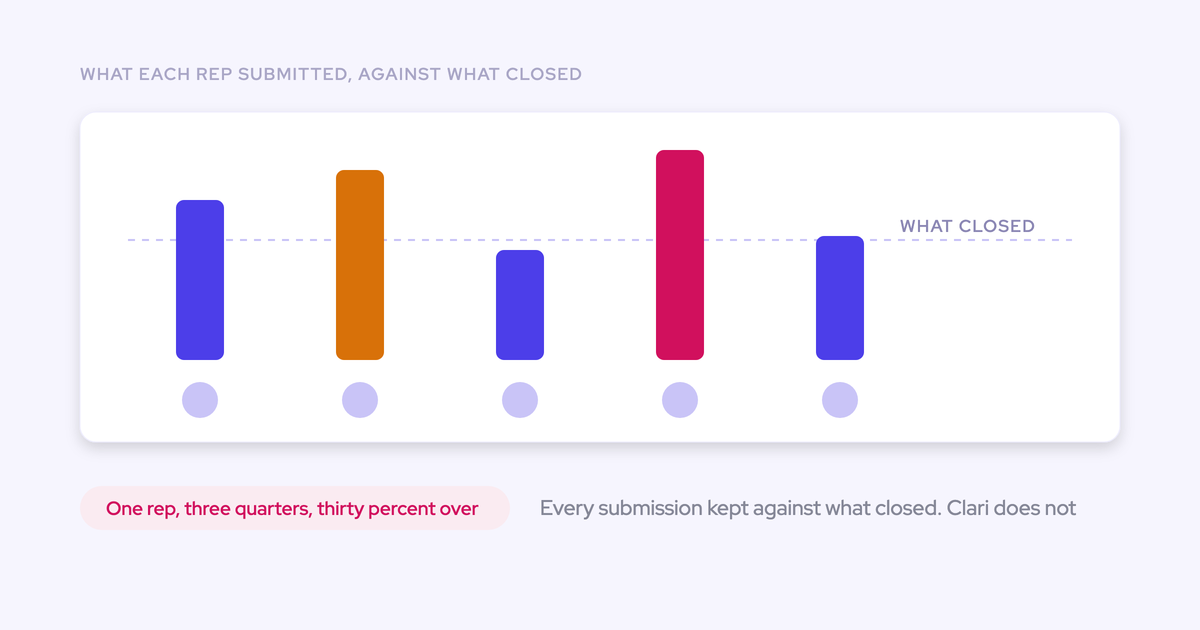
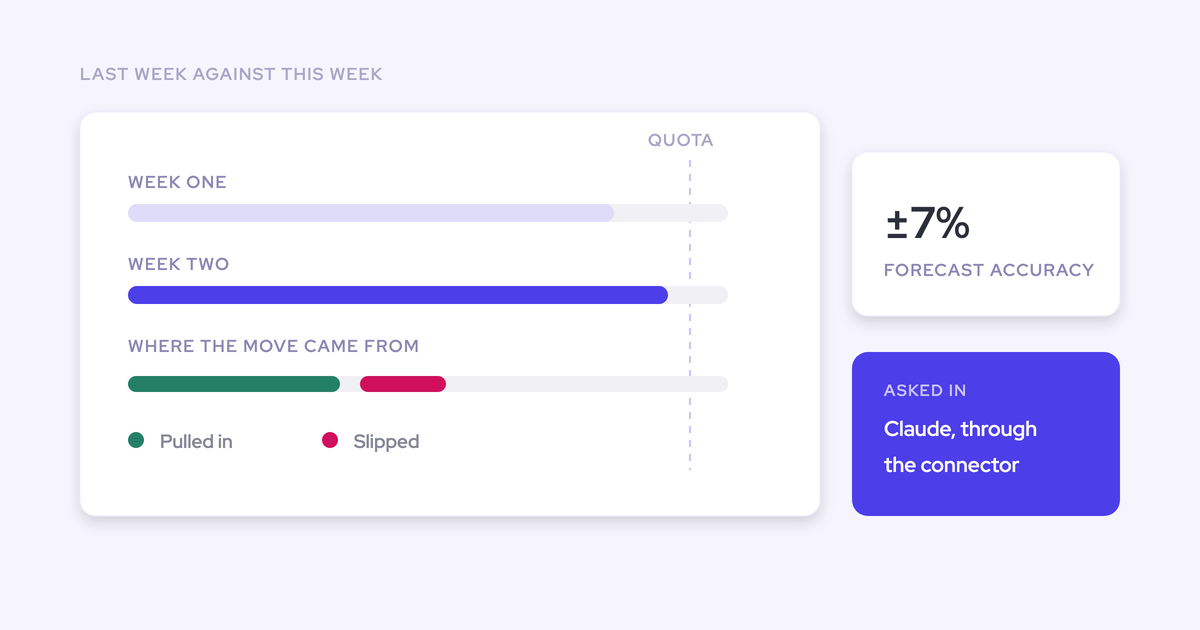
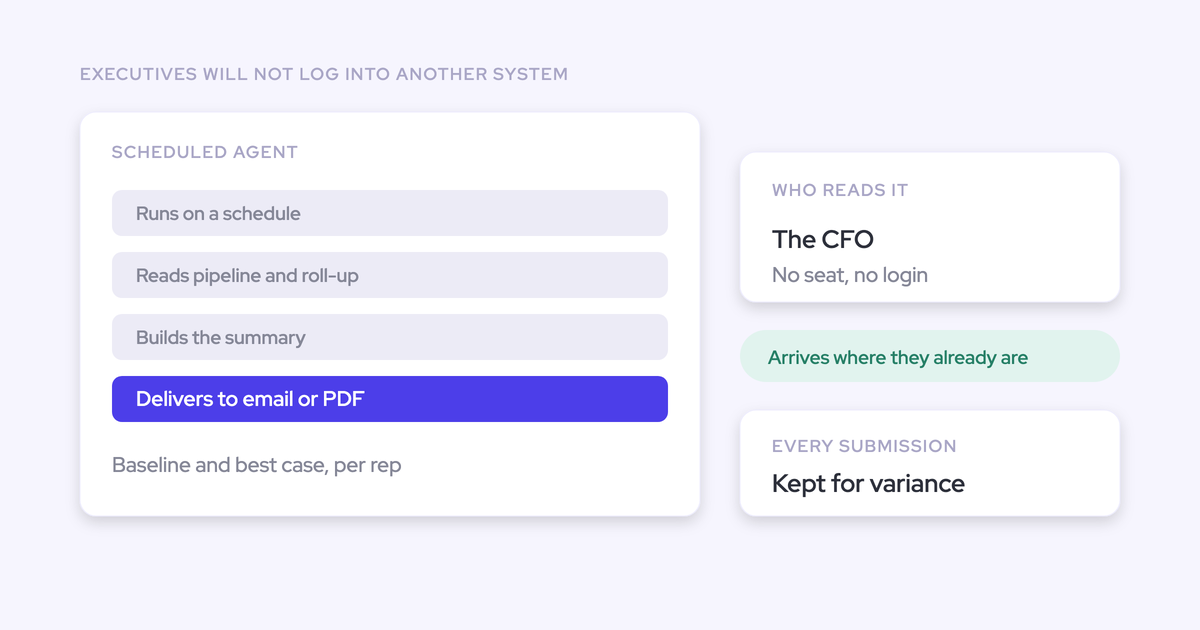
Weflow stores every forecast submission against the final closed amount, which turns accuracy into variance reporting per rep, per manager and by segment across consecutive quarters.
That's the part that ends the argument. Today a rep can miss by thirty percent three quarters running and it shows up nowhere a manager can act on.
Take the snapshot early, in week three or four of the quarter. A commit given in the final days is a report, not a prediction, and it proves nothing to a CFO.
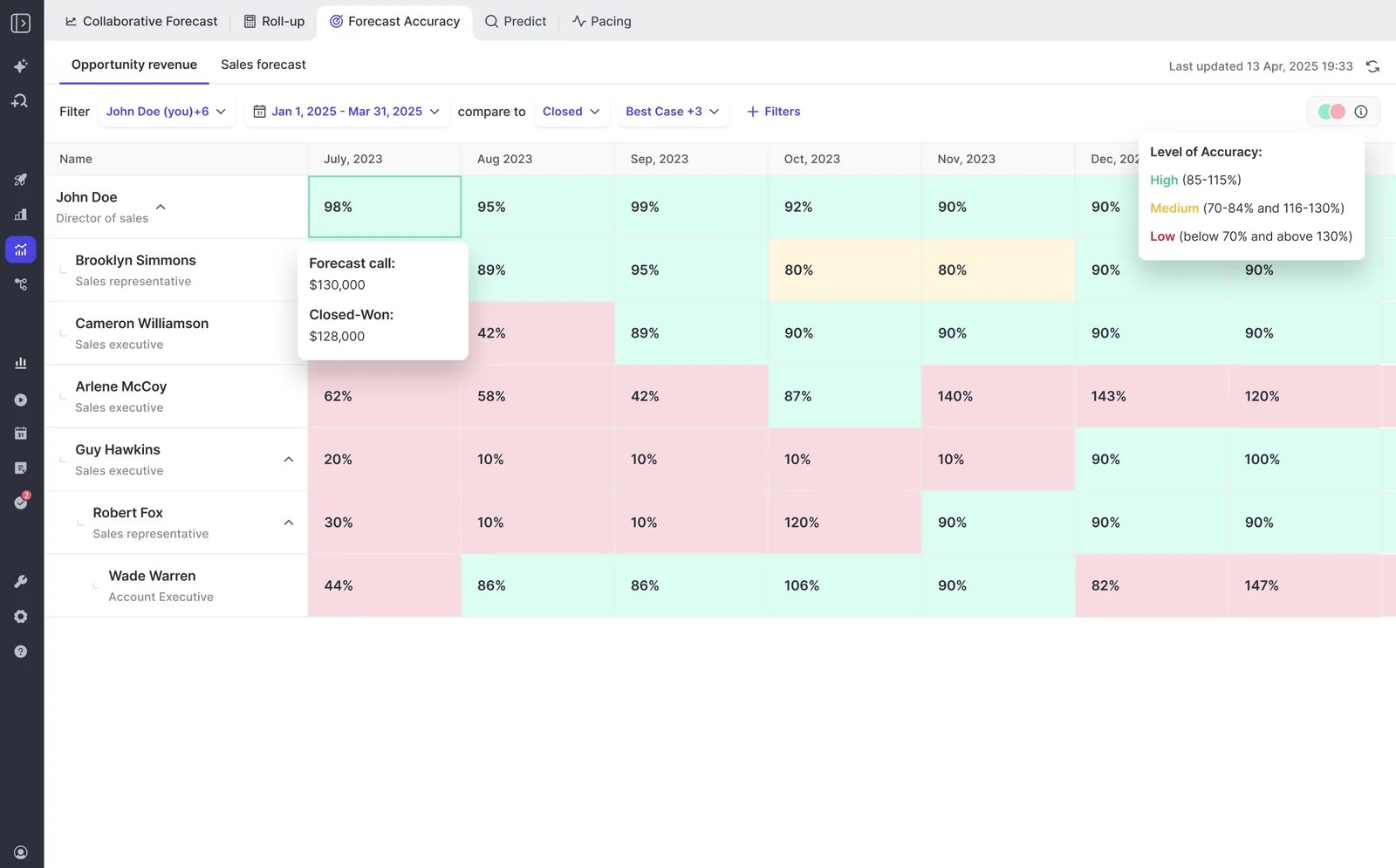
Zeotap forecasts within roughly seven percent using this process.
Weflow helps us create predictability, accountability, and accuracy. Quarter after quarter.
Chris MacKinnon, VP Revenue Operations at Zeotap
Where Weflow stops: BI reporting and the board deck
Weflow won't be your board deck by itself, and you should know exactly where the line sits before you shortlist anything.
- Weflow is not a BI tool and not an FP&A tool. No revenue recognition, no multi-entity consolidation. Salesforce stays the system of record.
- Forecast submissions, targets and roll-up data live in the Weflow application, not as Salesforce fields. Everything else Weflow produces is written back into Salesforce objects, but the forecast layer sits on top of the pipeline rather than adding forecast fields to your CRM.
- Teams that snapshot forecasts into a BI tool pull the roll-up out through the public API rather than reading it from Salesforce.
- Deal warnings and AI Playbook scores are Weflow fields too, so they don't appear in a Salesforce dashboard or a Power BI report unless you build an agent that writes the assessment into a Salesforce field you create.
- If your deal data is already clean and the only gap is presentation, Weflow is not your fix. Buy a reporting layer and keep your forecasting tool.
Weflow earns its place by fixing the data underneath the number, which is where this problem actually sits for most teams. If that's not your problem, say so early and save yourself an evaluation.
Rolling out the data-first path without another stalled tool
The technical work is small. A Salesforce admin and a mail admin get the integration live in thirty to forty-five minutes, and workspace configuration takes about an hour. What stretches an implementation is internal alignment, and what kills one is nobody owning it.
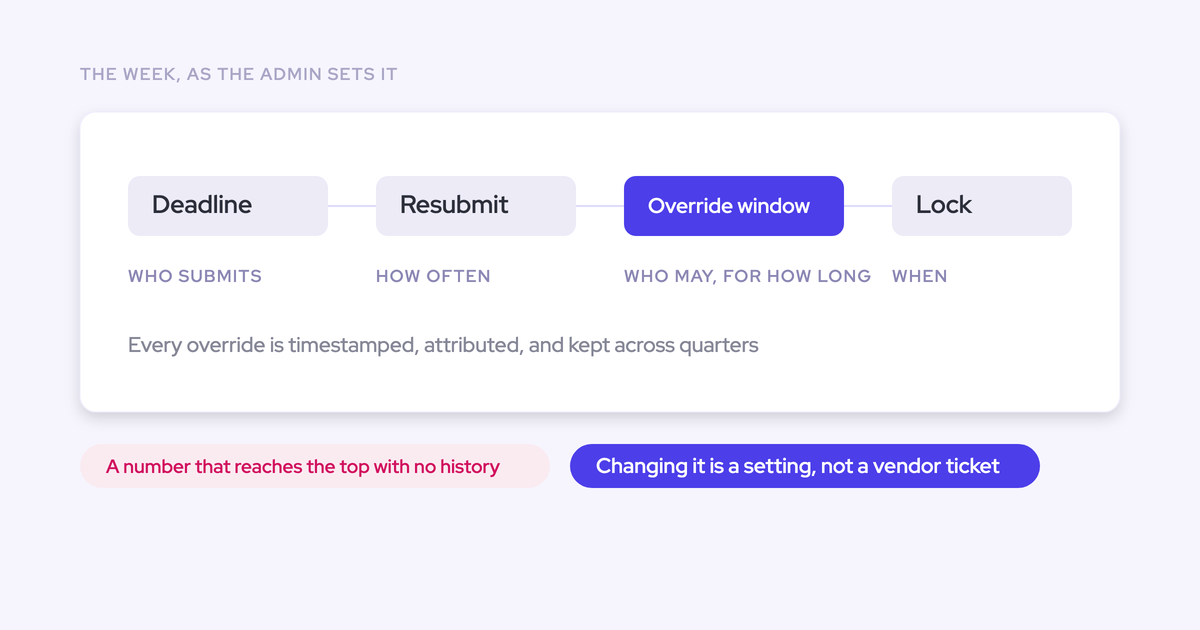
- Confirm the cadence exists before you buy anything. A fixed day for pipeline updates, deal reviews, submission and the forecast call. If that isn't running, the tool has nothing to automate.
- Name the business owner on day one. The most common reason a forecasting tool ends up unused is that nobody owned the rollout, not that the product was wrong.
- Land Activity & Contact Capture and Conversation Intelligence first. These ask nothing of reps and make their day easier, so adoption isn't a fight, and they're the layer the forecast will read.
- Fix your definitions while the data fills. One definition of a qualified opportunity, written stage entry and exit criteria, forecast categories tied to stages rather than to opinion.
- Turn on pipeline and forecasting once capture has stuck. Each wave gets its own short training and a follow-up slot for the questions it creates.
- Let a full cycle run before you judge the number. Then measure accuracy from a week-three or week-four snapshot, publish it, and celebrate the teams that call it right.
Do that and forecast accuracy stops being a debate about whose report is correct and becomes a number you can show the board a trend on.
Forecasting is just the end result. If you become very good at accurate forecasting, that means you have become good as an organization at building a good team and helping them become good sellers with the product that you are trying to sell.
Philipp Stelzer, CPO and Co-founder of Weflow
Free: The Ultimate Sales Forecasting Guide
FAQ: closing the sales and finance forecast gap
Does this replace Clari or run alongside it?
Both motions are real, and coexistence is often the smarter first move. Clari reads activities from Salesforce, so running Weflow Activity & Contact Capture underneath makes Clari's forecast better without touching the contract.
The one thing not to do is run two activity capture engines at once, because you'll get duplicate activities and blame the new tool for it.
Full replacement usually happens at renewal, and it's an honest conversation: a mature Clari configuration is years of accumulated setup, and a replacement typically covers about eighty percent of it on day one. What you gain is the capture and conversation layer the incumbent doesn't have.
Will finance accept a forecast produced in the sales system?
Finance was never after independence of department. They were after independence of method, and they left the system to get it because nothing inside it offered one.
Give them two things and they come back: inputs they can verify against real activity on the deal, and a variance track record showing how close each submission landed over consecutive quarters.
The practice that seals it is having finance submit their own number alongside the sales teams each quarter, locked in week four, scored against actuals. It turns the parallel model into a participant rather than a rival.
Can forecast accuracy be proven in a trial?
No, not in two weeks. The instance has to be configured and a roll-up motion has to run for a cycle before anyone can judge the number.
That's what Weflow's three-month paid pilot is for. It's contractually the first three months of a multi-year agreement with an opt-out at the end, so you get a real exit and a small bill instead of an unpaid proof of concept nobody in procurement wants to sign off after a long evaluation.
Do we start with activity capture or buy everything at once?
Start with capture. Reps get value immediately without changing anything they do, the forecast layer needs that data to be worth running, and it's the wave that decides whether the rollout succeeds.
Weflow Deal Intelligence & Forecasting doesn't work in isolation. Standalone forecasting without Activity & Contact Capture and Conversation Intelligence underneath produces weaker roll-up results, which is the whole argument of this article applied to our own product.
How much does Weflow forecasting cost?
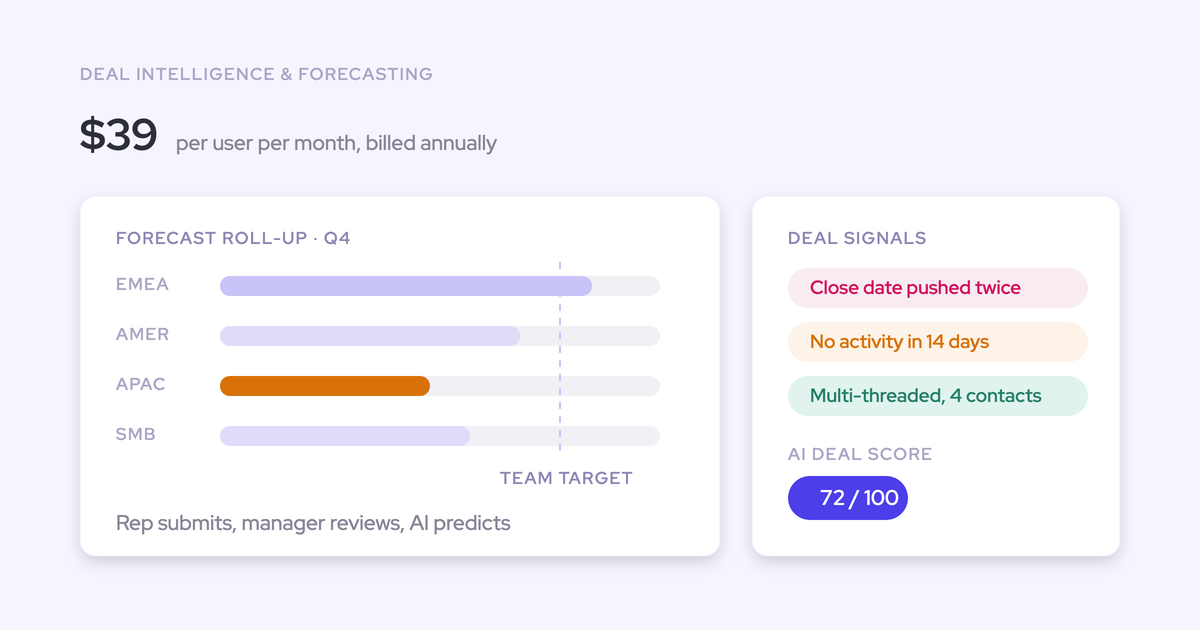
Weflow publishes its pricing rather than gating it behind a demo. Standalone: Activity & Contact Capture $19 per user per month, Conversation Intelligence $39, Deal Intelligence & Forecasting $39.
Bundles: Revenue AI Foundation $49 (capture plus conversation intelligence), Revenue AI Business $59 (adds deal intelligence), Revenue AI Enterprise $79 (adds forecasting). All annual, minimum ten users, with unlimited view-only licenses included.
The practical point for a CRO blocked by an incumbent renewal: expanding from Foundation into forecasting is a bundle change, not a second procurement cycle and a second six-figure contract.
How much new work does this create for reps?
Capture runs server-side, so emails, meetings and contacts land in Salesforce with no rep action, and recordings are summarized and written back automatically. Reps keep working in Salesforce, and Weflow views sit on the record page there.
The one real ask is the forecast submission itself, which is a weekly action for reps and managers and lives in the Weflow layer. If your rule is that reps open exactly one system and it's Salesforce, run the weighted forecast and the AI prediction instead. Both work off CRM data with no rep input at all.