When a Conversation Intelligence Renewal Is the Right Moment to Switch Vendors
Decide if a conversation intelligence renewal is the right time to switch vendors or consolidate tools.


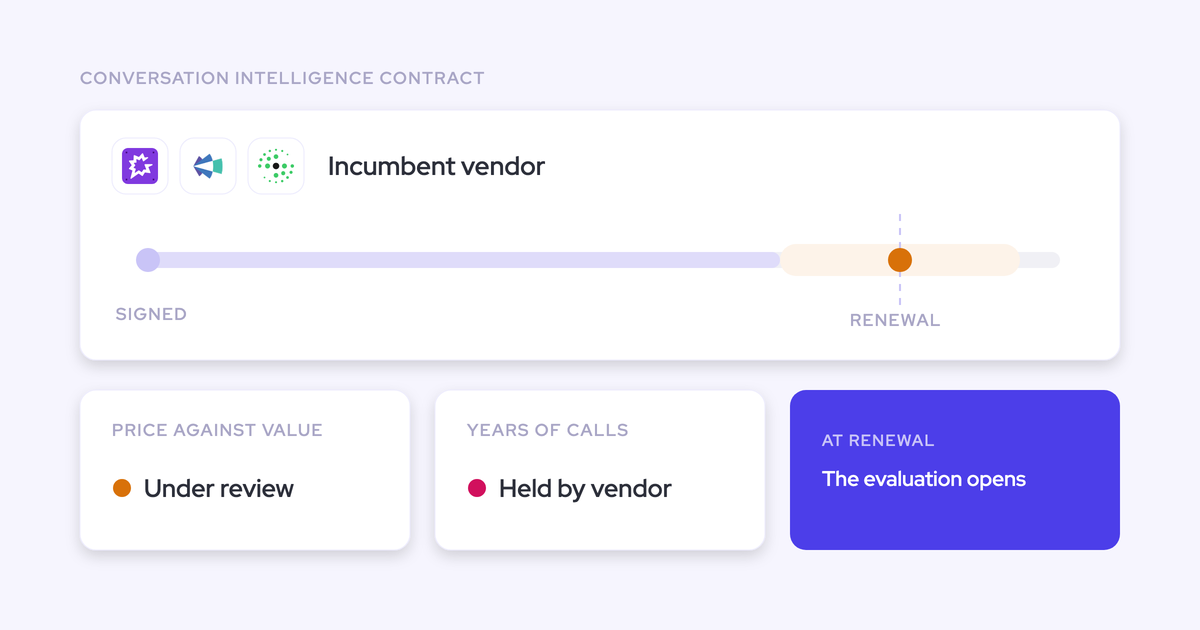

A conversation intelligence renewal is the right moment to switch vendors only when three things hold:
- You can show the gap between what you pay and what the tool actually produced.
- Your call archive, and every team that reads it, can come with you.
- Your calendar fits a switch that someone else runs.
If any one of the three fails, renew, negotiate hard, and set up the next window.
Most teams get the first test right and underestimate the second. The real cost of leaving isn't the new license. It's the years of calls sitting in the vendor's system, and the habits marketing, sales and CS have built on top of them.
Whoever owns that history decides whether you pay the same exit cost again next time. When your calls turn into deal fields in your own Salesforce, the way they do with AI-powered deal execution in Salesforce, the next renewal stays a real choice instead of a default.
Why the contract end date is your cheapest exit
The contract end date is the only moment you can undo years of switching costs without paying for two tools. Any other time, you're either buying out a contract or running two systems while finance watches.
Those switching costs grow every year, and nobody decides they should. Conversation intelligence was priced back when transcription was hard. Seats then grew with headcount, while depth of use stayed where it was.
Meanwhile, other teams quietly build on the archive. Marketing, CS and enablement each find their own way into the transcripts. Some companies even change their meeting platform to fit the recorder. Each of those decisions makes the next renewal harder to walk away from.
A renewal isn't the only thing that opens the window. Anything that forces effort on you anyway does the same job, because you spend the effort of moving either way:
- The renewal date itself. Several renewals often land together at year end, which turns into "pick in Q3, implement in Q4."
- A forced product change. Salesloft is replacing Salesloft Conversations with Clari Copilot, so existing Conversations customers face a migration either way.
- Support decay after a merger. When the account manager who knew your instance leaves and support slows to a queue, usage decays and the tool gets harder to defend.
Renewal talks start earlier than most people expect. One RevOps leader described the timing to us like this:
"Our company uses Gong. So we have a renewal coming up end of this year. I think my renewal conversations with them will probably start this month because I need to have a final decision by October."
Run these three tests before your conversation intelligence renewal call
Run all three before the vendor's renewal conversation starts. Once their deck is on the table, you're reacting to their numbers instead of yours.
Can you show what the spend produced, by seat and module?
You can, if you pull the usage data yourself before the renewal meeting. A renewal turns into a real evaluation when you can show that adoption depth lags behind seat count and price.
This is usually the easy test to pass. The pattern we see on calls is consistent:
- One 80-seat company on Gong Engage and Gong Professional left 70 to 80 percent of the functionality unused.
- At a Clari account, license usage sat at about 8%.
Neither team had a broken tool. They had a tool nobody had configured past recording, because there was no owner to do it.
Pull these before the call:
- Seats assigned versus seats active. Count who logged in and did something in the last quarter.
- Modules used. Separate recording from field updates, deal boards, coaching and forecasting. List the modules nobody opens.
- Seats per application. Gong counts a seat per application, so one person who needs deal functionality uses a Foundation seat and a Forecast Essentials seat.
- AI credit exposure. Gong now meters AI usage with credits on top of the seat price, and AI Tracker configuration drives most of the consumption. Price what next year looks like if adoption actually grows.
Pass if you can put a number on the gap between price and use. Fail if the team uses most of what you pay for and the price is close to the alternatives.
Can your call archive, and every team reading it, come with you?
Only if the history moves into a place you own and every team keeps a way to read it. This is the test that decides most switches, because the switch is priced by the history you'd lose and the teams you'd disrupt, not by the new license.
Start with what Gong lets you take today. Gong can export meetings, calls and emails to Salesforce as tasks or events once an admin turns the export on. But there are three gaps:
- It only exports activity with an external participant who matches a Salesforce contact or lead.
- It only exports emails from the day the export was switched on.
- It doesn't export call transcripts at all.
So the most valuable part of your archive lives only in Gong. And calls your team saved to the Gong library sit outside Gong's three-year retention policy, kept indefinitely.
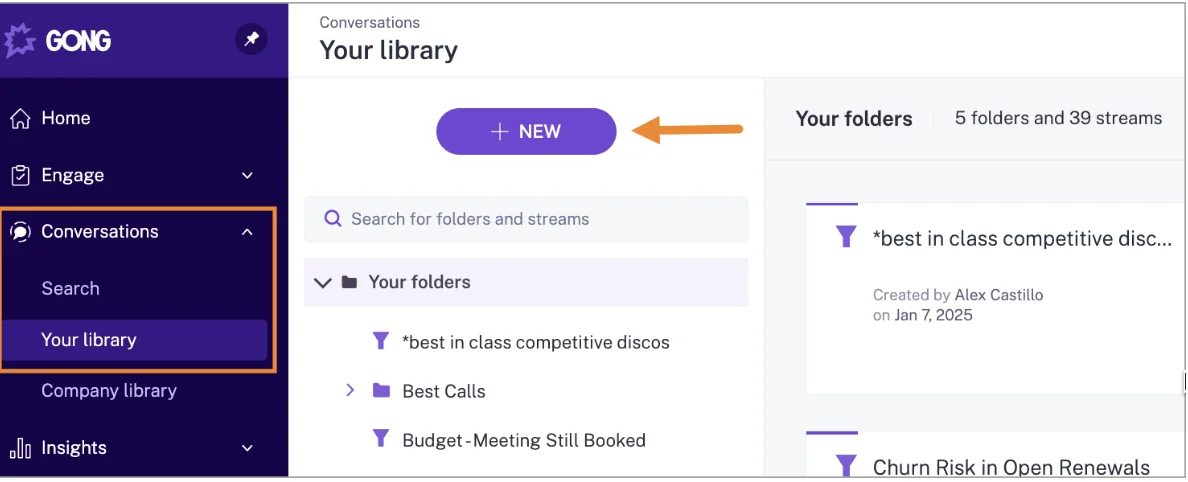
Then map who reads the archive. The tool rarely belongs to sales alone.
| What sits in the vendor's system | Who depends on it |
|---|---|
| Call transcripts and their metadata (who joined, when, which deal) | Sales for next steps, CS for feature requests and renewal signals, marketing for why leads came in |
| The link between each call and its account or opportunity | Win-loss and closed-lost analysis, deal reviews |
| Calls saved to the library | Enablement and onboarding programs |
| Video and clip playlists | Objection-handling and best-practice libraries for new reps |
| Trackers and scorecards | Competitive and keyword reporting, coaching |
| Emails from before export was on, and activity with no matching contact or lead | Anyone reporting on activity in Salesforce |
Prioritize as you map. Transcripts and their metadata carry everything summaries, field updates and search are built from. Video matters mainly for clip libraries.
Pass if transcripts, metadata and the call-to-deal links can move into a system you own, and each team in the table keeps an access path. Fail if the history can only move into another vendor's system, or a team you depend on loses its way in.
Does your calendar fit a switch that someone else runs?
Only if a vendor runs the switch inside your window, with a fixed timeline, a named benefit and a price. A switch competes with your RevOps delivery backlog, not with the incumbent. Anything that needs RevOps to project-manage it loses.
The sales calendar adds a second constraint. Peak quarters are off limits:
"We can't make any changes to the sales guys process in Q3 because our Q3 is by far the most important quarter of the year. So I sort of have to leave the sales guys alone. But in Q4 I would like to test out a solution with a subset of users."
Count back from the contract end date:
- Contract end date. The new tool is live and the old one switches off. Finance won't pay for two tools at once, so plan for no overlap or a short one finance has already approved.
- Rollout start. Early enough to finish before the end date, and outside your peak quarter.
- Trial. Two or three vendors, the same use case run through each, on your own Salesforce data.
- Decision date. Before your notice period closes and the auto-renewal clause decides for you.
- Renewal talks open. Roughly a quarter before the decision date.
Pass if every date lands outside your peak quarter and a vendor owns the work. Fail if the plan needs RevOps hours you don't have, or the rollout collides with the quarter sales can't afford to lose.
When each renewal path fits, and when it doesn't
Each of the four paths is right for a specific set of test results. None of them is the default.
Renew and negotiate harder when the team genuinely uses the tool
If the tool is used, well integrated, and the price gap is small, renew. Then use the renewal to get better terms.
Gong earned its place in a lot of stacks. It invented the category and has the deepest conversation analytics. Its compliance set is strong and complete. It can summarize methodology across every call on an account, and reps love its deal boards. If your team lives in those features, a switch takes away something they use every day.
Fits when:
- Test 1 fails: adoption is broad and deep.
- Reps and managers rely on account-level methodology summaries or deal boards.
- Other teams have integrations you can't afford to rebuild this year.
Doesn't fit when:
- You can show most seats use recording and little else.
- The AI credit line is growing faster than the value you can point to.
Your bargaining power at renewal is real:
- Bring planned hires into the renewal. Gong provides matching seats at no extra cost for headcount added as part of the renewal. Seats added after the renewal get paid for separately, across every application each seat needs.
- Negotiate the AI credit terms. Ask for credits bundled into the seat price or capped. Unpublish trackers that no longer earn their keep, since trackers drive most credit consumption.
- Drop the modules nobody opens. Your adoption data from test 1 is the case for it.
- Bring a published price. A competitor's public rate card is a cleaner anchor than a verbal quote.
First move: send the vendor your adoption-by-module numbers before they send you their renewal proposal.
Switch at contract end when all three tests pass
Switch when the value gap is provable, the archive moves intact into a place you own, and the calendar fits a managed rollout. That combination is rarer than vendor marketing suggests, which is why it's worth acting on when you have it.
Fits when:
- You can show the price-to-use gap in a number.
- Transcripts, metadata and call-to-deal links move into your own system, and every team keeps access.
- The vendor runs the rollout inside your window, outside peak quarter.
Doesn't fit when:
- The history can only move into another vendor's cloud. You'd be resetting the same lock-in for the next renewal.
- The plan depends on RevOps hours you don't have.
The mechanics of moving the archive deserve their own plan, so this article stays on the decision.
First move: book trials with two or three vendors on your own Salesforce data, running the same use case through each.
Consolidate tools when you're paying twice for overlapping jobs
Consolidation wins when it removes two tools. It fails when your conversation intelligence is bundled with sequencing or dialing, because replacing it means removing one tool to add two.
The overlap is often bigger than teams realize. A common example: thirty sales engagement seats where only five people run sequences. The other twenty-five are full-price licenses used for activity capture.
The bundled case is the hard one.
What usually happens is that the two halves get split in time. The easier half goes first.
Watch for one more trap. Buying from one vendor doesn't mean the products share data. Products assembled through acquisition often don't, and you end up rebuilding the join in a BI tool. Ask which Salesforce object each product writes to, and whether one can filter on a field the other produced.
Fits when:
- You pay for separate capture, call recording and forecasting tools doing overlapping jobs.
- Your sales engagement seats mostly do capture.
- Your conversation intelligence isn't bundled with sequencing or dialing.
Doesn't fit when:
- One contract covers conversation intelligence plus sequencing or dialing, and the replacement doesn't do both.
- The consolidated option's extra modules are weak, which just moves the sprawl inside one contract.
First move: list every tool that writes activity or call data to Salesforce, with its renewal date, and see which two can go in the same window.
Defer the switch and start where the renewal doesn't block you
If a test fails, land on a capability outside the blocked contract now, and set up the next window. "Not this renewal" is a credible answer when there's a plan behind it.
The usual blocker is finance.
Politics block switches too. Where a private equity owner has standardized a tool across its portfolio, replacing it isn't a decision your company makes. The realistic path is to coexist with it and improve the data it reads.
Fits when:
- The CFO won't fund a duplicate tool.
- A sponsor or executive has standardized the incumbent.
- The archive test or the calendar test fails this year.
Doesn't fit when:
- All three tests pass. Deferring then just buys another year of the same gap.
Activity capture is the natural landing spot, because it sits outside most conversation intelligence contracts and makes everyone's data better, including the incumbent's.
First move: put the next decision date in the calendar now, a quarter before the next notice period, and start tracking adoption by module from today.
Our recommendation: switch only when all three tests hold
| What your tests show | Path | First move |
|---|---|---|
| Price gap provable, archive portable, calendar fits | Switch at contract end | Run trials on your own Salesforce data |
| Price gap provable, archive portable, calendar doesn't fit | Renew, then switch at the next window | Land on activity capture now, set the next decision date |
| Price gap provable, archive not portable, calendar fits | Renew and negotiate | Find a destination that takes the archive into your own Salesforce |
| No provable price gap: the team uses the tool | Renew and negotiate harder | Bring planned hires and AI credit terms into the renewal |
| Price gap provable, CI bundled with sequencing or dialing | Consolidate in two steps | Replace the easier half first and keep the rest |
| CFO blocks overlap, or a sponsor standardized the incumbent | Defer | Start on a capability outside the blocked contract |
The archive test outweighs the price test. A cheaper tool that holds your call history in its own system just resets the lock-in for the next renewal. You save on the license this year and pay the exit cost again at a later renewal, with a bigger archive.
So switch when all three tests pass, and only then. If they don't, renew with better terms and use the year to make the next window clean: track adoption, map who reads the archive, and land somewhere your data stays in your Salesforce.
How to build a switch case your CFO and reps accept
Your case has to give two audiences a defensible reason to leave a safe brand: finance and the reps.
Bring finance one price, one timeline and no overlap
Finance approves a managed switch with a fixed timeline, a named benefit and a price. It doesn't approve two tools at once or an AI line with no ceiling.
You also have to beat the safety of the brand. Our own Head of Sales bought Gong twice before joining us, and he's honest about why:
"I wasn't going to get fired for buying Gong. It wasn't going to happen, right? So it was a very safe choice."
— Chris Nethercote, Head of Sales at Weflow, former Gong enterprise customer
You counter safety with evidence: what the current spend produces, and what you'd own afterwards. Your one-page case should hold:
- Adoption data from test 1: seats active versus assigned, and modules unused.
- One annual price for the replacement, with no open-ended AI line.
- A fixed timeline that ends on the contract end date, with zero or approved overlap.
- A named benefit finance can check later, such as methodology fields filled in Salesforce.
- Who does the work: the vendor, not your RevOps team.
- Data ownership: call history stays in your Salesforce, so the next renewal isn't another lock-in.
Win the reps over with a phased rollout and peer proof
Reps who like the incumbent need two things: to see the features they rely on, and to hear how teams their size moved. Turning everything on at once loses them, so roll out in phases:
- Activity capture. It asks nothing of reps and fills their records.
- Conversation intelligence. Recording, summaries and field updates replace what they used before.
- Coaching. Scorecards come once recording has stuck.
- Deal intelligence. Pipeline views and deal warnings follow.
- Forecasting. The roll-up comes last.
Give each wave its own short training session and a follow-up slot for the questions it creates.
Peer proof does the rest. RevOps decides on cost, sync and data, but the reps decide whether it sticks.
Ask every vendor on your shortlist for that story from a customer your size.
How Weflow keeps your call history yours, this renewal and next
Weflow is the Revenue AI Orchestration platform for sales, customer success, and RevOps teams. We built it for Salesforce teams, and everything it captures from your calls lands in your own Salesforce. It stays there after any future renewal, including one where you leave us.
That removes the exit cost that keeps teams on a tool they've outgrown.
Weflow brings your Gong, Chorus or Jiminny history into Salesforce
Weflow imports your existing recordings with an API key from your current provider. We run the import on our end, so there's no manual export or file upload. If you don't have API access, a raw file export can work, and our team evaluates it first.
Each recording gets re-linked to the right account, opportunity or contact. If your provider's API holds the Salesforce association, we use it. If it doesn't, we run our own lookup to match the recording to the right record.
Imported calls get reprocessed, not just stored. Here's what comes across:
- Recordings, transcripts and metadata. We reuse transcripts where we can and retranscribe where we can't.
- The call-to-deal link, so win-loss analysis works on old calls the same way it works on new ones.
- Searchable, scoreable history, at libraries in the thousands of recordings.
- Your existing tracker set, so keyword reporting doesn't restart from zero.
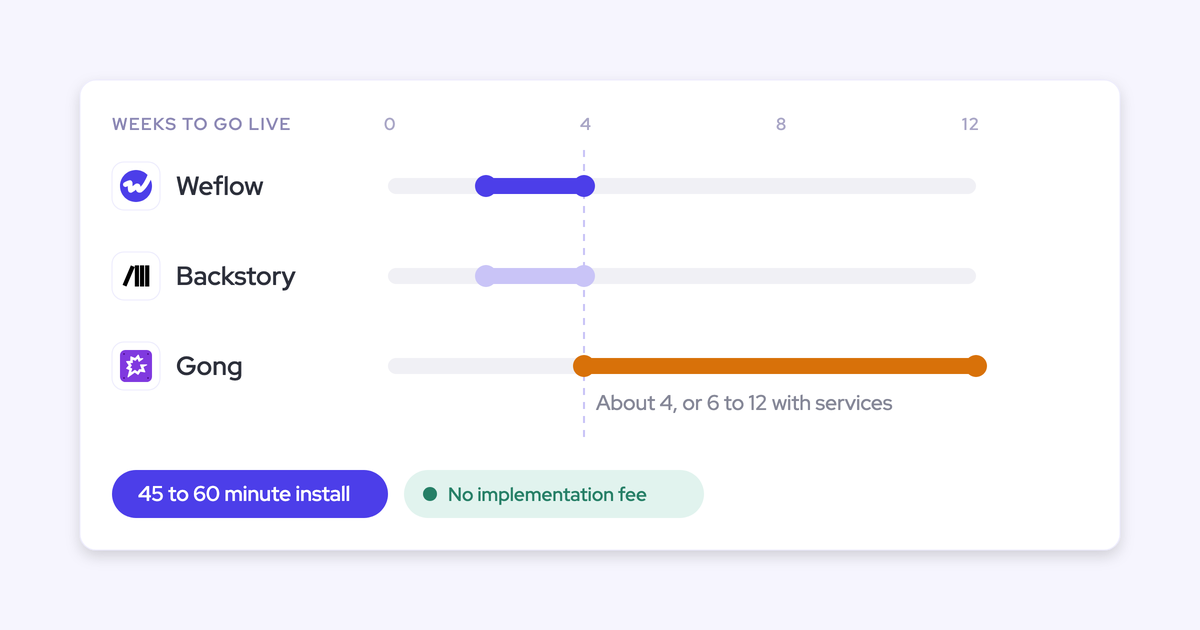
A Gong migration usually takes about a week.
Migration alone isn't what sets this apart. Fireflies and Jiminny also import Gong history. The difference is where it lands: in your Salesforce, linked to the right records, instead of in another vendor's tool.
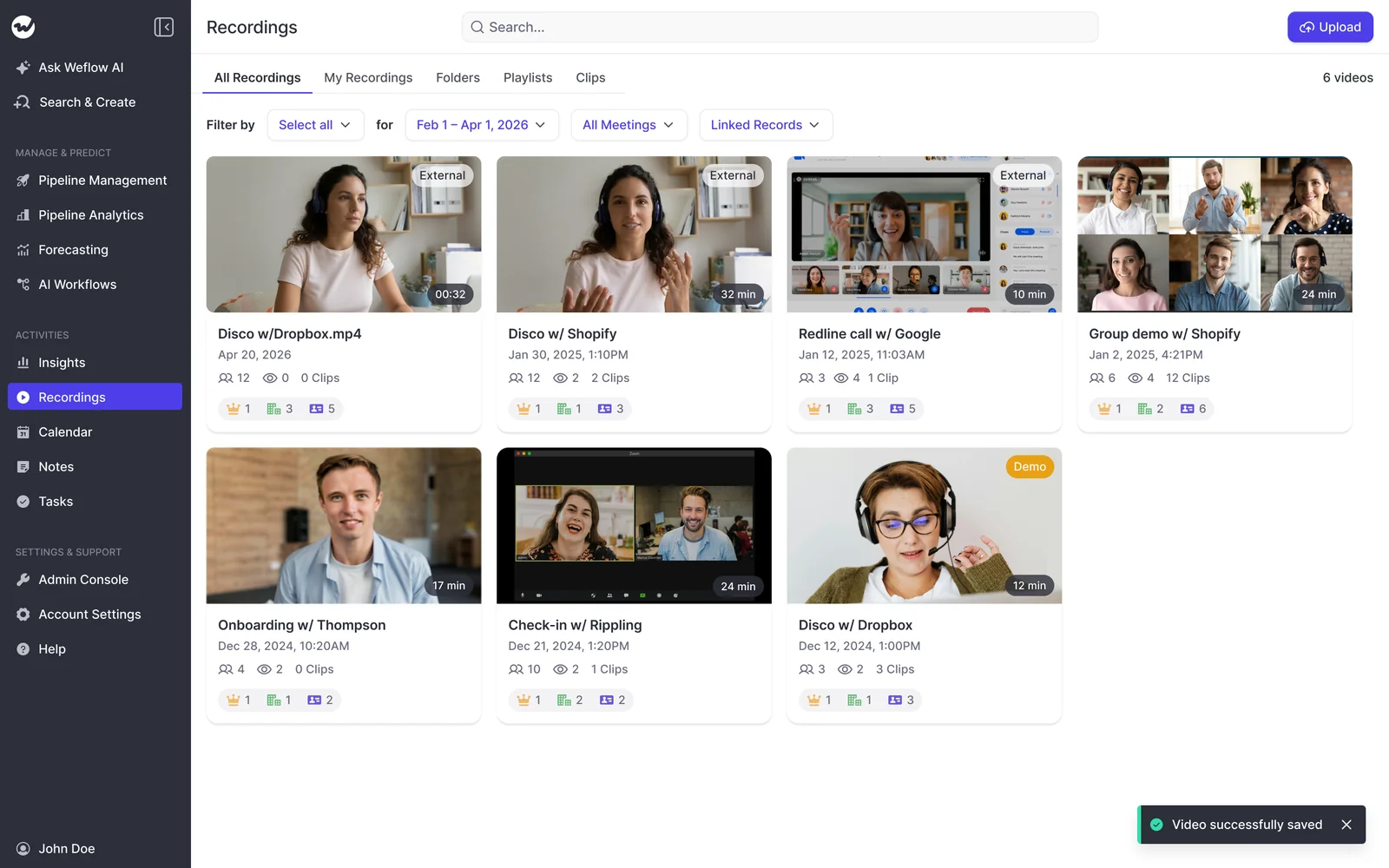
Weflow Conversation Intelligence + AI Field Updates turns calls into Salesforce fields
Weflow Conversation Intelligence + AI Field Updates writes each call into two Salesforce records. One holds the summary and the full transcript, and the other indexes it. Both are reportable, follow your Salesforce permissions, and survive the end of your subscription.
AI Field Updates then writes structured fields from the call. That covers next steps, stage, and methodology fields for MEDDIC, MEDDPICC, SPICED, BANT or your own framework. Before writing to a picklist, Weflow reads the field's allowed values, so it never writes a value the field doesn't accept.
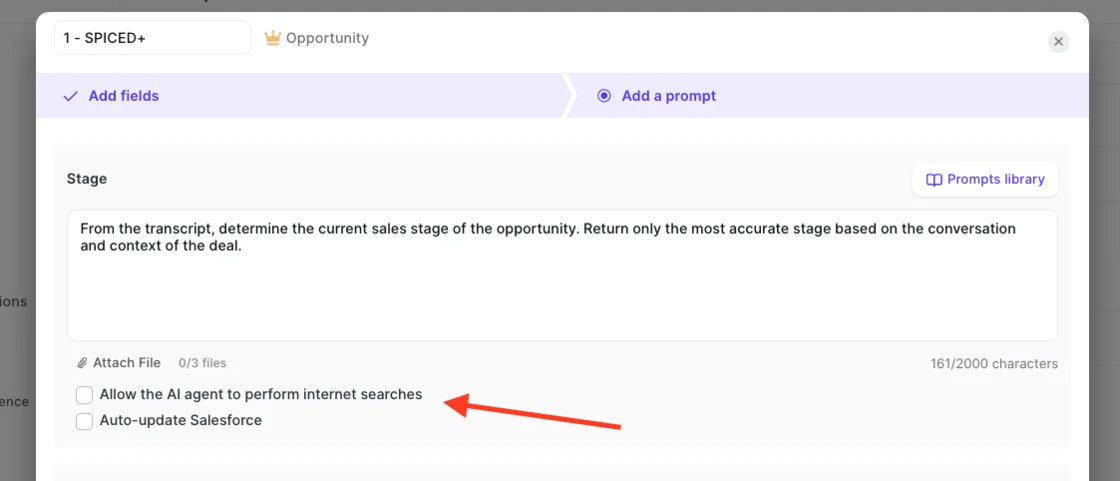
This is what fixes test 1 at your next renewal. Value shows up in fields your team reports on, not in a transcript nobody opens. Blacklane has 96% of its MEDDIC fields populated in Salesforce, which is a number you can put in front of a CFO.
One Weflow platform replaces separate capture, call and forecasting tools
Weflow Activity & Contact Capture, Weflow Conversation Intelligence + AI Field Updates and Weflow Deal Intelligence & Forecasting were built in-house, not acquired. They write to the same Salesforce records, so a forecast can filter on a field a call produced.
That fits whichever path your tests point to:
- Switch: replace conversation intelligence with Revenue AI Foundation, which covers activity capture and conversation intelligence together.
- Consolidate: retire separate capture, call and forecasting tools with Revenue AI Business or Revenue AI Enterprise.
- Bundled incumbent: keep Outreach, Salesloft or Apollo for sequencing. Weflow's compatibility mode skips email those tools already logged, so Salesforce doesn't get duplicates.
- Defer: start on Weflow Activity & Contact Capture, which sits outside a blocked conversation intelligence or forecasting renewal, and expand at the next window.
Weflow's team runs onboarding so your RevOps backlog doesn't
Weflow can own your onboarding from start to finish. The technical setup takes 30 to 45 minutes with your Salesforce admin and your Google Workspace or Microsoft admin. Full time to value runs one to three weeks, mostly spent on templates, forecast setup and team rollout. We don't charge implementation fees.
KORE Wireless evaluated Gong and chose Weflow. It ran a five-phase rollout: activity capture, conversation intelligence, coaching, deal intelligence, then forecasting. Weflow owned the onboarding, including live training with a real-time Portuguese translator for the Brazil team.
"I made a deliberate choice to let Weflow own end-to-end onboarding rather than pull my team off revenue-generating work. That's exactly the kind of partnership leverage I was looking for."
— Scott Jones, SVP of GTM Revenue Intelligence & Enablement, KORE Wireless
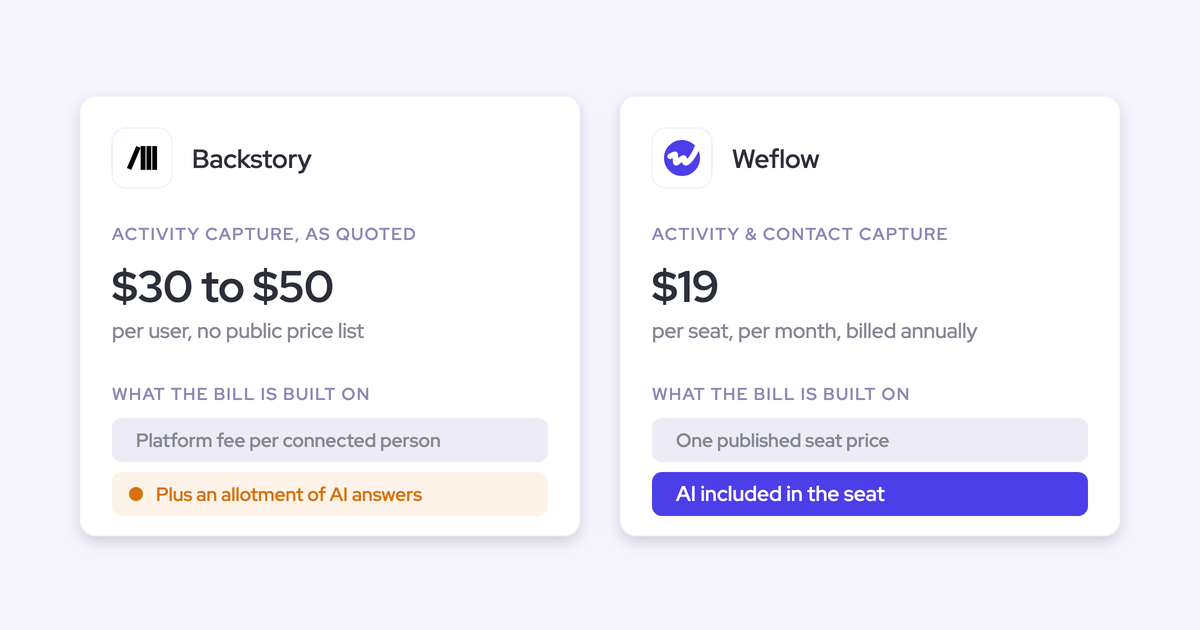
Weflow publishes seat-based pricing with no AI credits for everyday work
Weflow's pricing is published and seat-based. There are no usage-based charges, so recordings, transcripts, AI processing and deal signals are unlimited. Finance gets one known annual number.
| Plan | What's in it | List price per user per month |
|---|---|---|
| Revenue AI Foundation | Activity & Contact Capture, Conversation Intelligence, Mobile Copilot, Ask Weflow AI, Agent Builder | $49 |
| Revenue AI Business | Foundation plus Deal Intelligence | $59 |
| Revenue AI Enterprise | Business plus Forecasting | $79 |
| Weflow Activity & Contact Capture (standalone) | Capture, Ask Weflow AI, Agent Builder | $19 |
| Weflow Conversation Intelligence (standalone) | Conversation Intelligence, Mobile Copilot, Ask Weflow AI, Agent Builder | $39 |
Plans bill annually with a 10-user minimum. There are no platform fees, and final pricing is quote-based, with volume discounts for larger teams.
Every plan includes unlimited view-only licenses. Marketing, CS and leadership can watch recordings and read summaries and transcripts without a paid seat, which matters for the teams you mapped in test 2.
Where Weflow isn't the right replacement for your incumbent
- No sequencing or dialer. Weflow doesn't do sales engagement, and it isn't on our 2026 roadmap. A team using Gong Engage or Salesloft for both conversation intelligence and sequencing can't swap one-for-one.
- No account-level customer board. Our deal inspection and forecasting are built on opportunities. There's no board where a CSM sees the customer as a whole.
- Gong's analytics depth is real. If your managers rely on Gong's account-level methodology summaries and deal boards every day, you'll feel the change.
- Salesforce only. Weflow works exclusively with Salesforce.
- No phone call capture today. Weflow records Zoom, Google Meet, Microsoft Teams and WebEx meetings. VoIP phone calls aren't captured.
If none of those rule us out, see how your archive and fields would look on the other side. Walk through the product yourself, no call required.
FAQ: conversation intelligence renewals and vendor switching
How far ahead of my renewal date do I need to decide?
Set your decision date before the notice period in your contract closes, because an auto-renewal clause decides for you if you miss it. Renewal talks usually open about a quarter before that. Work back from the contract end date so trials and rollout land outside your peak quarter.
Can I run a new tool alongside the old one without paying twice?
Only for a short, planned overlap, because finance rarely funds two tools doing the same job. The cleaner route is to trial before the end date and start the paid contract when the old one ends. If that won't fit, start on a capability the old contract doesn't cover, such as activity capture.
What happens to my Gong call transcripts if I don't migrate them?
They stay in Gong, because Gong's Salesforce export covers activity as tasks and events and doesn't include call transcripts. Calls saved to the Gong library sit outside Gong's three-year retention policy and are kept indefinitely. Once you leave, that history isn't in a system you own.
How do marketing and customer success keep reading transcripts after a switch?
With Weflow, transcripts and summaries live in your Salesforce, so your existing Salesforce permissions decide who can see them. Weflow's unlimited view-only licenses let marketing, CS and leadership watch recordings and read summaries and transcripts without a paid seat.
Are contract buyouts and free-until-renewal offers worth taking?
They can solve the overlap problem, and vendors like Airspeed and Aviso run them. Airspeed offers free use until your Gong, Clari or Jiminny contract ends, or a contract buyout. Aviso offers to buy out your existing contract with free migration. The catch to weigh is where your data lands afterward, because a free year in another vendor's cloud resets the lock-in.
Should we build conversation intelligence ourselves with an AI assistant on Salesforce?
An assistant connected to Salesforce, plus transcripts from your meeting platform, can reproduce a share of what conversation intelligence does. What it doesn't give you is reliable capture when a meeting moves or nobody hits record, the security posture procurement asks for, or anyone to maintain it. Those are what you pay a vendor for.
Does switching conversation intelligence vendors mean a new security review?
Yes, so put it in your calendar before the trial ends. Weflow is SOC 2 Type II certified and GDPR compliant. It uses Zero Data Retention for AI processing and never uses customer data to train AI models.
What does a fair trial on our own Salesforce data look like?
Line up two or three vendors and run the same use case through each, on your own Salesforce data rather than a demo org. Judge the output: the fields written, the summaries, and how the history links to your deals. Weflow offers a 14-day free trial with guided onboarding.