
When "Commit" Means Two Different Things: Standardizing Forecast Categories


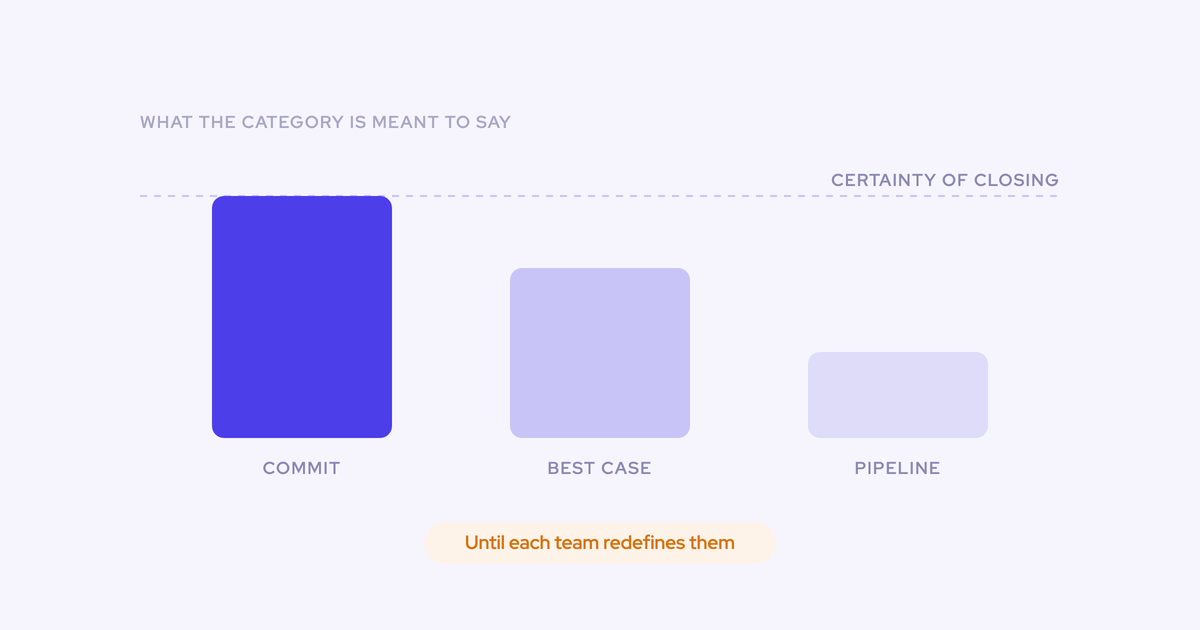
Forecast categories sort open deals into buckets of increasing uncertainty about closing in the period: Commit, Best Case, Pipeline. They record a judgment about whether a deal will be won this period, not where the deal sits in your sales process. That's exactly why they drift so quietly. Judgment has no schema.
Ask two of your managers what earns a Commit and you'll get two answers. Neither of them is lying. Nobody wrote the criteria down, nothing enforces them, and the roll-up faithfully adds both versions together and hands the total to your CEO. Then you re-explain the categories at the start of the next quarter, and you can feel leadership quietly stop trusting the split.
The fix isn't a nicer forecasting screen. It's definitional: separate the stage from the category, define each category by evidence you can check on the deal, keep the two loosely aligned instead of automatically linked, and measure last quarter's commit against what actually closed.
Weflow is the Revenue AI Orchestration platform for sales, customer success, and RevOps teams, and Weflow Deal Intelligence & Forecasting is where this discipline runs for our customers. It comes last in this article on purpose. The definitions have to be right before any tool is worth pointing at them.
Why every manager's "commit" means something different
The drift is structural, not a people problem. It follows a chain you can retell to your CRO in about ninety seconds:
- Salesforce ships opportunity stage and forecast category as two separate fields with no enforced relationship between them.
- Nothing gates stage entry or exit. A rep can drag a deal from the first stage straight to closed won in one click, so stages get skipped routinely.
- Because stages get skipped, stage history is thin. A couple of hundred opportunities can yield twenty-odd with usable tracking data, which makes time in stage, conversion rates, and the weighted forecast visibly wrong. Some teams respond by giving up on tying stages to probability at all, which removes the one structure a category system can lean on.
- Meanwhile the custom categories you layered on over the years have drifted away from the stages they were built to describe.
- Managers fill the definitional vacuum with their own judgment. Commit means whatever each of them decides it means.
- The roll-up sums those incompatible calls into one number, and board guidance, hiring, and spend get set against it. Then it gets reset in the last two weeks of the quarter.
- Nobody ever measures last quarter's commit list against what actually landed, so the drift is never caught.
Step seven is the one that keeps the whole thing alive. On calls we hear the symptom stated almost casually, as if it were weather:
We put a lot in commit, and it hasn't really happened.
Seeing numbers that are wrong is worse than not having them. And no amount of arithmetic downstream repairs an input that means two things.
"It's not necessarily the math in the number. A lot of what I've seen in my experience, and a lot of what was proven to be true, is the inputs that take place before the output. How many people in RevOps have walked into their very first forecast meeting, and the VP of sales says to the team, how much are you committing? They're looking for the magic number. But that is just the output of the process you should be setting up."
The stage is your process, the forecast category is your judgment
Stage and category record two different things, and the whole category system works once you stop asking one field to do both jobs.
"The stage is essentially your process. The forecast category is your judgment."
Stage is a black-and-white statement of where the deal actually is. Discovery, proposal, negotiation. It should be provable from events: a quote was created, security review opened, the contract went to legal.
Category is the human call on whether this deal is won inside this period. It's the one input a model can't produce for you, which is why it's worth protecting.
Mix confidence into the stage and you corrupt both signals at once. Stage conversion rates stop being comparable because reps advance deals on optimism, and the forecast loses the judgment it was supposed to carry.
| Opportunity stage | Forecast category | |
| What it records | Where the deal is in your process | Whether the deal will be won this period |
| How it's set | From verifiable events in the deal | By the rep, reviewed by the manager |
| Who owns the definition | RevOps, as written entry and exit criteria | RevOps, as written category criteria |
| What corrupts it | Skipped stages and advancing on optimism | Assigning commit on relationship and feel |
| What breaks when it's wrong | Conversion rates, time in stage, the weighted forecast | The commit number leadership acts on |
Should forecast category be tied to opportunity stage?
Loosely aligned, never auto-flipped. Commit plausibly lives in the final one or two stages before closed won, where paperwork, procurement, and legal are in motion. That relationship should shape your definitions. It shouldn't drive a write.
Two reasons to refuse the automatic flip:
- Your stages aren't reliable ground. If nothing gates stage entry and exit, an auto-flip inherits every skipped stage and every optimistic advance, and now the corruption is in the category too.
- Auto-flipping deletes the signal. If the category is derived from the stage, it has stopped being a judgment and become a restatement. You've automated away the only field in the forecast that carried a human opinion.
There's also the direction nobody designs for. A rep has to be able to move a deal backwards, out of commit, when the risk is real, and do it without it feeling like a confession. If the system flips deals forward automatically and makes reversing them awkward, you've built an incentive to hide slippage until the last week.
What works instead is using stage as a boundary, not a trigger: a deal below your penultimate stage cannot be Commit, and the system says so at submission. The rep still makes the call inside those bounds, and every downgrade is a normal move rather than an admission.
Defining Commit, Best Case, and Pipeline with verifiable criteria
Define each category by evidence someone else can check on the deal, not by confidence the rep asserts. That single change is what makes two managers land on the same answer.
Committing a deal because the rep has a good relationship with the buyer is gut-feel forecasting, and it's the most common source of pushed deals we see. A warm economic buyer doesn't move legal, security, or procurement, and those are what gate the signature.
| Category | What it asserts | Verifiable criteria on the deal | What does not qualify |
| Commit | This closes in this period, at roughly this amount | Legal redlines underway with a known turnaround; documented technical or security sign-off; procurement engaged with the remaining steps named; a concrete close or go-live date; more than one contact engaged on the buying side | A strong relationship with the economic buyer; a verbal yes; rep confidence; a close date that has already been pushed twice |
| Best Case | This closes if timing goes our way | Qualification answers complete (pain, critical event, decision criteria, decision process, champion); commercial proposal delivered; a next meeting booked with a date; recent two-way activity | An open deal with no next meeting and no named decision process |
| Pipeline | Qualified and being worked, not expected to land this period | Meets the shared definition of a qualified opportunity; stage entry criteria met and evidenced | A deal kept alive because nobody wants to close it lost |
Write the "does not qualify" column down too. It does more work in a forecast call than the criteria do, because that's the column a manager points at.
"The first one everybody knows is clear next steps. And I'm not talking about the next step field here. It's about really understanding what are the next steps of the deal. Let's say we are in legal. Do we know by when do we get the red line back? Do we know what the next step is after that? Do we know who's involved?"
How to run the commit-conversion test on your own data
Take the deals marked Commit at a fixed point in the quarter, count how many actually closed, and compare that to the confidence your leadership claims commit carries. It's cheap, it runs on Salesforce reports, and it converts "something's wrong with our commit process" into a number.
- Fix the measurement point. Week ten works. Day 35 works if you also want to compare quarters. What matters is that it's the same day every quarter, forever.
- Pull the commit list at that point. Open opportunities in Commit, with amount, close date, owner, manager, segment, and motion.
- On the first day of the next quarter, pull closed won for the period. Same amount field you forecast on, not the standard Amount field if that isn't the number you manage by.
- Match the two lists. Commit deals closed divided by commit deals called gives you realized conversion by count. Run it by value as well, because one large deal can flatter or wreck the ratio.
- Get the claimed number in writing first. Ask your CRO what commit means as a percentage before you show yours. Eighty or ninety is the usual answer.
- Cut it by rep, manager, segment, and motion. One team's definition is usually doing most of the damage, and you want to know which.
- Sort the misses into lost and slipped. Lost is a qualification problem. Slipped is a criteria problem: those deals never had the redlines or the procurement steps they were credited with.
Reading the gap is simple. Ninety claimed against fifty realized is not a coaching problem you fix rep by rep. It's a definitional problem, and it will reproduce itself next quarter regardless of who's in the seat.
"Now you talk to a sales leader, what's your commit? They'll tell you, well, it's ninety percent, eighty percent. And then you find out that only fifty or sixty percent of those deals won. Okay. Well, something's wrong with your commit process then. Right. That's the kind of thing you start thinking. It's a flawed process ultimately."
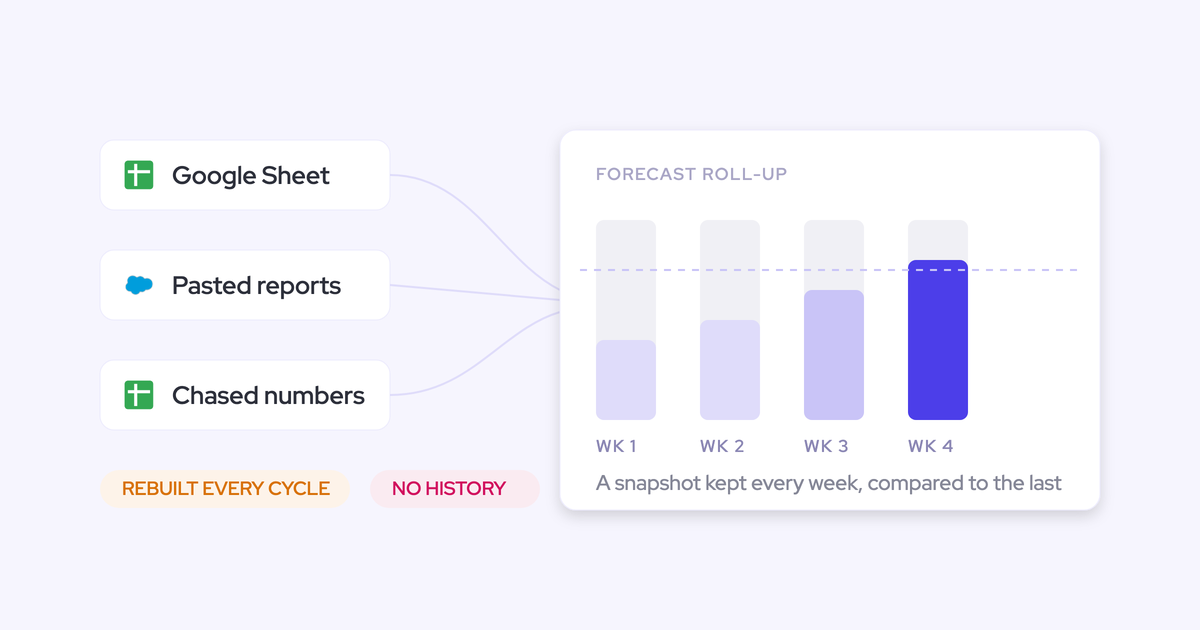
One caveat before you go looking backwards. Salesforce only records how a field changed if field history tracking was enabled on that field in advance, and calculated or roll-up fields can't be tracked at all. If nobody switched tracking on for Forecast Category, last quarter is gone. Start snapshotting now and you'll have your first real reading in about ten weeks.
What keeps standardized categories from drifting again
Standardized categories hold inside an operating discipline and nowhere else. Definitions on a page decay in a quarter unless something reads them out loud every week.
- One written definition of a qualified opportunity, plus written entry and exit criteria per stage. New opportunities get checked against it weekly, by the manager and again by RevOps. Without this, your close rates aren't comparable across periods and nothing built on stages can be trusted.
- Category criteria published as one page, with the "does not qualify" list attached. If it takes more than a page, managers will improvise.
- A weekly cadence where category changes get explained deal by deal. This was commit last week, where is it now, why did it move, what did we learn. That question forces the reason to be spoken while the deal is still alive, instead of reconstructed at quarter end.
- Deal reviews run separately from the forecast call. Fold inspection into the roll-up call and it becomes a round robin of status updates with too many people in the room. Nothing gets inspected and nobody gets coached.
- The conversion test every quarter, reported per manager. This is the audit that keeps the definitions honest, and the only thing that turns commit into a calibrated probability rather than a mood.
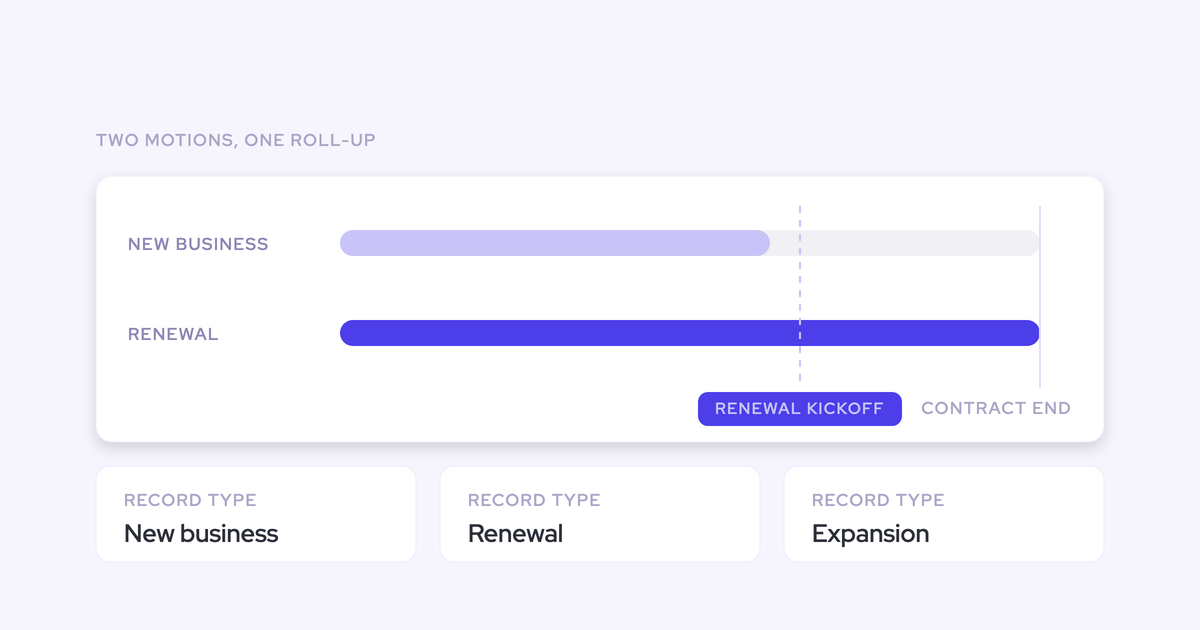
- Separate definitions and separate roll-ups per motion. New logo, expansion, and renewal convert at different rates, so one blended commit number hides which motion is actually short.
"If you don't run an operating cadence, the best tool in the world won't help you. You have to look at forecasting as a holistic process that has various ingredients to make it successful."
How Weflow keeps forecast categories honest
Weflow makes the category system checkable end to end, which is a different claim from fixing it. Here's the mapping from what breaks to what the platform actually does about it:
- The criteria fill themselves. Weflow Conversation Intelligence extracts qualification answers from recorded calls and writes them into the Salesforce fields your commit criteria read, using methodology templates admins configure and map. So "documented decision process" stops being a field a rep types and becomes a field the conversation produced.
- Multi-threading becomes a fact rather than a claim. Weflow Activity & Contact Capture syncs emails, meetings, and contacts to the right Salesforce records, and adds computed fields Salesforce doesn't have: days inactive, last and next meeting, per contact engagement, a rolling activity timeline. Those can't be gamed, because nobody typed them.
- Warnings appear at the moment of submission. Deal warnings are rules you author against any Salesforce field or computed field, close date pushed twice, only one contact, silence for fourteen days, and they surface inside the forecast submission screen, where the rep is choosing which deals to commit. That's what keeps unhealthy pipeline out of commit instead of explaining it in a report after the number is already wrong.
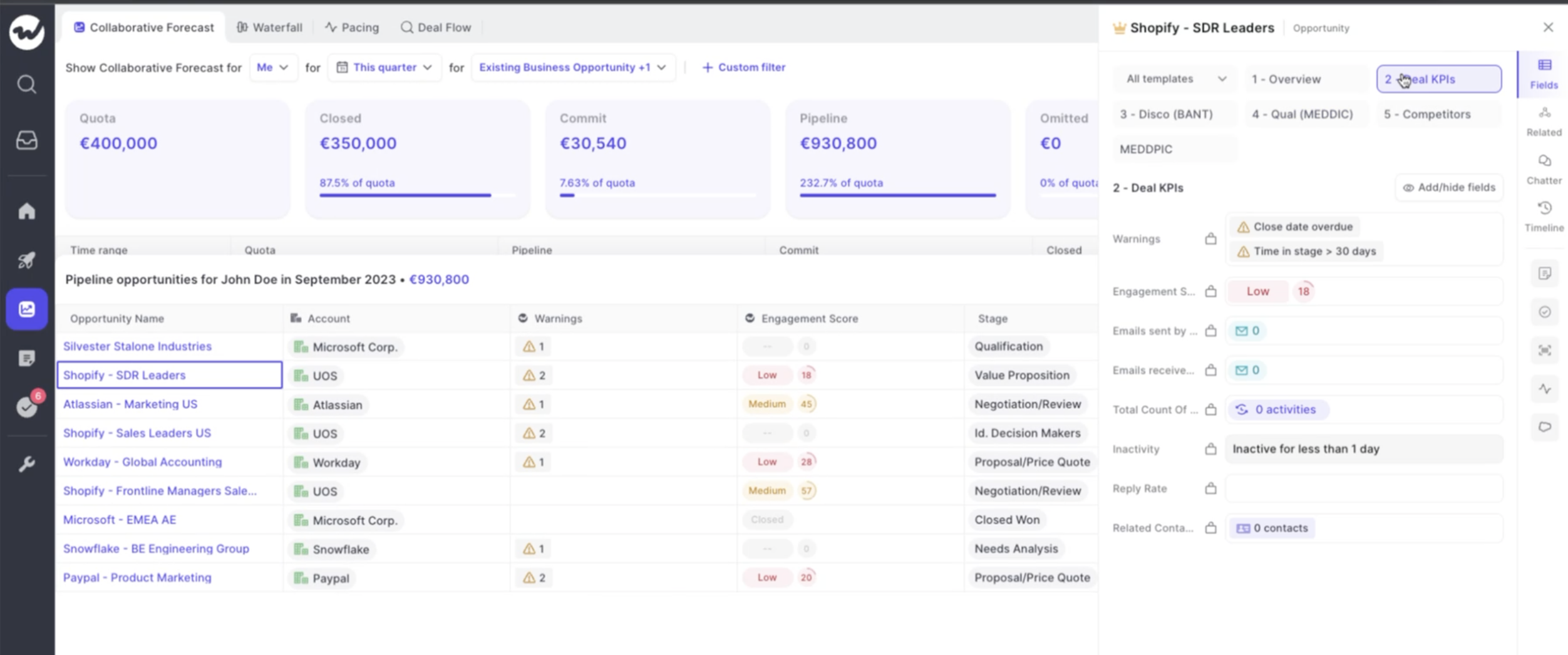
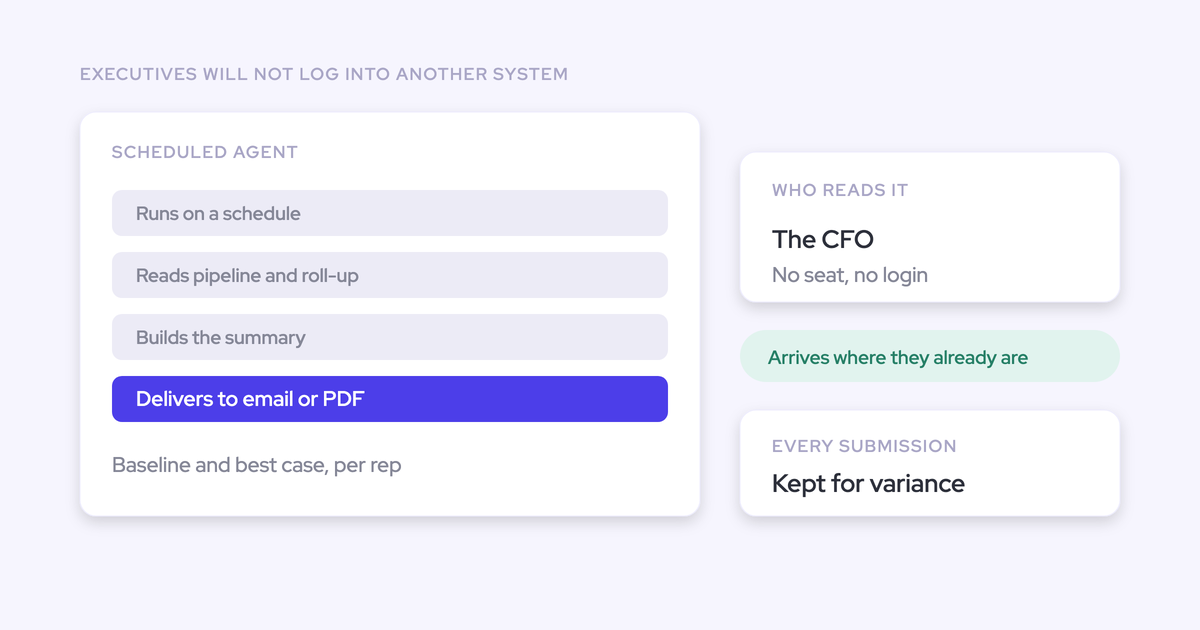
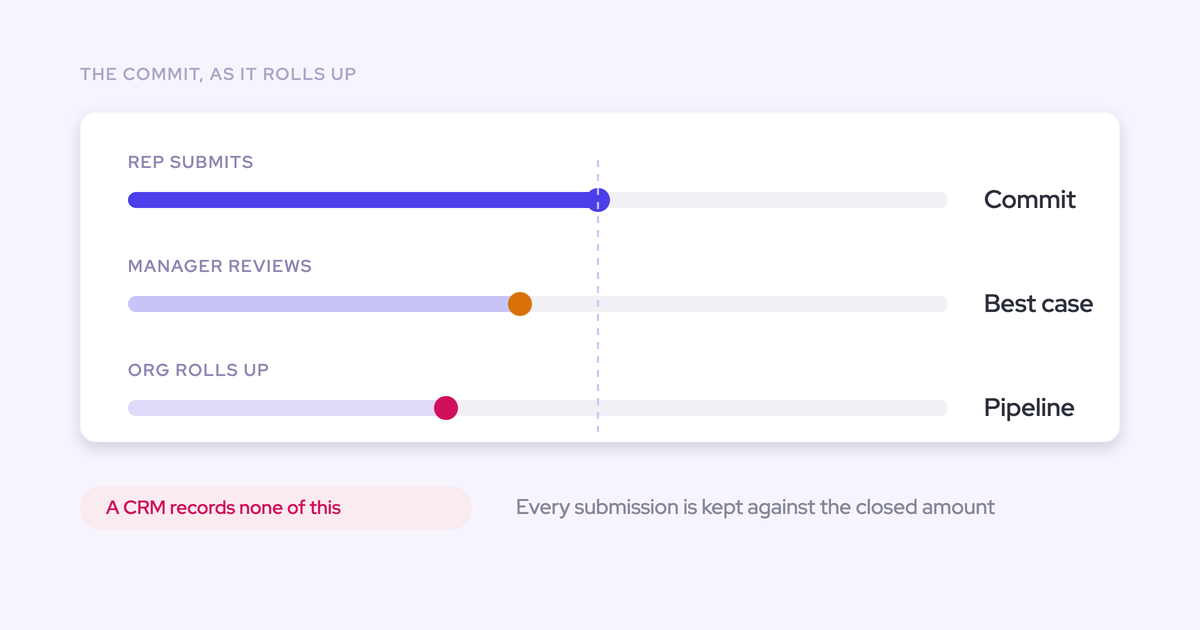
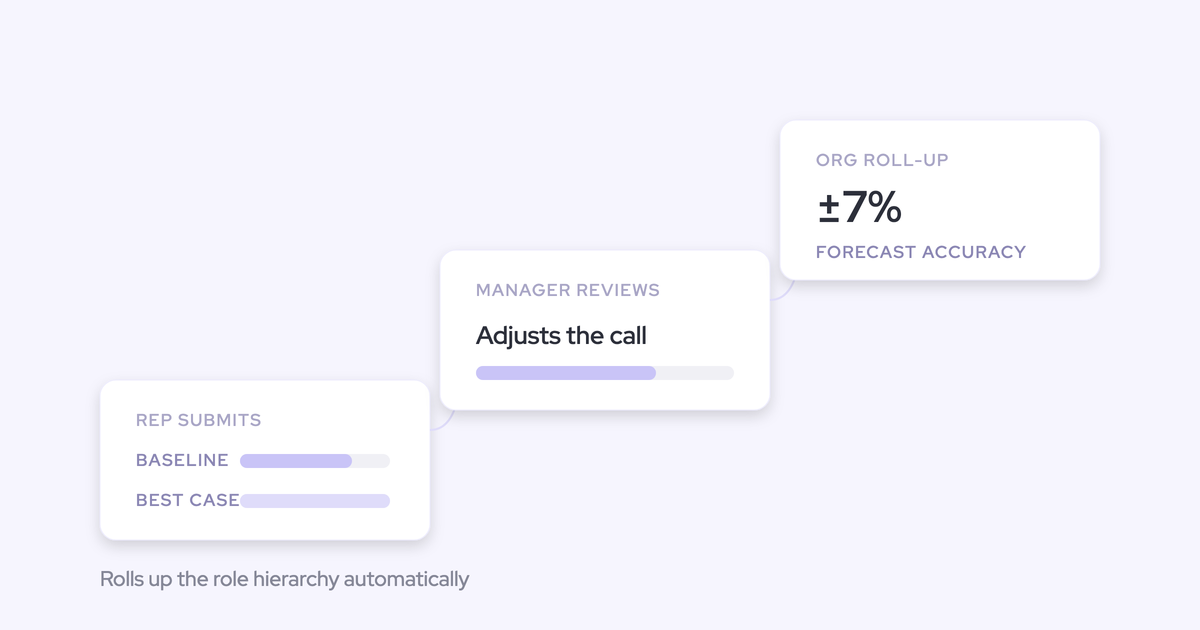
- Nothing about the call disappears. Each rep submits a baseline and a best case, either as a total or by selecting the named opportunities behind each figure. Every submission is versioned. Manager overrides sit at deal or total level, timestamped, attributed, stored with the rationale, retained across quarters. A deal that slid from commit to best case leaves a record that it was ever committed, which is a specific gap buyers describe to us about their current setup.
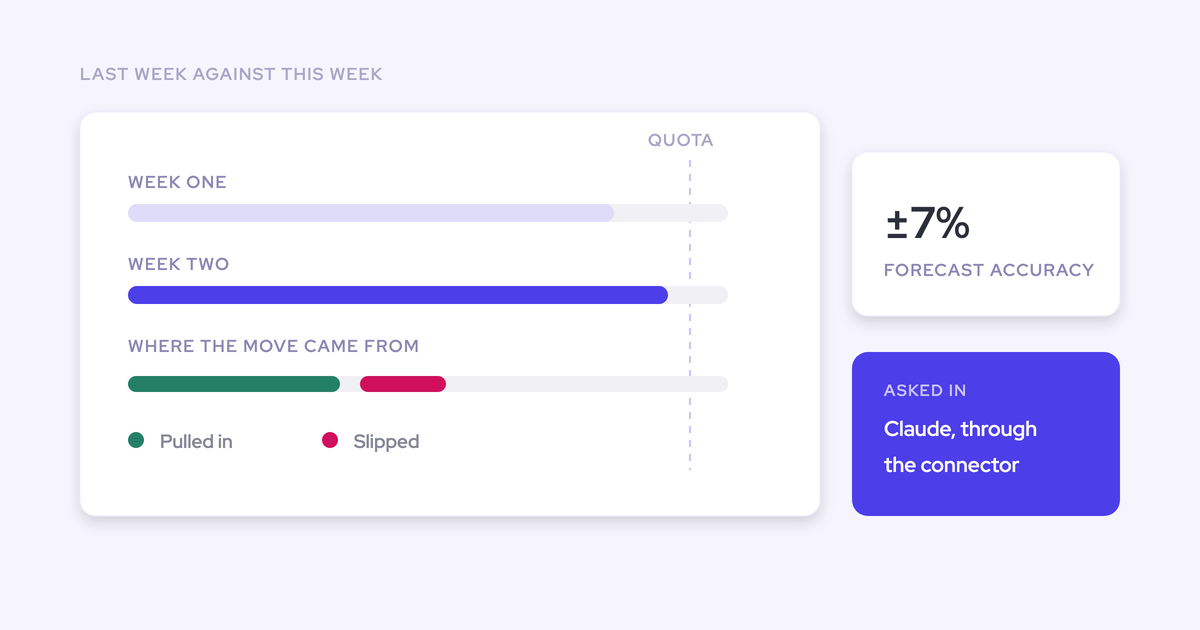
- The conversion test runs continuously. Weflow stores every forecast submission against the final closed amount, which produces variance per rep, per manager, and by segment across consecutive quarters. The quarterly archaeology project becomes a report.
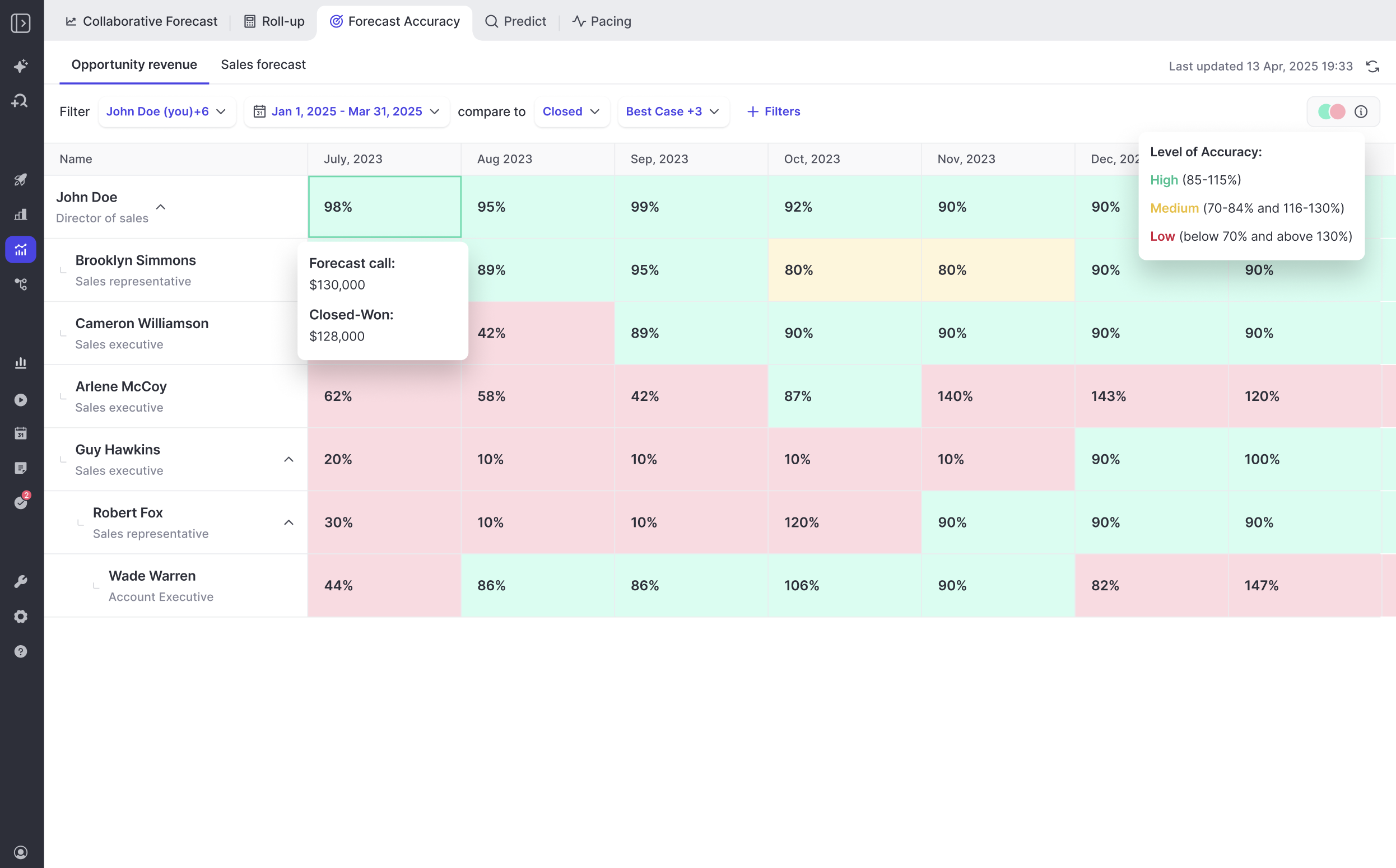
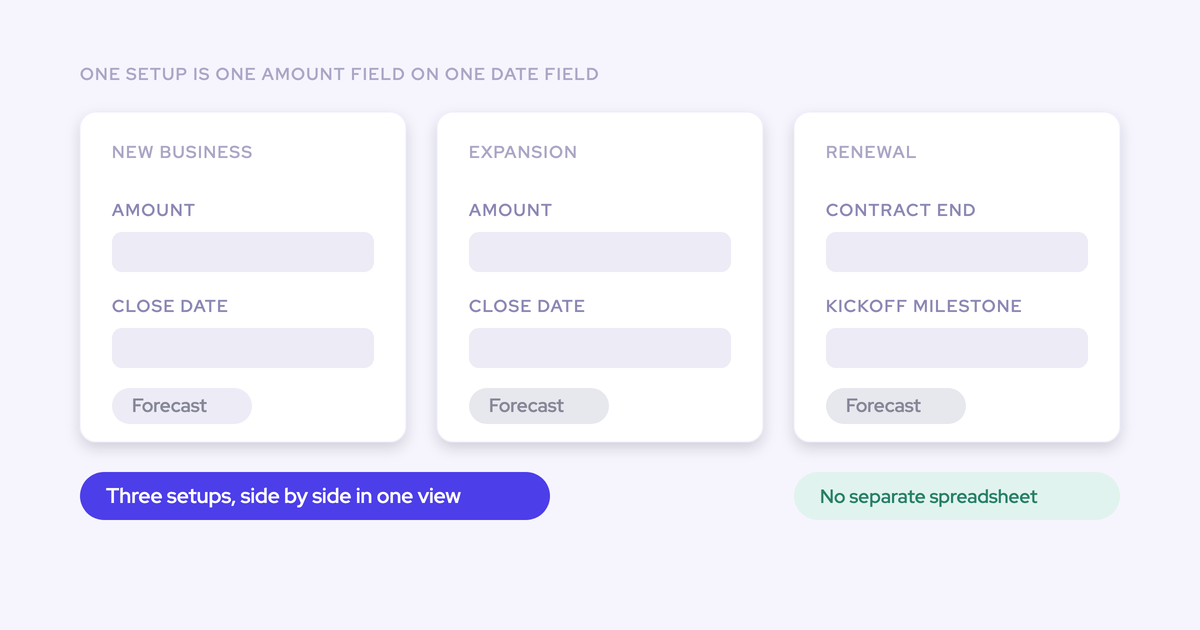
- Each motion keeps its own shape. Weflow supports multiple Salesforce opportunity record types, each with its own stage path, forecast-category mapping, and independent roll-up, plus parallel forecast setups with their own amount field, date field, cadence, and targets.
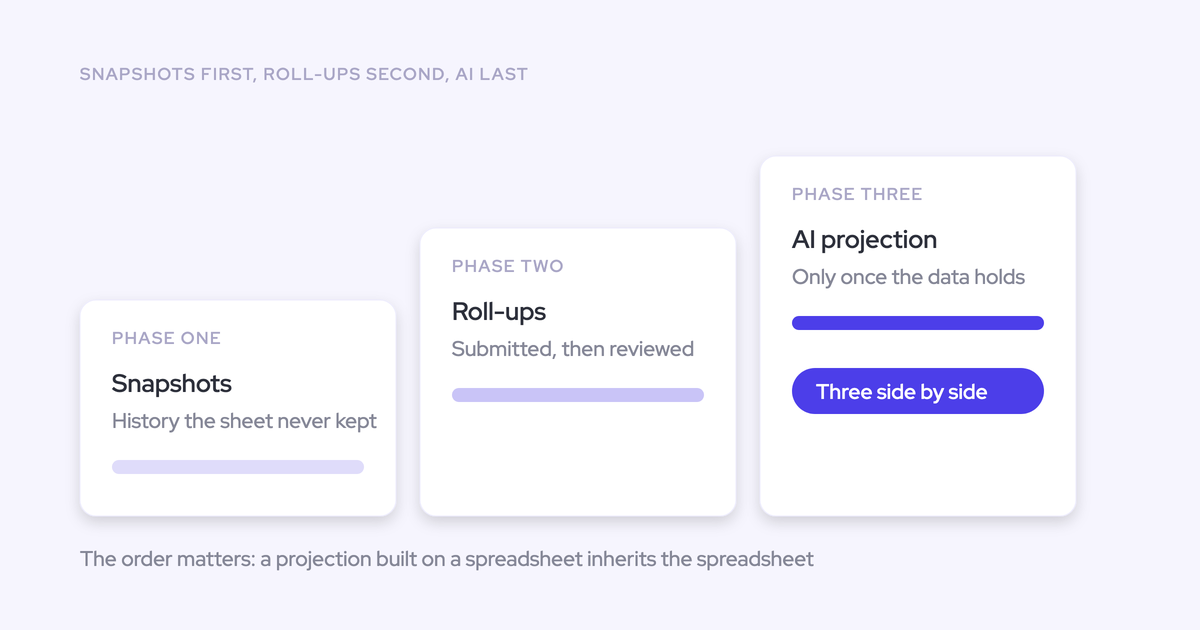
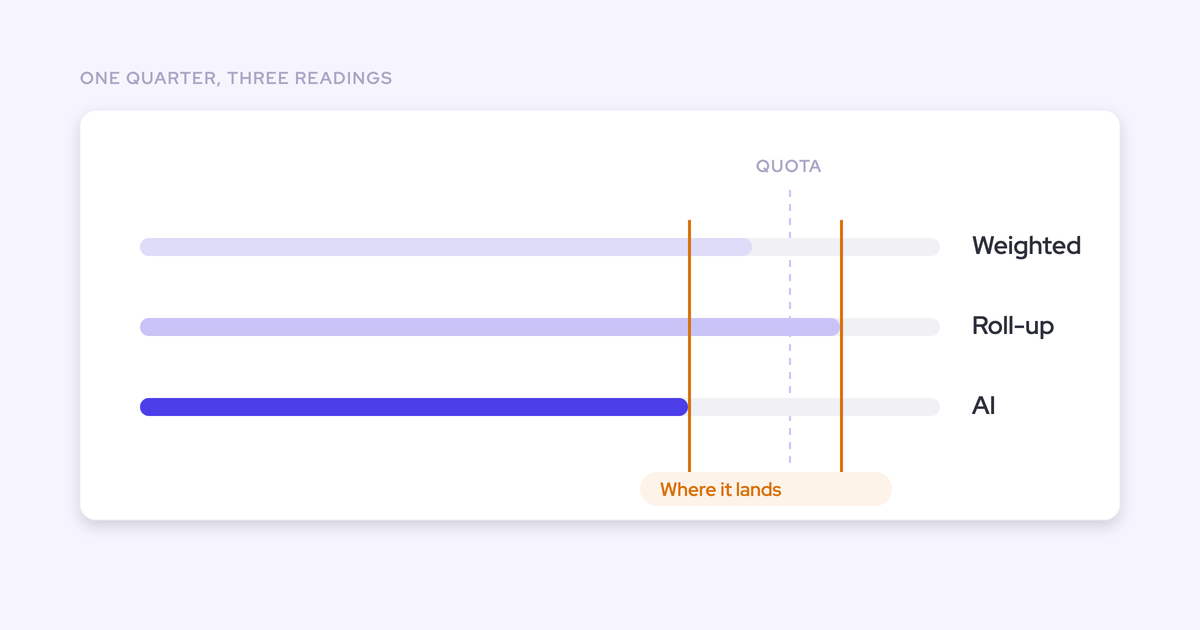
- Three numbers instead of one. A weighted forecast from historic stage close rates, the rep and manager roll-up, and an AI projection built on more than fifty deal-level signals that returns a landing range. Where they converge is your credible corridor. Where they diverge is the agenda for the call.
"Weflow helps us create predictability, accountability, and accuracy. Quarter after quarter."
Now the limits, because this reader has heard the pitch before.
- Weflow does not install the discipline. If your stages have no entry and exit criteria and there's no weekly cadence, standardized categories will drift again with our product in place. Forecasting is the part of a rollout that takes longest precisely because it's the encoding of an operating cadence, not a configuration task.
- The roll-up sums the chosen amount field on the deals reps select. It does not apply stage probability weighting. If you think in probability terms, that modeling lives in the weighted view and the AI projection, or you point the forecast at a weighted Salesforce field as its foundation.
- Forecast submissions, targets, and roll-up data live in the Weflow application rather than in Salesforce objects, unlike the activity, transcripts, and AI field updates we write back. If your rule is that reps only ever open Salesforce, roll-up submission breaks that rule.
- Weflow works exclusively with Salesforce.
Credit where it's due: Clari's roll-up mechanics, its pipeline waterfall, and its same-day-last-quarter comparison are the features teams actually use, and a replacement gets judged on those three. What we hear on switch calls is that the layer underneath was never there, so the forecast stayed a well-organized opinion.
FAQ: standardizing forecast categories
Should commit criteria differ for new logo, renewal, and expansion deals?
Yes, in both conversion expectation and evidence type. A new logo commit is gated by procurement, security, and legal. A renewal commit is gated by usage, executive engagement, and a contract end date, and customers on multi-year contracts often signal their intent to leave one to two years before the renewal ever enters a forecast.
Give each motion its own category-to-stage mapping and its own roll-up. A blended commit number hides which motion is missing, which is how three teams end up pointing at each other in the same meeting.
How do we migrate from custom forecast categories back to standard?
Four steps, in this order. Write the new criteria first, including the "does not qualify" column. Map every old value explicitly to Commit, Best Case, or Pipeline, and decide what happens to values that map to nothing. Cut at a period boundary, never mid-quarter. Keep the old field read-only for a quarter so managers can see what changed.
Accept that historical category data won't be comparable across the cut, and say so out loud before anyone asks. And enable field history tracking on the category field before you cut, or your first conversion test starts from zero.
Can forecast categories drive probability weighting in the roll-up?
No, and keeping them apart is the point. The roll-up sums the amounts on the deals selected. Categories express judgment, weighting expresses math, and conflating the two is the original sin this article opened with.
In Weflow, the probability modeling sits in the weighted forecast, which uses historic stage close rates, and in the AI projection, which reads deal-level behavior and returns a range. If you want weighting inside the submitted number itself, forecast on a weighted Salesforce field as the foundation field for that setup.
Does standardizing forecast categories need executive buy-in?
RevOps can design the definitions and prove the problem alone. The conversion test is your instrument, and it needs nobody's permission.
The cadence that keeps the definitions alive is an alignment topic, and that does need the room: the CRO, every first-line manager, and your finance partner. Managers are the ones applying the criteria weekly, so a definition they didn't help write is a definition they'll quietly amend.
How do we enforce category definitions without adding rep busywork?
Build the criteria out of things that already happened on the deal rather than new fields for reps to fill in. Contacts engaged, meetings held, days since last activity, close date pushes, and the qualification answers extracted from the calls themselves are all available without asking a rep for anything.
Then make submission the enforcement moment. The rep sees the warnings on a deal at the point of choosing to commit it, which is one decision in context, not a form.
If you want the deeper reference while you're rebuilding the definitions, we put the whole process into one place: The Ultimate Sales Forecasting Guide, free.