
Why a forecasting tool fails without a forecasting process (and the process to build first)


A forecasting tool automates a process. If no process is running, it automates nothing.
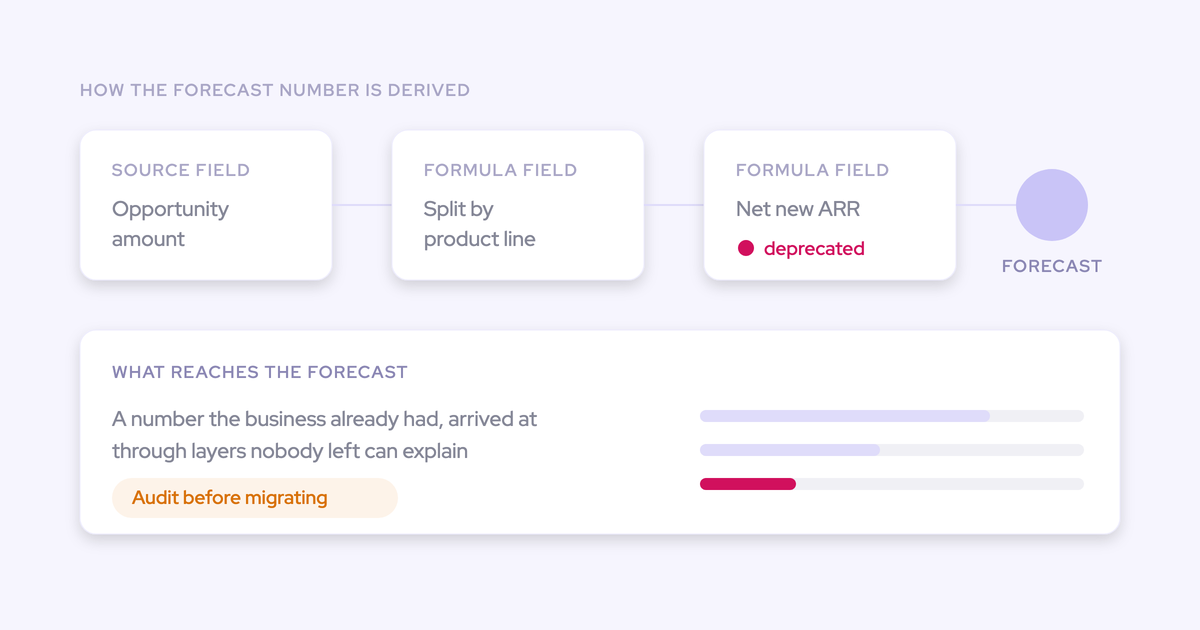
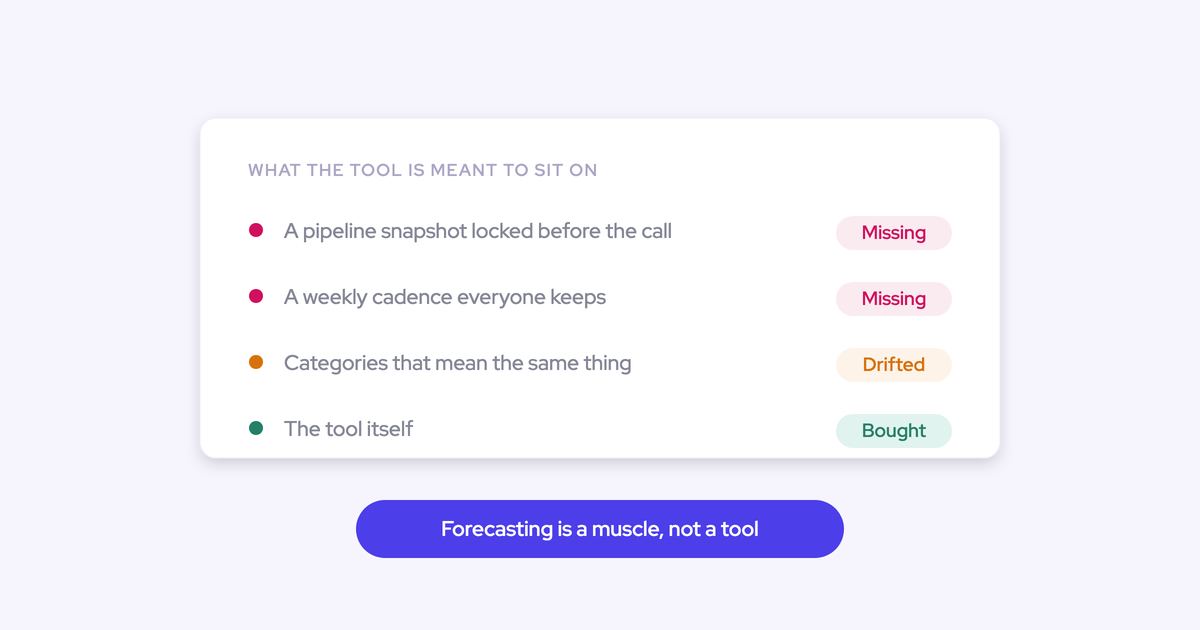
That's the whole mechanism behind the thing you're probably living with right now: a forecasting tool that got bought, half implemented, and never became the place the forecast is actually made. It wasn't a bad product. There was no locked snapshot for it to lock, no weekly rhythm for it to run, no deal review for it to prepare, and no definition of commit for it to enforce. So it produced a number, and the number got treated with exactly the same suspicion as the spreadsheet it replaced.
This article names that failure chain, lays out the five parts of a forecasting process you can stand up before you spend anything, and only then talks about where a tool belongs. If you want to see what a supported forecast meeting looks like once the cadence is running, that's the end state. The order matters more than the end state.
Why forecasting tools get shelved within a year
Forecasting tools get shelved because they were bought as a product when what was missing was an operating cadence, and because nobody was made accountable for the rollout after the contract was signed.
The failure is a chain, not a defect. It starts with the purchase framing and ends with RevOps doing the work by hand anyway.
The symptoms are consistent enough to read as a checklist:
- No internal owner was named, so nobody was accountable for the cadence running week after week.
- Renewals were never set up in the tool. New business runs there, retention still runs out of Salesforce.
- Reps still submit numbers by email or from a personal sheet, so nothing is locked and nothing is retained.
- Half the license holders log in to look, and that's it.
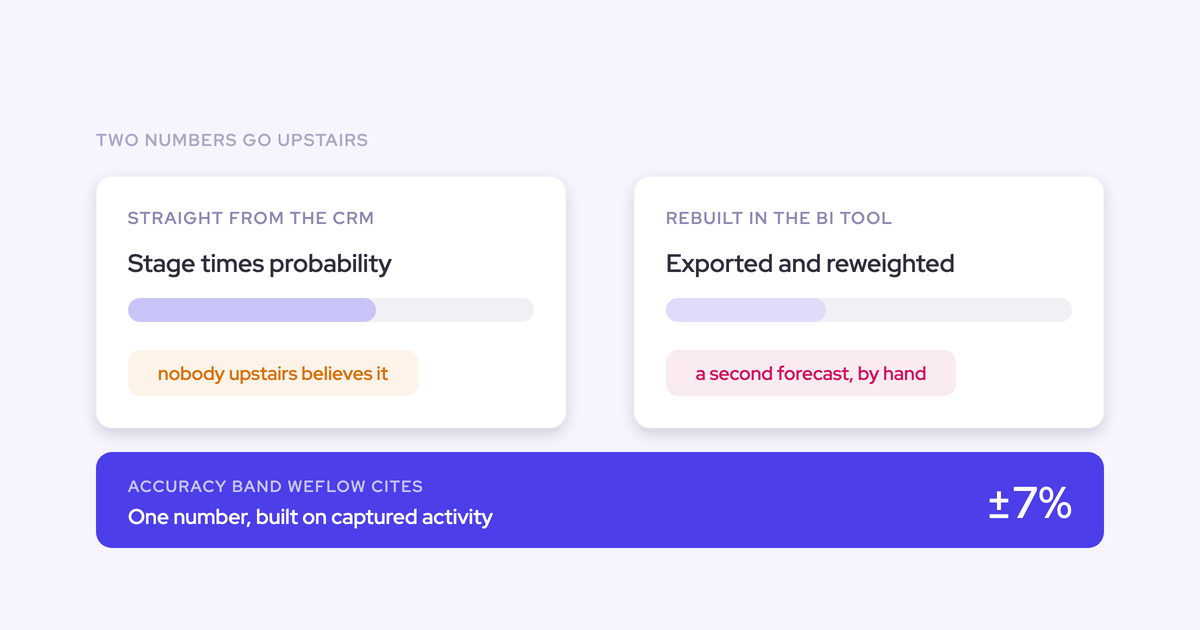
- RevOps quietly rebuilt the forecast dashboard off raw Salesforce data, because the tool's version isn't trusted.
- The board-grade view gets exported and rebuilt in a BI tool every cycle, because the tool's own reporting isn't presentable to a CFO.
- Leadership asks for another dashboard. It never helps, because the report was never the problem.
The company pays for the tool and does the work anyway. Some RevOps leaders have now rebuilt a working prototype of the whole thing over a weekend with an AI coding assistant, which is why the evaluation question has changed. It's no longer "which features." It's "who owns the rollout, and what stops this stalling again."
If you don't run an operating cadence, the best tool in the world won't help you.
Philipp Stelzer, Co-founder and CPO of Weflow
The forecasting process a tool can actually automate
A forecasting process is five specific, buildable things: an owner, one submission place with a locked snapshot, a fixed weekly rhythm, a deal review that isn't the forecast call, and commit criteria you can evidence and score.
Each one exists or doesn't independently of any software. Hold your own org against them honestly, one at a time.
An owner for the rollout and the rhythm
No assigned owner is the single most repeated reason the last tool stalled. Not a missing feature. A missing name.
Ownership here doesn't mean the admin who configured the instance and moved on. It means one person accountable for the cadence running: the snapshot locking on time, the submissions being in, the call happening on the day, the accuracy being scored at quarter end.
In place looks like: a named person, a standing slot in their week, and a line in their goals about forecast accuracy rather than about implementation being finished.
One place to submit, with a locked snapshot
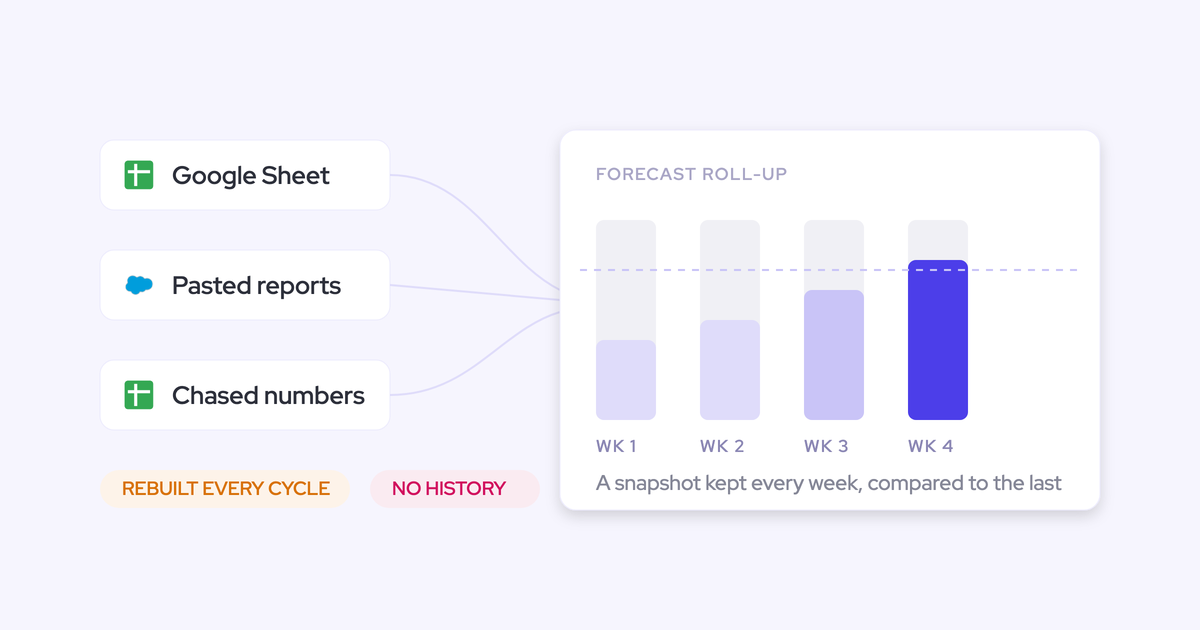
Ten reps submitting by email means ten sheets that can't roll up and no history anyone can go back to.
We see this constantly. Someone in RevOps takes a manual snapshot every Monday just to see what moved since last week, nothing is comparable across regions, and the process gets redefined each quarter by whoever is running it.
In place looks like: one standard place every rep submits, a cut-off after which the numbers are frozen, and last week's version still readable this week. Without the freeze, nobody can say whether the number moved or the data did.
A weekly cadence with fixed days and fixed attendees
Fixed days are what make the roll-up mean anything, because every number then reflects the same freshness of data.
A workable shape: reps clean their pipeline by Thursday, managers work deals with their pod on Friday, submissions land, the roll-up call happens the same day every week with the same people in the room. Change the format or the attendees without explaining why and the prep habit dies inside a month.
Consistency is the part that lets the process carry the forecast instead of a few heroic managers carrying it.
A deal review separate from the forecast call
Inspection folded into the forecast call is not inspection. It's a round-robin of status updates with too many people watching.
The forecast call turns into, hey, so what's up with that deal? Okay. And what's the next? Okay. Great. Next. Right? There's no real inspection. There's not the time nor the calmness, and then the room is too full.
The second half of the problem is that reviews run on whatever question the manager happens to think of, so two managers inspecting the same deal reach two different answers and neither can be defended upward.
In place looks like: its own session, a selected set of deals rather than all of them, and the same signals and the same questions at every stage. Otherwise the forecast is a poll of how confident people feel.
Commit criteria that can be evidenced and scored
Commit carries no information in most orgs, and everyone in the chain knows it.
Now you talk to a sales leader, what's your commit? They'll tell you, well, it's ninety percent, eighty percent. And then you find out that only fifty or sixty percent of those deals won. Okay. Well, something's wrong with your commit process then.
Hiring, spend and board guidance get set against that number and reset in the last two weeks of the quarter. The fix has two halves: define commit by criteria you can evidence from the deal rather than assert, and score last quarter's commit against what actually landed.
One pattern worth copying, from Robert Gimbel, GTM advisor and former CRO at Camunda: lock every team's week-four forecast, publish it in a shared place, and grade it at quarter end. Celebrate the teams that called it. Don't punish the ones that missed in public, or you'll teach people to protect themselves instead of forecasting honestly.
Forecast accuracy is a data problem before a roll-up problem
A cadence run on skipped stages, empty methodology fields, unlogged activity and no pipeline history forecasts fiction. The meetings happen and the number is still wrong.
We have so many customers that come to us and say, oh, we need to improve our forecasting. We need to improve our forecast accuracy. And, you know, then you peel back the onion and you see that data is missing, visibility is missing, understanding of what's going on is missing. And so it's not about then creating a roll up forecast or something. It's really fixing the root cause from a first principles perspective.
Janis Zech, Co-founder and CEO of Weflow
Four failures do most of the damage, and each one breaks something specific downstream:
- Skipped stages. Nothing in Salesforce stops a rep dragging a deal from first stage to closed won in one click, so stage history is mostly empty. On one org we looked at, a couple of hundred opportunities produced around twenty with any tracking data. Time in stage, conversion rates and the weighted forecast are all visibly wrong, which is worse than not having them.
- Empty methodology fields. The company picked MEDDIC or SPICED, trained on it, built the fields, and the fields sit blank. Nobody can say which deals are genuinely qualified, so commit criteria have nothing to be evidenced against.
- Missing activity and contacts. Without captured emails, meetings and participants, a dead deal and a live one look identical in the roll-up. Multi-threading stays an assertion: the CRM shows one champion on a deal that really has five people on the thread.
- No pipeline history. Salesforce only records how a field changed if history tracking was switched on in advance, and calculated or roll-up fields can't be tracked at all. So "how are we doing at day 35 compared with day 35 of the last three quarters" is unanswerable, and it's the question leadership asks every quarter.
Now the question you're actually asking: does the data have to be clean first? No, and a clean-first mandate is how this deadlocks.
Ten or fifteen years of architecture decisions sit under that data. Objects nobody dares delete, integrations whose owner left, custom fields feeding reports the board still reads. That's a migration, and it competes with the quarter.
The path that works is fixing capture and mapping at the source, so the foundation improves while the cadence runs. Asking reps to try harder is the fix you've already attempted, and it already failed.
Three paths: tool first, process first, or fix the incumbent
Which path fits comes down to four things: whether a rollout owner exists today, whether any cadence is running, whether the data underneath is trustworthy, and whether a contract or a mandate constrains what you can replace.
| Criterion | Path 1: buy the tool first | Path 2: process first, then buy | Path 3: keep the incumbent, fix the data |
| Rollout owner today | Required, with an executive sponsor behind them | Required, and their first job is running the cadence by hand | Required for the capture layer, not for a new forecasting rollout |
| Cadence running today | None, and you're betting the implementation creates one | None yet, and you build it manually before signing | Usually running inside the incumbent for new business only |
| Data underneath | Unknown, which is why the number gets doubted on day one | You find out fast, because the manual cadence exposes every gap | The thing you're actually fixing |
| Contract or mandate | Free to choose | Free to choose, and one quarter of prep costs you nothing | Locked: sponsor-standardized tool, or a renewal already signed |
| Fails when | Nobody owns adoption, so it becomes shelfware you keep paying for | The manual overhead never gets replaced and the team burns out on it | You run two capture engines at once and duplicate every activity |
Path 1: buy the tool and let rollout force the process
This is the default path, and it's the one that produced the shelfware. It does genuinely work under two conditions.
First, an owner and an executive sponsor exist before the contract is signed, not after. Second, implementation is run as a process rollout with a date the cadence starts, not as a configuration project that ends when the fields are mapped.
Both conditions hold more often than you'd think in orgs where the CRO is personally in the weekly call. Everywhere else, the tool arrives with nothing to automate and the number is doubted the first week it disagrees with somebody's gut.
Path 2: stand up a minimum cadence, then buy the tool
Run the cadence manually for a quarter, so the tool arrives with something to automate.
The cost is real and worth naming: forecasting done by hand is one hour in the calendar and about four days of work in reality, every week. Ops pulls the pre-read, the snapshot gets taken by hand, reps get chased, managers prep, the recap goes out.
That overhead is precisely what you then hand to a tool, and you can prove the saving because you measured it. You also walk into the evaluation knowing exactly which parts of your process the vendor has to support, which is a different conversation from a feature demo.
Path 3: keep the incumbent tool and fix the data underneath
When the forecasting tool is mandated or contractually locked, fix the data foundation under it instead of fighting for the seat.
This is more common than vendors admit. A private equity owner standardizes on Clari across the portfolio, the sponsor has used it for years, and raising a replacement internally is a non-starter no matter what the evaluation says.
Clari reads activities from Salesforce, so one capture layer feeding Salesforce improves Clari's output too: better activity coverage, contacts and contact roles actually populated, conversation content structured onto the opportunity. Weflow Activity & Contact Capture is $19 per user per month and Conversation Intelligence is $39, both billed annually, so this lands under an existing forecasting contract rather than competing with it.
The honest constraint: don't run two capture engines against the same mailboxes. That's how you get duplicate activities and a reporting layer nobody can reconcile. Pick one capture infrastructure, and if Einstein Activity Capture stays on, set its event sync to one direction, from the calendar into Salesforce, or every meeting gets written twice.
The recommendation: run a minimum cadence before you buy
Process first. Stand up the cadence manually, in this order, and make the tool decision from inside a working rhythm rather than from a wish list.
- Name the owner. One person, accountable for the cadence running and for accuracy being scored. Running means the call happened, the submissions were in, and last quarter got graded.
- Fix the rhythm and the submission point. Same day every week, same attendees, one place every rep submits, and a cut-off after which nothing changes. A shared sheet with a dated tab is enough to start. What matters is that last week's version still exists.
- Pull the deal review out of the forecast call. Its own session, a selected list of deals, the same signals and questions every time. Ten deals inspected properly beats forty mentioned.
- Define commit, in writing, as criteria. Two gates work well: is the deal real, and can it land this period. Each gate maps to a short list of fields a manager can check rather than a confidence percentage a rep can feel.
- Score last quarter before you buy anything. Compare what was called against what closed, per rep and per manager.
Run that for a quarter and the vendor conversation flips. You stop asking which tool has the better forecast screen and start asking which tool scales what you're already doing, which parts of your cadence it supports, and what happens on the days adoption slips.
One more filter, and it's the cheapest signal you'll get. Judge vendors on whether they ask how you forecast today before they show you anything.
We need to challenge them a little bit. Hey, do you actually have all the cadences set up already to actually do proper forecasting? How do you forecast today?
Janis Zech, Co-founder and CEO of Weflow
How Weflow supports a forecast cadence that's already running
Weflow is the Revenue AI Orchestration platform for sales, customer success, and RevOps teams. On forecasting specifically, it scales a cadence that's already running. It doesn't substitute for one, and we say that on sales calls before we say anything about the product.
What Weflow adds to each part of the cadence
| Process component | What Weflow adds |
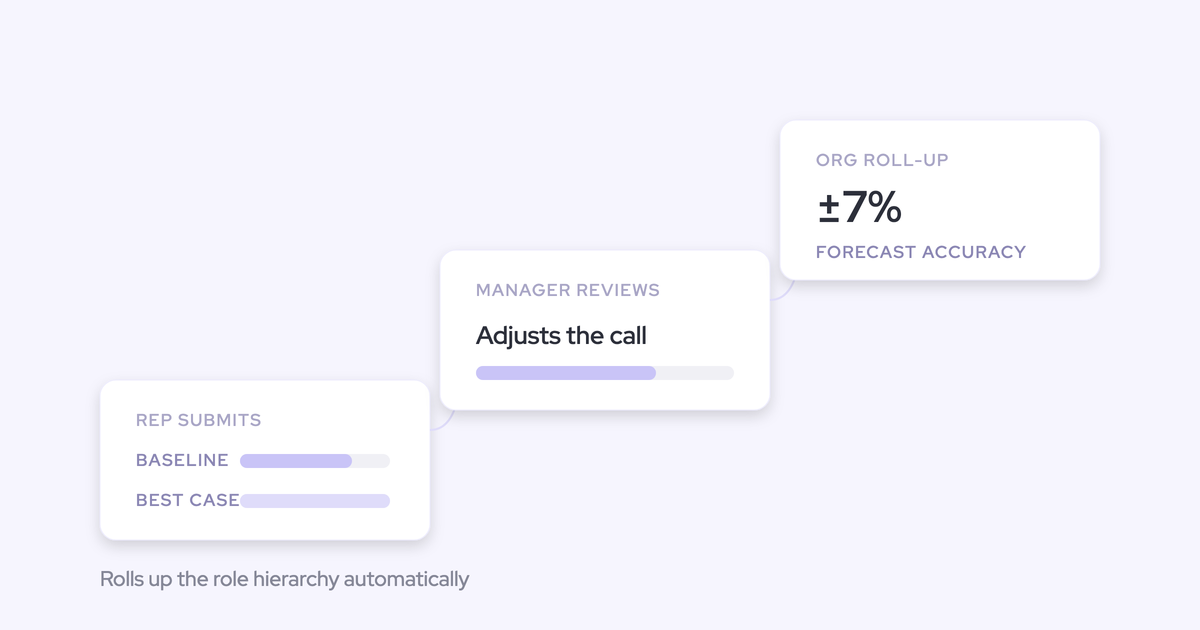
| One submission place with a locked snapshot | Deal-by-deal, rep-by-rep submissions that roll up the Salesforce role hierarchy automatically, with changes tracked. Weflow snapshots opportunity data every few hours, so the pipeline waterfall and the day-35-versus-last-quarter comparison exist without a warehouse project. |
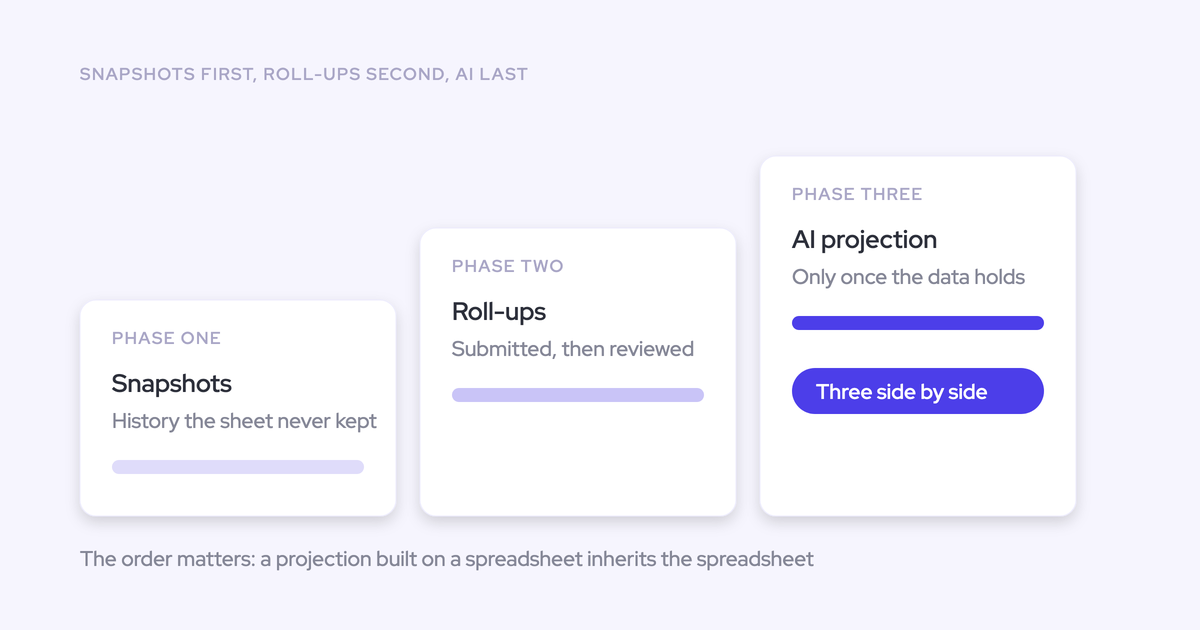
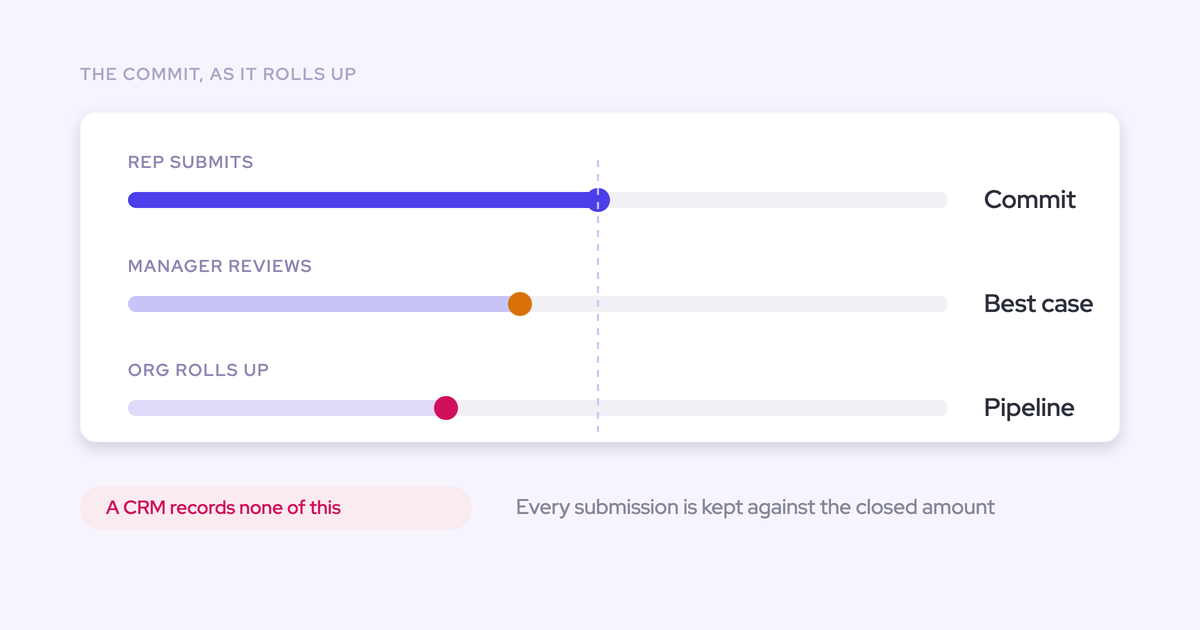
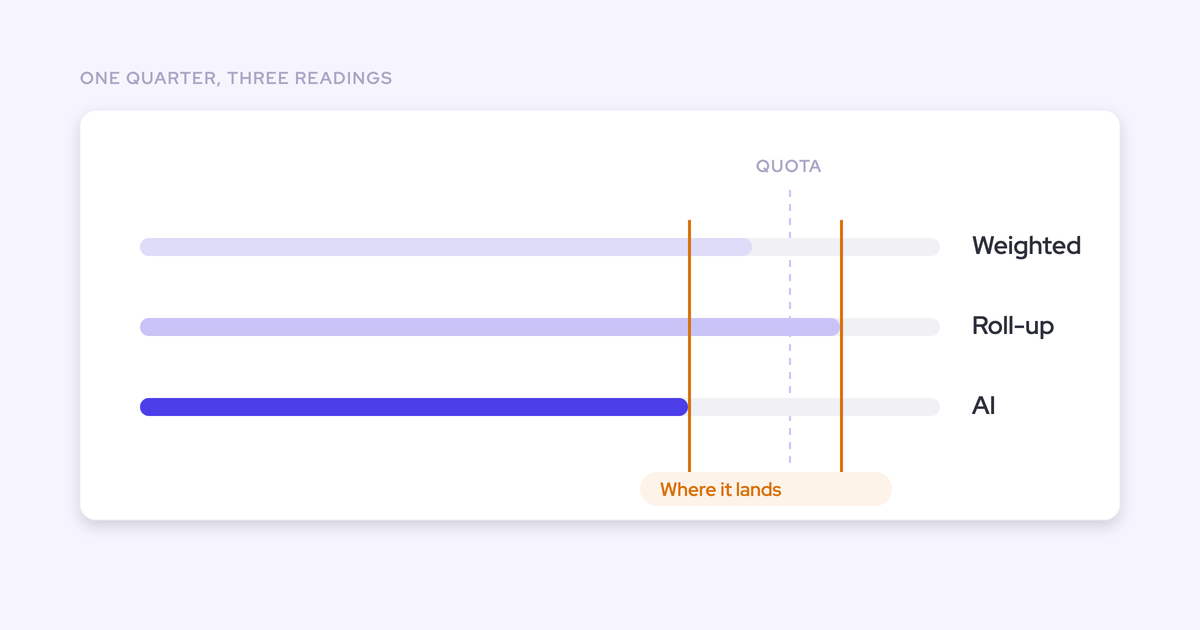
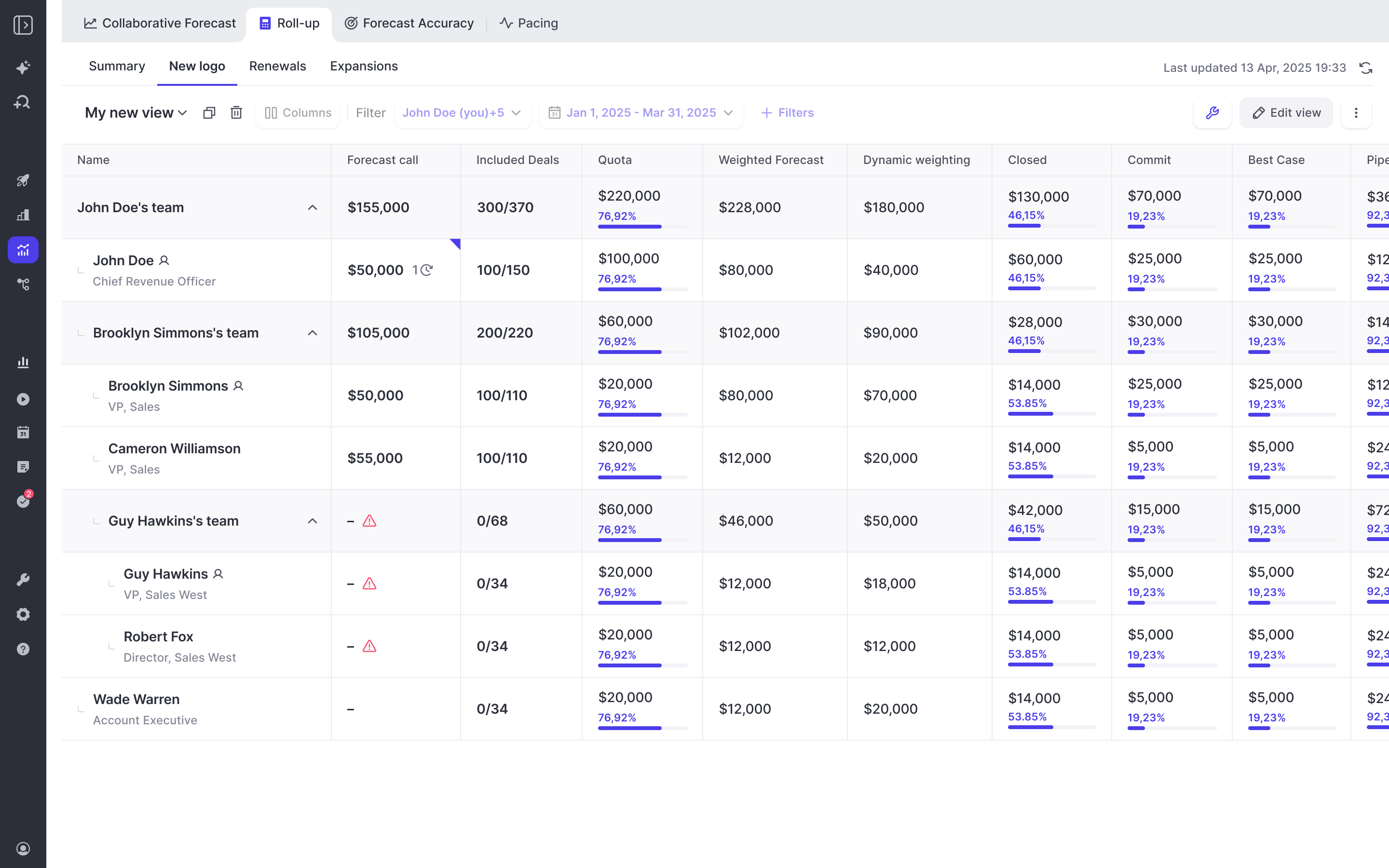
| The weekly forecast call | Three forecasts side by side: a weighted forecast from historic stage conversion, the rep and manager roll-up, and an AI projection that returns a landing corridor rather than one number. The gaps between the three are the agenda, instead of a poll of confidence. |
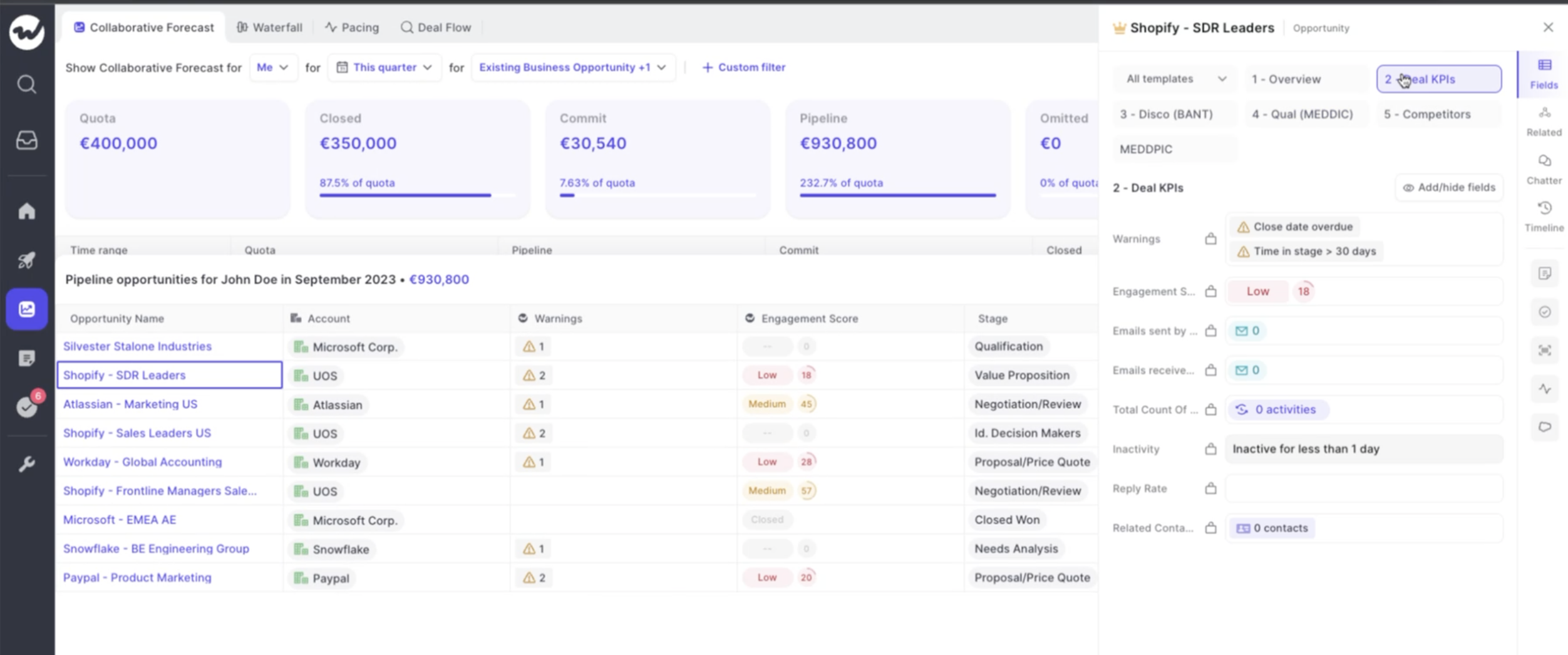
| The deal review | Warnings you author against your own slippage patterns: close date pushed more than twice, one contact on the deal, days in stage, no activity in a window that matches your cycle. Plus computed fields Salesforce doesn't have, like days inactive, reply rate and last and next meeting. |
| Commit criteria | Deal warnings and data-quality flags surface inside the forecast submission screen, at the moment a rep picks what to commit, so unhealthy pipeline gets caught before it enters the number. |
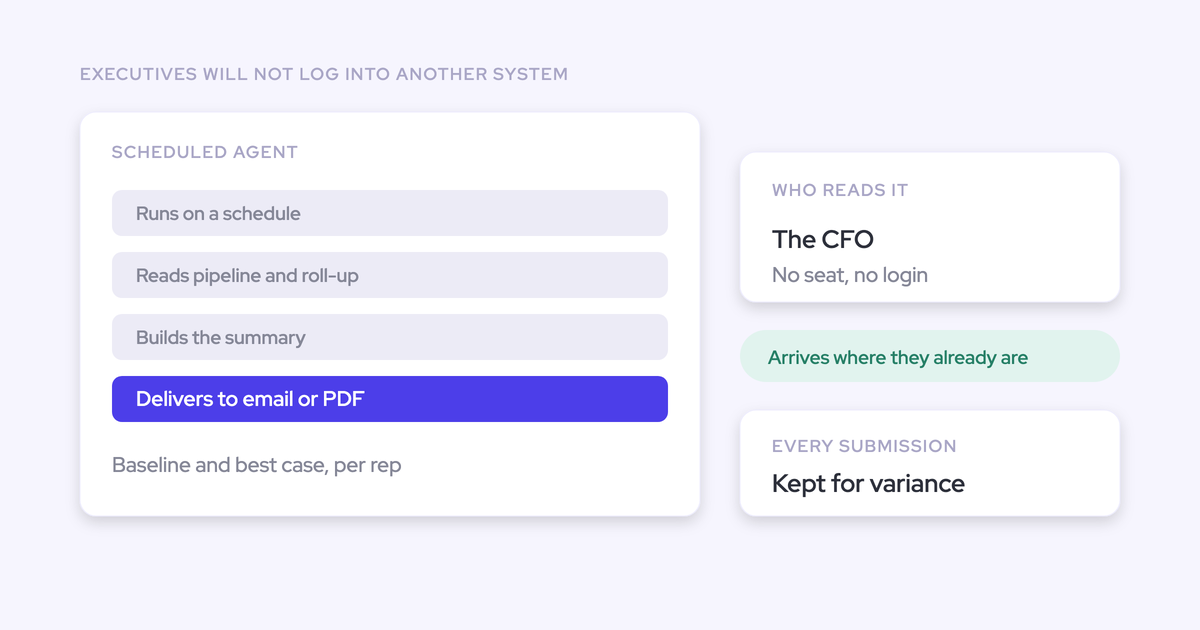
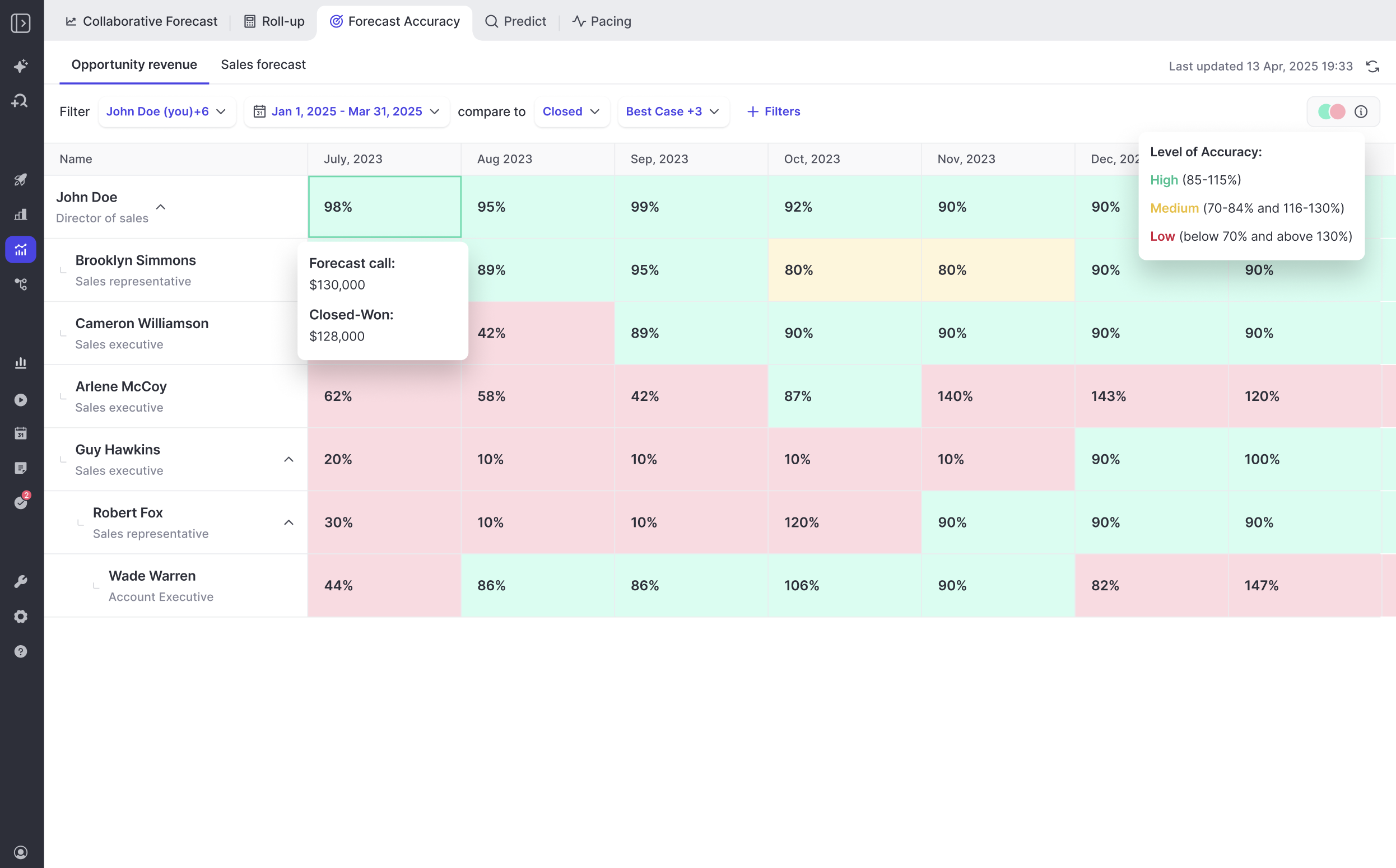
| Scoring accuracy | Every submission is stored against the final closed amount, so variance is reportable per rep, per manager and by segment across consecutive quarters. |
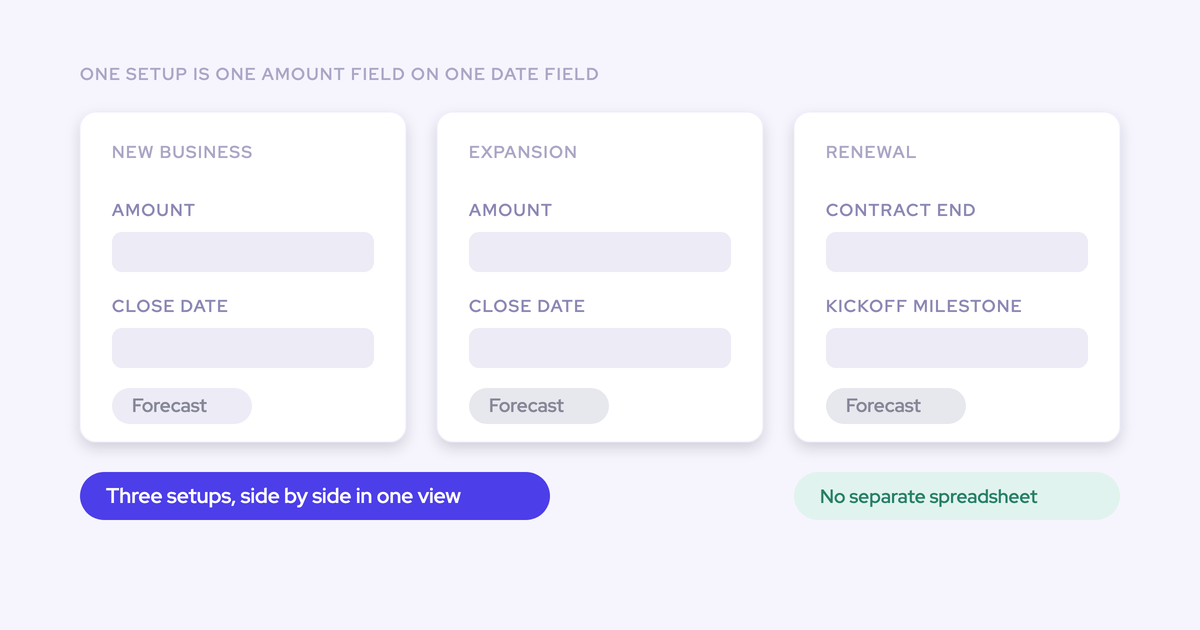
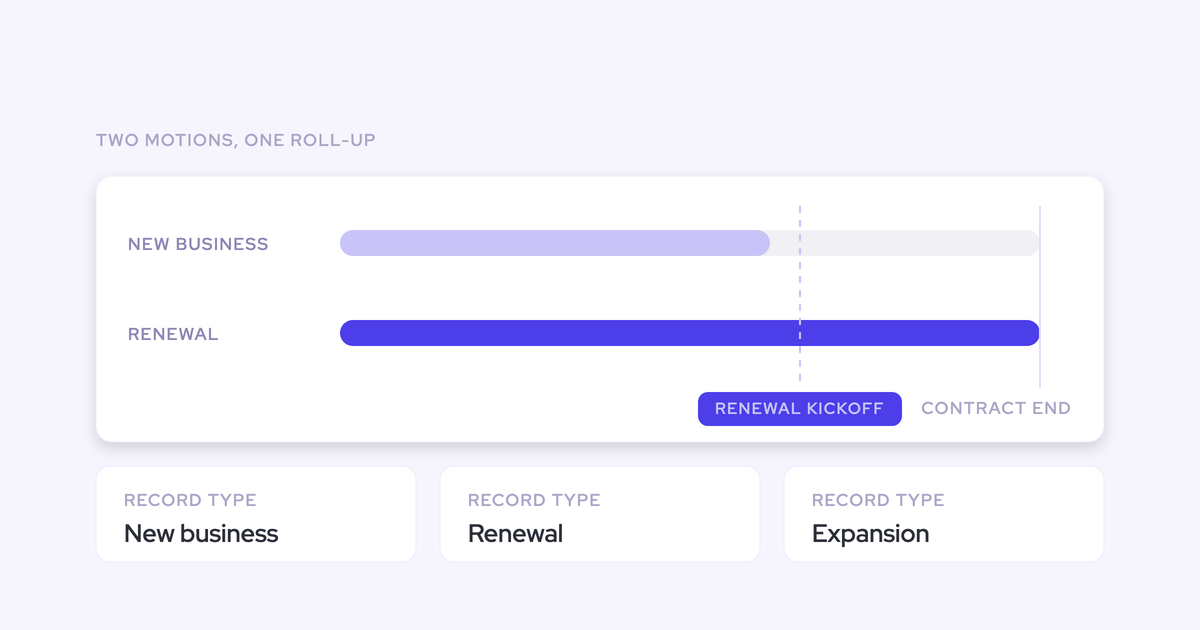
| Renewals as their own motion | Parallel forecast setups per motion, each with its own revenue field, stages, cadence and quota, plus a renewal roll-up and a configurable renewal-kickoff milestone ahead of contract end. |
The submission and roll-up view is where the hierarchy either works or quietly breaks, so it's the first thing worth pressure-testing in a trial.
Deal warnings and engagement signals sit on the opportunity itself, next to the number a rep is about to commit.
Once submissions are stored, "whose call is worth listening to" stops being an argument and becomes a track record.
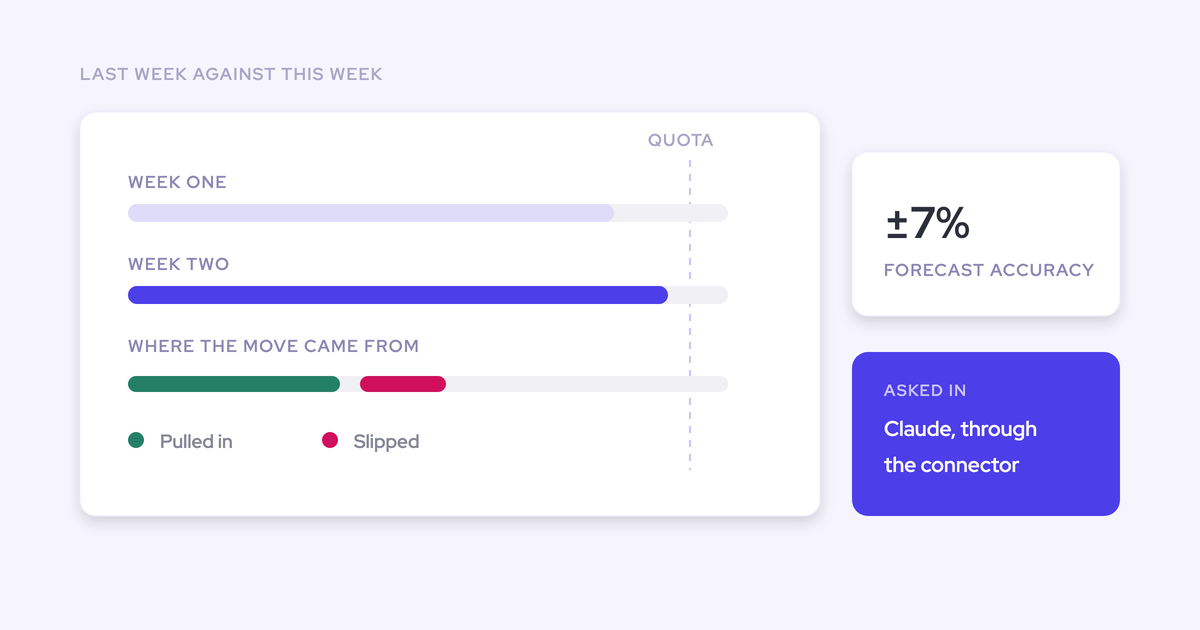
The reason the outputs hold up is the layer underneath: activity, contacts and conversation content captured into native Salesforce objects first. Zeotap forecasts within ±7% running that process on Weflow. Weflow Forecasting on its own, without capture underneath it, produces weaker roll-ups, and we'd rather tell you that than sell it that way.
What Weflow will not fix for you
Three limits, stated plainly, because you'll find them anyway.
Forecast submissions live in the Weflow app, not inside Salesforce. Everything else Weflow generates lands in Salesforce objects: activity, transcripts, summaries, AI field updates, and opportunity edits written straight back. Forecasting is the exception. If your team has decided reps live in one system only and that system is Salesforce, roll-up submission breaks that rule. The weighted forecast and the AI projection still work for you, because both run off CRM data with no rep input, and teams that snapshot forecasts into a BI tool pull the roll-up through the public API.
Multi-currency is on your conversion logic, not ours. Weflow forecasts read the standard Salesforce currency field and don't apply dated exchange rates. If you need dated conversion, point the forecast at your own converted amount field.
Weflow gives you the framework, not the discipline. Forecasting is a muscle, and the tool alone will not fix it. If nobody owns the cadence after go-live, you'll get a better-looking version of the same shelfware, and that will be on both of us.
FAQ: buying and rolling out a forecasting tool
Who should own the forecasting tool rollout?
One named person, accountable for the cadence running rather than for the configuration being finished. In most mid-market orgs that's the RevOps lead, with the CRO as sponsor and in the weekly call.
Without that name, the pattern is predictable: the instance gets configured, renewals never get set up, half the seats log in to look, and RevOps rebuilds the dashboard off Salesforce data twelve months later.
Can we keep Clari and still fix the data underneath?
Yes. Clari reads activities from Salesforce, so you can run Weflow Activity & Contact Capture and Conversation Intelligence to feed Salesforce and keep Clari for the forecast, and both get better.
The failure mode is running two capture engines against the same mailboxes, which duplicates activities and poisons every metric built on them. One capture infrastructure, with the incumbent consuming the cleaner Salesforce data.
Does our Salesforce data have to be clean before we buy?
No, and insisting on it is how the AI mandate and the data reality deadlock. Cleaning fifteen years of architecture is a migration that competes with the quarter.
Fixing capture at the source improves the foundation from the day it's switched on: emails, meetings and contacts mapped to the right record and stored as native Salesforce records, so flows, reports and BI can read them. Historical backfill of up to 24 months is available as an add-on if you need history to compare against.
Can renewals be forecast separately from new business?
Yes, and they should be. Renewals are the motion that never gets set up: new business runs in the forecasting tool while the renewal team forecasts straight out of Salesforce, in businesses where CSMs and account managers outnumber new-logo reps several times over.
Weflow runs parallel forecast setups per motion, each on its own revenue field, stages, cadence and quota, with renewals rolling up separately and a configurable kickoff milestone that fires ahead of contract end.
Do reps have to change how they work for adoption to stick?
The rep's job should shrink, not grow. Three judgments only they can make: what they're selling, when they think it closes, how confident they are.
Everything else has to arrive without typing. Weflow's capture runs server-side through the Google Workspace and Microsoft Entra ID apps, so there's no per-rep plug-in to install and no mailbox for anyone to connect. Any tool that still asks reps to log activity or hand-fill methodology fields is repeating the shelfware pattern with a new logo on it.
If you're standing up the process this quarter, take the full reference with you: Free: The Ultimate Sales Forecasting Guide.