
Clari after the Salesloft merger: what actually changed, and what it means for your renewal


If you own Clari, you've probably had a version of this thought in the last two quarters: the roll-up still works, and nothing else has moved. You present the board number out of it every month. You also can't name one thing that got better since 2023.
That's the exact spot most Clari owners are in when they reach out to us, usually with a renewal three to six months out. They're not shopping features yet. They're trying to work out whether the tool they run the business on has a future, and they need a position they can defend to a CRO and a CFO.
So here's the fair version. What the Clari-Salesloft merger actually confirmed, what Clari customers report experiencing that isn't confirmed, where Clari is still genuinely strong (the forecast roll-ups are not the problem), and a renew / coexist / consolidate framework you can take upstairs. No verdict at the top, because the credibility of this piece is that it doesn't start from one.
What the Clari-Salesloft merger changed: the confirmed facts
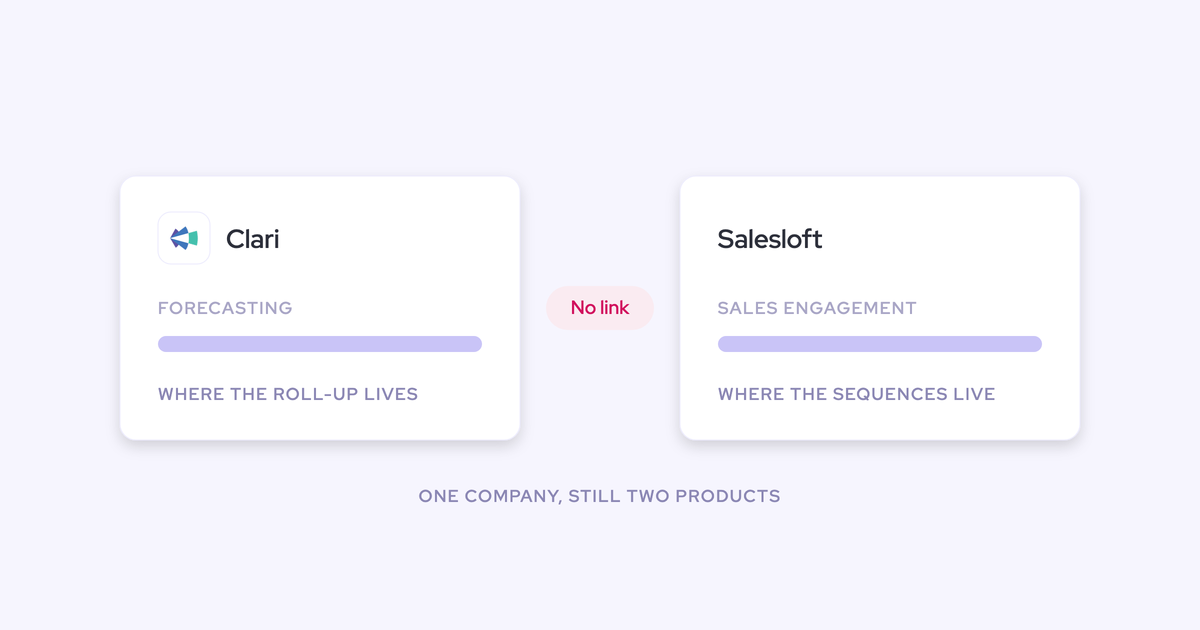
The Clari-Salesloft merger put two platforms under one private-equity-backed owner with new leadership. It combined the companies; it did not unify the products. Salesloft still runs as a standalone application alongside Clari's forecasting rather than inside it.
What's on solid ground:
- Clari and Salesloft merged into a single private-equity-backed company.
- Steve Cox was appointed CEO of the combined business.
- Salesloft remains a separate standalone product, not a native part of Clari's forecasting platform, so sales engagement sits beside the forecast rather than in it.
- Groove, which Clari acquired in August 2023, is now positioned as "Groove by Clari" and the integrated engagement module, while still running as its own application with its own login.
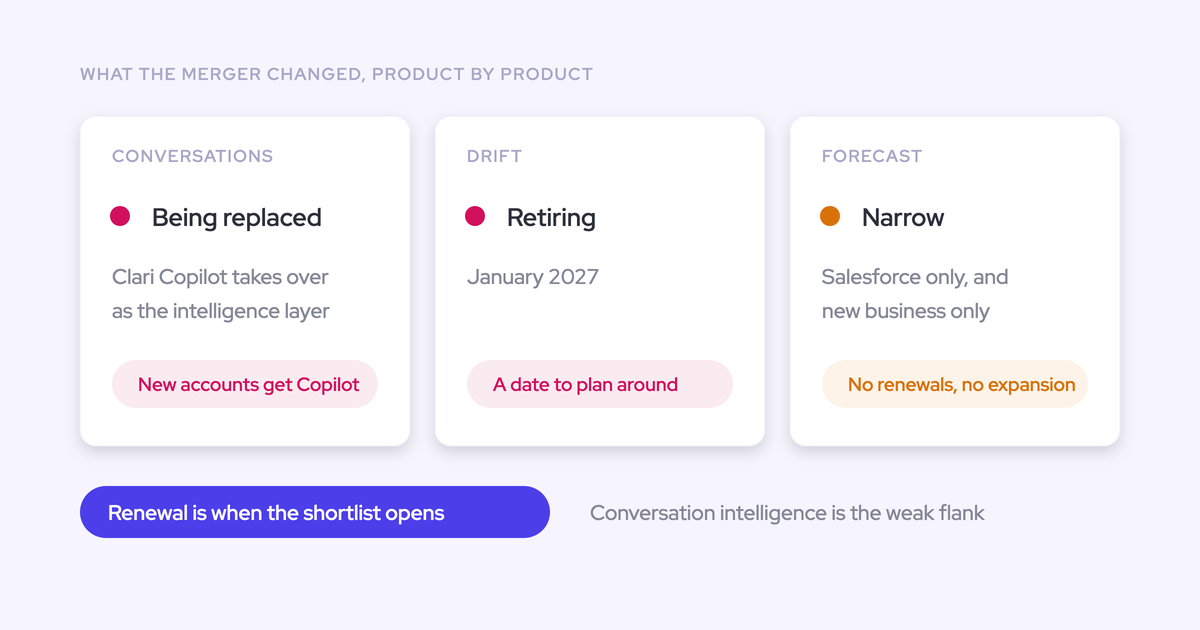
- Clari Copilot, the conversation intelligence product, came in through the acquisition of a separate recording company rather than being built as part of the platform.
Note the direction of the transaction, because buyers get it backwards on calls. One prospect told us "since Salesloft acquired Clari they're just not investing in it anymore." Directionally he's describing something real. Structurally, it's a merger under a new owner, and that distinction matters when you write the renewal memo.
Here's where confirmed ends. Nobody outside the company can see the R&D line, the headcount plan, or the roadmap commitments behind it. Anyone telling you the merger "killed" Clari is guessing. What you can read is output: what shipped, what your renewal quote does, and how long a config change takes.
Is Clari still being developed? What buyers report
No wind-down has been announced. What Clari customers consistently tell us is that the product they run in 2026 looks like the product they ran in 2023.
"the product we used in '23 is exactly the product we use in '26 · no improvements, no efficiencies, no growth"
— RevOps leader at a Clari customer, on a call with us
That's not one unhappy account.
The symptoms buyers describe cluster tightly:
- No agent or AI workflow layer. Clari has no agent builder for revenue workflows, in a year when every adjacent vendor shipped something branded AI.
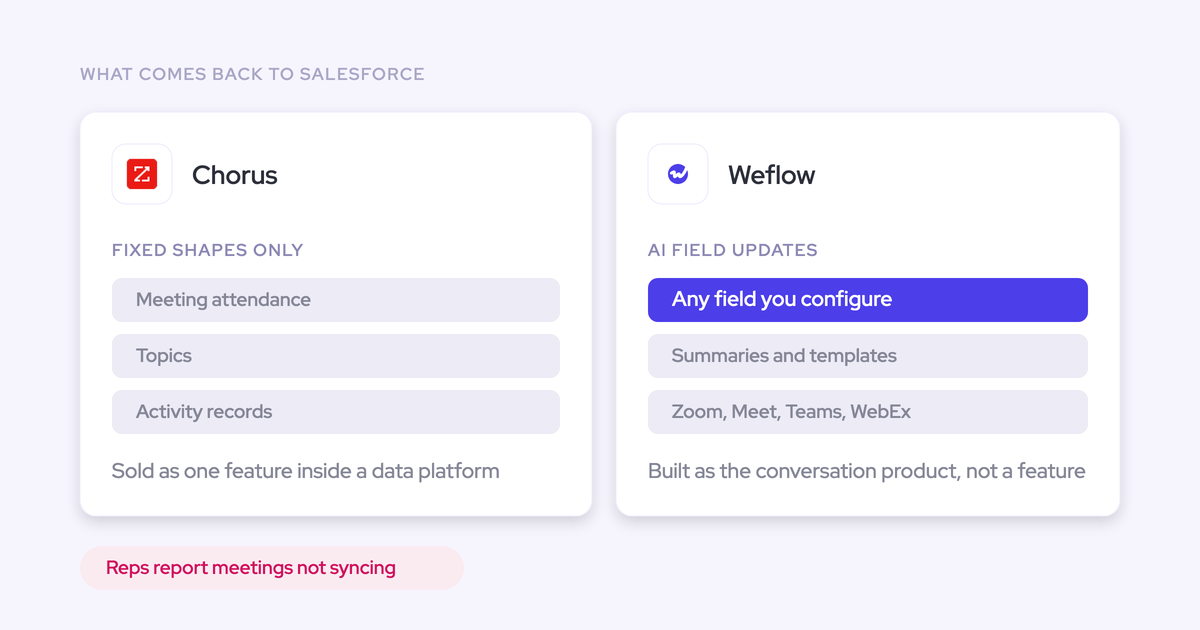
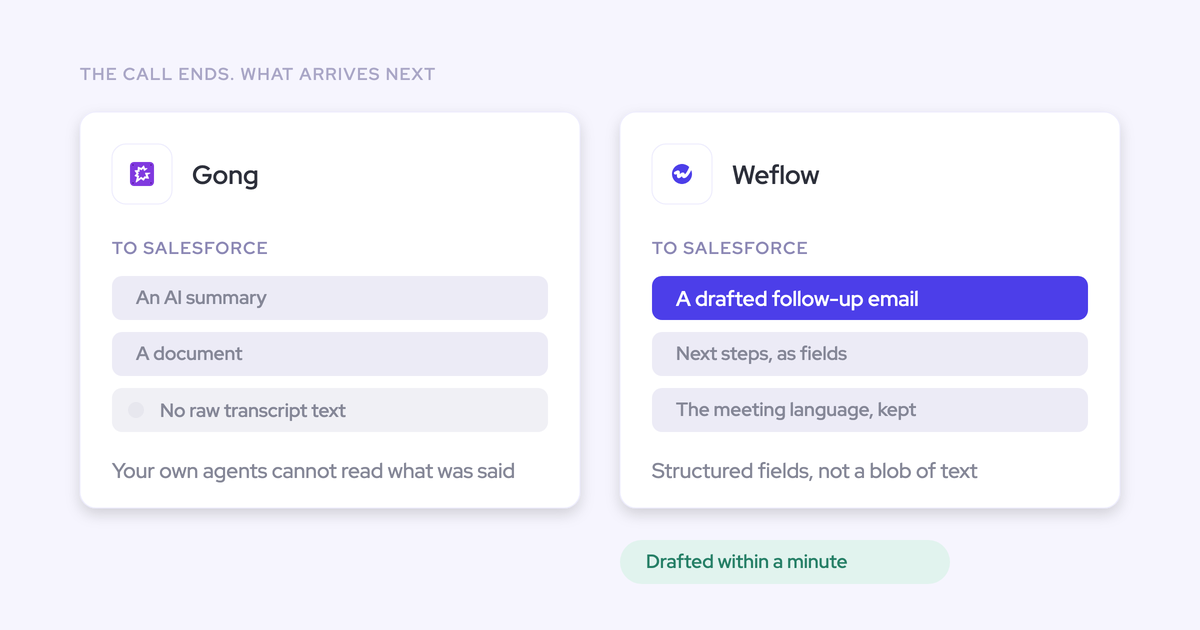
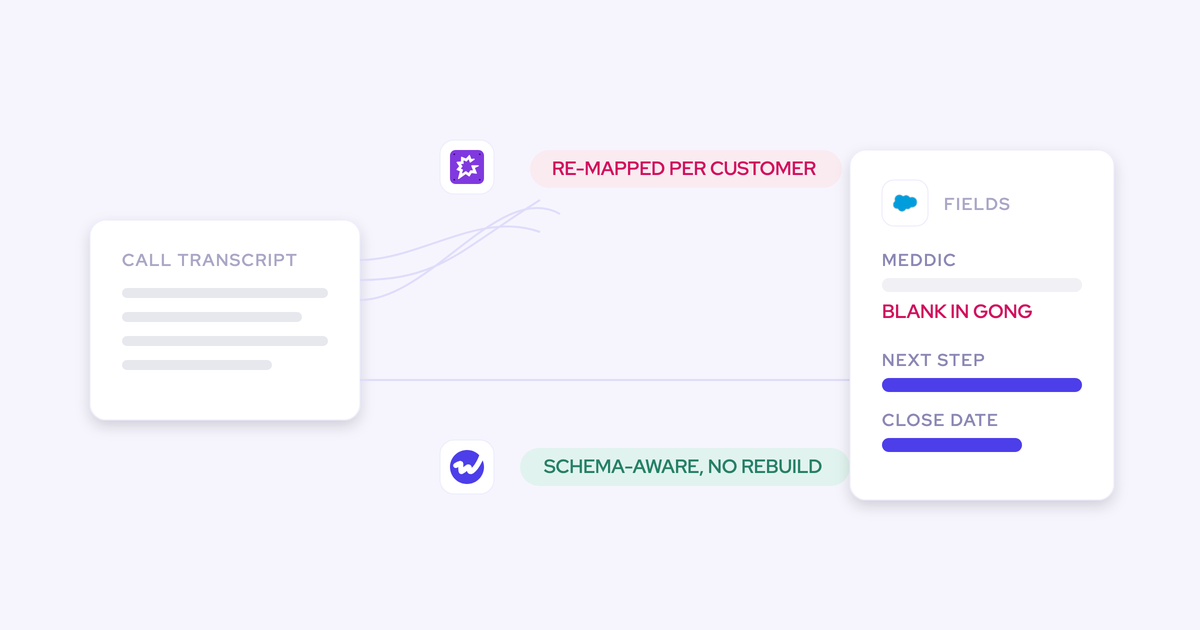
- Copilot doesn't write to Salesforce. No AI field updates into Salesforce fields or objects, no MEDDIC or MEDDPICC coaching scorecards, no rep-level coaching depth.
- Modules nobody opens. Teams tell us two of the products in their contract went unadopted, usually because no internal owner was ever assigned at implementation.
- Deployments going stale. A poorly implemented instance ends up lightly used, and the interface reads as busy and underinvested.
- Capture is the weak link. Clari Capture maps activity server-side off the email domain, so emails get missed when a contact isn't mapped to the right account, and activity gets misattributed when an account has several open opportunities.
- Forecast accuracy still isn't measured. After four years in the tool, a team often still can't say how close its calls were.
Be honest about what that evidence is. These are prospect and customer reports gathered in evaluations, not statements from Clari. But we hear them often enough, in the same words, that treating it as one team's bad implementation would be wishful.
Why Clari's products never became one platform
Clari's suite was assembled by acquisition, so the products never came to share a data layer. That's the structural reason the thing you bought as a platform behaves like separate products.
The clearest symptom is the one Clari owners feel weekly: the forecasting product and the conversation intelligence product don't talk to each other, so call content never informs the forecast. One prospect running both described exactly that gap, saying he couldn't see the value in owning Copilot and Forecast when they're
"not talking to each other"
— RevOps leader at a Clari customer, on a call with us
What customers do next is the tell. They pipe transcripts out into a separate AI workspace, pull the structured insight out by hand, and paste it back into the CRM. That's the fragmentation the suite was sold to remove.
| Component | How it arrived | How it connects |
|---|---|---|
| Forecasting | Clari's original product | The core. Strongest and most defensible module, and the one the roll-up runs on |
| Copilot (conversation intelligence) | Acquisition of a separate recording company | Doesn't share data properly with the forecast; no AI field updates into Salesforce |
| Groove (sales engagement) | Acquired August 2023 | Positioned as the integrated engagement module, still a separate app with its own login |
| Salesloft (sales engagement) | Merger under new PE ownership | Standalone application alongside Clari's forecasting, not built into it |
| Capture | Server-side activity capture feeding engagement scores | Domain-based mapping; misses and misattributes on accounts with multiple open opportunities |
The merger continued the pattern rather than breaking it. A second platform got bolted alongside the first, which is why "one vendor" and "one data layer" are not the same purchase.
If you want a two-minute test for any suite, including ours: ask which Salesforce object each product writes to, and whether one product can filter on a field the other produced. Vendors with six integrated products and vendors with six acquired products look identical on a feature grid. They behave completely differently in production, and you find out after signature.
Does private equity ownership mean less investment in Clari?
PE-driven consolidation typically prioritizes margin over product investment. That's a risk pattern worth naming plainly, and it is not a confirmed sentence about Clari's roadmap.
We're not going to pretend we know the plan. A sponsor can also fund a rebuild, and combining two platforms is exactly the kind of thing a new CEO gets hired to do. What you can do between now and renewal is stop arguing about intent and start reading signals.
The ones that actually tell you something:
- What shipped in the last twelve months that you turned on. Not the release notes. The features your team uses today and didn't a year ago.
- What the renewal quote does. Uplift percentage, seat minimums, and whether the pressure is toward a multi-year lock.
- Whether you can still configure anything yourself. If a new forecast call, a new quarterly target, or a column change still routes through professional services, that's the operating model you're renewing.
- Whether your open feature requests have dates. "On the roadmap" with no quarter attached is a no.
- Whether Copilot and Forecast have started sharing data. That's the one investment that would prove real platform work is happening.
- How long a support ticket takes now versus two years ago. Support responsiveness moves before roadmap does.
Six months of that gives you a defensible internal position. Not a vibe.
What Clari still does well: roll-up forecasting at scale
Clari's roll-up forecasting is genuinely strong and flexible, and at extreme enterprise scale it's more mature than anything challenging it, including us. If your org runs a thousand-plus sellers through a deep hierarchy, that's the real thing and we'll say so.
"Clari was the one screen that I live in most in terms of the forecasting element · their forecasting is really strong, it does everything that we need · where it's lacking, I would say, is the conversation intelligence"
— RevOps leader at a Clari customer, on a call with us
Three views carry most of the value, and any replacement gets judged on them:
- The pipeline waterfall, which shows what actually moved instead of what the pipeline totals to today.
- The pacing view.
- The comparison of where the quarter stands against the same day in previous quarters, which is the hardest to reproduce because it needs pipeline state snapshotted over time.
The interaction bar matters too. Buyers hold up Clari's inspect view, its Quick Submit that updates every month and week of a quarter in one action, and its quarter-navigation dropdown as the usability standard a replacement has to match. And Clari sells a process, not just software: predictability, repeatability, a cadence a CRO can defend to a board. That's a real reason your CRO likes it.
Now the pivot. Strength in one module doesn't answer the roadmap question, and even inside forecasting there are gaps you've probably already worked around:
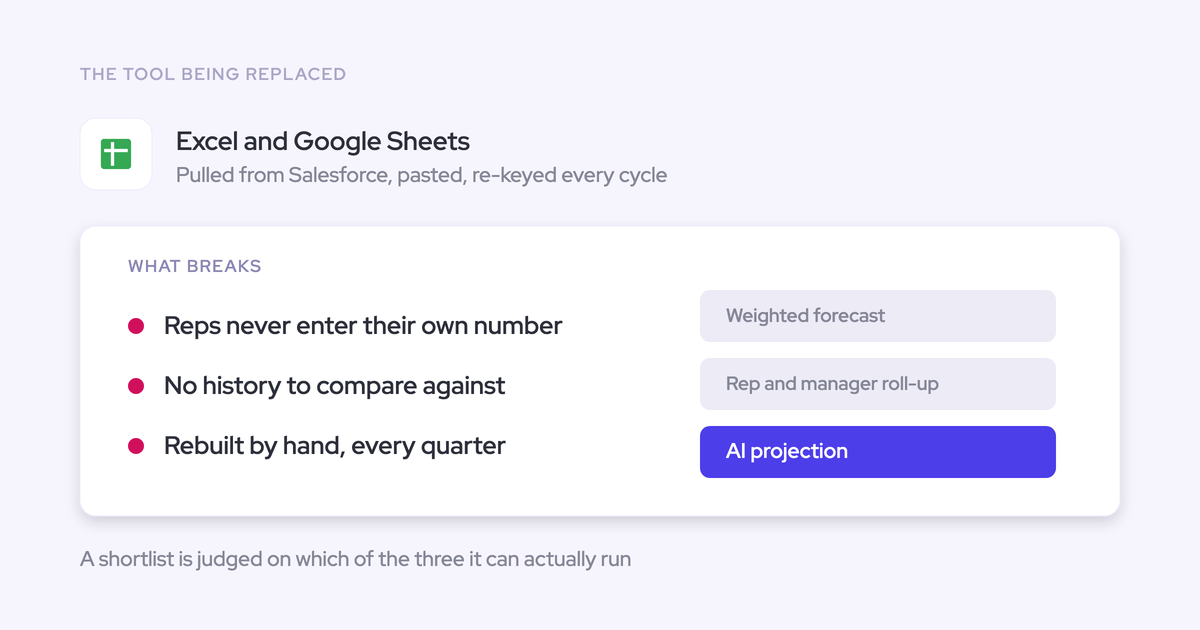
- It doesn't measure forecast accuracy, so nobody can grade last quarter's commit.
- It's weak on deal-by-deal health and on spotting deals being pushed, because the data layer underneath the roll-up is thin.
- It's rigid against the Salesforce hierarchy, which blocks a separate forecast when one leader owns multiple products and teams.
- Its forecast views aren't presentable to a CFO or CEO, so the number that gets debated is rebuilt somewhere else.
"Clari is clearly not suited as a reporting tool to present to this type of stakeholders. So we're using Tableau. So we kind of are flowing the data from Clari to Tableau."
— RevOps leader at a Clari customer, on a call with us
A well-organized opinion is still an opinion. That's the honest ceiling on a strong roll-up sitting on weak capture.
Renew, coexist, or consolidate: making the renewal call
The renewal isn't binary. There are three defensible positions, and which one is right for you falls out of four criteria: how much roadmap risk you can carry, whether a sponsor mandates the tool, how hard the cost pressure is, and whether you can get a migration staffed.
| Criterion | Renew | Coexist | Consolidate |
|---|---|---|---|
| Roadmap-risk tolerance | High: you can live with a frozen product for another cycle | Medium: you hedge by owning the layer underneath | Low: you want shipping velocity as part of the purchase |
| Sponsor or CRO mandate | Mandate exists and you agree with it | Mandate exists and replacing Clari is a political non-starter | No mandate, or you have the air cover to run a bake-off |
| Cost pressure | Manageable; you negotiate seats and modules down | Real; you cut unused Clari seats and spend the saving on the data layer | Hard; $120-180 per user for one working module is the line item under review |
| Migration appetite | None this cycle | Low: capture and conversation go in without touching the forecast process | Exists, but only as a managed migration with a fixed timeline and price |
| What you're betting on | That the roll-up at your scale is worth the stall | That better data makes Clari's own output better while you keep options open | That fragmentation, not the roll-up, is what's costing you |
When renewing Clari is the right call
Renew when the roll-up at your scale is genuinely irreplaceable and the switching cost outweighs the roadmap risk for one more cycle. That's a real answer, not a cop-out, and at a thousand-plus reps it's often the correct one.
Just don't renew quietly. Put the stall on the table: pull login data by module, cut the seats and products nobody opens, and ask for dated commitments on the requests you've had open longest.
One prospect took exactly this route into their June renewal, cutting back to about twenty seats and keeping only the piece that works. Seat count is the leverage you have, and renewal month is the one month a year you have it.
When coexisting and owning the data layer fits
Coexist when replacing Clari isn't a product decision at all. Where a private equity sponsor has standardized on a forecasting vendor across the portfolio, the tool is effectively locked in and the better product does not win.
"The PE firm really loves Clari. They've been using it for years. So they like the visual. I try to approach it like would you be interested in changing that? And that was kind of a non starter."
— RevOps leader at a Clari customer, on a call with us
The move here is to keep the roll-up, trim what isn't used, and own the capture and conversation layer beneath it. Clari reads activity from Salesforce, so cleaner activity in the CRM makes Clari's own engagement signals and deal views better, not worse.
It also routes around the objection you'd otherwise hit. A CFO who just signed a forecasting renewal will not approve a second forecasting tool. Capture and conversation intelligence sit outside that line item, so they're approvable this quarter.
When consolidating onto one platform pays off
Consolidate when the pain is fragmentation itself: capture, conversation intelligence and forecasting that don't talk, three renewals, three implementation scars, and a data layer that stays as bad as it was on day one.
The trigger is usually the moment you notice how many tools a switch lets you turn off. A vendor that adds a fourth login loses to one that removes two.
But be clear-eyed about why consolidation stalls. A tool swap doesn't compete with the incumbent, it competes with your own delivery backlog. It gets approved when it arrives as a managed migration with a fixed timeline, a named benefit and a price, and it dies when it arrives as a co-project needing RevOps hours in a busy quarter.
Where Weflow fits: coexist with Clari or consolidate
Weflow is the Revenue AI Orchestration platform for sales, customer success, and RevOps teams, built for teams that run on Salesforce. We're the structural inverse of a suite assembled by acquisition, which is the only reason we belong in this article at all: two of the three paths above need a platform built as one, and this is what that looks like in practice.
One data layer built as one product, not assembled
Activity & Contact Capture, Conversation Intelligence, and Deal Intelligence & Forecasting read the same data, and everything they capture or generate lands in native Salesforce objects your reporting and automations already use. There's no vendor cloud holding the layer your forecast depends on.
What that changes day to day:
- Call content reaches the forecast. Weflow Conversation Intelligence writes AI field updates into Salesforce fields, including MEDDIC and MEDDPICC answers and next steps, so the deal record the forecast reads reflects the conversation instead of what a rep remembered to type.
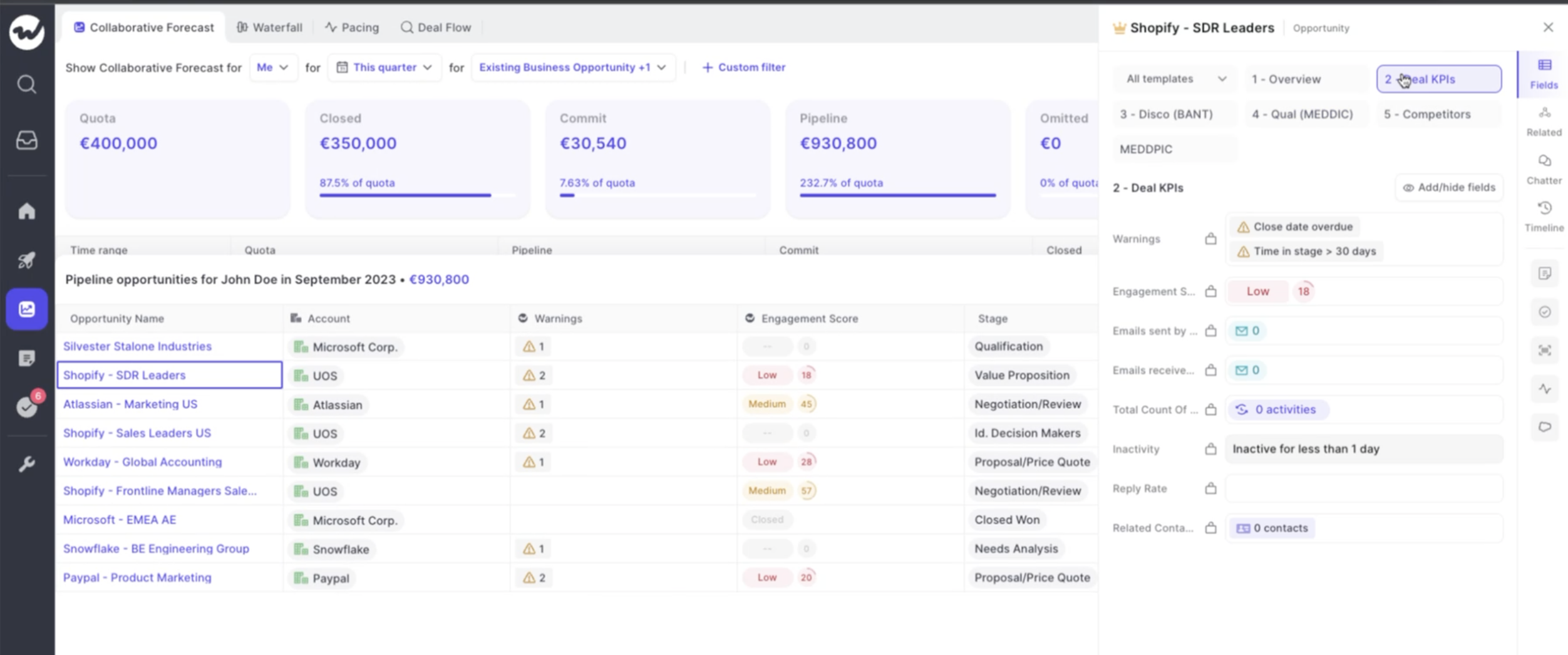
- Deal health sits under the roll-up. Over fifty deal signals, warnings, engagement scores and an AI prediction you can hold against the rep roll-up.
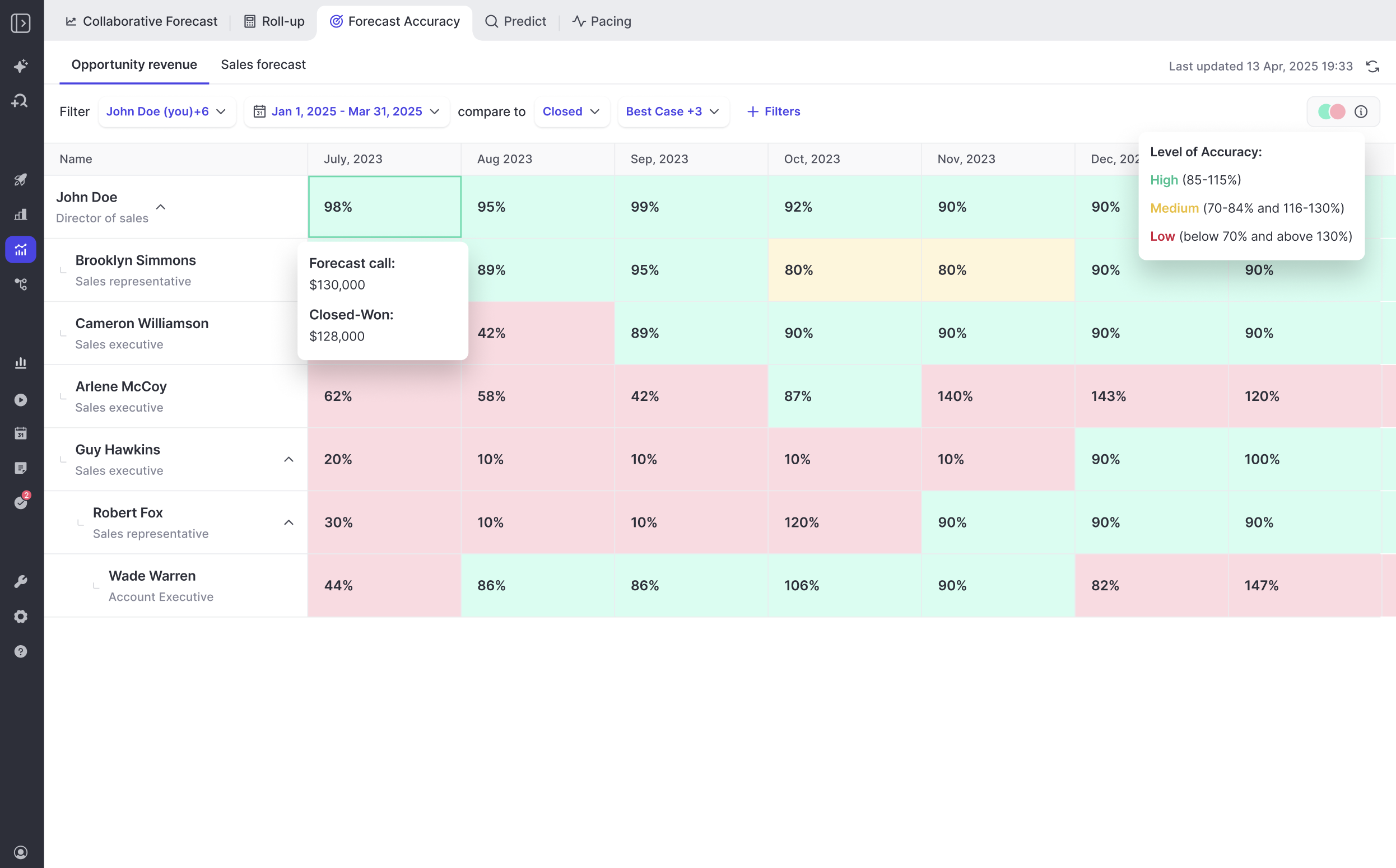
- Forecast accuracy is measured. Forecasted versus actual, by rep and by manager, tracked over time.
- Admins change the process themselves. A new forecast call, a new quarterly target, a reordered column: that's the admin console, not a professional services ticket and a two-week wait.
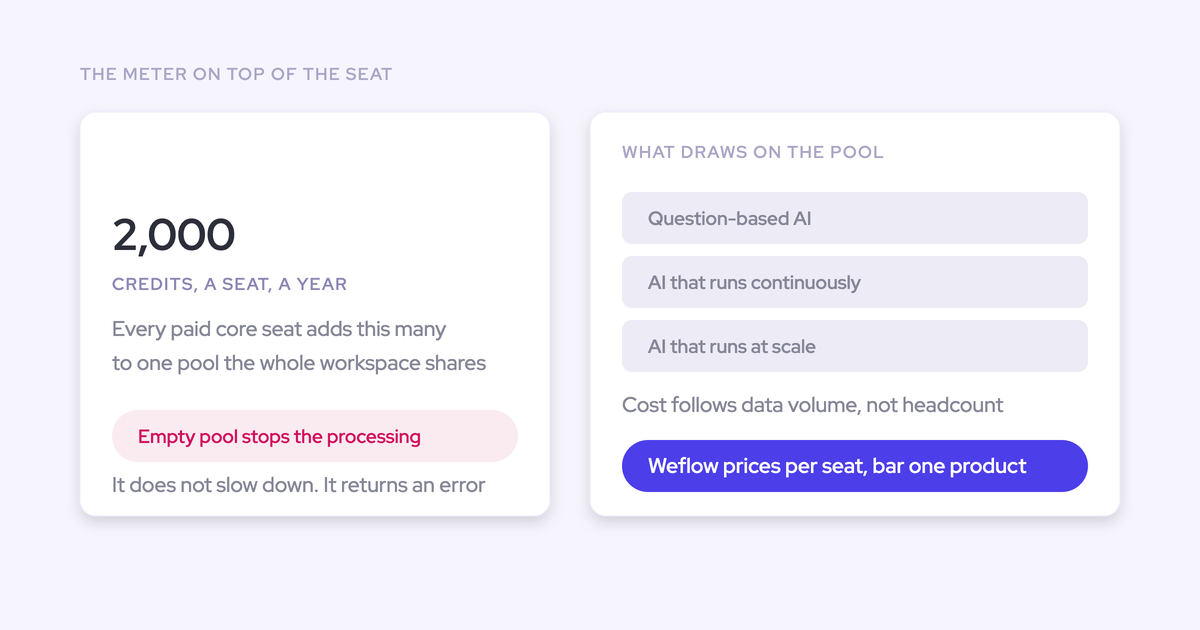
- Pricing is published. $19 per user per month for capture, $39 for Conversation Intelligence, $39 for Deal Intelligence & Forecasting, or $49 / $59 / $79 for the Revenue AI Foundation, Business and Enterprise bundles. No implementation fees, no usage metering, ten-user minimum, billed annually.
The deal-level view is where the difference from a roll-up-only tool shows up fastest: warnings, engagement score, time in stage and reply rate on the opportunity itself, not aggregated at account level.
Setup is a 30 to 45 minute session with a Salesforce admin and your Google or Microsoft admin, then one to three weeks to full value, mostly spent on business logic: AI templates, forecast types, cadences, quotas, warning rules.
Running Weflow alongside Clari without breaking capture
This is the coexist path, and it's mechanically simple as long as you respect one rule: one capture engine writing to Salesforce. Two engines running in parallel is the failure mode, not the coexistence.
The order that works:
- Decide which system owns capture, and stand the other one down. If Einstein Activity Capture is in the mix, set its event sync to one direction only, from mail and calendar into Salesforce, or the same meeting gets written twice and your activity metrics disagree with each other for weeks.
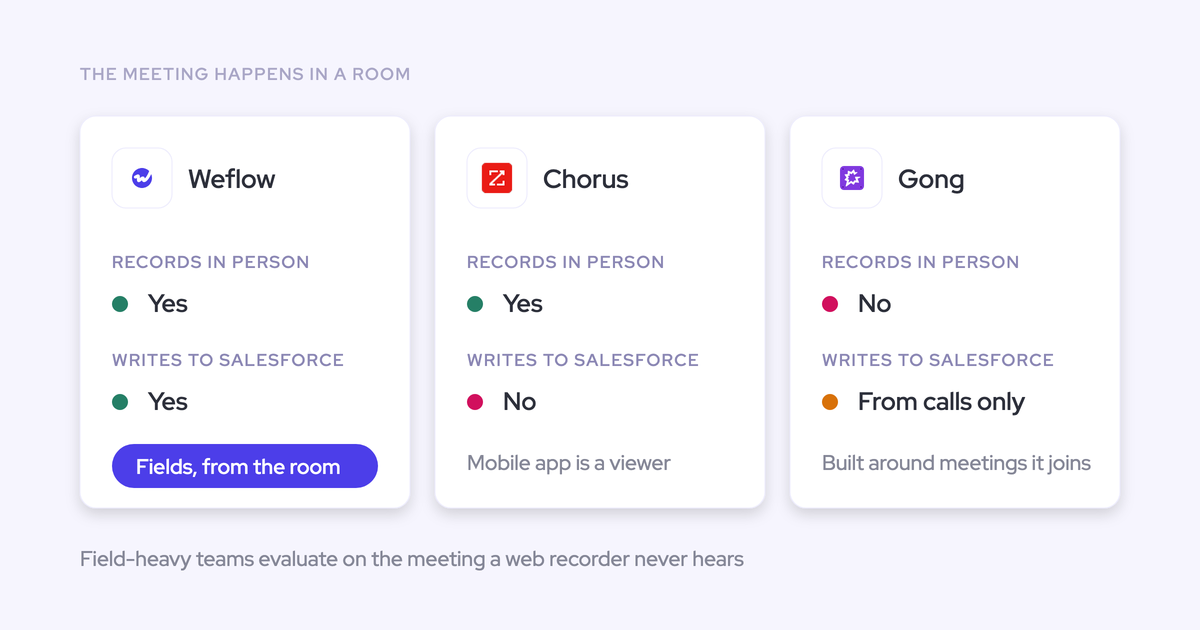
- Turn on Weflow Activity & Contact Capture. Emails, meetings and contacts map to the right Salesforce records, missing contacts get created, and up to twenty-four months of history can be backfilled from your mail tenant so in-flight deals don't look artificially dead on day one.
- If a sequencer is still logging email, switch on compatibility mode. Weflow delays its own sync, checks for the other tool's tracking pattern, and skips the message rather than duplicating it. Salesloft, Outreach and Apollo ship as presets.
- Add Conversation Intelligence so methodology fields, next steps and risks populate in Salesforce. Clari reads that Salesforce activity, so its engagement signals and deal views get better without anyone touching the forecast process.
- Leave forecasting alone until renewal. That's the political fight, and it's the one you don't need to have yet.
The end state is cleaner than running two tools forever, and you know it. But the sequence above is what makes the first step approvable this quarter instead of next year.
What Weflow doesn't do that Clari does
- No sales engagement. No sequences, no cadences, no dialer. Weflow starts at the opportunity, so the Salesloft side of the merger is not something we replace.
- No pipeline flow view. Weflow has pacing, waterfall, coverage and generation analytics. Flow is a Clari view we don't match.
- Forecast submissions live in the Weflow app, not in Salesforce. Everything else writes back to native objects, but targets, submissions and roll-up data sit in Weflow and come out through the public API. If your rule is that reps only ever touch Salesforce, roll-up submission breaks it.
- Clari's roll-up is more mature at extreme enterprise scale. Past roughly a thousand reps, we're not going to tell you we're further along than Clari on roll-up mechanics.
- One opportunity lands in one period. The date field is configurable, but Weflow can't split a single deal's amount across quarters, so delivery-schedule revenue recognition won't reproduce here.
- No VoIP or phone call capture, and no FedRAMP. Phone-heavy motions and federal contractors are not a fit today.
Walk through the product yourself, no call required.
FAQ: Clari-Salesloft merger and your renewal
What does the merger mean for Clari pricing at renewal?
Clari doesn't publish pricing. There's no self-serve signup, so every number is a quote.
What's reported by buyers we talk to: roughly $120 to $180 per user per month, with regular increases, plus $15,000 to $50,000 in professional services implementation fees. Pricing also runs regressive on size, so small purchases carry a disproportionate per-seat cost while large deals get cheaper per seat.
PE ownership patterns point toward margin, so plan for an uplift ask and a push toward multi-year. Your leverage is unused seats, unadopted modules, and the honest question of what shipped since the last renewal. For comparison, Weflow's published list runs $19 to $79 per user per month with no implementation fee.
Can I replace Clari without ripping out forecasting mid-quarter?
Yes, and you shouldn't do it any other way. Revenue tooling adopts in data-foundation order, and forecasting goes last.
- Capture goes first. It asks nothing of reps, works the day it's enabled, and everything downstream depends on it.
- Conversation intelligence follows, because reps get an immediate personal win in summaries and follow-ups.
- Deal intelligence lands once activity is attached to the right opportunities, since the signals are computed from it.
- Forecasting moves last, at a period boundary, as a managed migration with a fixed timeline. It isn't a tool topic, it's your operating cadence encoded, and it needs sales leadership in the room.
Nothing in the first three steps touches your forecast submission process. That's the point: the risky change happens once, on a clean date, not in week six of a quarter.
What happens to historical forecast data and snapshots if I leave?
Split it into three buckets before you sign anything.
- Your opportunity records and activity history are yours. They're in Salesforce and in your own mail tenant, which is why Weflow can backfill up to twenty-four months of emails and meetings into the CRM on day one, and why that history isn't lost when a capture tool is switched off.
- Submission history and pipeline snapshots built inside a vendor's system go with the vendor. Export them before the contract ends. Once access lapses, the quarter-over-quarter comparison you built over four years is gone.
- Snapshot history restarts on the new platform. Weflow takes its own opportunity snapshots from go-live forward, so your same-day-last-quarter view rebuilds over time rather than arriving complete. If that comparison is load-bearing for your board pack, that's an argument for starting the migration earlier in the year, not later.
Does Weflow match Clari's roll-up and quarter-over-quarter views?
On roll-up mechanics and pipeline analytics, mostly yes. On one view, no.
Weflow runs deal-by-deal, rep-by-rep submissions where each rep submits a baseline and a best case, either as a total or by selecting the named opportunities behind each figure. Every submission is versioned, managers can override without erasing the rep's original, and deadlines can lock the field. Roll-ups run up the Salesforce role hierarchy, and Weflow can also model its own hierarchy when one leader owns multiple products or teams.
Around that: waterfall, pacing, coverage, benchmarks, opportunity snapshots, forecast accuracy tracking, an AI prediction that scores each deal individually, and multiple forecast methodologies for new logo, expansion and renewal running on their own cadences.
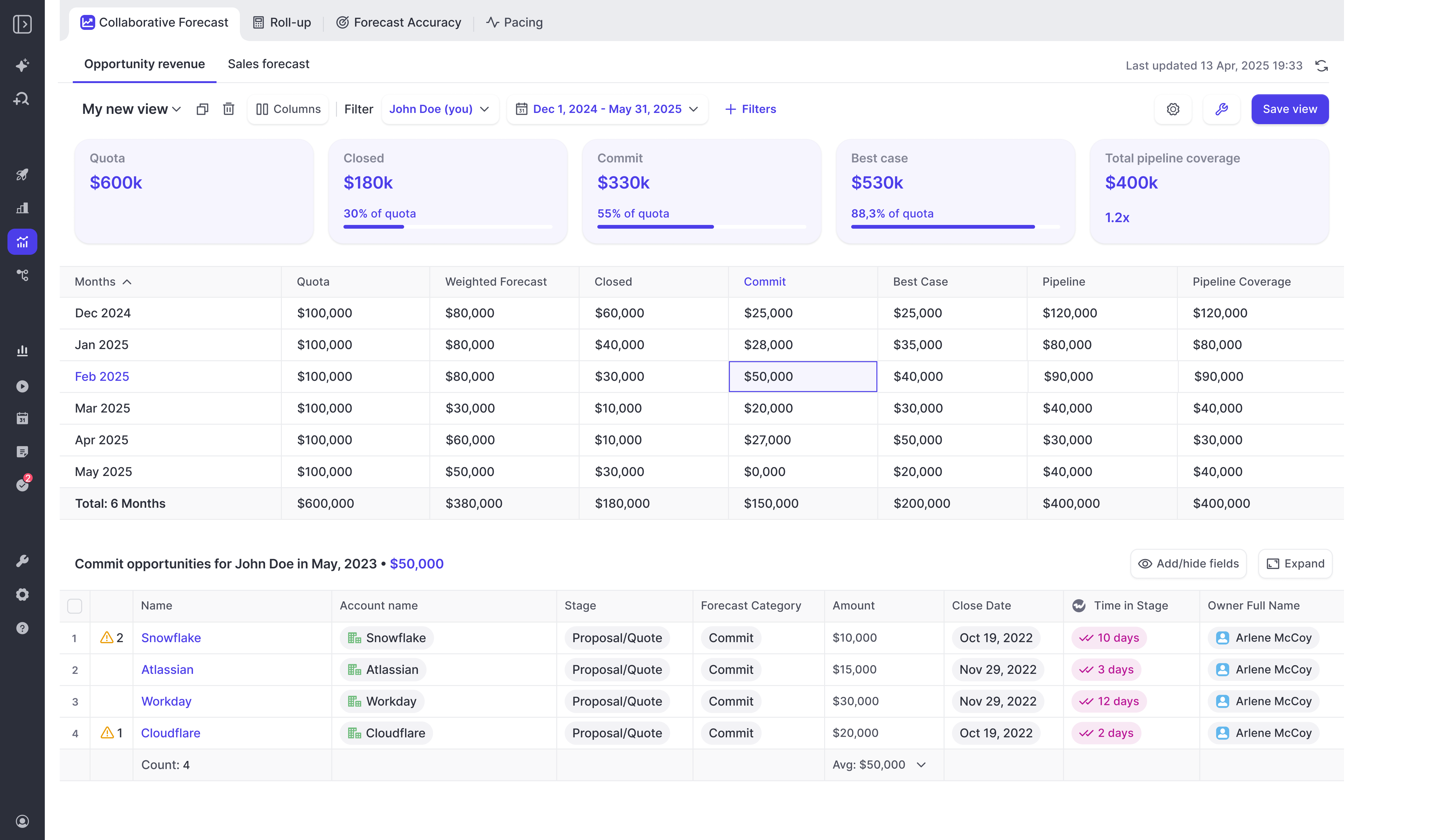
What you'd lose is the pipeline flow view. And if your team has muscle memory for Clari's Quick Submit and inspect interactions, expect a few weeks of adjustment; that UX is a real benchmark buyers hold us to.
Does Weflow replace the Salesloft side of the merger too?
No. Weflow does no sales engagement: no sequencing, no cadence engine, no dialer, and we don't send email to a customer on a rep's behalf. Agent workflows will draft an outbound message and route it to the rep, but the rep sends it.
So if you consolidate, you keep or choose engagement tooling separately, and Weflow runs alongside it via compatibility mode so the same email doesn't get logged twice. One thing worth auditing while you're in the renewal anyway: count how many of your engagement seats actually run sequences. Teams that license the whole go-to-market org on a sequencer are usually paying premium seats for activity capture, and that gap is often the cheapest budget available for a proper data layer.