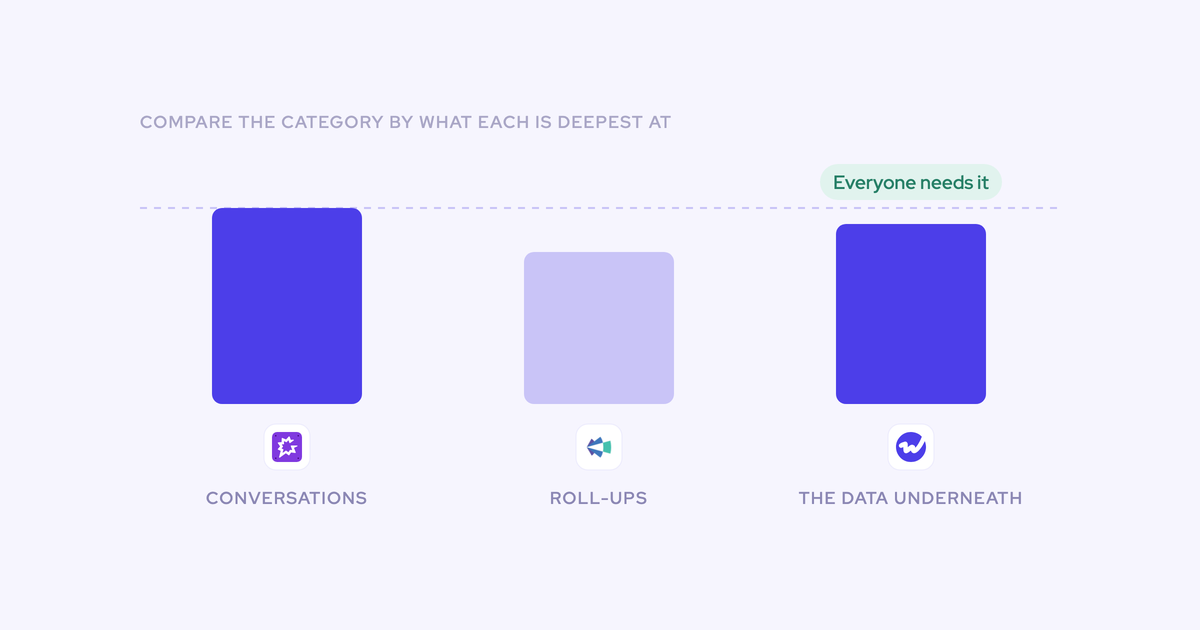

Best Revenue AI Platforms in 2026: Gong, Clari, Weflow, and How to Choose


Every platform in this category now claims the same things. Automatic capture, transcription, AI field updates, deal scoring, forecast roll-ups, agents. Open four vendor sites this week and you'll read the same eleven bullets in four fonts. The feature grid stopped discriminating, which is why you stopped trusting it.
Experienced buyers moved the evaluation underneath the grid instead. They ask where the product started, where the data lands, whether the vendor's own products share a data layer, what a trial on their own Salesforce actually proves, and what the thing costs all-in once implementation is priced. Those five questions separate platforms that look identical on a checklist and behave nothing alike once they're running your deal execution.
Weflow wrote this, so weigh the Weflow entry accordingly. We've also written down where Weflow loses: Salesforce-only, forecasting is our newest layer, no phone capture, and we're a younger company than Gong or Clari. Naming your own edges is the first test in the article. It would be strange to fail it.
Weflow, Gong, Clari, and the field at a glance
The six platforms a Salesforce-first revenue team actually meets in this evaluation, scored against the five tests rather than a feature list.
| Platform | Where it started | Where your data lands | One shared data layer? | What a 14-day trial proves | All-in cost posture |
| Weflow | Activity and contact capture, then conversation intelligence, then deal intelligence and forecasting | Native Salesforce objects you own; video files export to your own cloud storage | Yes. Three products read one layer in your Salesforce | Capture and conversation intelligence prove out on your own org; forecasting needs about three cycles | Published: $19 / $39 / $39 per user per month standalone, $49 to $79 bundled. No platform fee, no implementation fee |
| Gong | Call recording and conversation analytics; forecasting rolled in later | Gong's own schema. Activity is logged to Salesforce, but the canonical record stays in Gong | One vendor, one platform, but the data layer belongs to Gong | Call analytics depth. Test the CRM write-back, not the transcript | About $1,600 per seat per year Foundation, plus a $5,000 per year platform fee, plus coaching and forecasting add-ons at roughly $300 to $800 per seat per year |
| Clari | Forecast roll-ups; conversation intelligence arrived by acquisition | Clari's cloud. Its capture maps activity server-side by email domain | No. Forecasting and Copilot don't talk to each other | Roll-up mechanics. Test whether call data reaches the forecast at all | Quote-based, and configuration changes route through paid professional services |
| Einstein Activity Capture | Salesforce's own activity capture | Salesforce, in a limited form: no attachments, no contact creation, no admin control over the object | It is Salesforce, but the captured activity is thin | Whether you can report on captured activity at all | Included with Salesforce. No new line item |
| Attention | Conversation intelligence | Attention's platform, with call-centric write-back | Conversation intelligence is the product. Capture and forecasting are thin | Strong call output. The email and contact gaps show up fast | Quote-based, and conversation intelligence isn't sold standalone |
| AI notetakers (Fireflies, Granola and peers) | Meeting transcription | The notetaker's own portal, unless you build the sync yourself | Single product, so the question doesn't apply | How little friction they have, and that nothing reaches the CRM | The cheapest line item in the stack, by a distance |
The rest of this article shows how to run each of those five tests yourself, on your own org, before you sign anything.
Why the feature grid stopped separating Revenue AI platforms
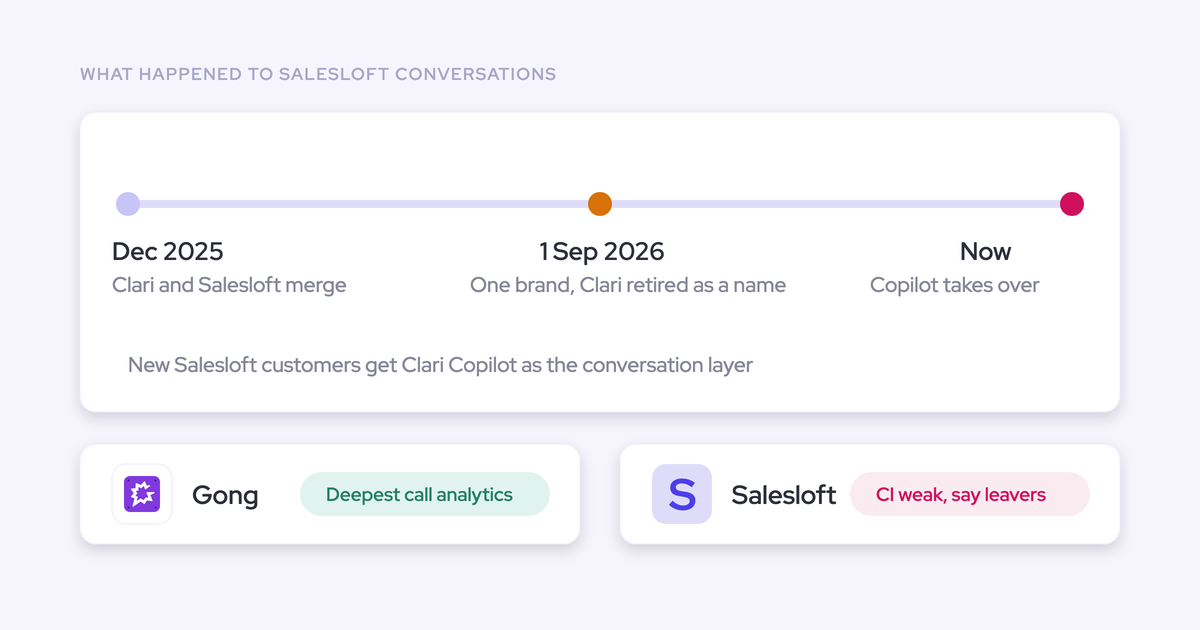
The first wave of these tools bolted AI onto architectures built for a pre-AI cost base, and they're converging on the same feature set from opposite origins. Gong started as call intelligence and rolled in forecasting. Clari started as forecasting and bought conversation intelligence. Everyone now claims everything, so the list of claims carries no information.
Buyers read breadth as a warning now, and they're right to.
He'd bought a do-everything suite before, found two modules were real and the rest was slideware, and ended up paying for a platform while still running three point tools next to it.
The deeper problem is that feature parity is not outcome parity. The same checkmark produces completely different output depending on the data underneath it.
| What the grid says | What production reveals |
| "Methodology scorecards" | One tool scores a single call. Another scores the whole opportunity across every email, meeting, transcript and field. Same checkmark, different answer in a deal review |
| "Activity capture" | One maps server-side by email domain and misfires when an account has two open opportunities. Another lets the rep see and correct the mapping |
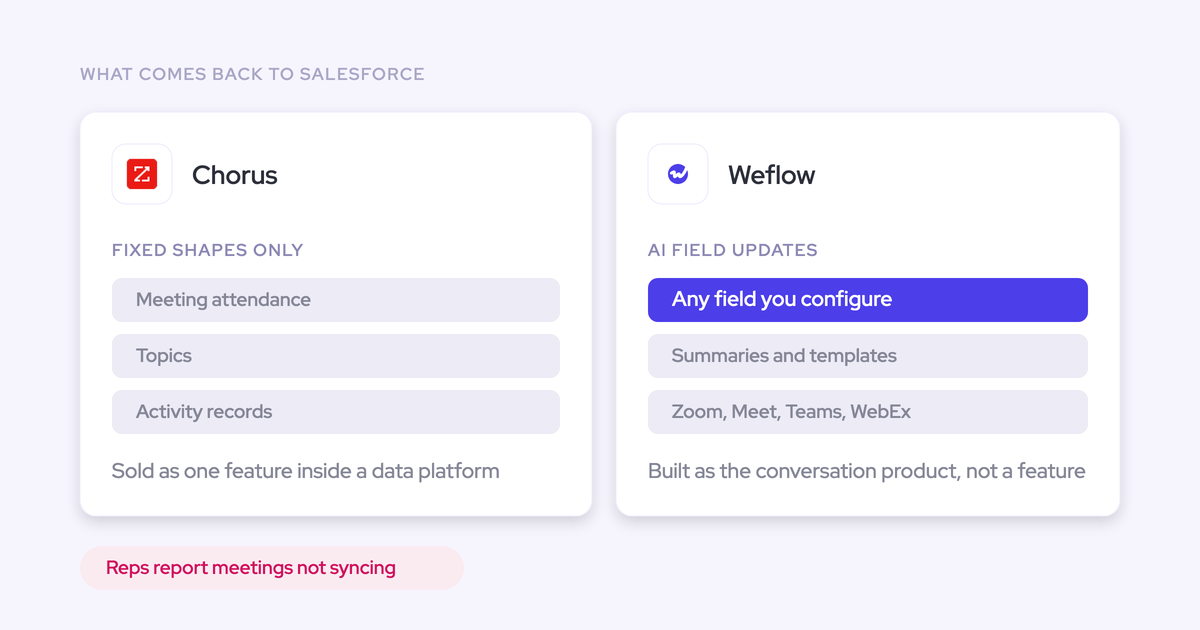
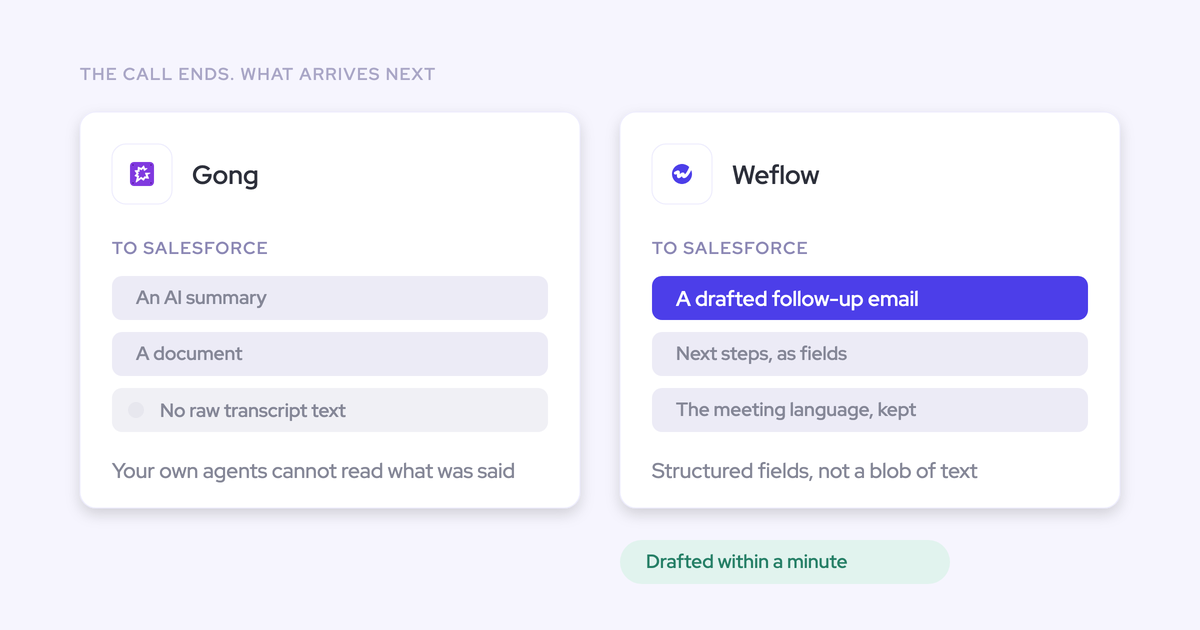
| "Updates your CRM" | One drops a summary in a text field. Another writes structured values into the Salesforce fields your reports already run on |
| "AI deal insights" | An AI reasoning over stage and amount alone returns plausible output built on a thin slice of reality |
Capture quality is the variable under all of it. Get the emails, meetings and contacts wrong and every AI output above them inherits the error, no matter how the feature is marketed.
The five tests that actually separate Revenue AI platforms
Each of these is something you can verify yourself. Ask it in a demo, run it in a trial, or price it on a spreadsheet. None of them requires you to take a vendor's word.
- Test 1: Where did the product start, and what does it still not do?
- Test 2: Which object does your data land in, and what's left in your org the day you turn the tool off?
- Test 3: Do the vendor's own products read one data layer, or did you just buy the join?
- Test 4: What can a trial on your own Salesforce prove in two weeks, and what genuinely can't be proved in that window?
- Test 5: What does it cost all-in, who runs the rollout, and does the timeline fit your renewal?
Test 1: where the product started and expanded from
A vendor's founding competence is where the product is deep. Everything bolted on after is where slideware hides, and the fastest way to find the seam is to ask the vendor to name it.
Run it like this:
- The question: "Where did you start, what did you add later, and what do you still not do?"
- An answer that passes: specifics. Named gaps, named roadmap items, a straight "we're weaker there than X."
- An answer that fails: equal enthusiasm about every module. A vendor that's equally good at everything has told you nothing checkable.
For the record: Gong started in call recording and conversation analytics. Clari started in forecast roll-ups and acquired its conversation intelligence. Weflow started in activity and contact capture, added conversation intelligence, then deal intelligence and forecasting, which is our newest layer and the one you should pressure-test hardest.
Test 2: where your data lives and who owns it
Ask which Salesforce object the platform writes to, and what stays in your org the day the contract ends. That single question separates a data layer you own from a data layer you rent.
Data held in a vendor's schema is the mechanism of lock-in. It isn't a philosophical concern, it's an exit price.
I've used GONG before. I'm a previous GONG user. I know they're weak and also you can never leave them because you don't own any of the data. And also they take you away from the Salesforce interface and you have to work within their interface.
There's a second cost that arrives long before renewal. Once the richest context lives outside the CRM, the CRM degrades further, because nobody is maintaining the place that no longer holds the truth. Any agent or analysis your team builds on Salesforce is then missing the conversation and activity layer entirely.
What to check before you sign:
- Which Salesforce object does each data type land in: EmailMessage, Task, Event, or a vendor custom object you can't report on cleanly?
- Can you build a Salesforce report on captured activity without the vendor's UI open?
- Does the tool write conversation output into the meeting activity that already exists, or create a second one? Two capture engines writing the same customer meeting twice is how meetings per rep and meetings per closed opportunity quietly double-count.
- Can it write structured values into your existing custom fields, respecting validation rules and permissions, or does it only drop text?
- What remains in your org if you switch the tool off tomorrow?
Weflow writes captured emails, meetings, contacts and AI field updates into native Salesforce objects, and an admin maps exactly which Salesforce fields the AI is allowed to populate.
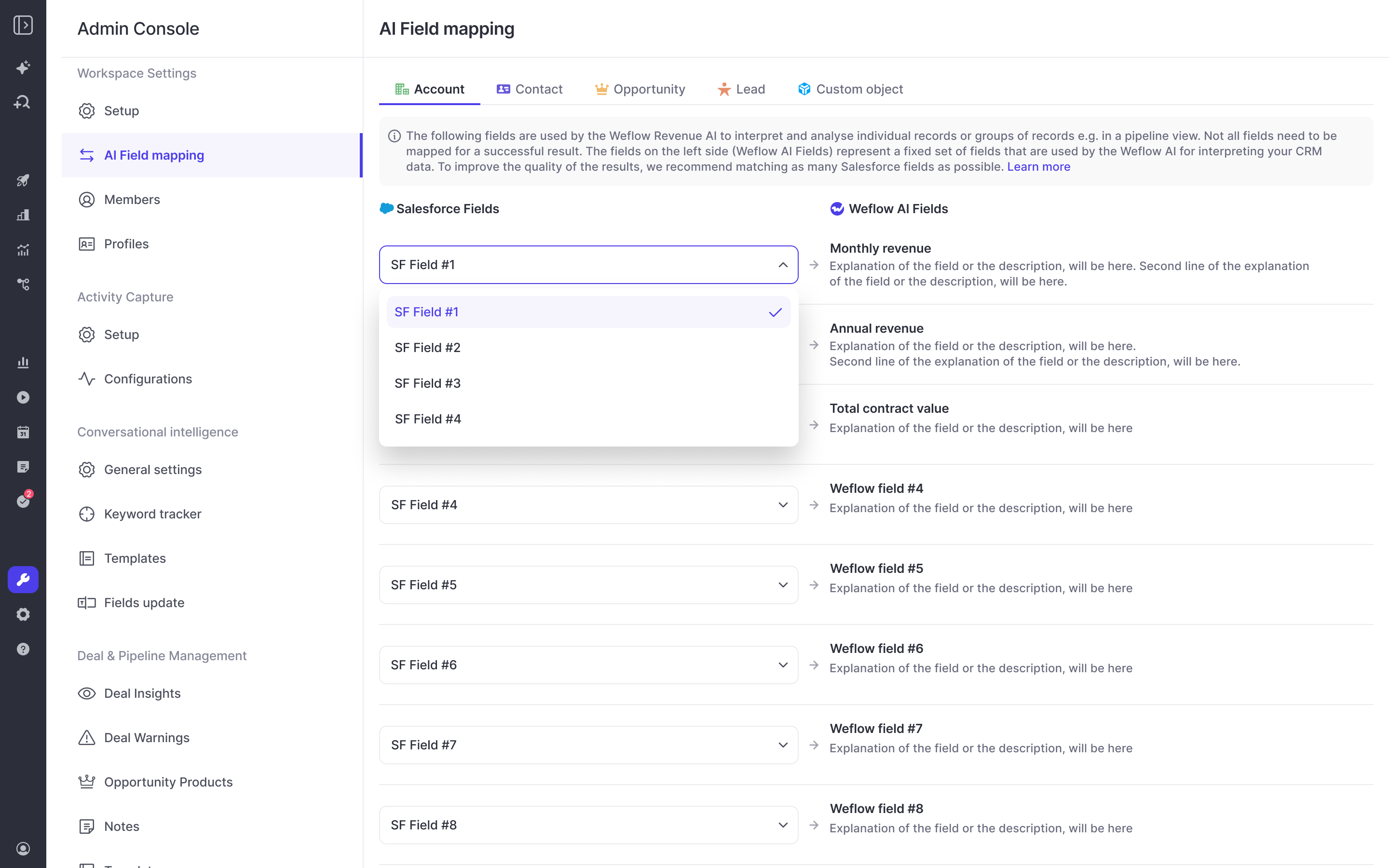
One honest exception on our side: Weflow doesn't store meeting video inside Salesforce. Salesforce storage is expensive and heavy, so video files export through the public API to your own cloud storage. Transcripts and the structured output of the call land in Salesforce.
Test 3: do the vendor's products share one data layer
The question is never how many products a vendor has. It's whether those products read the same data layer, because a vendor with six built products and a vendor with six acquired products look identical on a grid and behave completely differently in production.
The demo question that settles it: which object does each product write to, and can one product filter on a field the other one produced? Ask them to do it live.
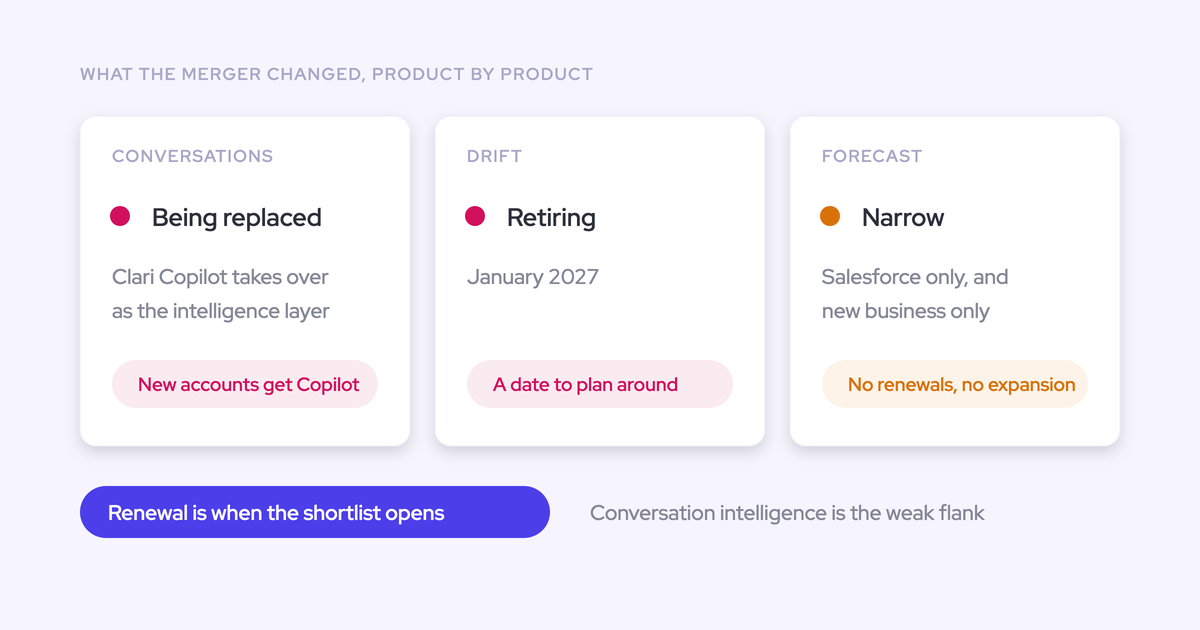
Clari is the clearest example in the category. Its forecasting product and Clari Copilot don't talk to each other, so call data doesn't inform the forecast. Customers who own both end up piping transcripts into a separate AI workspace to extract structured insight, then feeding it back to the CRM by hand. That's the exact fragmentation the second product was supposed to remove, and the customer paid twice for it.
The same seam shows up in reporting. Teams pull Clari's worldwide consolidation into a BI tool every cycle to build the deck the CFO actually sees.
If the answer to the demo question involves an export, you're buying the join and building it yourself.
Test 4: what a trial on your own Salesforce proves
The only differentiator that survives contact is what you see in your own Salesforce with your own data. A vendor who won't put the product on your org before you sign is telling you something, and every buyer we talk to now lines up two or three vendors and runs the same use case through each.
Be honest about the window, though. Capture and conversation intelligence prove out cleanly in fourteen days, because they act on the meetings and emails already happening. Forecasting doesn't. Forecasting only proves itself across enough cycles to compare predicted against actual, which is closer to three months. Any vendor claiming otherwise is selling you a demo.
What to verify while the trial is live:
- Does the meeting summary land on the one meeting activity that already exists, or does a second meeting appear?
- Are participants linked to the right contacts and leads, and are missing contacts created and attached as opportunity contact roles?
- Pick an account with two open opportunities. Does the activity land on the right deal, and can a rep correct it if it doesn't?
- Are structured fields populated, or is it a text dump in a description field?
- Can historical email and meeting activity be backfilled, so in-flight deals don't look artificially dead on day one?
One practical warning from running these: conversation intelligence trials less cleanly than capture. A pilot group that has never been recorded may resist it, and the evaluation turns into a referendum on being tracked rather than a test of the product. Pick a team that's fine with recording, agree the consent flow up front, and keep the two questions separate.
Weflow's evaluation runs as a 14-day free trial on your own Salesforce with our implementation team doing the setup at no cost, typically with one team of five to ten people. With a sync-back, it can show months of your real history on day one instead of an empty timeline.
Test 5: what it costs all-in and who runs the rollout
Price the total, not the list price. Foundation fees, per-seat licenses, add-on modules, implementation, and the weeks between signature and go-live, because those weeks cost you too.
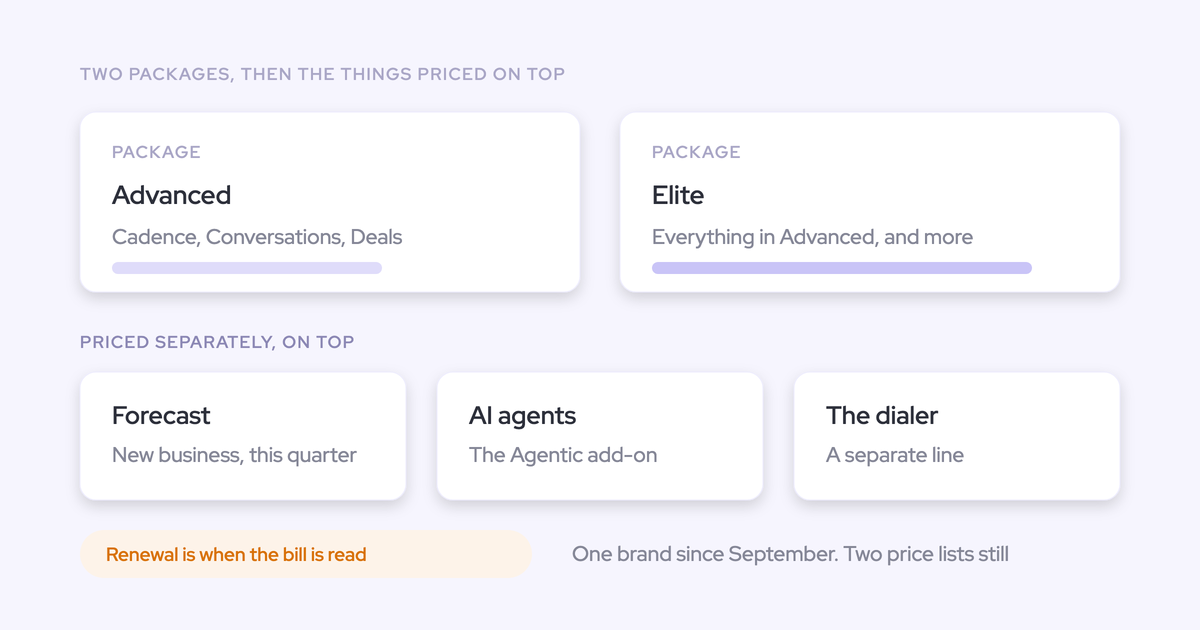
Gong's structure is the one to model carefully, since it's the most layered in the category: roughly $1,600 per seat per year for Foundation, a separate $5,000 per year platform access fee, coaching and forecasting as paid add-ons at around $300 per seat per year for the Essentials tiers and around $800 per seat per year for the fuller Engage and Forecast tiers, a Data Cloud add-on at about $5,000 per year, and a dedicated CSM only above $45,000 per year. Implementation is frequently handed to a third-party partner.
That last point ends deals late. A buyer defends a number internally, then discovers another twenty or thirty thousand for a partner-run rollout, and now two companies can blame each other if it stalls.
The all-in questions worth asking every vendor:
- Is there a platform or foundation fee before the first seat?
- Which capabilities are add-on modules, and at what per-seat price?
- Can you split licenses by team, so 200 reps get capture and only the leadership group pays for forecasting?
- Who implements it, is it included, and who's accountable if adoption stalls?
- How many days to technical go-live, and who from our side has to be in the room?
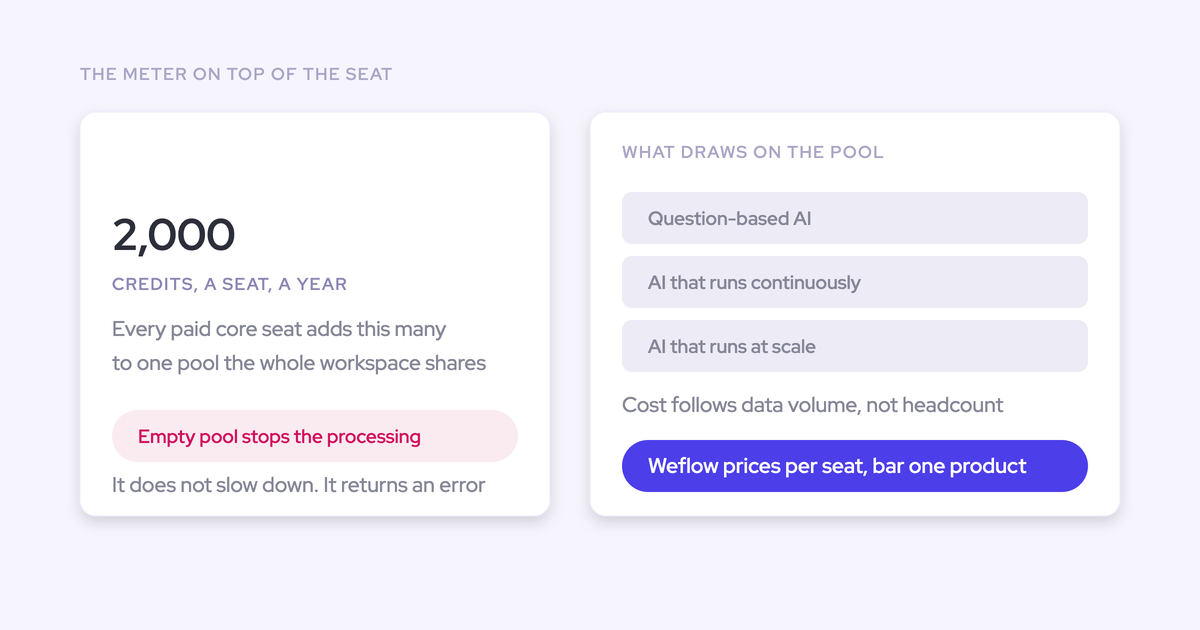
- Is AI usage metered, or bundled into the seat?
- What can we switch off once this is live? A tool that removes two is worth more than one that adds a fourth login.
And before any of it: audit the AI you already pay for. Half the stack has shipped AI features in the last year, some of them are a toggle away, and turning those on costs nothing and needs no procurement cycle. A new vendor has to beat what's already installed, not the status quo.
The best Revenue AI platforms in 2026, tested honestly
Six entries, not twelve. This category genuinely has a short list of credible platforms for a Salesforce-first revenue team, and padding it out would reproduce the vendor listicle problem this article exists to fix. Each entry follows the same shape: where it started, what it does well, where it falls short, how it's priced, and who it's for.
Weflow: AI-native platform on a unified Salesforce data layer
Weflow is the Revenue AI Orchestration platform for sales, customer success, and RevOps teams. Three modular products, built in-house rather than acquired, all reading one data layer inside the customer's own Salesforce: Weflow Activity & Contact Capture, Weflow Conversation Intelligence, and Weflow Deal Intelligence & Forecasting.
Quick specs: $19 / $39 / $39 per user per month standalone, bundles at $49 (Revenue AI Foundation), $59 (Revenue AI Business) and $79 (Revenue AI Enterprise), billed annually, minimum 10 users. Salesforce only. Technical setup takes 45 to 60 minutes; typical time to live is two to four weeks, four to six for a large org. SOC 2 Type II, HIPAA, GDPR, CCPA, Zero Data Retention, ISO 27001 in progress, not FedRAMP.
Where it's genuinely strong:
- Capture quality, which is the moat under everything else. Automatic capture plus a browser and Outlook extension that lets reps see and correct which Salesforce record an activity maps to. Switchers typically see 30 to 35% more emails and meetings captured. One customer tripled captured activity and assumed the data was broken before checking it by hand.
- Conversation intelligence that writes fields, not just summaries. AI field updates populate MEDDIC, MEDDPICC, SPICED or your own custom fields directly from the transcript, with side-by-side comparison against current CRM values and a manual review mode if you want one.
- AI playbooks that score the whole opportunity. Every email, meeting, transcript and CRM field on the deal, refreshed on a schedule and written back to Salesforce, with a next-step recommendation. A rep can't pass a methodology check by filling in a field.
- Every call scored automatically for coaching, per team, with the manager able to override. Adherence becomes a trend rather than the four calls a manager had time to listen to.
- Ask Weflow AI across calls, deals, accounts and pipeline, included in every plan rather than sold as an add-on.

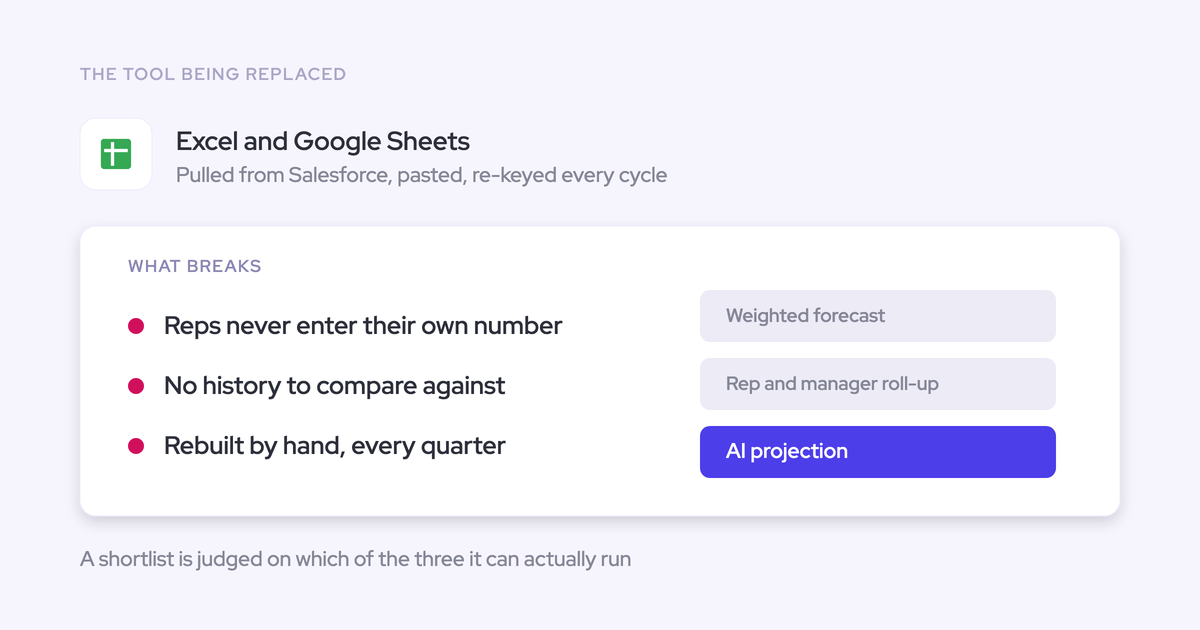
The forecasting layer covers roll-up submissions with baseline and best case, versioned and tied to named opportunities, an AI prediction to compare against the team's call, quota management, and forecast accuracy tracking.

Where Weflow falls short:
- Salesforce only. No HubSpot, no Dynamics, no Pipedrive. If you're not on Salesforce, stop reading here.
- Forecasting is our newest layer. Clari's enterprise roll-ups at 1,000+ reps are more mature, and our roll-up sums the chosen amount field rather than applying stage probability weighting unless the weighted value is itself the foundation field.
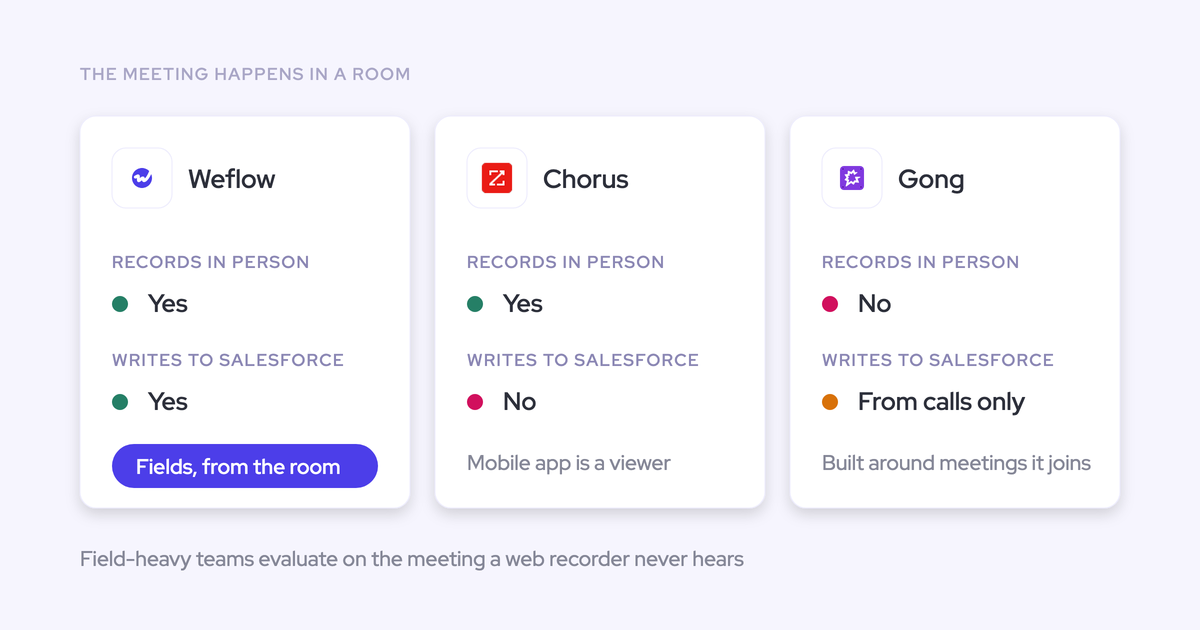
- No VoIP or phone-call capture. Phone-heavy inside sales motions aren't covered.
- We're younger and smaller than Gong or Clari. Scale, funding and support capacity are fair things to pressure-test, and buyers who once bet on a twenty-person vendor and had to migrate twice are right to ask.
- Not FedRAMP certified, and ISO 27001 is in progress, not achieved.
That was a fair read of the forecasting module in isolation. What changed the decision was the rest: the capture, the conversation data, and the fact that all of it landed in their own org.
Best for: Salesforce-first mid-market and enterprise revenue teams consolidating inside a renewal window, who want the data in objects they own.
Gong: the deepest conversation analytics, in Gong's own schema
Gong invented this category and still has the deepest conversation analytics in it. If call intelligence and coaching depth are the whole reason you're buying, Gong is a legitimate answer and we say so on sales calls.
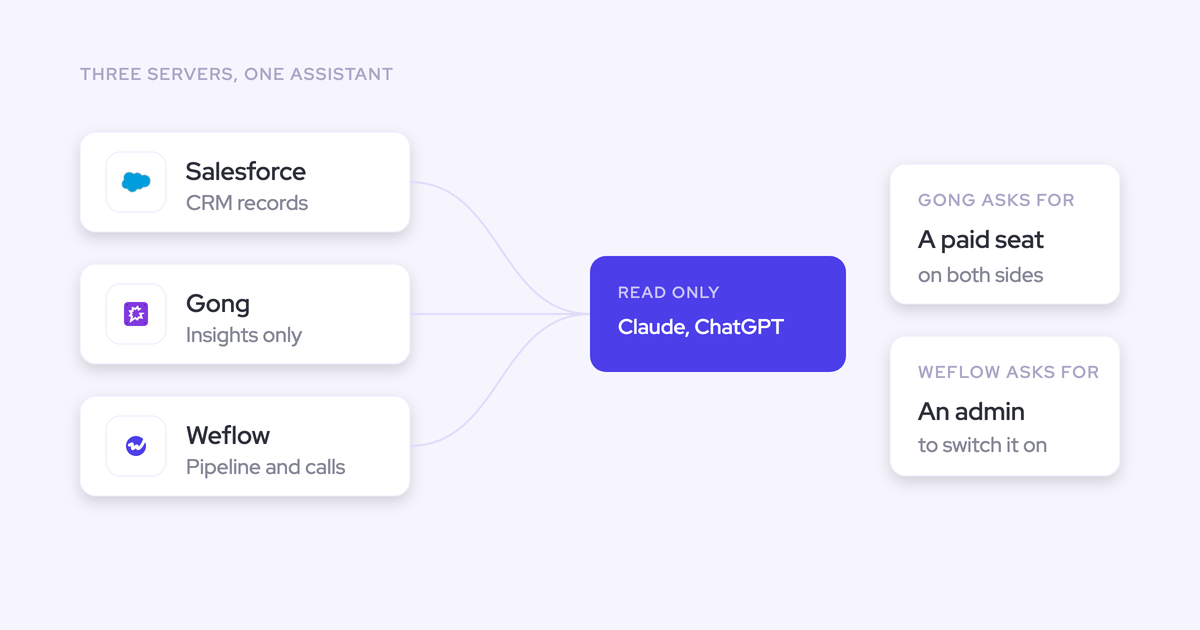
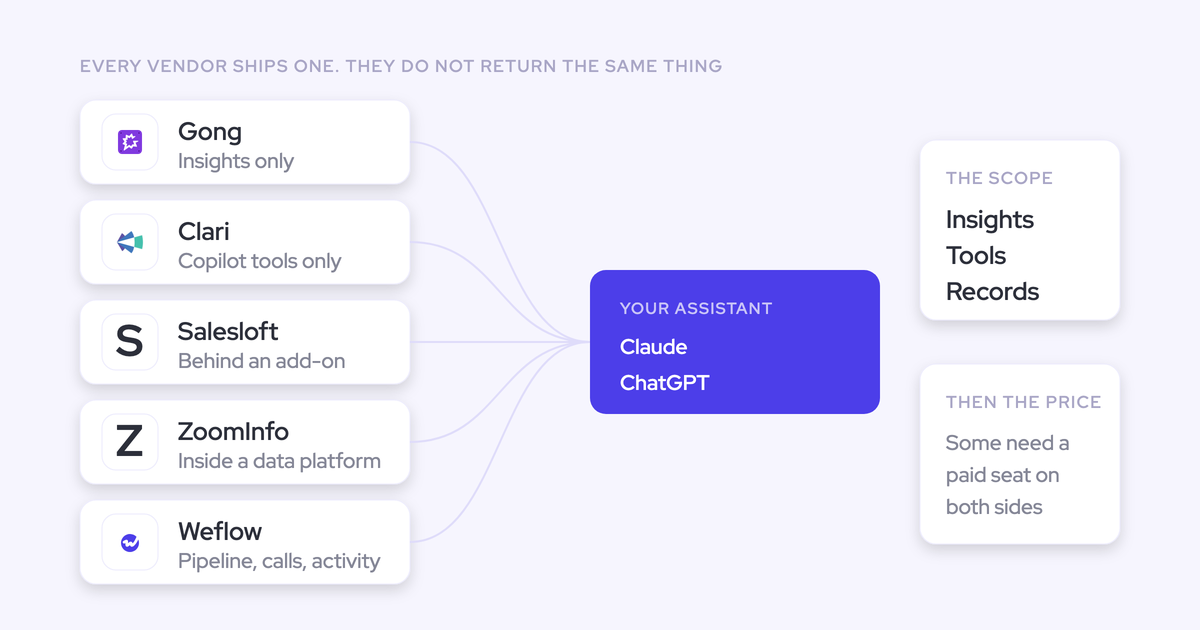
What's genuinely strong: the analytics layer, keyword and smart trackers, and account-level methodology summaries that read across every call on an account rather than one at a time. That last one matters more than it sounds, because a long cycle's qualification picture is spread across a dozen conversations, and any tool that only summarizes single calls feels like a downgrade to a team used to it. Gong also exposes an MCP endpoint, so external AI agents can query Gong data directly.
Where it diverges on the tests:
- The data layer is Gong's. Gong logs activity to Salesforce, so that alone isn't why teams leave. The difference is depth: Gong maps captured emails and meetings into its own structure, doesn't create Salesforce contacts, and doesn't auto-populate methodology fields, so those field updates stay a manual step after a rep reviews the insights.
- Field mapping is a known sore point. One RevOps leader put it bluntly on a call with us: "The mapping of fields is a nightmare in Gong, and they really haven't overcome that properly."
- It pulls sellers out of Salesforce into Gong's interface, which is exactly the second-system problem most RevOps leaders are trying to avoid.
- The cost structure is layered and the floor is high, which is why Gong often isn't rolled out to customer success or the wider revenue org at all. Partial coverage is a data problem, not just a budget one.
- Implementation is frequently a third-party engagement, and small customers report that feature requests go nowhere.
The price isn't arbitrary. Gong set it when transcription was expensive, and it now carries roughly $300 million in ARR and a valuation around $7 billion, which is a growth story its pricing has to keep justifying. Building the same capability today costs materially less, which is the substantive answer to "what am I giving up at half the price."
Worth naming honestly: plenty of teams stay on Gong for reasons unrelated to the product. Managers like it, reps treat it as a perk, and removing a tool everyone knows is real change management.
Best for: teams whose primary buy is conversation analytics and coaching depth, who are comfortable with the data staying in Gong's schema.
Clari: mature enterprise roll-ups, products that don't share data
Clari's enterprise forecast roll-ups at 1,000+ reps are the most mature in the category. The pipeline waterfall, the pacing view, and the comparison of where the quarter stands against the same day in previous quarters are the three things teams actually use, and the quarter-over-quarter comparison is the hardest to reproduce anywhere else because Salesforce keeps no history of what the pipeline looked like last month.
Now the tests.
- Test 3 is where it breaks. Forecasting and Clari Copilot don't share data, so what was said on the calls never reaches the forecast.
- The capture underneath is weak. Clari Capture maps activity server-side by email domain, so emails are missed when a contact isn't mapped to the right account, and activity is misattributed when an account has several open opportunities. The engagement score on top of it looks right and is often wrong.
- It's strong at roll-up, weak at deal-level health, weak at identifying deals being pushed, and it doesn't measure forecast accuracy.
- Configuration goes through professional services. A new quarterly target, a new forecast call, a change to the roll-up, even adjusting columns in a view: two weeks and a bill for something that should take ten minutes.
- Deployments go stale without an internal owner, and that's when RevOps quietly starts rebuilding the forecast dashboard on raw Salesforce data.
We also hear the hierarchy constraint repeatedly: the forecast is tied to the Salesforce hierarchy, so one sales leader running multiple products across different teams can't get a separate roll-up built for how the business actually operates.
Best for: large enterprises where multi-level roll-up mechanics at scale are the requirement and there's a named internal owner to keep the deployment alive.
Einstein Activity Capture: the native Salesforce baseline
Test 5 says beat the tools you already own first, and for a small team Einstein Activity Capture is a reasonable baseline that costs no new line item.
Its limits are specific, and they surface the moment a team tries to build reporting or AI on captured activity:
- It can't log email attachments, so the quote and the contract never make it to the record.
- It can't create contacts automatically, so the buying committee on the account stays whatever someone typed in months ago.
- Admins can't choose whether an activity lands on the email message or the task object, which decides what's reportable.
That third one is what pushes teams off it. You can see the activity in the timeline and still not be able to report on it, which is a bad place to be if AI is anywhere in next year's plan.
Best for: small Salesforce teams that need activity visible in the timeline and have no reporting or AI ambitions on top of it yet.
Attention: strong conversation intelligence, thin capture and forecasting
Attention's conversation intelligence is genuinely good and shouldn't be dismissed. It's a newer, CI-first challenger in the category.
Against the tests, it's a single-competence product wearing platform clothing:
- Capture is call-centric. It doesn't capture emails and contacts from Outlook or Google Workspace, its calendar-event-to-opportunity mapping is unreliable, there's no Outlook add-in or browser extension for correcting the mapping, and capture isn't sold standalone.
- AI field updates are basic and coaching depth is limited.
- There's no roll-up or collaborative forecasting, no forecast accuracy measurement, and no pipeline analytics.
Best for: a team buying conversation intelligence on its own. Not a consolidation play, and not the answer if the activity and contact footprint is the gap you're trying to close.
AI notetakers like Fireflies: cheap transcripts, no system of record
Recording and summarization are commoditized. Any team can get a good transcript and a decent summary for very little money, and notetakers win on friction: no bot to admit, no meeting link to hunt for, no login. Reps reach for one every time a CRM-connected recorder fails to join a call.
The gap is what happens next. The conversation stays outside the system of record, so a notetaker adds a portal rather than a data layer. Teams running Fireflies alongside Salesforce routinely hold a year or more of calls and transcripts inside Fireflies, where no deal record, no report and no agent can reach them.
There's a workable middle path. If those transcripts are synced into Salesforce in a structured form, Weflow can read and work on top of them, because Weflow reads the CRM through the API rather than needing to have recorded the call itself. Keep the notetaker, buy the capture and deal intelligence layers.
Best for: individuals and small teams who need transcripts and recall, and who accept the conversation data will never inform the pipeline.
Which Revenue AI platform fits your situation
The right platform is a function of your situation more than a function of a score. Find your row.
| Your situation | Where to look | Why |
| Salesforce-first, consolidating two or three tools inside a renewal window | Weflow, starting with capture and conversation intelligence | One data layer in your own org, published pricing, live in two to four weeks |
| Not on Salesforce | Gong or a CI-first tool | Weflow is Salesforce-only. This is a hard gate, not a roadmap item |
| 1,000+ reps and complex multi-level roll-ups are the primary requirement | Clari, unless a real forecast bake-off says otherwise | Roll-up maturity at that scale is Clari's genuine strength |
| Coaching depth and call analytics are the whole reason you're buying | Gong | Deepest conversation analytics in the category, if you accept the data layer is theirs |
| Phone-heavy inside sales motion | Not Weflow | No VoIP or phone-call capture today |
| A PE sponsor has standardized an incumbent across the portfolio | Coexistence, not displacement | The decision wasn't made in your company, and you won't win that fight in year one |
| Small team, activity visible in the timeline is enough | Einstein Activity Capture | Included with Salesforce, and its limits won't bite you yet |
| You need transcripts and recall, nothing more | An AI notetaker | Cheapest path to that outcome. Accept the data stays outside the CRM |
| FedRAMP is a procurement requirement | Not Weflow | We're not FedRAMP certified |
If a live contract blocks you, start where the contract doesn't reach. A CFO who signed a forecasting renewal in March will not approve a second forecasting tool in June, and no amount of product quality changes that. So the entry point has to be a capability you don't already own.
The coexistence pattern that works: one capture infrastructure writing clean activity and contacts into Salesforce, with the incumbent reading it. Clari reads activities out of Salesforce, so its forecast gets better while you own the data layer underneath. The failure mode isn't the coexistence, it's running two capture engines at once and getting duplicate activities.
Then expand at the next renewal. Weflow's packaging is deliberately built for this: add forecasting for roughly $10 more per user per month rather than a separate contract at a fresh procurement cycle. We take a lower contract value per deal in exchange for fitting how this audience actually buys.
How we compared these Revenue AI platforms
Weflow wrote this article and sells one of the products in it. Read the Weflow entry with that in mind, and note that we listed our shortfalls in the same detail as everyone else's.
The criteria came from live evaluations: what RevOps leaders actually ask us in bake-offs against Gong, Clari, Einstein Activity Capture and the notetaker class, and what switchers tell us broke on the tool they're leaving. Competitor pricing reflects the structures we see quoted in deals. Product limits reflect what we observe on switch calls and in trials on customers' own orgs.
Six entries rather than the usual twelve, because this category has a short list of credible platforms for a Salesforce-first team and padding it would reproduce the problem. Every test in here is one you can rerun on your own org, which is the only accountability that matters for an article written by a vendor.
FAQ: choosing a Revenue AI platform in 2026
What does Gong actually cost all-in compared with Weflow?
Gong's structure stacks: roughly $1,600 per seat per year for the Foundation tier, a separate $5,000 per year platform access fee, and paid add-on modules for coaching and forecasting at around $300 per seat per year for the Essentials tiers or around $800 per seat per year for Gong Engage and Gong Forecast. The Data Cloud add-on is about $5,000 per year, a dedicated CSM comes only above $45,000 per year, and implementation is often quoted through a third-party partner.
Weflow publishes its pricing: $19 per user per month for Activity & Contact Capture, $39 for Conversation Intelligence, $39 for Deal Intelligence & Forecasting, or $49 to $79 per user per month bundled, billed annually with a 10-user minimum. No platform fee, no implementation fee, no usage metering on recordings, transcripts or AI. In practice that lands at roughly half of a comparable Gong deployment, and you can put most seats on capture and only the leadership group on forecasting.
Can you run Weflow alongside Clari during an existing contract?
Yes, and it's the pattern we recommend when a renewal or a PE mandate blocks displacement. Clari reads activities out of Salesforce, so Weflow captures emails, meetings and contacts into your Salesforce and Clari consumes the cleaner data, which makes the forecast you already paid for more accurate.
The one thing to avoid: running both capture engines at the same time. Two engines writing the same emails and meetings produces duplicate activity, and duplicated meetings wreck exactly the reporting you bought the tools to get. Turn one off.
What happens to historical calls and emails when you switch?
Email and meeting history is safer than call history, because it already lives in your own mail tenant rather than the vendor's system. Weflow can backfill up to two years of historical emails and meetings from the mail server into Salesforce, so a team can switch the old capture off in the morning, turn Weflow on the same day, and have the gap filled. It's opt-in and spread over days or weeks, because pulling that much history is heavy on the Salesforce API.
Call recordings are the harder problem. Years of recorded calls sitting inside a conversation intelligence vendor usually come back only through an API export, at extra cost and after real work, which is why teams stall on tools they dislike. Ask about migration and backfill in the first conversation with any vendor, not the last.
How long does a Revenue AI platform take to go live?
With Weflow, technical implementation is a 45 to 60 minute call with your Salesforce admin and mail admin in the room. Typical time to live is two to four weeks, or four to six weeks for a large org, and Weflow runs onboarding itself rather than handing it to a partner, at no charge. A managed-service option exists where we do the heavy lifting and your RevOps team just answers questions and unlocks access, because the blocker in most switches is RevOps bandwidth rather than product fit.
Capture and conversation intelligence move fastest, in roughly two weeks. Forecasting takes longer, and not for technical reasons: you're encoding an operating cadence. Who submits, how often, at deal or manager level, against which quota and which budget. Treat time to live as a selection criterion in its own right if you're working against a renewal date.
Can your own AI stack reach the platform's data?
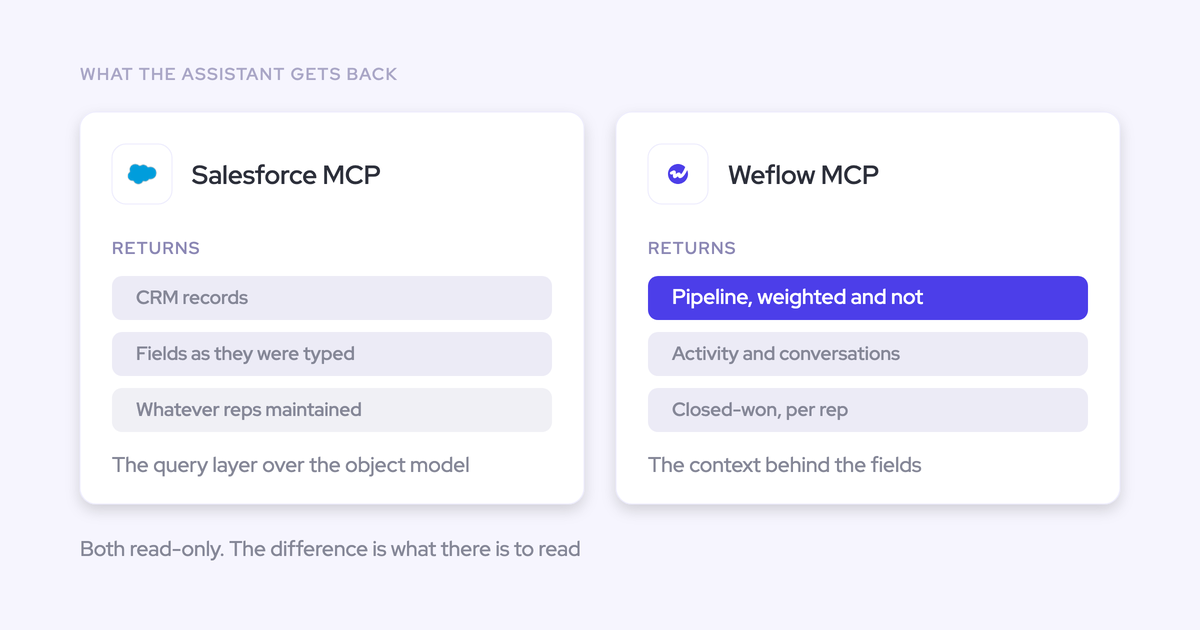
It depends entirely on where the data landed. Data written into native Salesforce objects is reachable by anything that already reads Salesforce: your warehouse, your own agents, your BI tool, whatever assistant your company standardized on. Weflow also exposes a public API. Data sitting in a vendor's schema needs that vendor's endpoints, which is why Gong ships an MCP endpoint for Gong data.
Ask the question directly in the demo, because teams that have standardized on a corporate assistant care about it more than any feature on the grid. If the answer is "through our portal," you've added one more login that nobody outside the revenue team will open.
What is Revenue AI Orchestration?
Revenue AI Orchestration is the practice of running go-to-market as one system: people, AI agents, and unified revenue data working the same pipeline, with RevOps owning the data foundation and the agents on top of it. It has three layers. A system of truth, which is the unified record of what happened across activity, conversation, contact and CRM data. A system of intelligence, which is what gets inferred from it: deal health, methodology coverage, risk. And a system of action, which is what gets done about it, by a human or by an agent.
Weflow is the Revenue AI Orchestration platform for sales, customer success, and RevOps teams. The reason the tests in this article look at data layers instead of feature counts is that the intelligence and action layers are only ever as good as the truth layer underneath them, and most platforms in this category never owned that layer at all.
See how Weflow captures activity, updates Salesforce fields from calls, and rolls up your forecast. Book a 30-minute demo.