The short answer: RevOps should report to the executive whose span matches its scope. In practice, that means:
- The CRO: While RevOps serves the same functions the CRO runs.
- The COO: Once RevOps runs the whole bow tie or becomes the company's AI operations layer.
- The CFO: Only when the fight is over the number itself.
One caveat before you redraw anything: the reporting line on its own barely moves performance. What matters is how it affects RevOps' proximity to you, its neutrality between peers, and its mandate.
If you're a CRO, your real worry is probably responsiveness: you need the forecast call, board prep and weekly deal reviews to keep running, whether you run them in a spreadsheet or in Weflow deal reviews.
This guide gives you a criteria table, a decision path, and the option most CROs miss: splitting RevOps strategy from RevOps systems, so you keep the part you need.
How much does the RevOps reporting line affect performance?
Less than most org-design debates suggest. In Insight Partners' survey of about 200 portfolio CROs, roughly 40% described their RevOps leader as a right-hand strategic partner, and that share barely differed between top-performing and average companies.
What separated the top performers wasn't clever structure. It was operational discipline on the basics, done every week.
So don't reorg expecting growth. Reorg when your current line is causing a specific problem, like:
- RevOps gets dragged into executive fights it can't settle.
- Finance and RevOps bring different numbers to the same meeting.
- RevOps has quietly shrunk into sales ops because you don't own CS or marketing.
If none of those is happening, your current line is probably fine.
Why RevOps outgrows the CRO it reports to
RevOps' scope keeps expanding while the CRO's span stays the same. Here's how that usually plays out:
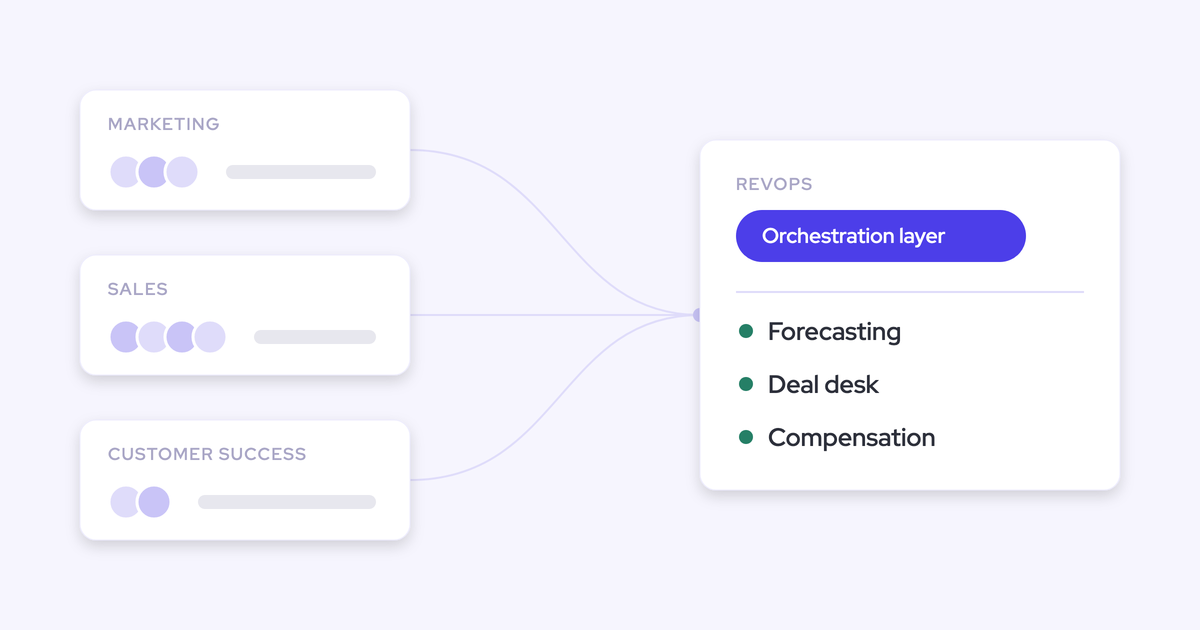
- RevOps was created to align marketing, sales and customer success, the full bow tie, as one function.
- But most RevOps teams grew out of sales ops and still put sales first: in a survey of 180 RevOps professionals, 45% said their team prioritizes sales over every other function.
- So RevOps lands under the CRO by default, RevOps lands under the CRO by default, often as "two people tinkering in Salesforce" before the first real RevOps executive arrives.
- As the company scales, scope expands into post-sale work, because most revenue then comes from existing customers. Consumption businesses add controls after close, and lately AI operations pull RevOps into finance, product and engineering.
- TMeanwhile, the CRO's span stays put. At top-performing companies in the Insight Partners survey, about 30% of CROs own customer success and about 17% own marketing. The common pattern is a CRO who owns new logo and expansion, with a peer CMO and a peer customer success leader.
- That gap between RevOps' scope and its boss's span shows up as referee fights, duplicate numbers, and a COO or CFO asking to take RevOps.
So the reporting line is really a symptom. The real decision is the mandate: what RevOps is for, and who it has to stay neutral between.
The criteria that decide where RevOps reports
Six criteria decide the line. Check where your situation sits today on each row. If most rows point to one column, that's your answer. If they're split across columns, you probably need the split model covered further down.
| Criterion | Points to CRO | Points to COO | Points to CFO |
|---|---|---|---|
| RevOps' scope against its boss's span | RevOps serves new logo and expansion, which the CRO owns | RevOps serves marketing, sales and CS, and the CRO owns only part of that | RevOps' core work is the number and the controls around it |
| Who RevOps must stay neutral between | Sales leaders and regional teams under one CRO | Peer executives: CRO, CMO, customer success leader | Revenue leaders on one side, finance on the other |
| Where the fight over the number lives | Inside sales: commit calls, stage definitions, rep forecasts | Between functions: marketing-sourced versus sales-sourced pipeline, sales versus CS | Between RevOps and finance: competing pipelines, bookings versus revenue |
| How much proximity the CRO needs | Daily: forecast calls, deal reviews, board prep | Weekly, and it can be designed back in through an embedded partner | Low, and the CRO accepts more distance |
| Whether RevOps owns AI operations beyond go-to-market | AI work stays inside sales workflows | AI workflows extend into finance, product and engineering | AI work isn't a deciding factor here |
| Company stage and revenue mix | Early stage, where winning new customers is the main risk | Scale, where existing customers drive most revenue | Consumption pricing, where most control work happens after close |
One thing the table can't show is that neutrality depends on what RevOps owns, not only on who it reports to.
"So we bring all the insights to that conversation, and we can be a neutral referee between the CRO and GMs always wanting more headcount versus the CFO who says, let's not hire. Let's, you know, have a higher EBITDA and gross margin."
In other words, RevOps earns the referee seat by owning the capacity model and the data. Without that, no reporting line makes it neutral.
When RevOps should report to the CRO
RevOps should report to the CRO while its scope equals the CRO's span.
When that's the case, the CRO line gives you something the others can't: an ops leader who lives inside your motion, knows your forecast as well as you do, and acts on your priorities without a translation step.
Jeremey Donovan of Insight Partners argues that strategy, analytics and planning work is most effective when it reports to the leader it supports.
"There's just such a huge advantage to having your ops person as your right hand in whatever you do."
Proximity also makes RevOps better at filtering. With a full plate, you have room for the top two problems RevOps raises, not the full list, and a RevOps leader who sits in your staff meeting learns which two those are.
| Fits when | Breaks when |
|---|---|
| You own new logo, expansion and customer success | Customer success and marketing report to peers, yet RevOps is supposed to serve them |
| Most revenue still comes from winning new customers | Existing customers drive most revenue, and RevOps still spends its week on sales |
| The disputes RevOps referees sit inside your org | Peers start treating RevOps numbers as your numbers |
| AI work stays inside sales workflows | RevOps gets handed the company-wide AI mandate |
The trade-off is perceived neutrality with your peers. If you don't own CS or marketing, RevOps under you can quietly turn into sales ops under a new name.
When RevOps should report to the COO
RevOps should report to the COO once it runs the full bow tie or takes on AI operations beyond go-to-market.
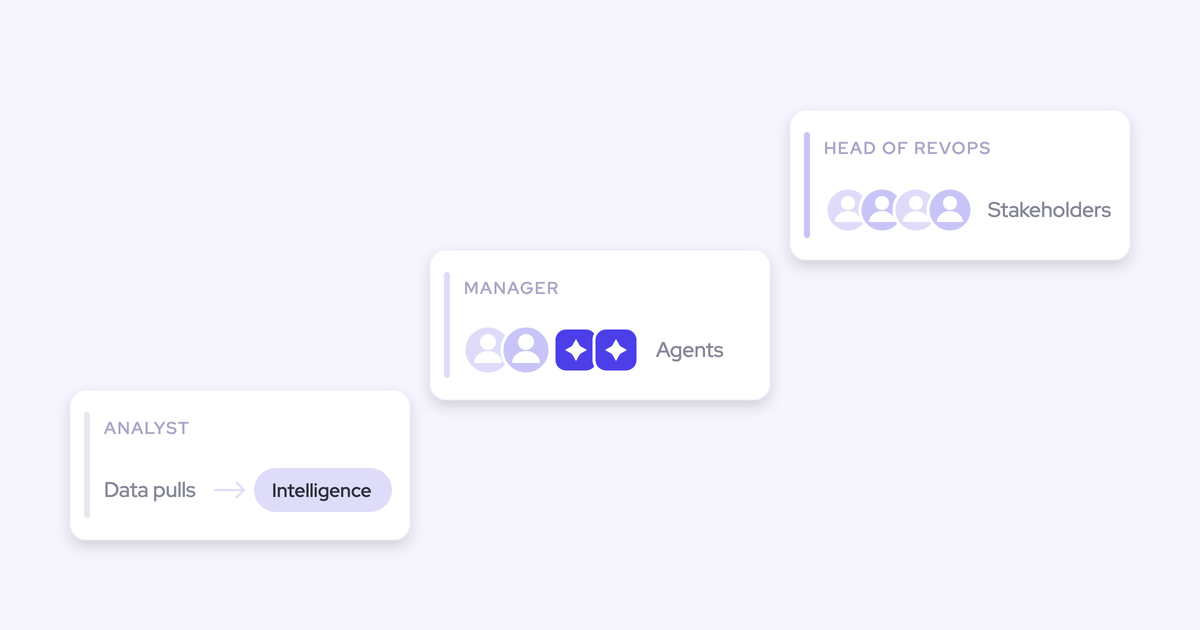
It's also the line we think more companies are heading toward, because RevOps is turning into the team that builds and governs the systems running the business, and a function serving every department sits awkwardly under one functional leader.
Avtar Varma made this case on our RevOps Lab podcast: RevOps can grow into the company's AI operations function, but that move fits better under the COO than the CRO, since AI operations touches finance, product and engineering.
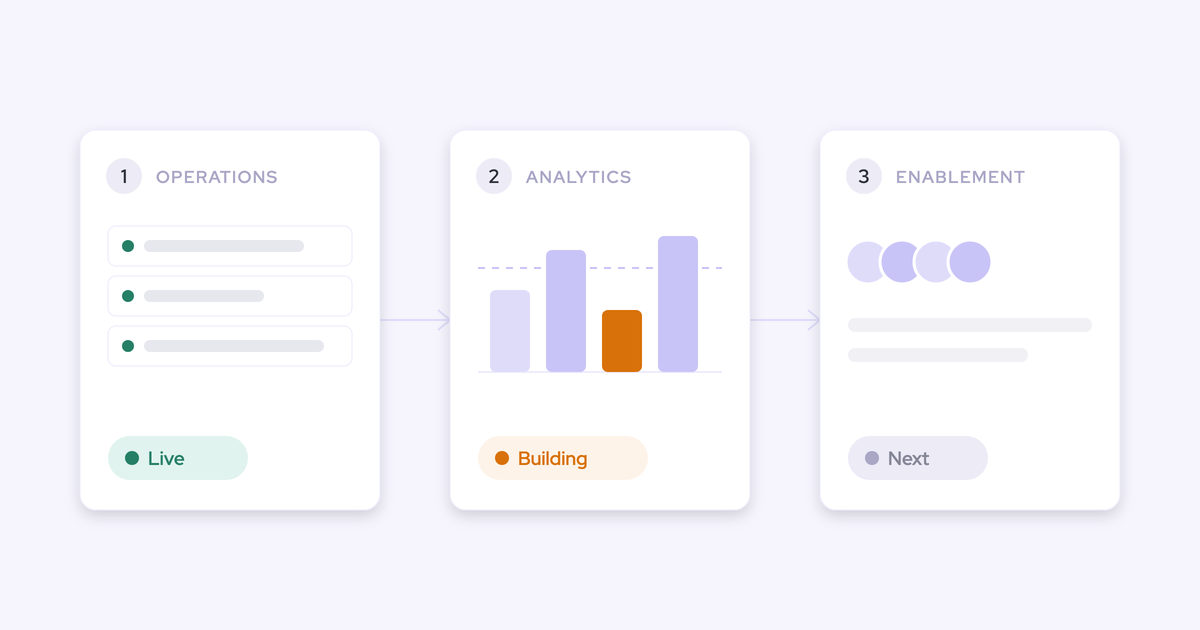
The path usually starts inside go-to-market: build AI workflows for sales, marketing and CS, show the return, then extend them to the rest of the company.
The COO line also solves the peer problem. When the CRO, CMO and customer success leader are peers, a RevOps team reporting to one of them has to work hard to look impartial.
Under the COO, RevOps can enforce one set of definitions across all three without anyone reading it as a power play.
| Fits when | Breaks when |
|---|---|
| RevOps serves marketing, sales and CS, and they report to different executives | The COO has no real interest in go-to-market and treats RevOps as back office |
| RevOps owns AI agents and workflows that reach finance, product and engineering | Nobody designs proximity back in for the CRO, so the forecast call loses its partner |
| Existing customers drive most revenue and post-sale needs equal attention | The company is early stage and the main risk is still closing new business |
| You've moved to regional GMs and need one operating system across them | RevOps hasn't yet earned the mandate, so the move reads as a demotion for sales |
The trade-off is day-to-day proximity, unless you design it back in with an embedded RevOps partner who runs your operating rhythm.
When RevOps should report to the CFO
RevOps should report to the CFO mainly when the fight is over the number itself. It's the narrowest of the three cases.
The clearest trigger is competing versions of the pipeline. When finance and RevOps each own one and leadership meetings open with reconciliation, putting both under one executive ends the argument by fiat.
The second trigger is consumption pricing, where a signed contract is only an estimate of revenue, so RevOps has to own controls on both sides of the signature.
"Being in a consumption based model really extends it out and extends out the responsibility and the controls and structures you need in place after closing, because that's really where most of the work is at that point."
| Fits when | Breaks when |
|---|---|
| Finance and RevOps run competing pipelines or competing numbers | RevOps' main job is driving pipeline and deal execution |
| Consumption pricing puts most control work after close | The CRO needs RevOps in deal reviews and forecast calls every week |
| Neutrality between revenue leaders and finance is the defining problem | RevOps drifts into finance reporting and loses touch with customer reality |
The trade-off is distance from customer reality: RevOps under the CFO tends to become the team that reports on the business, the reverse of where the function is heading.
Can you split RevOps strategy from RevOps systems?
Yes. Where strategy and analytics sit and where systems and data administration sit are two separate decisions, and splitting them is a legitimate fourth path. It usually takes one of two shapes.
Keep strategy and analytics with the CRO, centralize the systems
Here, decision-support work stays with you as your right hand, while the stack, data and admin move under a neutral owner.
Navin Persaud described a similar structure on RevOps Lab: a front of house covering reporting, analytics, forecasting and planning, and a back of house covering the tech stack, integrations, IT administration and change management.
| Stays with the CRO | Centralizes |
|---|---|
| Forecast process and the weekly forecast call | CRM administration and configuration |
| Pipeline analytics and deal inspection | Data model, definitions and data quality |
| Board prep and the business narrative | Go-to-market tech stack and integrations |
| Capacity and quota planning for your teams | Change management and release cadence |
The cost is two masters and a coordination tax, since every request your strategy team makes of the systems team now crosses a reporting line.
Run a RevOps center of excellence with partners embedded in each region
If you're moving to regional GMs, this is the model to copy. Dan Jiao runs it at Aircall, where RevOps works like a product management organization whose product is the global go-to-market operating system.
- The center of excellence owns the standards: That covers annual planning, capacity modeling, operating cadence, analytics and commissions, plus acquisition ops, marketing ops and customer ops.
- The embedded business partner runs each GM's operating rhythm: They act as the GM's de facto chief of staff, from pipeline inspection and hygiene to the weekly forecast, business reviews and QBRs.
- The partner diagnoses regional gaps. When outbound works far better in one region, only someone living that region's rhythm can tell whether it's the market or how the region runs it.
- The partner drives adoption: They get the global deal inspection and forecast methodology into the daily work of the GM's sales and CS leaders.
The partner's solid line runs to RevOps and the dotted line to the GM, so they reinforce the standard instead of drifting into local exceptions.
How to pick the RevOps reporting line for your situation
Go through these situations in order and stop at the first one that fits.
- If RevOps' scope equals your span (you own new logo, expansion and customer success, and AI work stays in go-to-market), keep RevOps with the CRO. You give up perceived neutrality with peers, which matters little when there are few peers to be neutral between.
- If CS or marketing report to peers but RevOps is meant to serve them, move RevOps to the COO, or split it with strategy and analytics staying with you. You give up daily proximity, or with the split you take on a coordination tax.
- If you're moving to regional GMs, build a center of excellence with embedded partners, solid line to RevOps and dotted line to each GM. You give up some regional flexibility in exchange for one number you can take to the board.
- If RevOps is taking on AI operations across the company, move it to the COO. You give up a RevOps team that's yours alone, because it now serves finance, product and engineering too.
- If the fight is over the number itself (finance and RevOps run competing pipelines, or consumption pricing puts most control work after close), consider the CFO. You give up customer proximity and accept a pull toward finance reporting.
The logic is the same at every step: the line follows scope. The line follows scope. Once RevOps orchestrates across functions and AI agents, its reporting line has to sit above any single function.
What Weflow changes in a RevOps reorg, and what it can't
No tool can pick your reporting line for you. What Weflow changes is the fight underneath it, since much of the neutrality debate is really about whose facts count.
"You don't wanna be the person in the middle trying to keep the peace and kind of managing political debates within the company."
Weflow is the Revenue AI Orchestration platform for sales, customer success, and RevOps teams. Built for Salesforce teams, it writes activity, conversation and forecast data into native Salesforce objects you own.
So whichever executive RevOps reports to, it holds one version of the evidence instead of brokering three.
Weflow also holds up when the org chart moves. Teams in Weflow build dynamically from Salesforce by manager, role or field condition, so a rep who moves between GMs in Salesforce moves in Weflow automatically.
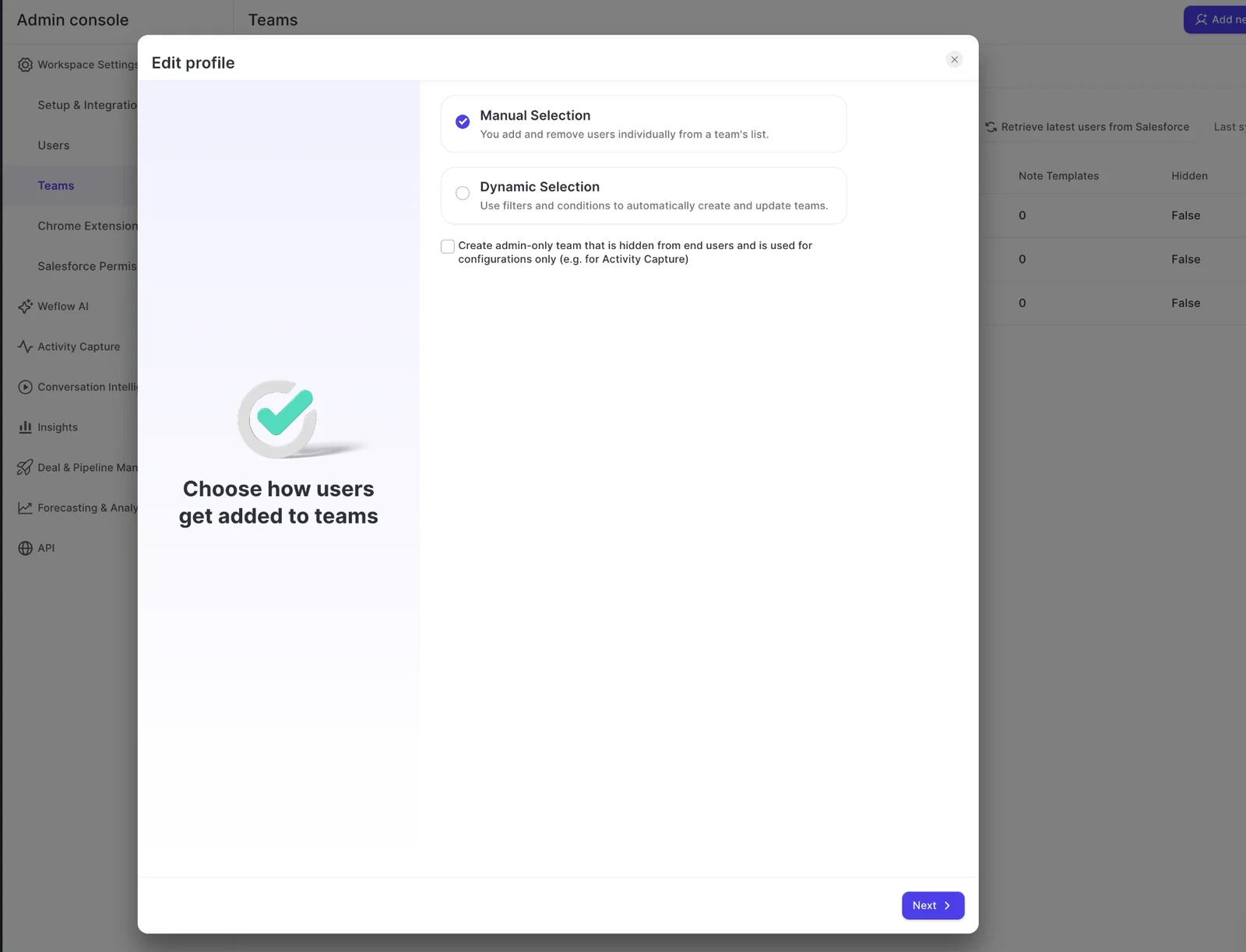
Reporting works the same way: RevOps designs it once and assigns it by role, so it stays out of the report-request queue under any boss.
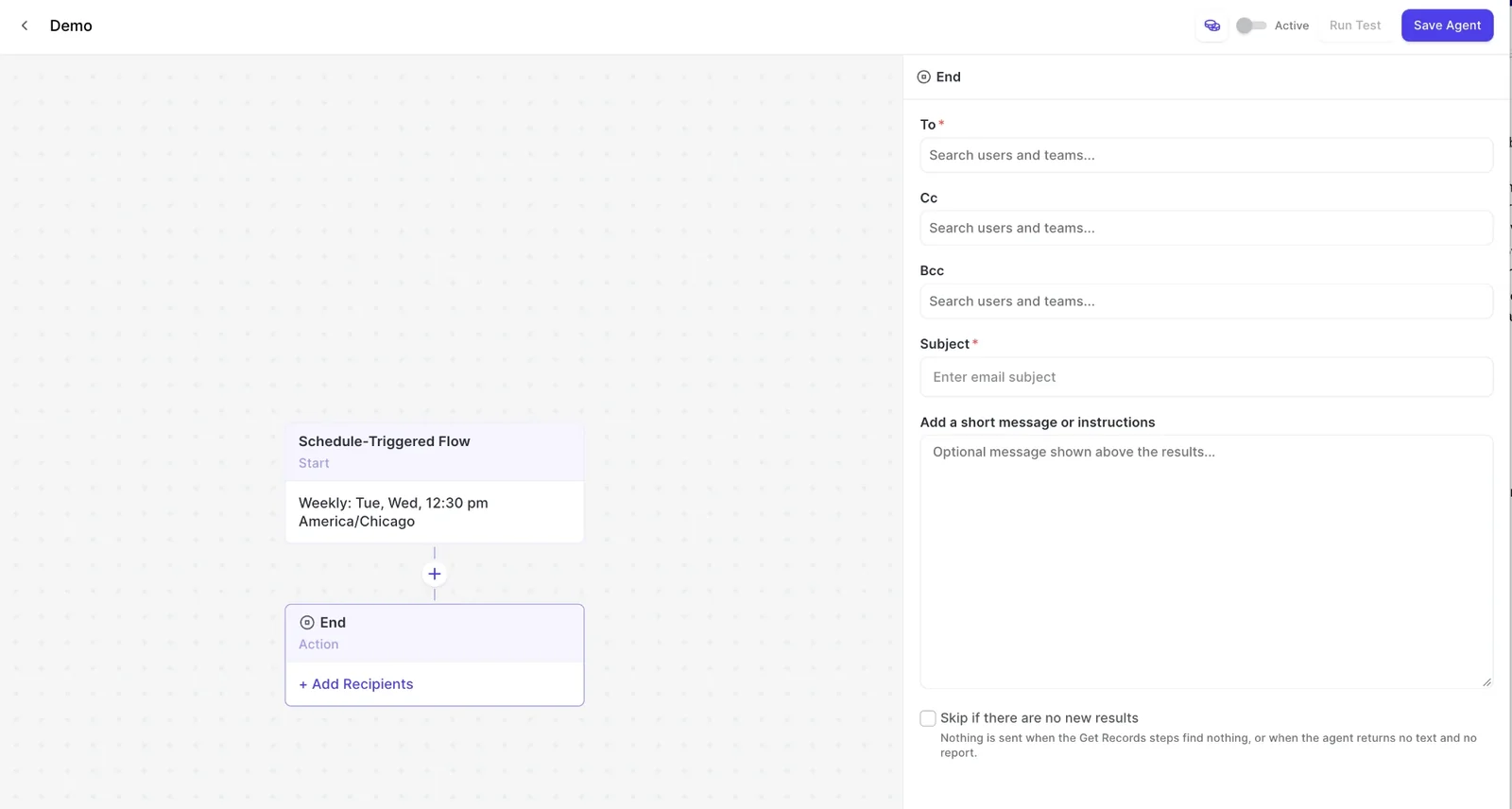
For executives who won't log into another system, Weflow Agent Builder runs scheduled agents that read Salesforce live and email the results to users and teams.
| What Weflow handles in a reorg | What stays your decision or another team's |
|---|---|
| One version of activity, conversation and forecast data, in your own Salesforce, through Weflow Activity & Contact Capture, Weflow Conversation Intelligence and Weflow Deal Intelligence & Forecasting | The reporting line itself, and the mandate behind it |
| Teams that rebuild themselves from Salesforce when managers, roles or regions change | The revenue run-rate and provisions view, which stays with finance, because Weflow forecasts from pipeline and deal data |
| Insights dashboards assigned to teams from the Admin Console, so each role lands on its own board | Post-sale teams working outside Salesforce, because Weflow works exclusively with Salesforce |
| Scheduled executive reports from Agent Builder, delivered by email with a PDF attached | Agreement on commit, stage definitions and the number across executives |
| Unlimited view-only licenses, so finance, CS and leadership see the same data without a paid seat | The priority order RevOps works against |
| A managed onboarding option where Weflow does the heavy lifting and RevOps answers questions and unlocks access | Whether RevOps has earned the seat at the executive table |
No tool fixes a mandate nobody has agreed on. Weflow gives RevOps the evidence to stay neutral, but the executives still have to agree on what it's neutral about.
How to move RevOps without losing forecast and board prep
The move sticks if three things happen before the line changes: the priority order is agreed, the definitions are shared, and the operating metrics are baselined. Skip any one of them and you'll spend the first quarter after the reorg relitigating it.
Agree one RevOps priority stack with the CRO and peers
Use one cross-functional stack rank in three tiers, a model Tessa Whittaker described on RevOps Lab:
- Company priorities come first, and every executive accepts them as the frame.
- CRO priorities across the whole go-to-market come second.
- Individual SVP priorities come third, ranked together in one session with the CRO and direct reports in the room.
That way the trade-offs get made once, in the open, and RevOps executes against the stack instead of arbitrating between executives every week.
Lock shared definitions for commit, stages and the number
Commit, stage definitions and the reported number have to mean the same thing in every region and function. Without that, no reporting line keeps RevOps neutral, because every team can argue the definition instead of the deal.
"You can't do that if, like, one business is defining commit and, like, a stage four deal differently from another region or business unit."
Lock these before the move:
- What qualifies a deal for commit, and who can override it.
- Entry and exit criteria for every opportunity stage.
- Which number goes to the board, and whether it's bookings or revenue.
- How pipeline gets attributed between marketing, sales and CS.
Baseline RevOps operating metrics before the reorg starts
Capture operating baselines before anything changes, or you'll have no way to prove the reorg was worth the disruption. Bookings and other lagging outcomes get recorded anyway, but operating metrics only exist if someone measured them first.
"One of the steps that I always skipped early on in my career that I wish I could go back and fix was not baselining things."
Baseline at least these:
- Forecast turnaround: How long from the forecast call to a submitted number.
- Board-prep effort: Hours RevOps spends assembling the board pack each quarter.
- Request backlog: How many open requests RevOps carries and how long they wait.
- Reconciliation time: How much of each leadership meeting goes to agreeing whose number is right.
Whichever line you pick, your operating rhythm has to survive the move. Our free Revenue Operating Cadence Guide lays out the weekly, monthly and quarterly cadences to keep intact during the change.
FAQ: RevOps reporting structure
Should RevOps report to the CEO?
It can, when RevOps' mandate is genuinely company-wide and no single functional executive spans it. In most companies, though, the COO line covers the same ground with less of the CEO's time.
Where does marketing ops sit if the CMO doesn't report to the CRO?
Inside RevOps, while marketing strategy stays with a peer CMO. As Haris Odobasic put it on RevOps Lab, RevOps can handle the technical half of marketing, like funnel and website conversion analysis.
The strategic half, where the market is going and how to position for it, needs its own leader.
Does the right RevOps reporting line change with company size?
Yes, because the revenue mix changes. Below about $10M in revenue, a RevOps focus on sales and marketing makes sense, since winning new customers is the main risk.
By around $50M, Haris Odobasic estimates about 80% of a year's revenue comes from existing customers, which pushes RevOps' scope past the CRO's span and makes the COO line more likely.
Is a dotted line to the CRO enough to keep RevOps responsive?
Only if an embedded RevOps partner runs your operating rhythm: pipeline inspection, the weekly forecast and business reviews. Without someone embedded, a dotted line is just a line on the org chart.
Who should own AI agents and AI operations in the revenue org?
Increasingly, RevOps, since it already holds the data, processes and systems those agents run on. While the agents stay inside go-to-market, RevOps can own them under the CRO. Once AI operations reaches finance, product and engineering, the COO line fits better.