
SPICED Sales Framework: What It Is and How to Use It
Learn what the SPICED sales framework is and how to use it in B2B SaaS discovery calls.



.png)

What is the SPICED sales framework?
SPICED is a customer-centric sales qualification framework built for B2B recurring revenue models. Developed by Winning by Design, it gives reps a structured way to qualify deals by understanding the buyer's world—not just checking boxes on an internal scorecard.
SPICED stands for:
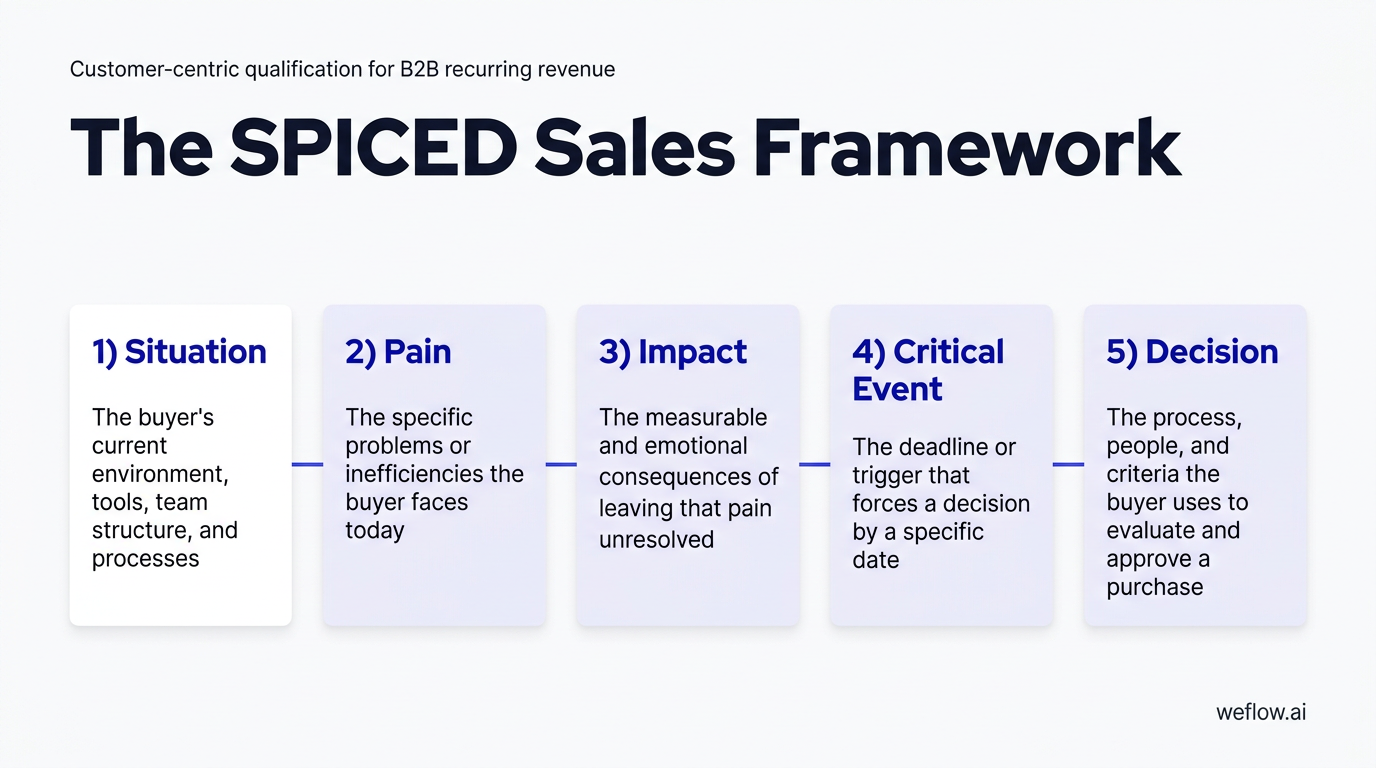
- Situation — The buyer's current environment, tools, team structure, and processes
- Pain — The specific problems or inefficiencies the buyer faces today
- Impact — The measurable and emotional consequences of leaving that pain unresolved
- Critical Event — The deadline or trigger that forces a decision by a specific date
- Decision — The process, people, and criteria the buyer uses to evaluate and approve a purchase
Unlike older frameworks like BANT (which starts with budget) or MEDDIC (which centers on internal sales process), SPICED starts with the customer's situation and works outward. This makes it a natural fit for SaaS and subscription businesses where long-term retention matters as much as the initial close.
The framework maps directly to the recurring revenue bow-tie model: the same SPICED context that helps close a deal also helps customer success teams drive adoption and expansion. When a CSM inherits a deal with a complete SPICED summary, they don't start from zero—they already know the buyer's pain, the outcomes they expect, and the timeline they're working against.
How to use the SPICED framework: a step-by-step guide with examples
Each SPICED element builds on the one before it. Here's how to work through all five during discovery—with definitions, B2B SaaS examples, and questions you can use on your next call.
Situation
Situation captures the buyer's current state: their tech stack, team structure, processes, growth stage, and any recent changes. This is context, not qualification—you're building the foundation for every question that follows.
Example: A mid-market SaaS company with 80 AEs running Salesforce Enterprise. They use Gong for call recording but have no activity capture tool. Reps manually log activities, and CRM data completeness sits around 40%.
Discovery questions:
- "Walk me through how your sales team is structured today—segments, regions, reporting lines."
- "What tools does your team use for pipeline management and forecasting right now?"
- "How are reps currently logging activities in Salesforce?"
- "Have there been any recent changes to your sales process or tech stack in the last six months?"
Pain
Pain identifies the specific problems the buyer faces. The goal isn't to hear "we need better forecasting"—it's to understand exactly what's broken and how it affects their day-to-day work.
Effective pain discovery separates quantitative pain (measurable, number-based) from qualitative pain (experiential, process-based). Both matter, but quantitative pain builds a stronger business case.
| Pain type | Definition | Examples |
|---|---|---|
| Quantitative | Measurable problems with numbers attached | Forecast accuracy off by 20%+; reps spend 5+ hours/week on CRM data entry; 60% of pipeline deals have incomplete fields; 30% of activities never get logged |
| Qualitative | Process or experience-based frustrations | Reps distrust the CRM data and build shadow spreadsheets; managers can't prep for pipeline reviews because data is stale; the board questions revenue numbers every quarter |
Example: The VP of Sales can't trust the weekly forecast because reps update pipeline stages inconsistently. The RevOps team spends two days every month cleaning CRM data for board reporting. Reps avoid logging activities because it takes too long, so managers have no visibility into actual selling behavior.
Discovery questions:
- "What's the biggest gap between what your CRM shows and what's actually happening in deals?"
- "How much time do reps spend on CRM data entry each week?"
- "When you pull a forecast report today, how confident are you in the numbers?"
- "What happens when a deal slips that nobody saw coming?"
Impact
Impact quantifies what happens if the pain goes unresolved. This is where you connect operational problems to business outcomes—and to the emotions of the people living with those problems.
Strong impact discovery covers both rational and emotional dimensions:
| Impact type | Definition | Examples |
|---|---|---|
| Rational | Business outcomes tied to revenue, cost, or efficiency | Missed revenue targets by 15% last quarter; $200K in pipeline leaked due to untracked deal risk; board lost confidence in forecast accuracy, delaying fundraise |
| Emotional | Personal consequences for the people involved | The CRO dreads forecast calls because the numbers aren't defensible; the RevOps lead is burned out from manual data cleanup; reps feel micromanaged when managers ask for updates the CRM should already show |
Example: Because forecast accuracy is off by 20%, the CRO presents numbers to the board that don't hold up. Last quarter, they missed the commit by $1.2M. The RevOps team has been asked to fix the data problem three times—each "fix" lasted about six weeks before reps stopped logging again.
Discovery questions:
- "What did inaccurate forecasting cost the business last quarter—in revenue, credibility, or both?"
- "If nothing changes in the next two quarters, what happens to pipeline visibility?"
- "How does this problem affect your team personally—your time, your credibility with leadership?"
Critical event
The critical event is the external deadline or trigger that creates urgency. Without it, deals stall—even when the pain is real and the impact is clear. A critical event answers: "Why does this need to happen by a specific date?"
[banner type="download" url="https://www.weflow.ai/resources/cheat-sheets/spiced-sales-checklist" text="SPICED Discovery Checklist" subtitle="Run discovery calls that surface every SPICED element before the deal stalls" button="Download checklist"]
Critical events aren't arbitrary deadlines set by sales reps. They're buyer-side triggers: fiscal year planning, board meetings, contract renewals, leadership changes, regulatory deadlines, or growth milestones that force action.
Example: The company's Gong contract renews in Q3. The CRO has told the RevOps team to evaluate alternatives before renewal. The board meeting is in eight weeks, and the CFO wants a plan to reduce sales tool spend by 20%.
Discovery questions:
- "Is there a specific date or event driving the timeline for this decision?"
- "When does your current contract renew, and have you started the evaluation process?"
- "What happens if this doesn't get resolved before [board meeting / fiscal year end / Q3]?"
- "Who set this timeline, and what's driving it?"
Decision
Decision covers how the buyer will evaluate, approve, and purchase a solution. It has three sub-elements:
- Decision process — The steps from evaluation to signed contract. How many stages? Is there a formal RFP? What approvals are required? How long does procurement typically take?
- Decision committee — Every person who influences or approves the purchase. This includes the economic buyer (signs the check), the champion (drives the deal internally), technical evaluators (test the product), and blockers (people who can stall or kill the deal).
- Decision criteria — The specific requirements the buyer uses to evaluate options. These might be Salesforce-native architecture, deployment speed, pricing model, security certifications (SOC 2 Type II), or integration with existing tools.
Example: The RevOps lead is the champion. The CRO is the economic buyer. IT security needs to review SOC 2 documentation. Procurement requires three vendor quotes. The decision criteria are: Salesforce-native integration, activity capture without per-rep OAuth, deployment in under four weeks, and pricing under $100/user/month.
Discovery questions:
- "Walk me through what happens between 'we like this' and 'contract signed' at your company."
- "Besides yourself, who else needs to weigh in on this decision?"
- "What are the three or four must-have criteria that'll drive your final choice?"
- "Have you bought a tool like this before? What did that process look like?"
SPICED vs. MEDDIC vs. BANT: which sales framework should you use?
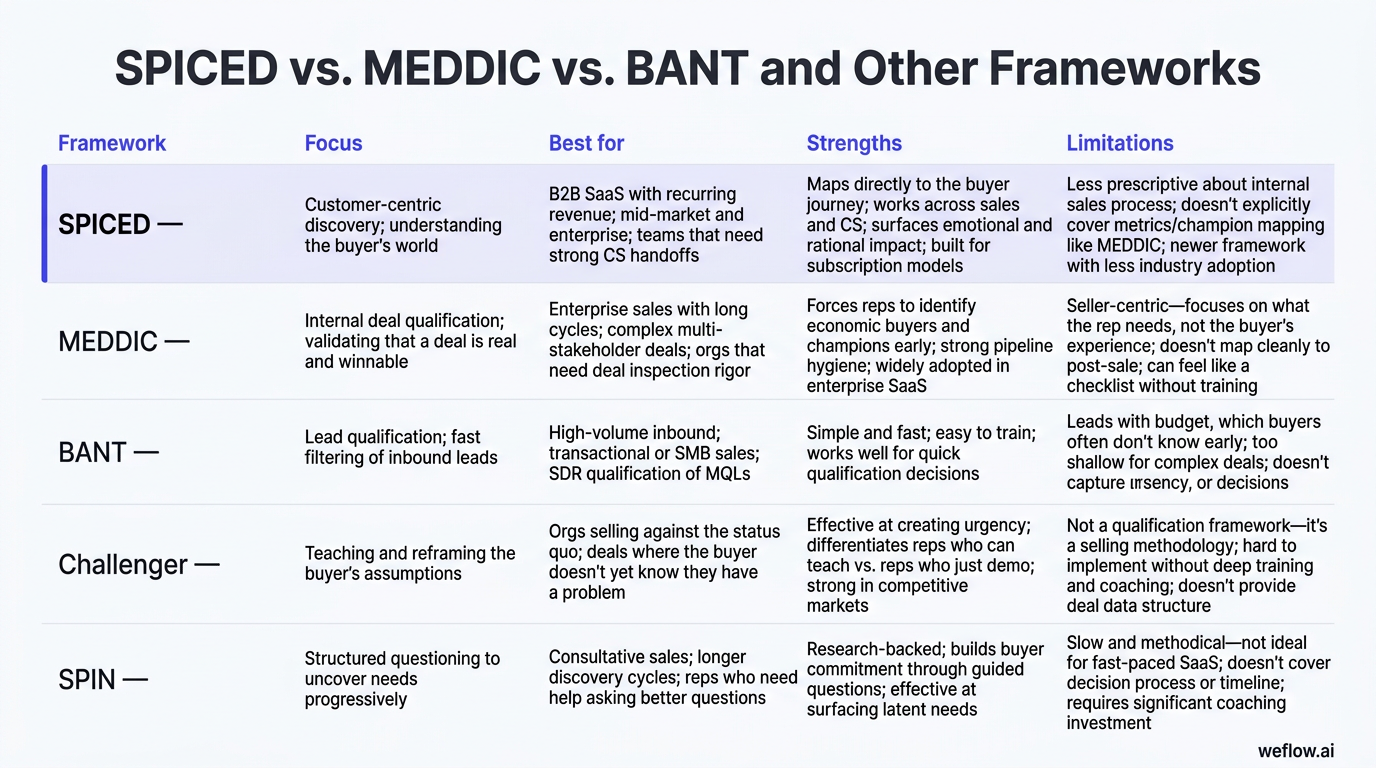
No single framework fits every sales motion. SPICED, MEDDIC, and BANT each solve different problems—and the right choice depends on your deal complexity, sales cycle, and what's breaking in your pipeline today.
| Framework | Focus | Best for | Strengths | Limitations |
|---|---|---|---|---|
| SPICED | Customer-centric discovery; understanding the buyer's world | B2B SaaS with recurring revenue; mid-market and enterprise; teams that need strong CS handoffs | Maps directly to the buyer journey; works across sales and CS; surfaces emotional and rational impact; built for subscription models | Less prescriptive about internal sales process; doesn't explicitly cover metrics/champion mapping like MEDDIC; newer framework with less industry adoption |
| MEDDIC | Internal deal qualification; validating that a deal is real and winnable | Enterprise sales with long cycles; complex multi-stakeholder deals; orgs that need deal inspection rigor | Forces reps to identify economic buyers and champions early; strong pipeline hygiene; widely adopted in enterprise SaaS | Seller-centric—focuses on what the rep needs, not the buyer's experience; doesn't map cleanly to post-sale; can feel like a checklist without training |
| BANT | Lead qualification; fast filtering of inbound leads | High-volume inbound; transactional or SMB sales; SDR qualification of MQLs | Simple and fast; easy to train; works well for quick qualification decisions | Leads with budget, which buyers often don't know early; too shallow for complex deals; doesn't capture impact, urgency, or decision process |
| Challenger | Teaching and reframing the buyer's assumptions | Orgs selling against the status quo; deals where the buyer doesn't yet know they have a problem | Effective at creating urgency; differentiates reps who can teach vs. reps who just demo; strong in competitive markets | Not a qualification framework—it's a selling methodology; hard to implement without deep training and coaching; doesn't provide deal data structure |
| SPIN | Structured questioning to uncover needs progressively | Consultative sales; longer discovery cycles; reps who need help asking better questions | Research-backed; builds buyer commitment through guided questions; effective at surfacing latent needs | Slow and methodical—not ideal for fast-paced SaaS; doesn't cover decision process or timeline; requires significant coaching investment |
When to layer frameworks together
The best sales orgs don't pick one framework and ignore everything else. They layer them.
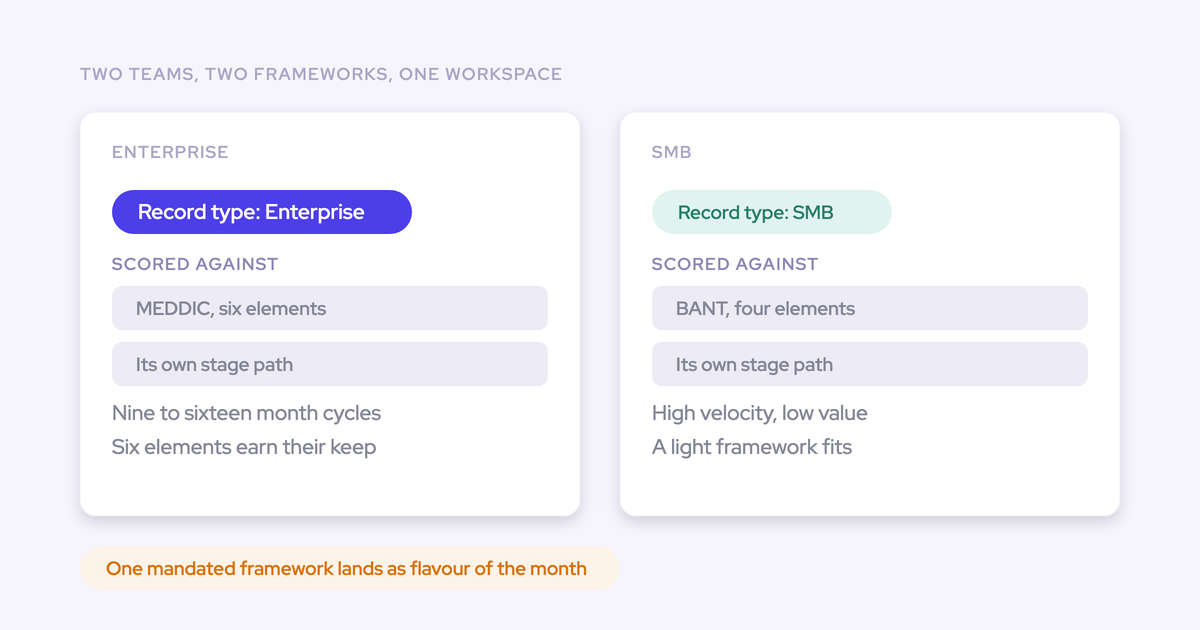
A common approach: use SPICED as the discovery framework (what you learn about the buyer) and MEDDIC as the deal qualification framework (how you validate the deal is real). SPICED gives you the customer context. MEDDIC forces you to confirm you've got a champion, an economic buyer, and a documented decision process.
For teams with a high-volume inbound motion, use BANT at the SDR stage to filter leads quickly, then transition to SPICED once a deal enters the pipeline and warrants deeper discovery.
Challenger and SPIN are selling methodologies, not qualification frameworks. They complement SPICED and MEDDIC but don't replace them. A rep can use Challenger's teach-tailor-take control approach during the same call where they're gathering SPICED data.
How to implement SPICED across your sales org
Rolling out SPICED isn't just about training reps on an acronym. It requires CRM infrastructure, coaching cadences, and a plan for making SPICED data visible and useful—not just another set of fields reps ignore.
CRM field setup in Salesforce
SPICED data belongs on the Opportunity object in Salesforce. Here's a practical field setup:
| SPICED element | Salesforce field(s) | Field type | Notes |
|---|---|---|---|
| Situation | Situation Summary | Long Text Area | Buyer's current tech stack, team structure, processes. Keep it to 3-5 sentences. |
| Pain | Primary Pain; Pain Type (Quantitative/Qualitative) | Long Text Area; Picklist | Separate the specific pain from the category. Include quantified metrics where possible. |
| Impact | Business Impact; Impact Type (Rational/Emotional) | Long Text Area; Picklist | Tie to revenue, cost, or risk. Include the personal stakes for the champion. |
| Critical Event | Critical Event; Critical Event Date | Long Text Area; Date | The date field enables pipeline views filtered by urgency. The text field captures what's driving the deadline. |
| Decision | Decision Process; Decision Committee; Decision Criteria | Long Text Area (x3) | Three separate fields. Decision Committee should list names, titles, and roles (champion, economic buyer, blocker). |
Pro tip: Add validation rules that require SPICED fields at specific stage transitions. For example, require Situation and Pain before a deal moves past Stage 2, and require all five elements before Stage 4 (Proposal). This enforces data quality without blocking early-stage pipeline.
Rep training approach
Don't teach SPICED as theory. Teach it through call reviews.
- Week one: Introduce the framework with three recorded discovery calls—one great, one average, one poor. Have reps map each call to SPICED elements and identify gaps.
- Week two: Reps practice on live calls with a SPICED scorecard. Managers listen to two calls per rep and score SPICED coverage.
- Week three: Pipeline review using SPICED data. Walk through five deals and ask: "What's the critical event? Who's on the decision committee? What's the quantified impact?" Gaps in the data become coaching moments.
- Ongoing: Integrate SPICED into weekly pipeline reviews and 1:1s. The framework sticks when managers ask SPICED questions consistently—not when reps attend a one-time training.
Coaching cadences
SPICED works as a coaching framework because it gives managers specific things to inspect:
[banner type="download" url="https://www.weflow.ai/resources/cheat-sheets/sales-methodology-cheat-sheet" text="Sales Methodology Cheat Sheet" subtitle="Pick the right framework for your deal cycle without guessing which one fits" button="Get the cheat sheet"]
- Weekly pipeline review: Filter deals by Critical Event Date. If a deal has no critical event, it's not qualified—coach the rep on how to find or create urgency.
- 1:1 deal coaching: Pick two or three deals per rep. Ask them to present each deal using SPICED. Gaps in their explanation map directly to gaps in their discovery.
- Call reviews: Score discovery calls on SPICED coverage. Did the rep uncover all five elements? Which elements are consistently weak across the team?
Common rollout mistakes
- Adding fields without validation rules. If SPICED fields are optional, reps won't fill them in. Tie field completion to stage gates.
- Training once and moving on. SPICED adoption requires 8-12 weeks of consistent reinforcement through pipeline reviews and call coaching. A single training session has a half-life of about two weeks.
- Making it a data entry exercise. If reps see SPICED as "more fields to fill out," adoption dies. Frame it as "the information that helps you close deals faster"—and back that up by showing reps how SPICED data actually helps them in deal reviews.
- Skipping the CS handoff. SPICED's biggest advantage over MEDDIC is that it maps to post-sale. If you don't build a process for passing SPICED context to customer success, you're leaving half the value on the table.
- Ignoring manager adoption. Reps follow what managers inspect. If managers don't ask SPICED questions in pipeline reviews, reps stop capturing SPICED data within a month.
How AI and conversation intelligence automate the SPICED framework
The biggest barrier to SPICED adoption isn't training—it's data entry. Reps understand the framework. They just don't have time to update eight Salesforce fields after every discovery call. This is where conversation intelligence changes the equation.
How it works
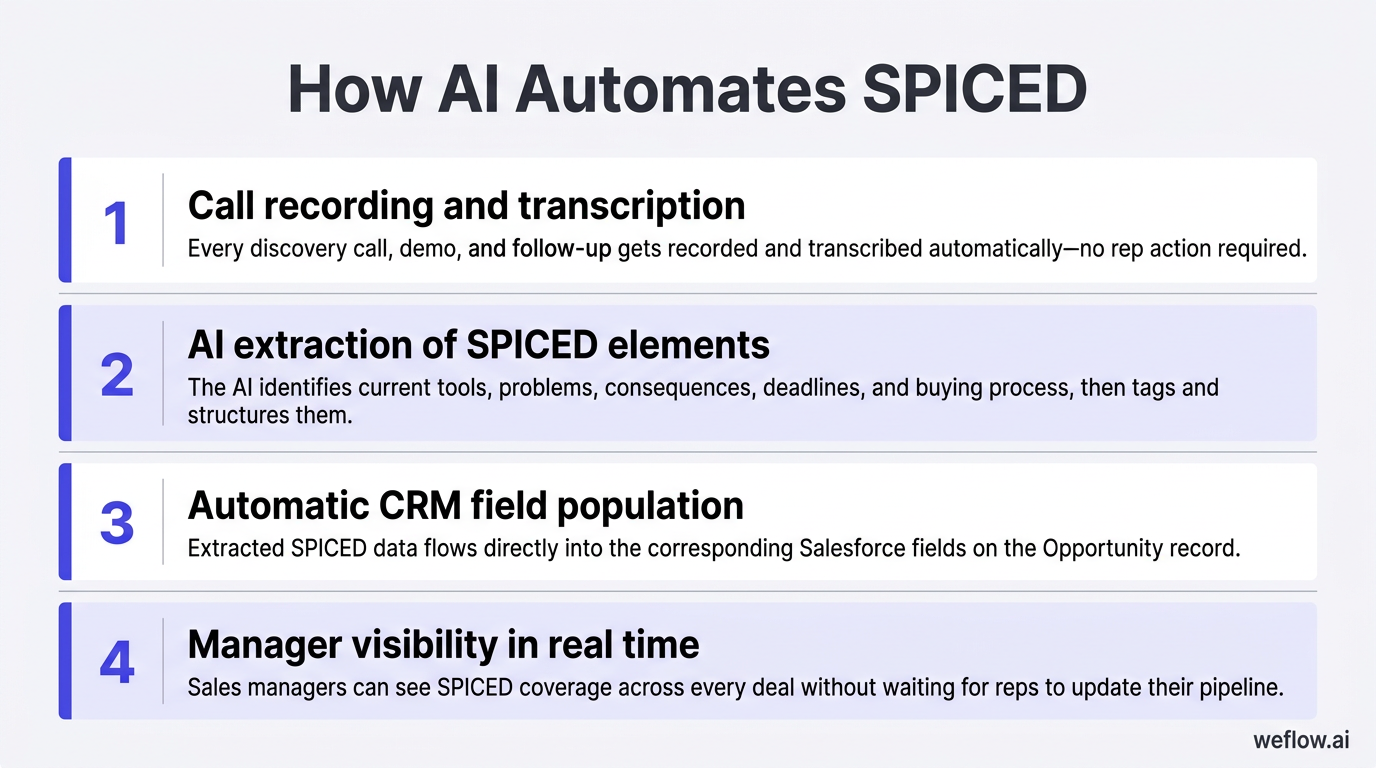
Modern conversation intelligence platforms record sales calls, transcribe them using AI, and then extract structured data from the conversation. For SPICED, that means:
- Call recording and transcription. Every discovery call, demo, and follow-up gets recorded and transcribed automatically—no rep action required.
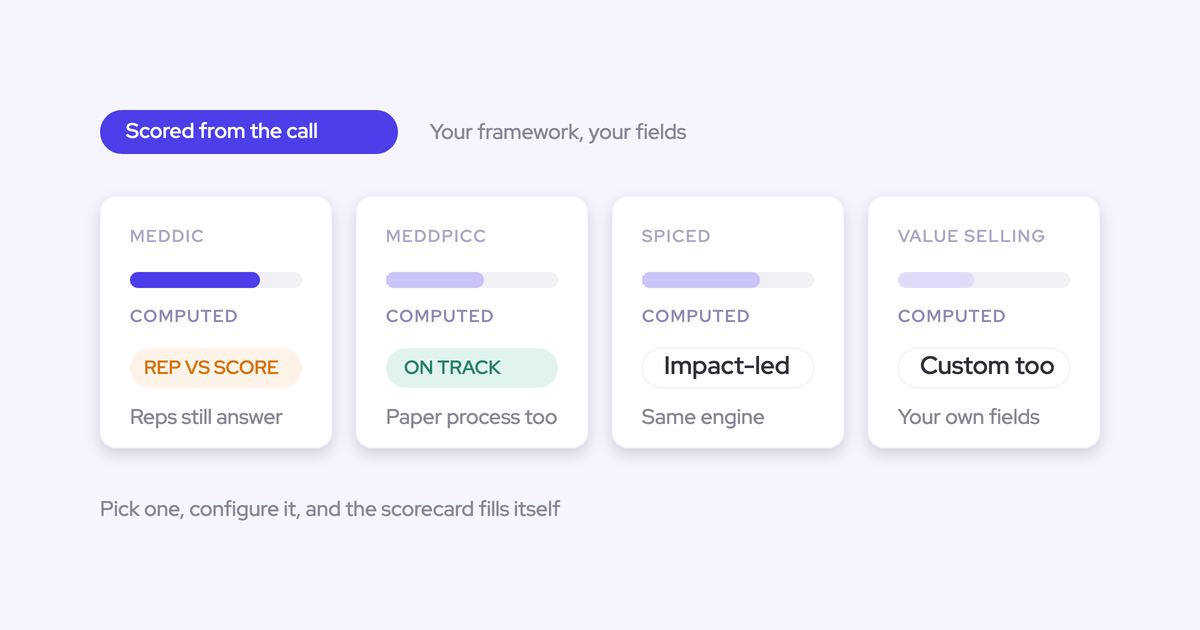
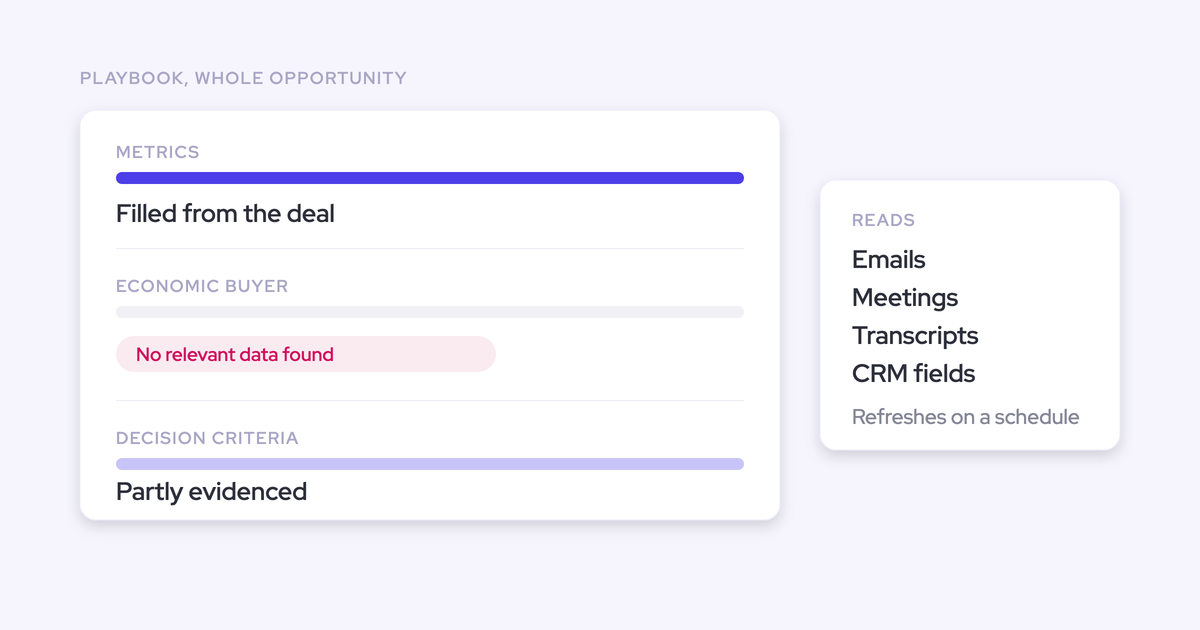
- AI extraction of SPICED elements. The AI identifies when a buyer mentions their current tools (Situation), describes a problem (Pain), quantifies consequences (Impact), references a deadline (Critical Event), or explains their buying process (Decision). These elements get tagged and structured.
- Automatic CRM field population. Extracted SPICED data flows directly into the corresponding Salesforce fields on the Opportunity record. Reps don't log in and type anything—the data appears after the call ends.
- Manager visibility in real time. Sales managers can see SPICED coverage across every deal without waiting for reps to update their pipeline. Deals with missing elements get flagged automatically.
What this means for pipeline quality
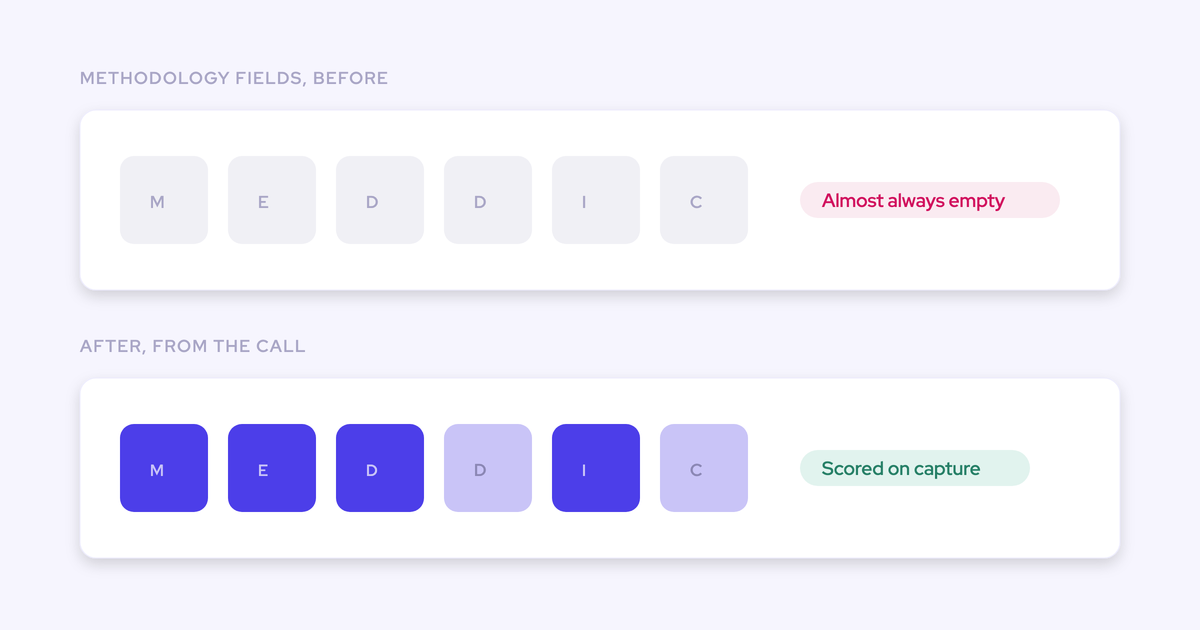
Manual SPICED workflows typically achieve 30-40% field completion across the pipeline. AI-powered extraction pushes that to 80%+ because it removes the friction between having the conversation and capturing the data.
For managers, this means pipeline reviews shift from "did you update your deals?" to "your Impact field shows the buyer cited a $500K revenue risk—how are you using that in your proposal?" The quality of coaching conversations goes up because the data is already there.
For RevOps teams, automated SPICED data creates a reliable dataset for analyzing what discovery patterns correlate with closed-won deals. You can finally answer questions like: "Do deals with a documented critical event close 2x faster?" Because the data exists consistently, not just on the 30% of deals where a rep bothered to fill in the field.
Where Weflow fits
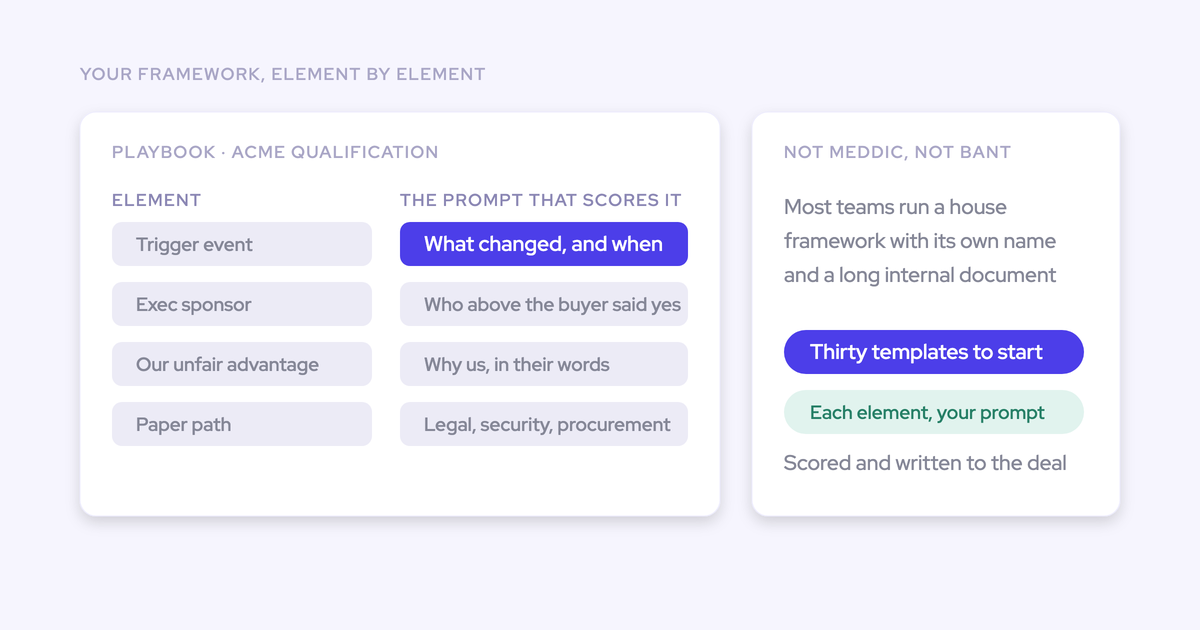
Weflow, a Salesforce-native revenue AI platform, records calls, captures activity data, and uses AI to populate Salesforce fields automatically—including methodology fields like SPICED. Because Weflow is built natively around Salesforce (not as a bolt-on integration), extracted SPICED data writes directly to Opportunity fields, respecting your validation rules, field-level security, and custom objects.
Reps finish a discovery call and find their SPICED fields already populated. Managers open their pipeline view in Salesforce and see real-time SPICED coverage without chasing reps for updates. RevOps teams get the data completeness they need for reporting and forecasting—without building manual compliance workflows.
Who should use the SPICED framework?
SPICED isn't just for AEs on discovery calls. It creates a shared language across the entire revenue team. Here's how each role uses it:
| Role | How they use SPICED |
|---|---|
| SDRs / BDRs | Capture Situation and Pain during initial outreach and qualification calls. Pass structured context to AEs so the first discovery call doesn't start from scratch. |
| Account Executives | Run full SPICED discovery across the sales cycle. Use Impact and Critical Event to build urgency. Use Decision to navigate procurement and multi-threading. |
| Sales Managers | Inspect deals using SPICED in pipeline reviews. Coach reps on gaps—"You have Pain but no Critical Event, so this deal will stall." Use SPICED coverage as a leading indicator of deal health. |
| Customer Success | Inherit SPICED context at handoff. Use Situation, Pain, and Impact to set onboarding goals. Reference Critical Event timelines for QBR planning and renewal conversations. |
| Marketing | Analyze SPICED data across closed-won deals to identify which Pains and Impacts appear most often. Use these patterns to refine messaging, content strategy, and persona targeting. |
| RevOps | Build SPICED fields into Salesforce, create validation rules for stage gates, and report on SPICED coverage as a pipeline quality metric. Use SPICED data to correlate discovery quality with win rates. |
SPICED discovery call template
Use this template to prepare for and run discovery calls. These questions are organized by SPICED element—you don't need to ask all of them. Pick two or three per element based on what you already know about the buyer.
| SPICED element | Discovery questions |
|---|---|
| Situation |
|
| Pain |
|
| Impact |
|
| Critical Event |
|
| Decision |
|
Frequently asked questions
What does SPICED stand for in sales?
SPICED stands for Situation, Pain, Impact, Critical Event, and Decision. It's a B2B sales qualification framework developed by Winning by Design that helps reps understand the buyer's context, uncover real problems, quantify the stakes, identify urgency, and map the buying process.
How is SPICED different from MEDDIC or BANT?
SPICED is customer-centric—it starts with the buyer's situation and works outward. MEDDIC is seller-centric, focused on validating that a deal meets internal qualification criteria. BANT is a quick-filter framework that leads with budget. SPICED is better suited for recurring revenue models because it captures context that's useful beyond the initial close, including customer success handoffs and expansion plays.
When should a sales team use the SPICED framework?
SPICED works best for B2B SaaS and subscription businesses with deal cycles longer than 30 days and multiple stakeholders. If your team struggles with shallow discovery, unpredictable forecasts, or poor sales-to-CS handoffs, SPICED addresses all three by creating a structured, reusable understanding of each deal.
Can SPICED be used alongside other sales methodologies?
Yes. Many teams use SPICED for discovery and customer understanding alongside MEDDIC for deal qualification. SPICED captures what you learn about the buyer; MEDDIC validates that the deal is real and winnable. Challenger and SPIN are selling techniques that complement both frameworks without conflicting.
How do you implement SPICED in a CRM like Salesforce?
Create dedicated fields on the Opportunity object for each SPICED element: Situation Summary, Primary Pain, Business Impact, Critical Event (with a date field), and three Decision fields (Process, Committee, Criteria). Add validation rules that require key fields at specific stage transitions—for example, require Situation and Pain before Stage 3. This enforces adoption without blocking early-stage pipeline.
What are the best SPICED discovery questions to ask?
Start with open-ended situational questions ("Walk me through your current process"), then dig into pain with specifics ("How much time do reps spend on CRM data entry each week?"). For Impact, always ask about both business outcomes and personal stakes. For Critical Event, look for buyer-side deadlines—not timelines you create. For Decision, ask about process, people, and criteria separately.
How does AI help automate the SPICED sales framework?
Conversation intelligence tools record sales calls, transcribe them, and use AI to extract SPICED elements automatically. Instead of reps manually typing Situation, Pain, Impact, Critical Event, and Decision data into Salesforce after every call, AI identifies these elements in the conversation and populates the corresponding CRM fields. This raises field completion rates from the typical 30-40% to 80%+, giving managers and RevOps teams reliable data for pipeline reviews, forecasting, and coaching.
-p-1600.png)

.png)
-p-1600.png)
-p-1600.png)
-p-1600.png)