
Sales Discovery Questions: 37 Examples and Frameworks
Learn 37 sales discovery questions and frameworks to qualify prospects, uncover pain, and book next steps.



.png)

What is a sales discovery call?
A sales discovery call is a structured conversation where a rep asks targeted questions to understand a prospect's current situation, pain points, decision-making process, and buying timeline before proposing a solution. It's the first real selling conversation after an initial connect—and it determines whether a deal has legs or dies in Stage 1.
Discovery calls typically last 25 to 45 minutes and happen early in the sales cycle—usually the second or third interaction. The goal isn't to pitch. It's to gather enough information to decide whether this prospect is worth pursuing and to give them confidence that you understand their problem.
Gong's data shows top-performing reps ask 11 to 14 questions per discovery call, spread evenly across the conversation rather than front-loaded in the first five minutes. Reps who treat discovery as a diagnostic exercise close at higher rates than those who rush to a demo.
What are sales discovery questions?
Sales discovery questions are open-ended questions designed to uncover a prospect's business challenges, priorities, decision-making criteria, and urgency to buy. Instead of confirming whether someone has budget, you're learning why they're looking for a solution, what happens if they don't solve the problem, and how decisions get made.
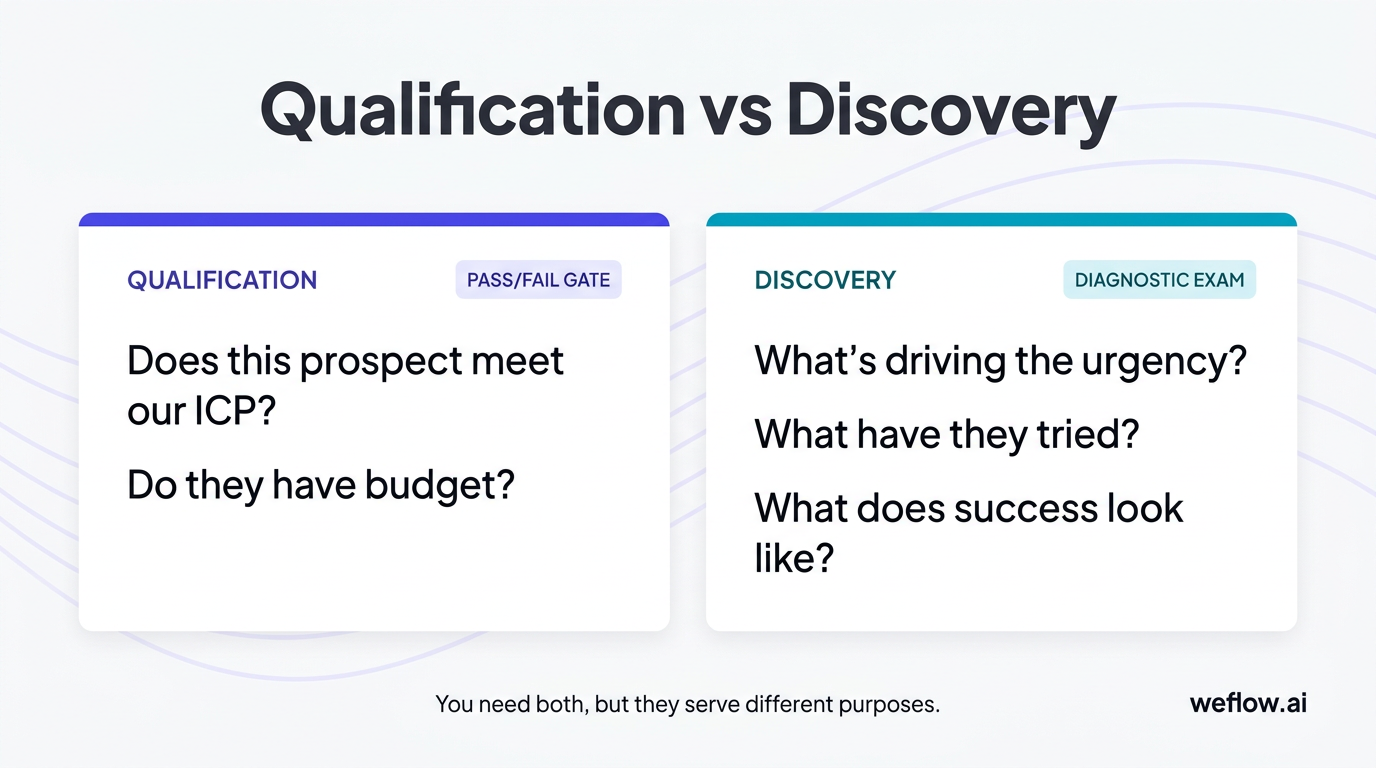
Discovery and qualification overlap but aren't the same. Qualification filters: Does this prospect meet our ICP? Do they have budget? Discovery explores: What's driving the urgency? What have they tried? What does success look like? Think of qualification as a pass/fail gate and discovery as a diagnostic exam. You need both, but they serve different purposes.
Rapport-building questions to start the conversation
The first two minutes of a discovery call set the tone for everything that follows. These questions warm up the conversation without wasting time on small talk that goes nowhere.
| Question | Why it works |
|---|---|
| "I saw your team just [specific event—new hire, funding round, product launch]. How's that going?" | Shows you did your homework. Turns a cold open into a warm conversation. |
| "What prompted you to take this call today?" | Cuts straight to intent. You'll learn whether they're actively evaluating solutions or just exploring. |
| "How familiar are you with what we do, and would a quick 30-second overview be helpful?" | Respects their time. If they've done research, skip the intro. If not, you earn the right to frame the conversation. |
| "What's your role in the evaluation process for something like this?" | Identifies authority early without the blunt "Are you the decision-maker?" that puts people on the defensive. |
| "Before we dive in—what would make this call a good use of your time?" | Lets the prospect set the agenda. You'll learn what matters most to them before you ask a single question. |
| "How's your quarter going so far?" | Opens a natural conversation about pipeline, targets, and pressure—exactly the context you need for the rest of the call. |
Fact-gathering questions to understand the prospect's current state
Before you can diagnose a problem, you need to understand the baseline. These questions map out how the prospect operates today.
| Question | What it reveals |
|---|---|
| "Walk me through how your team handles [specific process] today." | Surfaces the actual workflow, not the idealized version. You'll hear where things break down. |
| "What tools are you using for this right now?" | Maps their tech stack and reveals integration requirements and switching costs. |
| "How many people on your team are involved in this process?" | Scopes deal size and reveals how many stakeholders you'll need to convince. |
| "What metrics do you track to measure success here?" | Tells you how they define value—and how they'll measure whether your solution is working. |
| "How long have you been doing it this way?" | Identifies inertia. If they've been doing it the same way for three years, you'll need a stronger case for change. |
| "What's working well with your current approach?" | Prevents you from trashing something they like. Reveals non-negotiable requirements. |
| "Where does your data live today—one system or multiple?" | Uncovers integration complexity and data silos that affect implementation planning. |
| "Who else on your team would I need to talk to if this moves forward?" | Maps the buying committee early. The sooner you know about a VP of Finance sign-off, the better. |
Qualification questions to assess budget, authority, and fit
Qualification questions help you decide whether to invest more time in this deal. Ask them after you've built enough rapport that direct questions about money and authority don't feel abrupt.
| Question | What it reveals |
|---|---|
| "Has your team allocated budget for a solution like this, or would we need to build a business case together?" | Separates funded initiatives from exploratory conversations without the blunt "What's your budget?" |
| "What's the approval process look like for a purchase of this size at your company?" | Maps the procurement process—legal, security, finance—so you can plan your timeline. |
| "Who else needs to be involved in this decision?" | Identifies the full buying committee. You need to know about CFO sign-off now, not at the contract stage. |
| "Have you evaluated other solutions? What did you like or dislike about them?" | Reveals competitive landscape and evaluation criteria you'll need to address. |
| "What would need to be true for you to move forward with something like this in the next 90 days?" | Surfaces hidden blockers—reorgs, budget freezes, competing projects—that stall deals. |
| "Is this solving a problem you need to fix this quarter, or is it more of a next-year priority?" | Gauges urgency. Next-year priorities belong in nurture, not active pipeline. |
| "If we solve this problem, what does the financial impact look like for your team?" | Connects your solution to a dollar figure—pipeline, revenue, or cost savings. |
| "What happens if you don't solve this problem?" | If the answer is "nothing much," this deal doesn't have urgency. |
Pain-point questions that uncover business impact
Pain questions go beyond identifying problems—they quantify the business impact of inaction, which creates urgency to buy.
Reps who skip this step compete on features and price. Reps who nail it create urgency to act now.
| Question | Impact it uncovers |
|---|---|
| "How much time does your team spend on [manual process] each week?" | Quantifies wasted hours. Multiply by headcount and hourly cost for an instant ROI case. |
| "What's the cost of getting this wrong—missed quota, lost deals, bad data?" | Forces the prospect to articulate consequences in business terms. |
| "How does this problem affect your team's ability to hit their number this quarter?" | Ties the pain directly to revenue. Revenue impact moves deals faster than operational pain. |
| "You mentioned [pain point]—can you give me a specific example of when that caused a real problem?" | Moves from abstract frustration to a concrete story you can reference in your proposal. |
| "If you could fix this tomorrow, what would the first 30 days look like?" | Gets the prospect to visualize the solution and articulate their own success criteria. |
| "What's the impact on your customers or prospects when this process breaks down?" | Surfaces downstream effects that multiply the perceived cost of inaction. |
| "How does this compare to the other priorities on your plate right now?" | Tells you where this sits in their stack rank. If it's priority four out of five, your deal timeline just got longer. |
| "What have you tried before to solve this, and why didn't it work?" | Reveals failed attempts—they already believe the problem is worth solving. You just need a better approach. |
Follow-up questions to gauge commitment and timeline
These questions test whether a prospect is genuinely ready to move forward or just being polite.
| Question | Signal it provides |
|---|---|
| "Based on what we've discussed, does this feel like something worth exploring further?" | "Yes, definitely" vs. "Maybe, we'd need to think about it" tells you everything. |
| "What's your ideal timeline for having something like this up and running?" | Reveals whether there's a real deadline or an open-ended exploration. |
| "Is there a specific event driving the timeline—a board meeting, a quarter-end, a new fiscal year?" | Identifies compelling events that create natural deadlines for your forecast. |
| "What would need to happen internally before you could sign off on something like this?" | Surfaces the internal approval workflow so you can help your champion navigate it. |
| "If I put together a proposal based on what we've discussed, who would you share it with?" | Reveals whether your contact is a champion, an influencer, or a gatekeeper. |
| "What concerns do you have at this point that might slow things down?" | Surfaces objections early when you still have time to address them. |
| "On a scale of one to 10, how confident are you that this gets prioritized this quarter?" | Anything below seven means there are blockers you haven't uncovered yet. |
| "Is there anything I haven't asked about that I should know?" | Catches hidden variables—a competing vendor, a build-vs-buy debate, or a stakeholder you don't know about. |
Next-step questions to advance the deal
Every discovery call should end with a concrete next step. Lock it down before the prospect hangs up.
[banner type="download" url="https://www.weflow.ai/resources/cheat-sheets/sales-enablement-cheat-sheet" text="Sales Enablement Cheat Sheet" subtitle="Turn your best rep's discovery call into a playbook the whole team can run" button="Get the cheat sheet"]
| Question | Purpose |
|---|---|
| "Based on everything we've covered, I think a [demo/technical deep-dive/workshop] with [relevant stakeholders] would be the right next step. Does that make sense?" | Proposes a specific next action rather than the vague "I'll send over some materials." Harder to defer. |
| "Who else from your team should be in that meeting?" | Expands the buying committee. Single-threaded deals die when your one contact goes on vacation. |
| "Can we get something on the calendar right now while we're both here?" | Eliminates the "I'll check my calendar and get back to you" delay that kills momentum. Book it live. |
| "What information would be helpful for me to send over before our next conversation?" | Gives you a reason to follow up with value rather than a "just checking in" email. |
| "Is there anything that could prevent this next meeting from happening?" | Catches blockers—PTO, budget freeze, reorg—before they become ghosted follow-ups. |
Disqualification questions: when to walk away
Not every discovery call should lead to a next step. Knowing when to disqualify saves your pipeline from deals that were never going to close.
- "What happens if you don't solve this problem this year?" — If the answer is "honestly, not much," there's no urgency. Move them to nurture and revisit next quarter.
- "Is there budget allocated for this, or would this need new budget approval?" — Unfunded initiatives take two to three times longer and require executive sponsorship. No budget and no champion means your win probability drops below 10%.
- "You mentioned you're also looking at [competitor/internal build]. What would tip the decision in our direction?" — If they can't articulate why they'd choose you, you're likely a column filler brought in to satisfy a three-bid procurement requirement.
- "How does this rank against the other projects competing for your team's time right now?" — If it's priority five behind four other initiatives, it won't close this quarter. Forecast accordingly.
- "Is there anything about our approach that gives you pause?" — If they list fundamental mismatches—wrong CRM, wrong segment, wrong use case—part ways respectfully rather than forcing a deal that churns in six months.
Walking away from a bad-fit deal isn't a loss. It's pipeline hygiene.
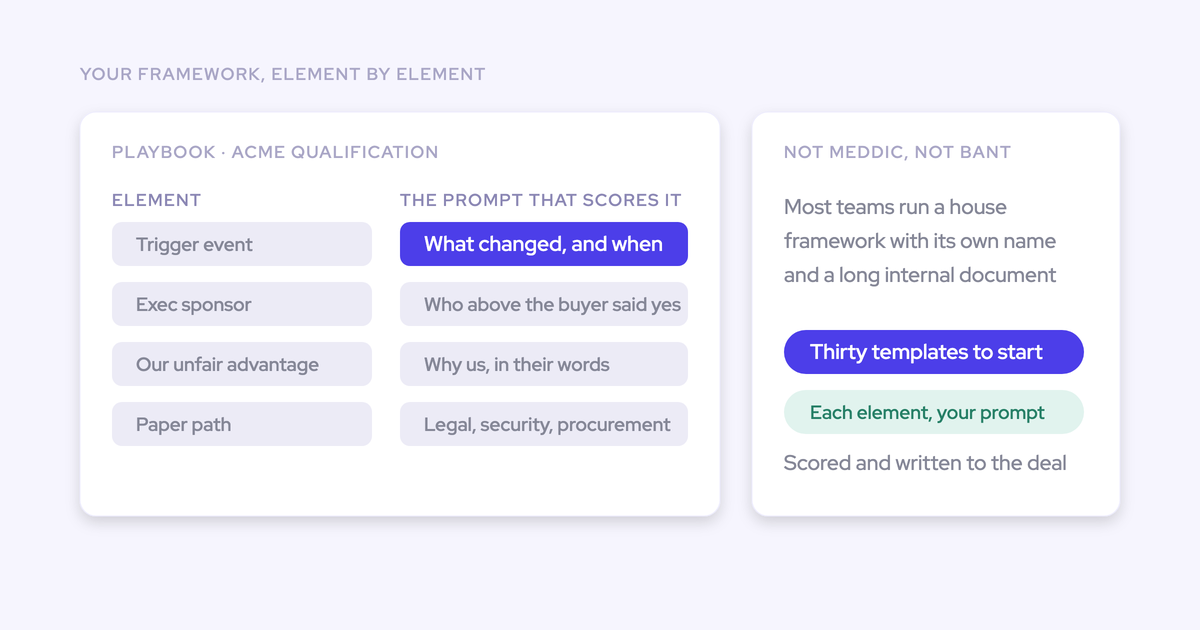
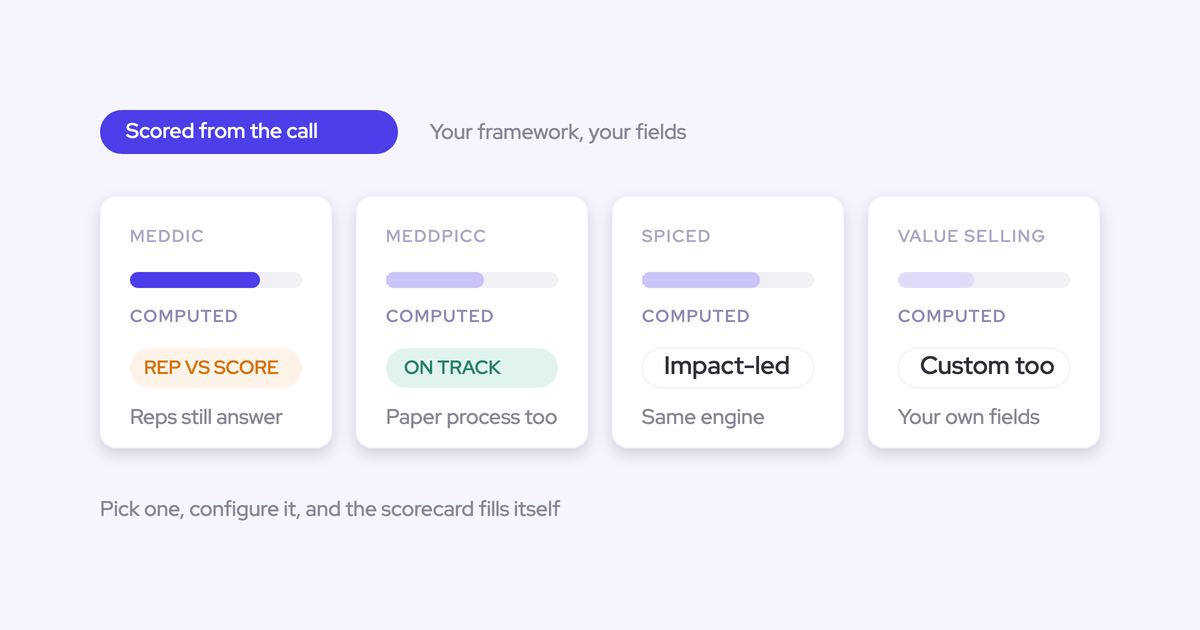
Sales discovery question frameworks: SPIN, MEDDIC, and BANT
Frameworks give your discovery calls a repeatable structure. Here's how the three most common methodologies map to discovery questions.
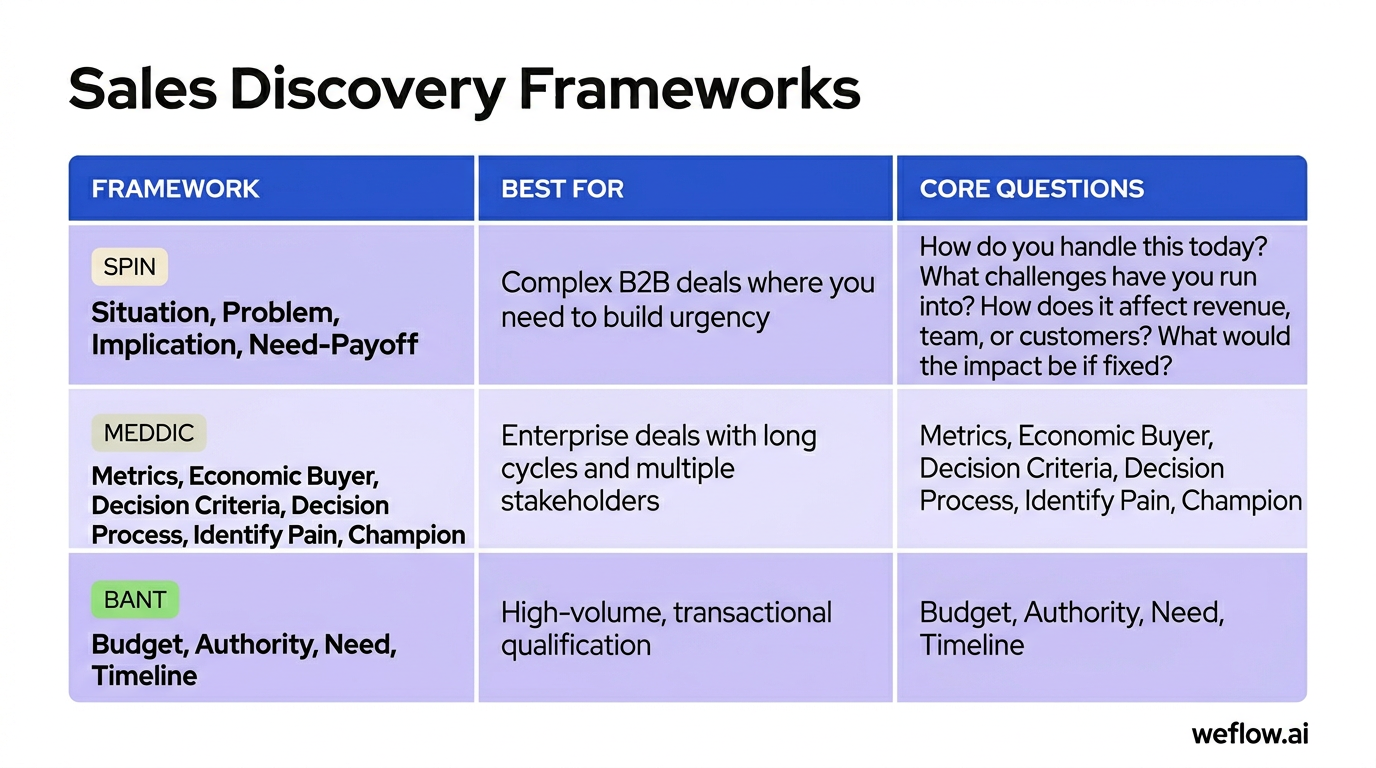
| Framework | Best for | Core questions |
|---|---|---|
| SPIN Selling | Complex B2B deals where you need to build urgency by helping the prospect recognize the full impact of their problem. | Situation: "How do you handle [process] today?" Problem: "What challenges have you run into with that approach?" Implication: "When that breaks down, how does it affect [revenue/team/customers]?" Need-Payoff: "If you could fix that, what would the impact be on your team?" |
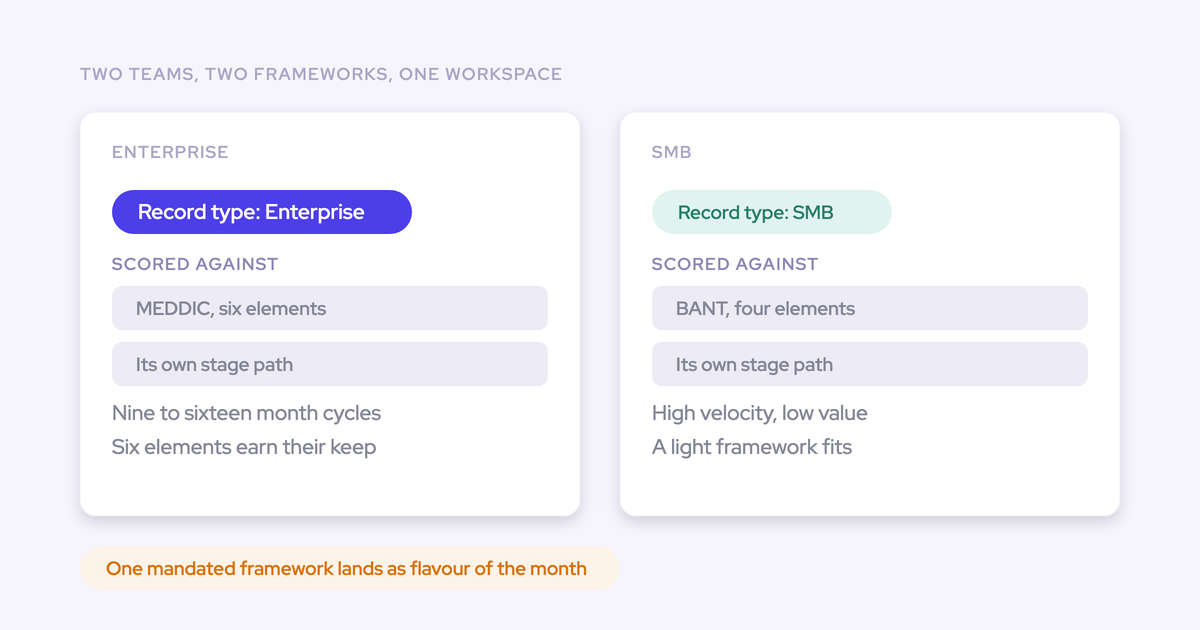
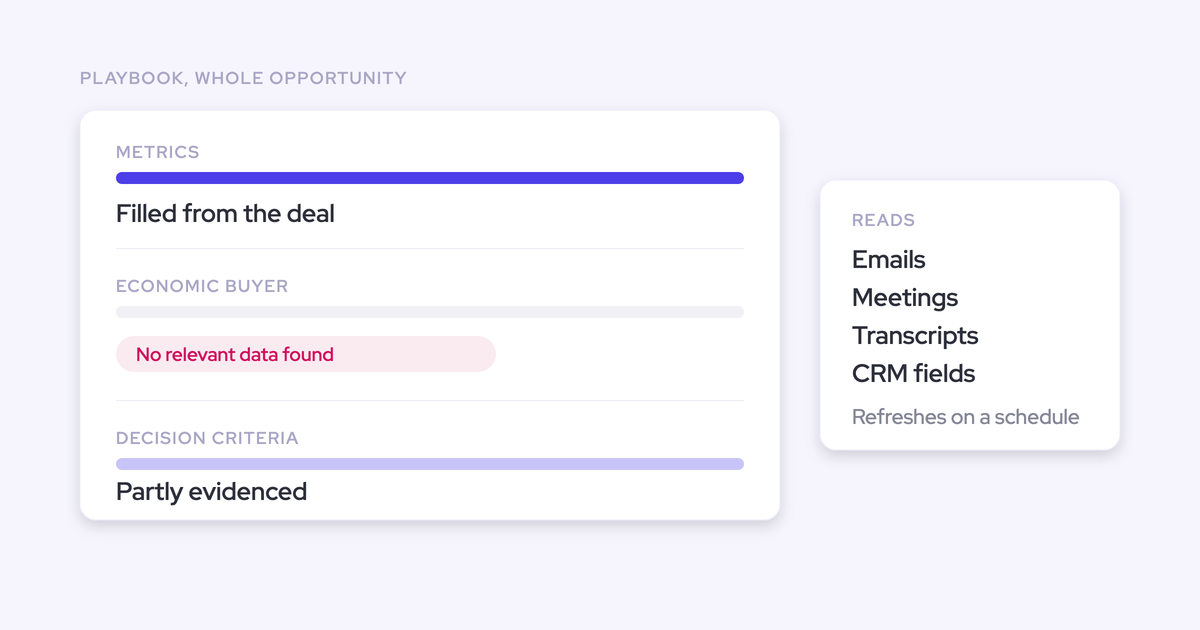
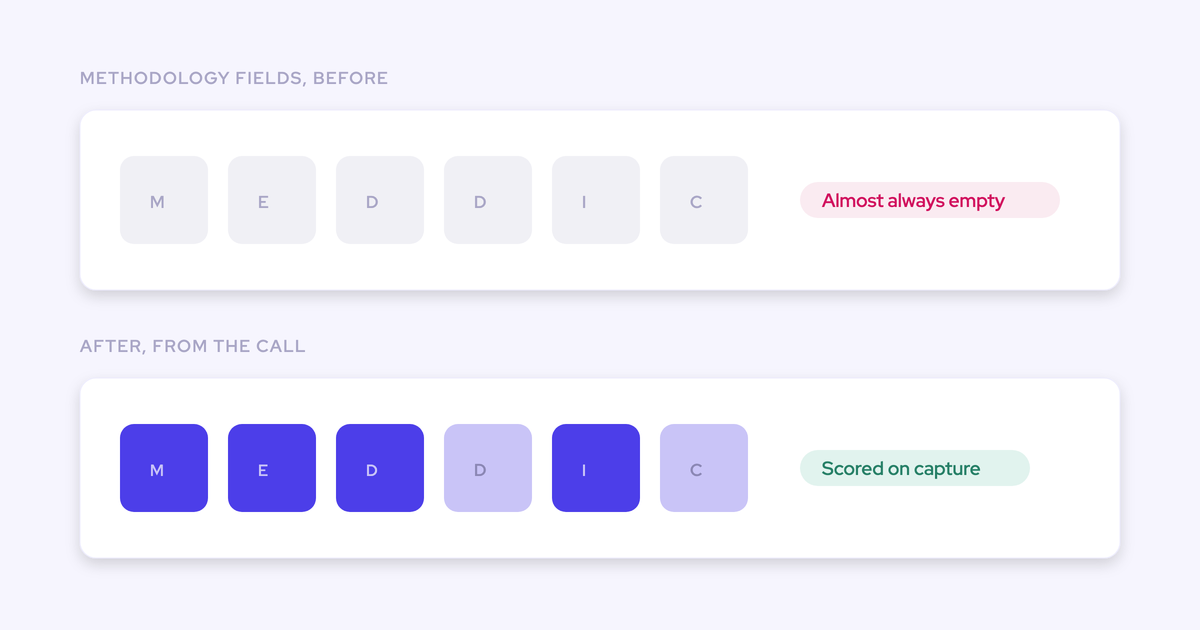
| MEDDIC | Enterprise deals with long sales cycles, multiple stakeholders, and formal procurement. Common when selling into 500+ employee organizations. | Metrics: "What metrics improve if this is solved?" Economic Buyer: "Who has final sign-off?" Decision Criteria: "What are the top three things you're evaluating against?" Decision Process: "Walk me through how your team approves a purchase like this." Identify Pain: "What's the business impact of not solving this?" Champion: "Who's sponsoring this internally?" |
| BANT | High-volume, transactional sales where you need to quickly qualify or disqualify prospects. Works well for SDR-led qualification before handing to an AE. | Budget: "Has budget been allocated for this?" Authority: "Who's involved in the decision?" Need: "What problem are you trying to solve?" Timeline: "When do you need this in place?" |
Most experienced reps blend elements from multiple frameworks rather than following one rigidly. The framework is a scaffold, not a script.
How to prepare for a sales discovery call
These seven practices consistently lead to higher conversion rates from discovery to the next stage.
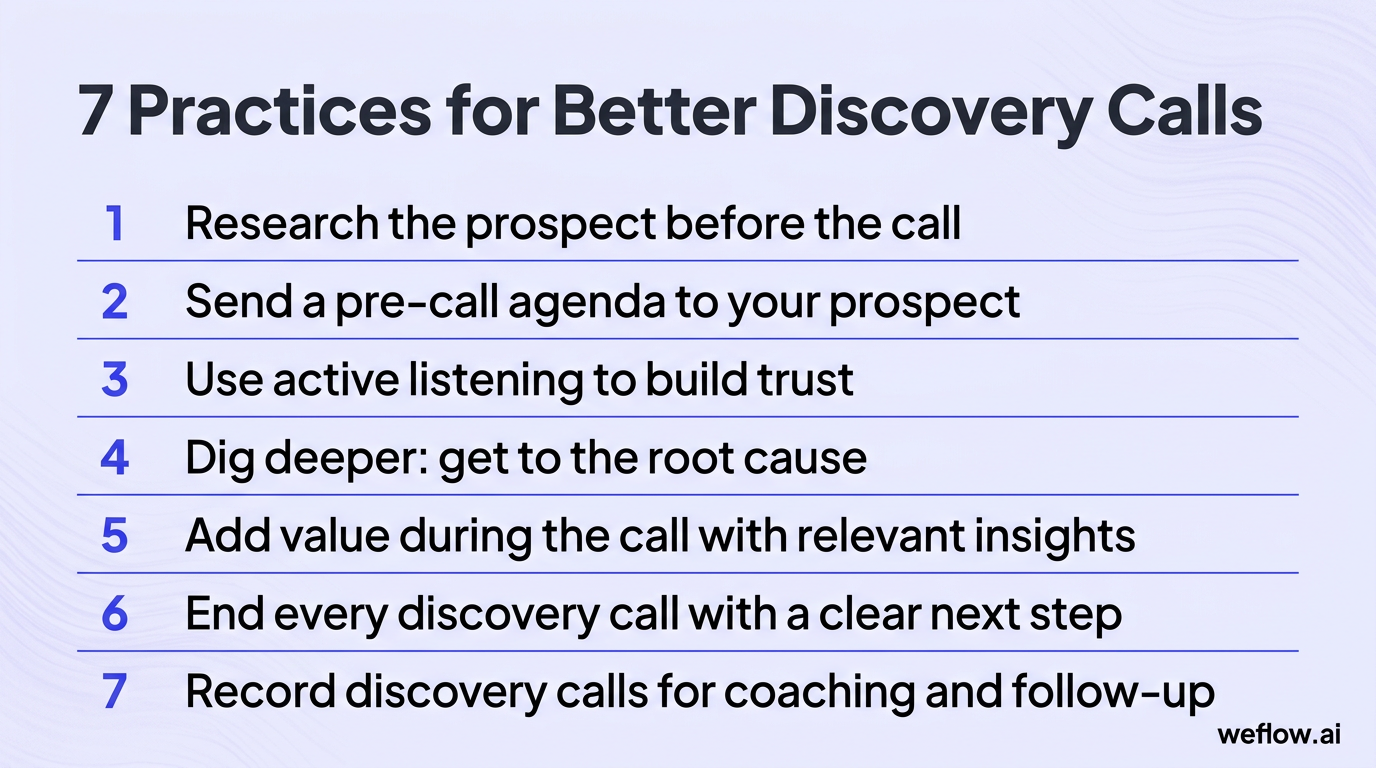
Research the prospect before the call
Spend 10 to 15 minutes before every call reviewing:
- Recent company news—funding rounds, acquisitions, leadership changes, product launches
- Their LinkedIn profile—role tenure, career path, recent posts
- Their tech stack (BuiltWith, Slintel, or your sales intelligence platform)
- G2 reviews of their current tools—reveals pain points they may not volunteer
- Job postings—a proxy for CRM maturity and team growth
- Prior CRM interactions—emails, content downloads, previous meetings
"I noticed you're hiring a RevOps manager—is that related to what we're discussing today?" beats "So, tell me about your company."
Send a pre-call agenda to your prospect
Send a short email 24 hours before the call with three to four bullet points covering what you'll discuss. It reduces no-show rates and gives the prospect time to prepare thoughtful answers instead of improvising on the spot.
Use active listening to build trust
Paraphrase what the prospect said before asking your next question. "It sounds like your team spends about 10 hours a week on manual CRM updates—is that right?" This confirms understanding and often prompts them to share detail they wouldn't have volunteered otherwise.
Dig deeper: how to get to the root cause
When a prospect gives a surface-level answer, follow up with "Can you tell me more about that?" or "What's driving that?" A prospect who says "We need better reporting" might actually mean "Our CEO lost confidence in our forecast last quarter and I need to fix it before the board meeting." The root cause is where the deal momentum lives.
[banner type="download" url="https://www.weflow.ai/resources/cheat-sheets/sales-onboarding-cheat-sheet" text="Sales Onboarding And Training Cheat Sheet" subtitle="Get new reps running discovery calls that book second meetings, not ghosted follow-ups" button="Download free"]
Add value during the call with relevant insights
Discovery is a two-way exchange. Share a relevant data point or a pattern you've seen across similar companies. "We've seen other RevOps teams in your space reduce their forecast error rate from 20% to under 8% by doing X" gives the prospect a reason to keep talking to you.
End every discovery call with a clear next step
Never end a call with "I'll follow up next week." Propose a specific action: "Let's schedule a 30-minute demo with your VP of Sales on Thursday." Book the meeting live on the call. Deals that leave discovery without a scheduled next step are 50% less likely to progress.
Record discovery calls for coaching and follow-up
Recording calls improves follow-up accuracy (you can reference exact quotes instead of relying on memory) and accelerates coaching (managers review real calls, not self-reported summaries). Gong, Chorus, and Clari Copilot record, transcribe, and surface coaching insights automatically. If your team isn't recording calls yet, it's the highest-ROI change you can make to your discovery process.
Key takeaways for running better discovery calls
- Lead with curiosity, not your pitch. The best discovery calls have a 40/60 talk-to-listen ratio—you talk 40%, the prospect talks 60%. If you're talking more than half the time, you're pitching, not discovering.
- Ask 11 to 14 questions, spread evenly across the call. Front-loading all your questions in the first five minutes feels like an interrogation. Weave questions into a natural conversation.
- Quantify the pain in dollars, hours, or deals lost. "It takes too long" isn't specific enough to put in a proposal. "Your team spends 15 hours per week on manual CRM updates" gives you an ROI case you can put in a proposal.
- Book the next meeting before hanging up. "I'll send some times" is where deals go to die. Pull up a calendar and book it live.
- Disqualify fast and without guilt. A deal that shouldn't be in your pipeline costs you more than a deal you never pursued. Protect your time for the opportunities that can actually close.
Frequently asked questions
What is a sales discovery call?
A sales discovery call is a structured conversation where a rep asks targeted questions to understand a prospect's situation, pain points, decision-making process, and timeline. The goal is to determine fit and earn a second meeting—not to pitch.
How many discovery questions should I ask on a call?
Aim for 11 to 14 questions across a 30- to 45-minute call. Gong's research shows this range correlates with the highest win rates. Fewer than 11 means you didn't dig deep enough; more than 14 risks turning the conversation into an interrogation.
What is the difference between discovery questions and qualification questions?
Qualification questions filter prospects on fit criteria—budget, authority, need, timeline. Discovery questions explore the situation in depth—processes, pain points, business impact, success criteria. Qualification tells you whether to pursue a deal. Discovery tells you how to win it.
What sales methodology works best for discovery calls?
SPIN works well for building urgency in complex deals. MEDDIC is the standard for enterprise sales with long cycles and multiple stakeholders. BANT is effective for high-volume qualification where speed matters. Most reps blend elements from multiple frameworks.
How do I handle a prospect who gives short answers on a discovery call?
Short answers usually mean the prospect is busy, doesn't trust you yet, or isn't the right person. Try sharing a relevant insight first—"Other teams in your space have told us X, does that match your experience?"—to prompt a longer response. If they stay guarded, ask whether there's a better time or a colleague who's closer to the problem.
Should I record sales discovery calls?
Yes. Recording calls improves follow-up accuracy, accelerates coaching, and creates a searchable library of buyer language for proposals. Gong, Chorus, and Clari Copilot handle this automatically. Always disclose the recording upfront—it's a legal requirement in many states and builds trust.
What are the biggest mistakes reps make on discovery calls?
Talking too much (above 60% talk time kills deals), pitching before understanding the problem, and ending the call without a scheduled next step. The fourth common mistake is failing to multi-thread—relying on a single contact instead of mapping the full buying committee.
How do I prepare for a discovery call?
Research the prospect's company, review their LinkedIn, and check your CRM for prior interactions. Send a pre-call agenda with three to four topics. Prepare eight to 12 questions built for their situation and know which framework fits the deal. Preparation is the one variable that consistently separates average reps from top performers.
-p-1600.png)

.png)
-p-1600.png)
-p-1600.png)
-p-1600.png)