
B2B Sales Process: 7 Stages, Exit Criteria, and KPIs
Learn the 7 stages of a B2B sales process, with exit criteria and KPIs to track.




What is a sales process?
A sales process is a repeatable sequence of stages that moves a prospect from initial contact to closed deal. It defines the specific actions reps take at each step—qualification questions, discovery calls, proposal delivery—so every deal follows the same path. Unlike ad-hoc selling where reps improvise their approach, a formal sales process creates consistency that compounds over time.
Companies with a documented sales process generate 18% more revenue than those without one, according to research from the Sales Management Association. The reason is simple: when you know what works, you can repeat it.
Sales process vs. sales methodology: what’s the difference?
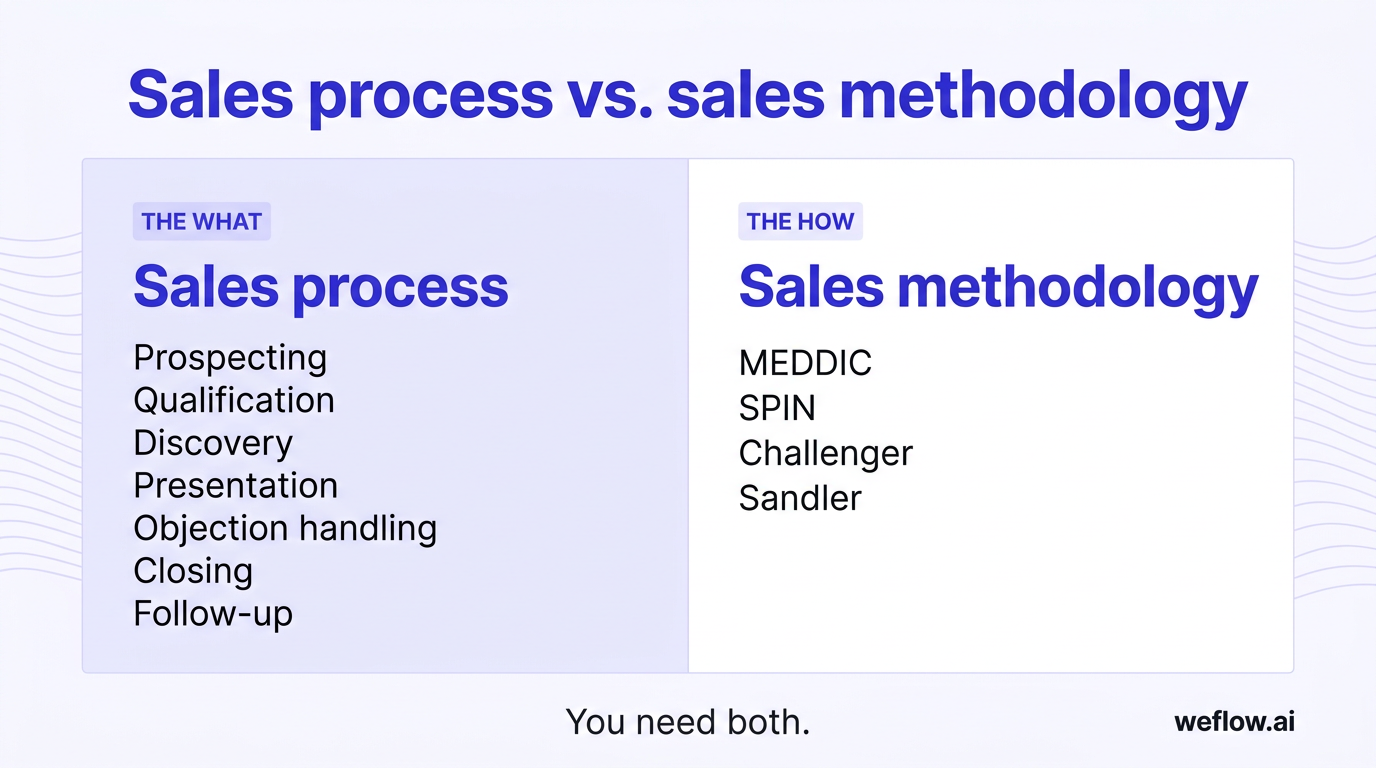
Your sales process is the what—the stages a deal moves through (prospecting, qualification, discovery, presentation, objection handling, closing, follow-up). Your sales methodology is the how—the techniques and frameworks reps use within those stages.
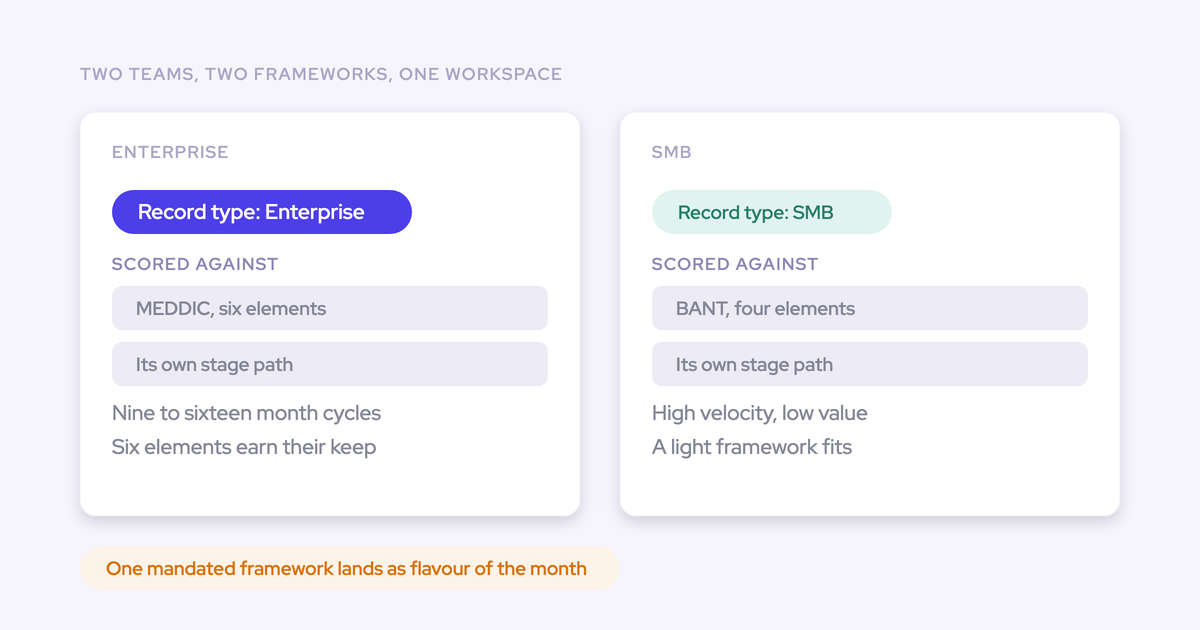
Methodologies like MEDDIC, SPIN, Challenger, and Sandler give reps a playbook for conversations. Your sales process gives the organization a playbook for pipeline management. You need both: methodology without process creates brilliant individual performers with no forecasting visibility; process without methodology creates pipeline stages that don’t reflect real buyer progress.
Why a defined sales process increases win rates
A formal sales process isn’t bureaucracy—it’s the infrastructure that makes scaling possible. Here’s what it delivers:
- Faster rep onboarding. New hires follow a documented path instead of shadowing top performers for months. Ramp time drops from 6+ months to 8–12 weeks when reps have clear stage definitions and exit criteria.
- Better forecast accuracy. When every rep uses the same stage definitions, pipeline reports mean the same thing across the org. Forecasts stop being guesswork and start being math.
- Shorter sales cycles. Defined exit criteria prevent deals from stalling in stages. When reps know exactly what’s required to advance a deal, they stop wasting time on activities that don’t move opportunities forward.
- Higher win rates. Process forces reps to complete critical activities at each stage—activities that top performers do naturally but average performers skip. The gap between your best and worst reps narrows.
- Pipeline visibility for managers. Stage-by-stage metrics reveal where deals stall, which reps need coaching, and where the pipeline needs attention—before the quarter ends.
- Coaching opportunities at scale. Instead of reviewing random deals, managers can focus on specific stage transitions where conversion drops.
- Optimized selling across the team. A/B test different approaches at specific stages. When you change one variable and measure the impact, you can systematically improve conversion rates quarter over quarter.
How to build a B2B sales process in 7 steps
Building a sales process isn’t a one-time project—it’s a continuous loop of documentation, measurement, and refinement. Here’s how to get it right.
Step 1: Audit your current sales process for gaps
Before building something new, understand what exists today. Even teams without a formal process have an informal one—reps are doing something to move deals forward. Your job is to map it.
Interview your top performers. What do they do after an initial meeting? How do they qualify? When do they bring in a technical resource? Document the pattern, then compare it to what your average performers do. The gaps between these two workflows are your improvement opportunities.
Use this audit checklist to identify where your current process breaks down:
- Can every rep describe the stages a deal moves through?
- Do reps agree on what qualifies a lead vs. an opportunity?
- Are stage definitions documented somewhere reps can reference?
- Do you have exit criteria for each stage, or do deals advance based on gut feel?
- Where do deals stall most frequently? (Pull stage duration data from Salesforce.)
- Where do you lose the most deals? (Pull closed-lost by stage data.)
- Which stages have the highest conversion variance between reps?
- How long does it take a new rep to understand the process?
- When was the process last reviewed or updated?
Step 2: Align sales, marketing, and customer success stakeholders
Your sales process doesn’t exist in isolation. Marketing generates the leads that enter it. Customer success inherits the relationships that exit it. If these teams aren’t aligned on definitions and handoffs, deals fall through the cracks.
[banner type="download" url="https://www.weflow.ai/resources/cheat-sheets/sales-onboarding-cheat-sheet" text="Sales Onboarding Cheat Sheet" subtitle="Ramp new reps in weeks instead of shadowing top performers for months" button="Get the cheat sheet"]
Get agreement on these three questions before finalizing your process:
- What’s a qualified lead? Marketing and sales need the same definition of an MQL and the same criteria for when a lead becomes an opportunity.
- What information transfers at each handoff? When an SDR passes a qualified opportunity to an AE, what context must be captured? When a closed deal moves to customer success, what does the CSM need to know?
- Who owns post-close follow-up? Define where sales responsibility ends and customer success begins.
Step 3: Map the 7 stages of your sales process
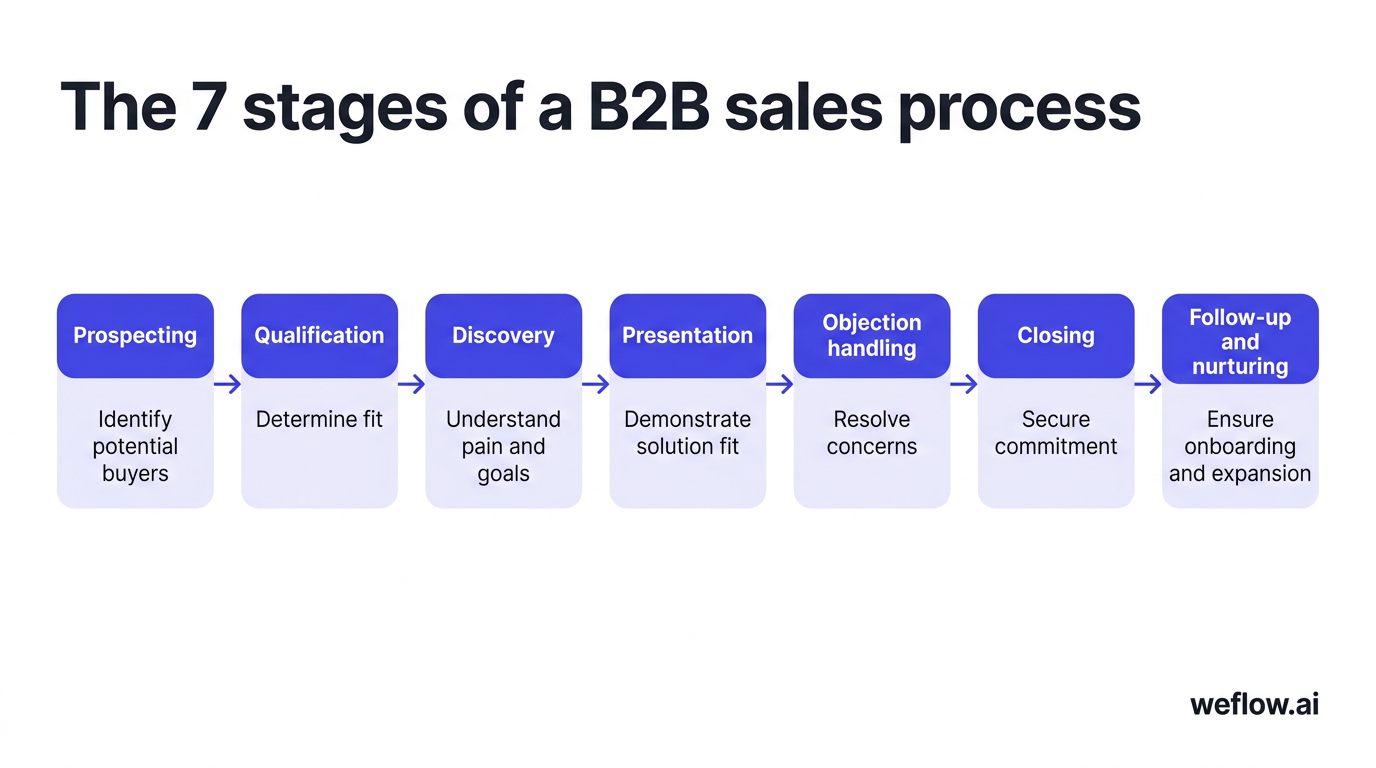
A B2B sales process typically includes seven stages. Here’s how each stage maps to objectives, activities, and exit criteria:
| Stage | Objective | Key activities | Exit criteria |
|---|---|---|---|
| Prospecting | Identify potential buyers who fit your ICP | Research target accounts, build contact lists, execute outbound sequences, respond to inbound inquiries | Contact engaged (replied, took meeting, or requested information) |
| Qualification | Determine if the prospect has budget, authority, need, and timeline | Run BANT or similar framework, confirm ICP fit, identify decision-makers, assess urgency | Qualification criteria met and documented, discovery meeting scheduled |
| Discovery | Understand the prospect’s pain, goals, and buying process | Conduct discovery call, map stakeholders, document pain points and business impact | Pain quantified, decision process mapped, champion identified |
| Presentation | Demonstrate how your solution addresses their specific needs | Deliver tailored demo, share case studies, connect features to documented pain points | Solution fit confirmed, stakeholders agree to evaluate further |
| Objection handling | Resolve concerns blocking the deal | Surface objections proactively, address pricing/ROI concerns, handle competitive comparisons | All major objections addressed, path to decision clear |
| Closing | Secure commitment and finalize the agreement | Send proposal, negotiate terms, coordinate legal/procurement review, obtain signatures | Contract signed, payment terms confirmed |
| Follow-up and nurturing | Ensure successful onboarding and identify expansion opportunities | Hand off to customer success, check in during implementation, track adoption metrics | Customer live on product, success criteria met, NPS captured |
Step 4: Set exit criteria and stage-gate actions
Exit criteria are the specific conditions a deal must meet before advancing to the next stage. Without them, pipeline stages become meaningless—reps move deals forward based on optimism rather than evidence.
| Stage | Required actions | Exit criteria | Typical duration |
|---|---|---|---|
| Prospecting | 3+ contact attempts via different channels, ICP fit verified | Prospect replied or engaged with content | 1–4 weeks |
| Qualification | BANT fields completed, contact role identified | All BANT criteria confirmed, discovery scheduled | 1–2 weeks |
| Discovery | Discovery call completed, pain documented, stakeholder map created | Champion confirmed, business impact quantified, demo scheduled | 1–3 weeks |
| Presentation | Demo delivered, use case aligned, technical questions answered | Verbal confirmation of fit, next steps agreed | 1–2 weeks |
| Objection handling | Objections surfaced and addressed, competitive analysis shared if needed | No unresolved blockers, proposal requested | 1–3 weeks |
| Closing | Proposal sent, negotiation completed, legal/procurement engaged | Contract signed | 2–6 weeks |
| Follow-up | Kickoff completed, implementation tracked, success metrics defined | Customer live, first value milestone achieved | 2–8 weeks |
Step 5: Track sales process KPIs to measure effectiveness
You can’t improve what you don’t measure. These six KPIs reveal whether your sales process is working:
| KPI | What it measures | What it tells you |
|---|---|---|
| Win rate | Percentage of opportunities that close | Overall process effectiveness. Benchmark: 15–30% for B2B SaaS. |
| Lead-to-opportunity conversion | Percentage of leads that become qualified opportunities | Quality of inbound leads and effectiveness of qualification criteria. |
| Sales cycle length | Average days from opportunity creation to close | Process efficiency. Lengthening cycles indicate stalls at specific stages. |
| Average deal size | Mean contract value of closed-won deals | Effectiveness of discovery and value selling. |
| Pipeline velocity | (Opportunities × Win rate × Avg deal size) / Cycle length | Revenue throughput of your pipeline. |
| Quota attainment | Percentage of reps hitting quota | Whether your process and quotas are realistic. |
Step 6: Handle objections with reframing techniques
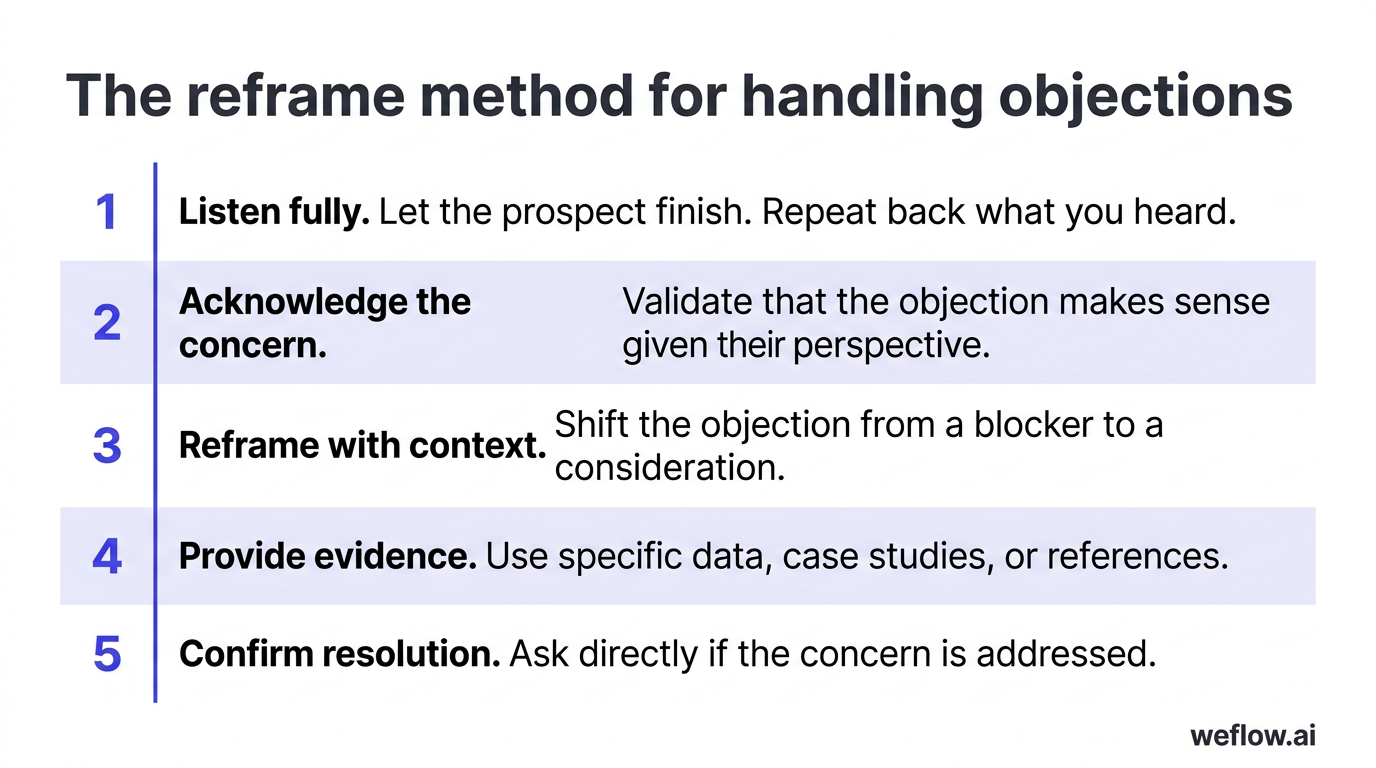
Objections aren’t roadblocks—they’re information about what the buyer needs to feel confident. Use the reframe method:
- Listen fully. Let the prospect finish. Repeat back what you heard.
- Acknowledge the concern. Validate that the objection makes sense given their perspective.
- Reframe with context. Shift the objection from a blocker to a consideration.
- Provide evidence. Use specific data, case studies, or references.
- Confirm resolution. Ask directly if the concern is addressed.
Step 7: Follow up and nurture post-sale relationships
The deal doesn’t end at signature. Post-close activities determine whether you get renewals, expansions, and referrals—or churn.
Define a structured handoff from sales to customer success. Key information that must transfer:
- Why the customer bought (pain points, success criteria)
- Who the key stakeholders are and their priorities
- What was promised during the sales process
- Any concerns or objections that came up
- Timeline expectations for implementation
How to automate your sales process with CRM automation
A documented sales process only works if reps follow it. Reps spend 5–6 hours per week on CRM data entry. When updating the CRM feels like busywork, compliance drops.
Here’s what to automate:
[banner type="download" url="https://www.weflow.ai/resources/cheat-sheets/sales-enablement-cheat-sheet" text="Sales Enablement Cheat Sheet" subtitle="Get every rep running the same process instead of improvising each deal" button="Download cheat sheet"]
- Activity sync. Emails, calendar events, and calls should write to Salesforce automatically.
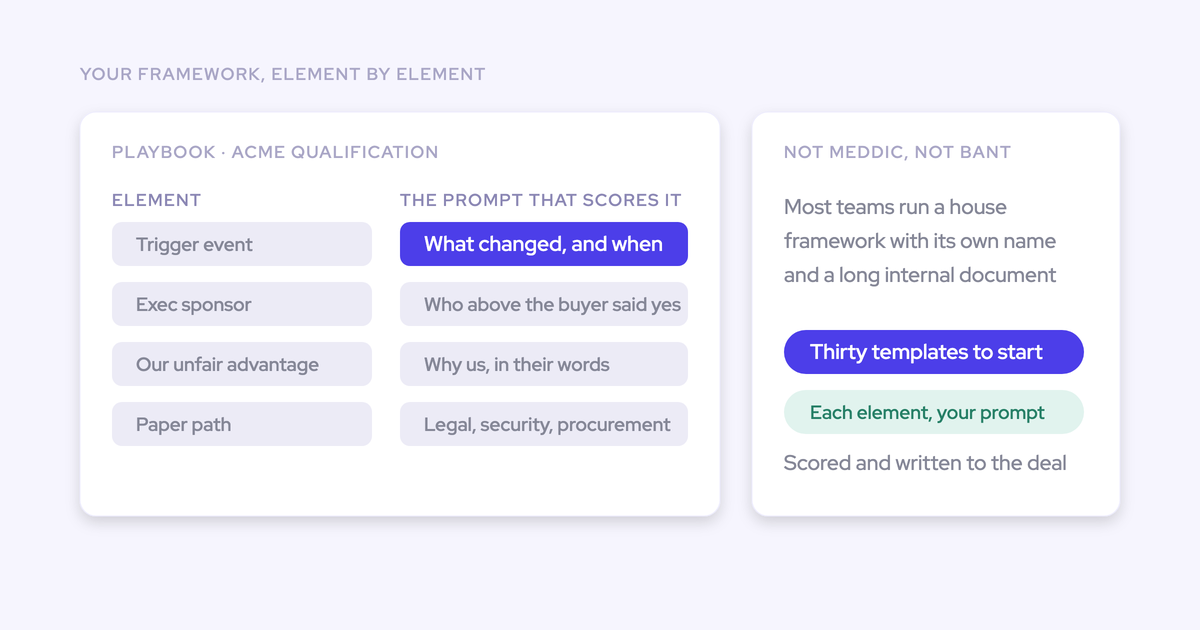
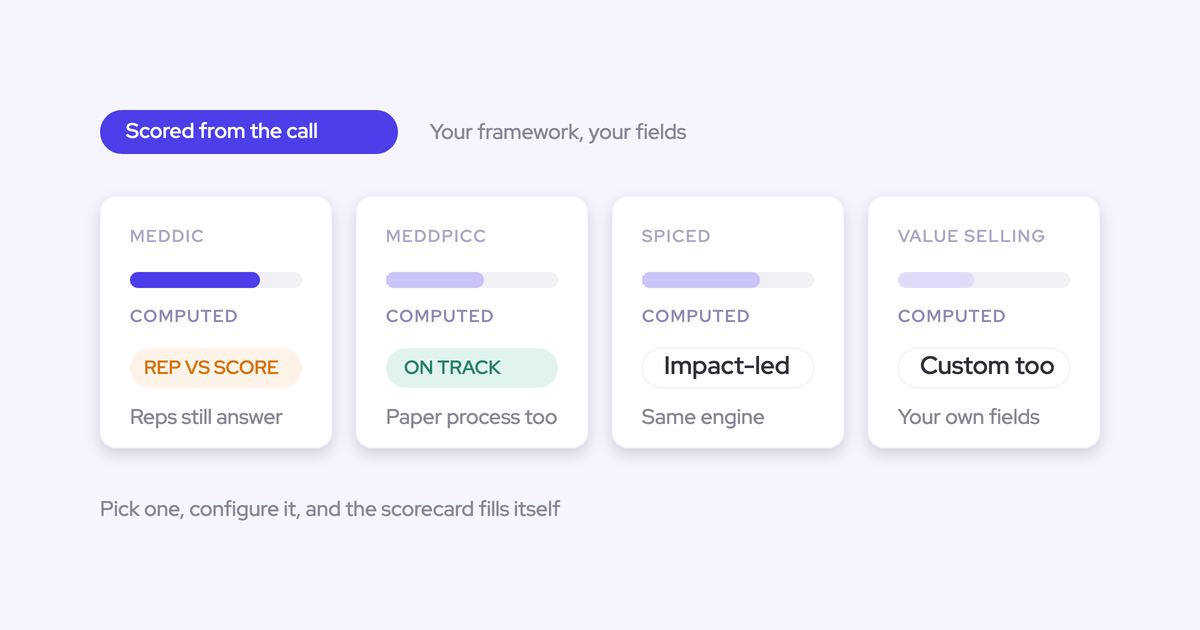
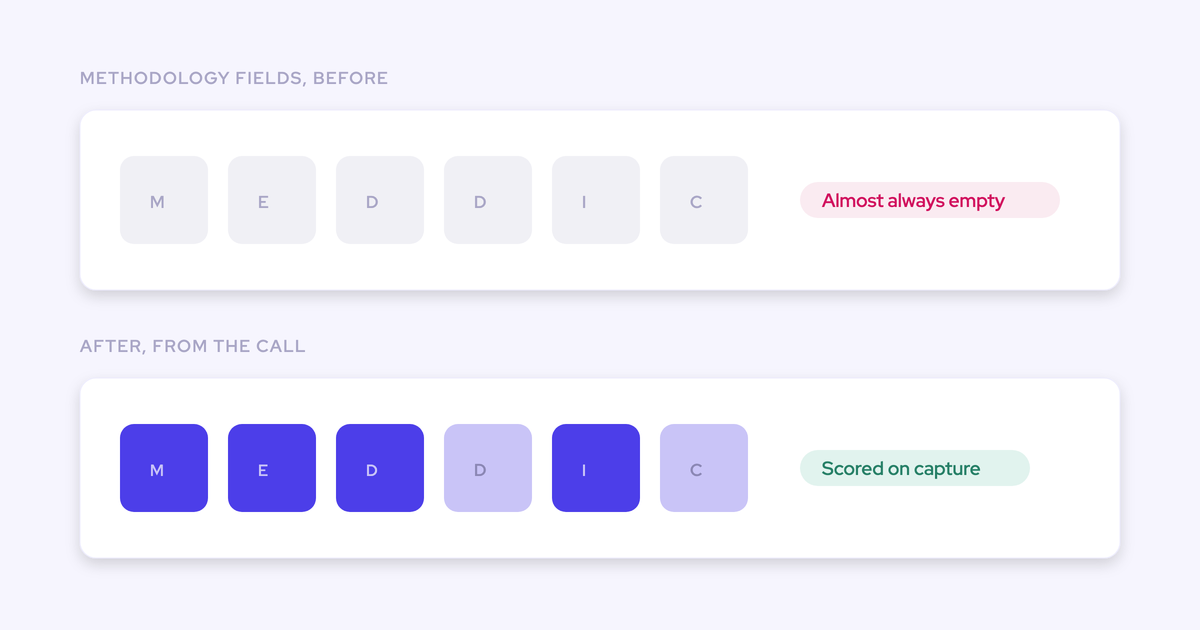
- Methodology field updates. Conversation intelligence should extract MEDDIC information and populate fields automatically.
- Pipeline views by stage. Build filtered views showing deals by stage with clear indicators of which exit criteria are met.
- Stage progression alerts. When a deal stalls beyond expected duration, trigger an alert to the rep and manager.
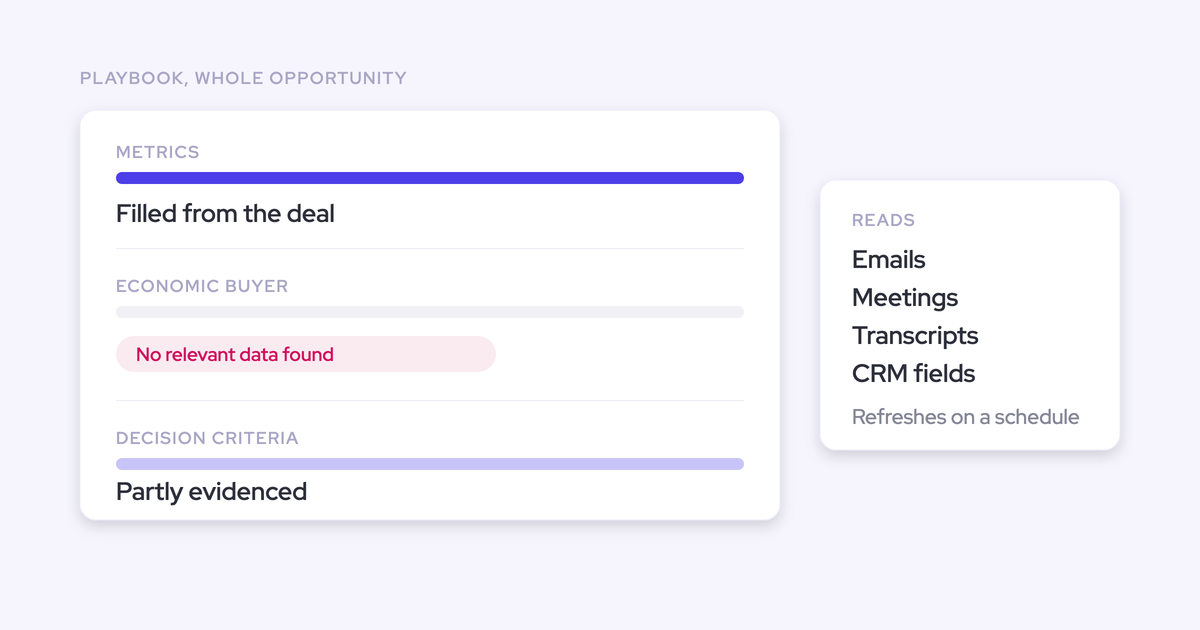
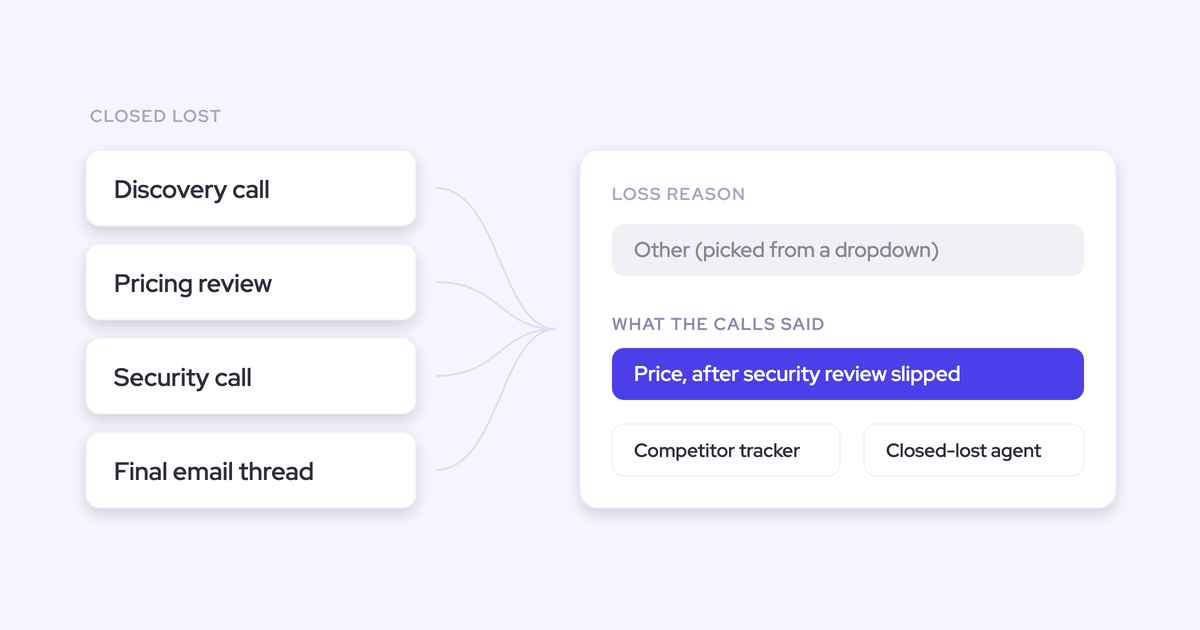
Weflow, a Salesforce-native revenue AI platform, automates this entire workflow. Emails, meetings, and calls sync to Salesforce records automatically. AI captures methodology fields from conversations. Pipeline inspection surfaces deals at risk.
Key takeaways
- Document your stages and exit criteria. A sales process without clear stage definitions is just a pipeline with labels.
- Measure stage-by-stage conversion. Win rate alone doesn’t tell you where the process breaks.
- Automate CRM data capture. Manual data entry kills process compliance.
- Align cross-functional handoffs. Your sales process touches marketing and customer success. Define these boundaries explicitly.
- Review and refine quarterly. Your sales process should evolve as your business and buyers evolve.
Frequently asked questions
What is a sales process?
A sales process is a standardized set of stages that guide a sales rep from initial prospect contact to closed deal. It defines the activities, milestones, and exit criteria at each stage so every deal follows a consistent path.
What are the 7 steps of the sales process?
The seven stages are: (1) Prospecting, (2) Qualification, (3) Discovery, (4) Presentation, (5) Objection handling, (6) Closing, and (7) Follow-up and nurturing.
What is the difference between a sales process and a sales methodology?
The sales process is the “what”—the stages a deal moves through. The sales methodology is the “how”—the techniques reps use within those stages. MEDDIC, SPIN, Challenger, and Sandler are methodologies that fit inside your process.
How long should a B2B sales cycle take?
SMB deals typically close in 14–30 days. Mid-market deals run 30–90 days. Enterprise deals often take 90–180 days or longer.
How do you measure the effectiveness of a sales process?
Track six core KPIs: win rate, lead-to-opportunity conversion, sales cycle length, average deal size, pipeline velocity, and quota attainment.
What are exit criteria in a sales process?
Exit criteria are the specific, verifiable conditions a deal must meet before advancing to the next stage. They prevent deals from advancing on optimism rather than evidence.
How do you handle objections in the sales process?
Use the reframe method: listen fully, acknowledge the concern, reframe with context, provide evidence, and confirm resolution.
How often should you update your sales process?
Review quarterly at minimum. Major triggers include new product launches, market shifts, competitive changes, or significant changes in sales cycle length or win rate.
-p-1600.png)

.png)
-p-1600.png)
-p-1600.png)
-p-1600.png)