#128 How RevOps can use AI to enable 3x AEs
with
Jacco van der Kooij
,
Founder at Winning by Design
November 9, 2026
·
46
min.


Key Takeaways
- The 3x seller is a progression, not a leap. At 1x a seller uses AI for tasks like call summaries. At 2x AI handles all non-customer-facing work, and the hours saved go to outbound. At 3x the seller owns the full cycle including expansion, works about six hours a day, and spends one to two hours setting up AI to work the next sixteen.
- Jacco expects the go-to-market roles to reshape within a few years. Customer success largely moves into the product. Sales engineers stay and become an anchor. The SDR role splits: inbound goes to agents, outbound stays human-led and agent-aided. RevOps builds the infrastructure, and enablement focuses on adoption.
- The last fifteen years of specialization were the anomaly. Splitting the deal across SDR, AE and CSM was a response to volume, and it created separate tools, data and processes for each role, like a factory line. Janis adds that it reduced the AE to a project manager who has lost the skill of prospecting.
- The gap is created in the next six months. Jacco expects most SaaS companies to sit at 2x for the next twelve months, which is fine, while AI-native companies already operate near 3x. Some of the AI-native companies Winning by Design works with have seen inbound fall about 45% in 30 to 60 days, which forces sellers back to outbound.
- Sales can borrow engineering's way of testing. Janis notes that agents in sales work half blind because the data is fragmented, unlike an engineer's code repository. Jacco's answer is to run ten calls in parallel across different sellers and test the pitch like an A/B test, then put the resources behind what worked.
- The trade show is a concrete example of 3x selling today. Find speakers and attendees on LinkedIn, have the person with the biggest following post about the event, screen-record the likes, have AI map them to the ICP, and invite them to coffee a week before. Jacco says this turns about 20 conversations into 50, and a Claude skill makes it repeatable for every event.
- If your customer will not meet with you, they probably will not buy from you. Jacco's unpopular opinion: use AI to remove the overhead of CRM entry and internal admin so sellers spend their time in human conversations with customers. He calls the coming SKO season the moment to set that up, and 2027 the year of competing for business.
Hosts and Guest

Janis Zech
CEO at Weflow
Janis Zech is the co-founder and CEO of Weflow, and previously scaled his last B2B SaaS company from $0 to $76M ARR as CRO. In this episode, he joins RevOps Lab to discuss how AI can help AEs become full-cycle sellers and why strong rollout guardrails and unified data matter before teams move fast.

Philipp Stelzer
CPO at Weflow
Philipp Stelzer is the co-founder and CPO of Weflow, where he focuses on how revenue teams capture activity, inspect deals, and forecast inside Salesforce. In this episode, he joins RevOps Lab to explore how AI can support the shift from order takers to full-cycle sellers, and why agents need clean revenue data to work well.

Jacco van der Kooij
Founder at Winning by Design
Jacco van der Kooij is the founder of Winning by Design and the author of Revenue Architecture. In this episode, he returns to RevOps Lab to share his "10X engineer to 3X seller" model and explain how AI can help AEs become full-cycle sellers who prospect, close, and expand their own accounts.


Full Transcript
Janis Zech: Hello, and welcome to another episode of the RevOps Lab podcast. I'm here with Philipp, and our guest today is Jacco. Jacco, welcome back.
Jacco van der Kooij: Welcome. Welcome, everyone. How are you all doing?
Janis Zech: Doing very well. Doing very well. It's been a while. I think last time we spoke about your book, Revenue Architecture, which I think hopefully everybody knows. We also ask our guests, like, what is a book to recommend at the end of the show? And I think this... your book came up the most. So congrats on that. That was a huge success. Loved it. Great book. Obviously, world has changed a lot. So for the people who don't know you, you know, who are you? What do you do?
Jacco van der Kooij: Well, my name is Jacco van der Kooij. I'm the founder of Winning by Design out of California, originally born and raised in the Netherlands. Still have that little bit of the Dutch accent in me, so some people may recognize that. As a firm, we are specialized in go to market, B2B recurring revenue. Primarily of that is recurring revenue is not just subscription, it is also consumption based model, including outcome based model. So all that is considered recurring revenue. We mostly help companies in the area of one hundred to five hundred million, or we help larger companies with business units that are in that range. Customers that, like we call our, we help are like Canva, are very active with and a very active customer right now, but in the past we've helped like Boston Dynamics and Dropbox and DocuSign and companies like that. Today we are fortunate that several of the top mobile companies are yeah, our customers that we learn from by delivering our services and making ourselves better from what we hear from their feedback. That's kind of like who we are. I don't want to think as we're not a big company, don't think of us as hundreds of people. Our following is big, so we got like thousands and thousands of followers, but like I would say is like think of us as a twenty five to thirty person high expertise driven GTM company.
Janis Zech: Yeah, I mean you have an engineering background, I think when you read the book you can, you know, like absolutely read it.
Jacco van der Kooij: Does it show? Does it really show? Tell me.
Janis Zech: I don't know. I mean, I think, you know, ask an engineer, but no, I think it's awesome. I loved it. And, yeah, I think today we wanna talk about, you know, essentially, you know, a topic which I think is also dear to our heart because we're building in the space. So, you know, from 10x engineers to 3x sellers. Right? Like, you basically wrote a deep paper on that topic, so we wanna digest that. You did that with something called the Growth Institute, maybe what is that? Maybe for our listeners just to know.
Jacco van der Kooij: Yeah. Thank you. So first of all, I believe in that proper research is required to do certain things, right? You cannot just go out and make things happen. You actually need to perform research on it. Now the first and the second and the third practitioners will figure it out, that's the way how you do that. But after that you go like, okay what is working down here, why is it working, how can we scale it? Right, like that in order to do that we write papers. We call them working papers and we call them executive briefs. Executive briefs is a paper that we research in-depth, we then share it with executive teams, working papers and take that executive brief and work it out deeper with a working group, right? That's the way for many who in the technical world that's you know like that is recognizable. I personally helped with establishing impact, that was my role in those time as a chip designer or as a chip person that implemented test systems, let's get it accurate. But in order to do that, you cannot do that alone. And so for that we established what's called the Growth Institute, a group of people that come in that write these papers and that then shares them out and go like, hey, look at what we find. Now today, why are these papers so important? Because you can upload them into your AI and make them part of your modeling of growth. Like, so imagine that you have twenty papers that have been worked on by people for weeks on end that you then upload so that your AI systems gives you accurate feedback. Now why is that needed? Because in our business, we are not an established and protected business, not like a doctor or like a lawyer or even an architect. So any person can come up with an idea, buy popular ads with it and make that the thing while it's completely irresponsible to do that. That's the reason why we have to grow this. Let's establish a more responsible way of sharing and best practices and do deeper research before we start sharing them.
Janis Zech: Yeah. So maybe first question regarding this specific topic, like is... So we all know the concept of 10x engineers, and I will go into it shortly. But like, so you called it like from 10x engineering to 3x sellers. Right? And I think it's fair to say that obviously, Claude, Code, Cursor. Right? Like, all these tools have had tremendous impact on the engineering side. Right? But it's not true that, you know, the quotas have gone up 3x. It's just not true across the board today. Right? So I think you have this notion of, like, you know, kind of, you know, like like, essentially a 3x seller. So so maybe, like like, kind of, you know, tell us a bit more about how you came up with the concept, right? Like how you think about it, and then we're going to dissect it one by one.
Jacco van der Kooij: Yeah. I think that in the decade we will see a large part of the quota bearing role be gone. I think in the next three years we will see CS be gone, customer success. I think we're going to see, here's a couple of beliefs to start off so that people can ground themselves and go like, hey what is this person speaking to me right now? I believe that customer success will mostly be integrated inside the product. And as a result, customer success managers are no longer needed for what we see today. Most of customer success managers tackle ninety percent, ninety five percent of the time, the exact same questions across different customers. AI will pick that up and integrate that as a product feature or integrate that as an automatic Q and A system or something like that. Two, I think sales engineers are not going anywhere, whether we call them deployment engineers, solutions architects, I think they're going to be for the next two years, they're going to be an anchor that many companies are going to build on. So up on that, down on CS, right? I think that the SDR role will clearly split into inbound and outbound. I think the inbound will clearly go to agents that are already doing that. If you're not doing that, then it sounds odd to me. Not saying that you cannot occasionally have a human assistance in there. Absolutely, you can. So the larger your organization, call it ten to one, is now your human to... sorry, ten to one is agent to human ratio, right? But I think that outbound is going to be more and more human effort driven because of the level of nuance and complexity in that, aided by agents, right? I think that RevOps will set up the infrastructure for all this system that is needed. That's the world I live in. I think enablement primarily is going to focus on how do we get the adoption gap closed. The whole role of enablement should be adoption, adoption, adoption. Adoption of best practices that works. The whole idea of RevOps is set up that infrastructure underneath it so that it will work. That is the lay of the land two years from now. Now I can't say that it is ten years from now, but what I can say you is that eventually the whole quota based mindset and earn money on top of will run its course and within a decade will no longer be seen the high salaries or the high compensations for winning a customer. That's ten years from now, let's not worry about that. Let's worry about what is straight in front of us.
Janis Zech: Yep. I mean, there was a lot in there already, I would say.
Philipp Stelzer: And maybe just one question on my end. Like, you said customer success, right? Customer success in my book also is like a commercial role. Right? Like, that also plays a big big role here, renewals, upsells, enabling the customer, understanding the customer's needs, feeding that back to the product organization. That also, I think, is important. Like, would you see... would you say that AI can also do that part, or is it really about, like, this technical problem solving, like, you know, always like the same issue over and over again that when you bake AI into the product more deeply, you know, then it can sort of like auto solve that issue for the customer?
Jacco van der Kooij: I think whether customer success can do expansion sale has proven over the past five years that that just doesn't work. Like we can talk long and hard about it, but it doesn't. Obviously you can always have exceptions in a particular company or particular person inside the company, yes. But if you look at it as an industry that just hasn't taken off anywhere, and that's primarily because the nature is not there, right? Like, yeah, what can I say? It's just not there. Is asking a seller nowadays to do outbound? Very hard. And so some of these things are a problem. Now what I'm going to lay out and what is going to help is if I put a little map in front of you. So I think we today are where we at, right? Whatever it is. The one seller embraces a form of AI that could be Grok, Claude, ChatGPT, Copilot, whatever that is, embraces AI and starts doing something with it. That gets us to 1x. At 1x you're operating part of your business using AI. You create a call summary, you do something, that's 1x, okay. At 2x you're doing more and more tasks that are not human centered, you're doing that with AI, and you're using the hours gained to do outbound. Yes, you heard it right, sellers need to go do outbound. We are in the age of inbound abundance, and you know, like our sellers have learned to primarily, you know, be inbound centric. Not just our sellers, entire organization is. And then number three, what are we going to do with 3x? So we now have 1x, I'm becoming more infatuated with AI. 2x, I'm going to do more and more part of my journey. I'm going to take on proposal creation, research, you know, like analysis, all that I'm using AI for, all non customer facing tasks I'm using AI for, that frees up hours. Some of those hours in 2x I'm going to do outbound. In 3x I'm going to use it for expansion. And I'm going to go like, okay, stick with the customer. You sell it, you own it, right? And now whether that is for AI businesses with expansion metrics, now I'm going to take that on and say like now my hours are going to be spent down there. In addition, 3x, I am no longer expecting you as a seller to generate eight hours worth of productivity, I'm expecting you to generate twenty four hours worth of productivity. I'm telling you six hours do what you need to be doing, two hours every day, one to two hours every day, you set up Claude, Grok, ChatGPT to work their next sixteen hours. This is, I'm doing this every day nowadays. This is not like I'm asking you like, oh, it's not like, oh, we need to wait for technology to do this. This is available to everybody on this call right now to do, we're just not doing it. And that mindset is mind boggling to me.
Janis Zech: Right? Like like yeah. So so you think everything is going back to essentially, like, end to end, like, from the... like, how how much pipeline do you think, like, an AE in the future will do? Right? Like, is it is it like eighty percent is the requirement or, you know, on the outbound side or...
Jacco van der Kooij: Okay. When you say we go back, it's a correct statement for your point of view, right? Like from my point of view, it is like the anomaly was what happened over the past ten, fifteen years. That was the anomaly. So like going back is like we're returning to normal is arguably the better way of saying it. And in the better way, it's like, look, if I go back twenty years ago and I cannot reach out, I got to actually go meet a customer, you know, get my butt in the car, drive somewhere, meet that customer. And so to give you an idea on what I mean with that, when you met with a customer twenty years ago and you are in the security gates, because we had those security gates for the longest time, you don't meet with one person, right? Like you're in the security gates, go meet with three people. Like set meetings up left and right. You don't come back from a client meeting and go like, who do you meet? Oh I met John. Okay but what about Mary? Yeah no no Mary couldn't meet me. Okay like where there's nobody else in the company. While you were in the kingdom, you went into Disneyland, you went onto one ride and walked back out like, wait what? Like what are you doing? Right? Like why? Because that is a deeply invested meeting, I had to fly you down there to pay the flight for it, the car rental, drive all the way over there three days on the road. Like you don't go meet with one. That mindset tells you that once you meet with a customer, that is the most valuable time that you as a seller can spend on. Now if that customer brings me in those days a million dollar plus to ten million dollars, quota for sellers in those years that worked on my team was anywhere from two million to about six, seven million per year. Now if I bring that back down today, go like, look, we need to operate that a person who gets paid two hundred and fifty thousand dollars to three hundred thousand dollars needs to bring in somewhere between one to two million dollars minimum, right? Like we can't have, we pay that amount of money. Why? Because we can't count on five years retention any longer, right? AI companies can't count on that, that their customers are going to stay and consume for the next three, four, five years, an increasing amount. I don't see that happen. So you got to make your ways due within two years. And that means you as a seller need to become way more effective because you're one of the largest ticket items that they have to recoup. In order to do that, I'm going to simply say, can you become more effective and efficient by using AI? Like relatively straightforward, I would say.
Philipp Stelzer: Yeah. I mean, you're basically saying is like, okay, the AE function needs to evolve into a function that is like SDR, AE, CSM, all in one person through the power of AI, and you either adopt to that as quickly as you can. Time is limited, basically what you're saying here, right, I think, to, you know, to kinda, like, speed up your game, to become that smart and using those tools to take up that mindset and become, like, a 3x seller. Because otherwise, kind of, like, you know, like, maybe not immediately. I don't think it's like a two year thing, like, for the majority of, like, the the, you know, the world. But, like, if you don't adopt then, you know, step by step, you will kind of, like, you lose your game, and at some point, you will lose your job. Right, because there's no place for you in that elevated world. Is that like a fair summary, or am I going too far here?
Jacco van der Kooij: No, you're going too far on the time, right? Yeah. I think if you do not set the stage for two years, if you say it's not going to be that fast, you're not doing your customers and your followers a service. Because what they're going to do is like, oh, I'm going to wait. The problem is the difference is going to be created in the next six months. That is going to play out over the next three to five years. If you're not on this in the next six months, you're going to miss the train, and that gap is going to keep growing. Now, everything else that you said is accurate, but I want to point out to you why that is. We are experiencing a change in business model that drives the entire thing upside down. And if we're not seeing that, age of specialization was in response to an increase in volume that we needed to produce in order to generate the same amount of revenue. When I worked at Skystream, we were about to go IPO on what was it about like, call it about a forty, fifty million dollar revenue, not recurring revenue from a customer, right, at about eighty customers, eight zero. Right? Like today it would be very hard on that revenue to even, because you would not by no means. Why was that? Because the volume of deals was low but the ACV was high. You took your big ACV customers all million dollar plus, you took a few of the smaller customers. The volume was high. If I have to close eighty customers a year times three win rate, have to work on two thirty customers. Today if I am an AI or SaaS business, I'm easily talking that I need a thousand customers at a certain rate. And I easily talk about a twenty percent run rate, meaning I have to call on five thousand customers. So the volume is significantly higher. Now I'm going to apply manufacturing principles to that. I'm going to get input and output has two metrics, input leads to output, that goes to throughput, like what is the conversion rate, and it has a latency in it. Now the moment in time that I split up that function of processing that and say like I'm going to put twenty people on the production line, they all got to touch it, SDR, AE, CSM, there's one right, I'm not only creating a specialized role, was that only the case, it was we could fix it. We created specialized tool stacks for each of them. We created specialized data for them. We created specialized processes for them. So we often call it the specialized role. No, no, no. That is a highly specialized function as if you're in the factory, you're working from one machine, manually walk it over to the other machine, have a chat at the coffee machine meanwhile, and then walk to the second station, right? That's how we're working today. That was okay for the time period, but where we are going next, that just doesn't seem reasonable. We are operating at a much higher velocity right now that requires a different mindset. That mindset says, go ahead, sorry.
Philipp Stelzer: No, no, no, no. I'm just one thing that is top of mind for me listening to you, is if I think about our audience, right, like revenue operations, then I would basically think, okay, Jacco is saying, like, we need to turn, like, you know, like, current AEs into, like, 3x AEs or sellers, full cycle sellers. Who owns the rollout of that, like, 3x? Because, like, you know, I think anyone who works in, like, in a company with, like, you know, five thousand plus employees, you know, where you don't know every single person, like, I think there is, like, reason to be scared to put that much power and ownership into each individual's person's hands and say, like, you know, go and elevate the game. I feel like there needs to be, like, some guardrails. There needs to be some kind of, like, structure to it, and it's not like every person, you know, on their own. There needs to be some controlled...
Jacco van der Kooij: For what it's worth, I don't think SaaS companies of AI solutions are going to go to 3x that fast because of the organizational challenges. I think they're going to be at 2x, and honestly for the next twelve months, that's going to be fine. You don't have to go to full 3x. I think that AI natives today are already operating on 3x, most of it. They may not have some of the nuances of it, but they're already going like it's already full cycle. They don't grow to an SDR, some do if the volume is high. Look, if you have a high volume like an Anthropic, right, and an abundance of inbound, then the SDR AE model works. I'm not against it. It works. Right? Yep. That's what it's designed for. But if you don't have that abundance of inbound, and you need really outbound to do that. Now I can tell you from AI native companies that we work with, and in the precursor, told you some of them, they're seeing their inbound significantly go down, like by forty five percent in the last thirty to sixty days. Because the industry is coming to like, hey I'm not spending millions on you, what productivity are they? So now that may not, you know we may say it's okay they still have an abundance of inbound, it's only half of that, yeah but they've scaled their organization, their valuation, everything on that abundance of inbound. So to them it's as problematic as it is to the people listening down here who can get like the next ten SQLs in or whatever we call them for the month. It's the same problem. When the problem, when you go down to it, it's all coming like who are you really selling to and what are you doing with them? And you know like when I say you sell it, you own it, right? Like think about that, you sell it, you own it. If you buy a car, you buy something big, don't you go back to the person who sold it to you? Don't you go like, hey, you sold this to me, right? Because that was the bond we built the moment. So I can see that you sell it, you own it is essentially going back to where we are. But like I said, SaaS companies will take a step in between. We call it 2x in order to get to 3x.
Janis Zech: So one thing I find interesting here is like...
Jacco van der Kooij: By the way, before you do that, do you feel that that inert resistance that you go, like, yes, but. Right? Like, feel that. Right? Honestly.
Janis Zech: I don't know. So I have a view here, right? So obviously it's super interesting. Like from my point of view, right, I always had this challenge with the AE being an order taker, right? Like I sit there and I get the pipeline delivered through inbound, outbound and, you know, partnerships. Right? And essentially my job is to just close the deal. Right? That to me was always very, very weird because... and then it goes further. Right? It's not like you're actually not even product expert because you have the sales engineer. Right? So what I think happened over the last ten years is this over specialization of roles where the requirements to the AE role really reduced down to essentially being a project manager. And the project manager essentially, right, the cost to that was like you have two SDRs to one AE or one SDR to one AE. You have a half, like, let's say one third or one fourth of an SE to an AE. Right? You have another product specialist that might come in and they make the most money. Right? So that to me never really made sense. I think that's super, super strange. And I think, you know, some of the more modern companies already shifted that model. The challenge, though, is that I think most AEs have lost their way of prospecting. They just don't know how to do it. They just don't know how to do it. And this is the big problem here that, like, outbound, like, you know, everybody's struggling on outbound. Right? Like like most companies are struggling on outbound. They they they they really struggle on it. They they don't know how to do it well. And I think that, like, you need like, you need to have really sophisticated ways of doing it. And the interesting thing is it's actually a program that scales across brand, inbound, outbound. Right? So it all basically helps you to get the outbound engine going, and then you need to find the right people. So I think it's almost like a reskilling. And, of course, right, like like like, the the time you spent five years ago to build a list was crazy in my mind. It was crazy. Right? Like, you think about, like, how to build a list, like five years ago and how you do it today and with the signals you have today and what you can do and automate. And I think that's essentially what we're talking about. Right. Like that's like like like ten years, fifteen years ago. Yes, you could do this if you do really large deals. But if you like, close twenty dollar items, you can't fly there. It doesn't really make sense. But now you could even do it for maybe a hundred K deals, but you need to be fully leveraged on AI. Right? And I think that's the... like, that's I think kind of what, like, what I'm hearing here, which makes total sense to me.
Jacco van der Kooij: Janis, you're a hundred percent right. And if you and I and and Philipp are right down here, and by the way, we are right because we're all wearing black shirts today. I have no idea why we... how we got to this point.
Janis Zech: No. It's actually blue. It's actually blue. You're actually... You you just came back from Berlin. Right? Like, so you're you're wearing black.
Jacco van der Kooij: Okay, but the reason why, if what you're saying is right, then what we're experiencing has a clear perception. GTM is currently the biggest moat that any product vendor can cross. While products becoming more and more the same, it is essentially the form of distribution, because GTM is a form of enabling distribution, is the big moat. And what we now see is what is the biggest challenge in that moat? Well I can tell you from our research, the moment you remove people from a larger scale thinking, right, not every product is capable of that, but we see that when you remove the people and you let the systems take over, the systems powered by AI create growth loops and those growth loops power things like a Lovable growth or a Harvey growth or you know like systems grow much faster without people than with people. Now not every business is capable of that, I get that. The point that it tells me is the human beings are essentially the bottleneck in this. And if I say why are human beings the bottleneck? Because A, if I want to scale hiring people is a bit going to take me eighteen months, right, eighteen months before that person becomes productive. Okay, however having a person in place and making them do that has an adoption cycle that is also significant. Look we're now talking about this, don't get me wrong, we're talking about this in year four of AI. This is not like AI just came out like we're talking about it in year four. We still are one of the slowest, again research by Anthropic points to that sales is one of the slowest to adopt AI. And I think it's because we're holding on to old things saying like it needs to be this or that. Now I am a full one hundred percent in agreement that what we want is we want sales in our world we want it to be human communication driven. One hundred percent. I love that. And I'm talking about fifty K deals, like a fifty thousand dollar ACV deals. I'm not saying if you buy something for fifty dollars you need to make that. I'm saying it's like there's a size where you know you should have a human interaction. And that human interaction is a conversation. Now I'm going to try to explain, I'm going to be like try to explain what we now see is the difference between like think about a taxi as 1x sales, think about an Uber as 2x sales and think about Waymo as 3x sales. Okay I'm going to try to depict what is the difference between 2x and 3x. 2x I'm still using the app and I'm still driving and I'm still having this. At 3x it is completely systems driven. A Waymo can drive twenty four seven. It's not like how many hours does a human being can drive twenty four seven. And now like that thing right, 3x is all more orchestration and autonomous, 2x is fully aided. I'm aided by AI, I'm aided by the app. The app tells me and so on and so forth. At 3x at a certain point in time you take the steering wheel out and you say like, do we still need the seller? Look I don't know where that goes. I'm not looking forward to that moment, but yeah, I can say I used to go with great fun play, you know, like the only thing I could was play vinyl. I still love vinyl, but I can't play it in the car while I'm driving, right?
Janis Zech: Like, yeah, not yet. It comes back. It comes back. But, no, I think so so I think I think, you know, I think, like, I think maybe, like, for all listeners, right, I think what is just the reality is, like, everything, all these recurring workflows from meeting prep, CRM admin to, you know, list building to research. Right? All the nitty gritty things, right, that you can automate, you need to automate quickly. Right? And then I think you need to think about the kind of, you know, engagement model of your roles. Right? Like it like, what are your ratios? Do you need, you know, outbound SDRs or do you need them only maybe for parallel dialing and the AEs do all the rest? Right. And like, there's there's no easy answer here. And what do you need to basically enable that? Right. But like, I think I think we are moving to a world where like like, you know, if you don't do that, like like the competitors are going to do it and they will win. And to a certain extent, you know, if you do it better, then you'll win more. Right? And so I think like there is certainly urgency. And then there's the human repercussions. Right. But I think like like which I mean is a is a is a related, not uncomplicated situation we're in. But I think the like I think like very right now, like, that's already absolutely possible. We are on stage three. Right? Like, what we see a lot, Jacco, is like like the main problem why, you know, if you think about, like, an engineer. Right? Like, the context data of an engineer is the repository. Right? And, like, the system has access to it, and they can basically run loops to essentially create an outcome and test the outcome and improve the outcome. And that is something that in sales today just doesn't exist system wise. Right? So we see this every day because we unify it. Like, the data is fragmented across too many systems. It's not unified. It's not mapped correctly. It's not available to the agents. So the agents are essentially operating half blind. And like that's something that's like a foundational issue that like took a bit longer to solve, but it's still not solved in so many realities. I don't know if you see that, but yeah, that's something we are like definitely seeing every day.
Jacco van der Kooij: I'll give you a two step answer. First of all, you're right. What AI, what we're currently talking about is we can control the seller side as much as we want, but we cannot control the buyer side, right? So hold that, so I'm agreeing with you on there. And now we can help with optimized processes, the buyer side, to influence it a little bit, right? It's not, you know, you're not going to, if a customer's buying cycle is one hundred days, you're not going to bring that down to two days just because you run more AI, right? It ain't going to happen, right? So understood, right? In that, say that there's another way to solve it. Your correct assumption is, Jacco, when I compile something, can fix it, I can fix the code, I can create a closed loop, I can make it go fast, I can supply more stuff and eventually it will figure itself out and no harm done, right? Like when I do it with a customer, I don't get to go back to the customer ten times and say, hey can I try it again? I want to see that sales pitch one more time, see if it works better, right? And so you don't do it, but you have the technology that actually does that, and you're selling that. What is that technology is, although I cannot go to one customer at the same time, I can run ten calls in parallel by different sellers, and I can test it out that way. So that's the technology you offer that you can do that with. And that is a misunderstood concept today. We're not asking, like if I tell you the next week we're going to test out this concept and AB test it, right? It's no different than an AB test, but in this case it's an ABCDEFGHS because we're testing different sellers out, right? We run the calls that way this week. Look, you forego a lot of opportunity, but you have a clear picture at the end of the week what works and doesn't work to go into week two, which you can now deploy ten times more resources on the thing that works. That is a completely proven manufacturing strategy, military strategy, pharmaceutical strategy. This is perfectly applicable. If something takes sequential time, I'm running ten things in parallel of each other in order to prove how it works. So this is engineering thinking, right? And what I'm looking at right now, if people don't embrace this level of thinking about a problem, then the next couple of years are going to be, yeah, you're going to work for a company, you
have a terrible disease, you're not going to go to the friendly doctor who treats you kind. going to go like, dude, keep me alive, please. Like, like, hopefully, hopefully.
Janis Zech: And so when the good thing is you don't know whether the doctor will do that, but like not, I get the point. Right.
Jacco van der Kooij: Well, you know, you can see that you can follow the record there, but, but, but, but this mindset is where we're entering, right? Like, and that we call this the go to market mindset. And in this go to market mindset, you know what? The big moat right now is our company's able and willing to make that jump. And anybody who is not. No, I sat in there in a warm up to this session. I said the following way, like, look, if you right now are using AI and are on the journey doing your call analysis and so on and so forth, you're on the journey, fantastic. You're gonna be fine. Just accelerate a little bit, adjust here and there, be going. But if not, like, what is your value over the next year going to be? Because the thing is this, technology is exhilarating. We all see this, right? Like this is no longer a debate, right? Technology continues to accelerate, okay? Human application of AI is not accelerating at the same pace that technology is accelerating. Like what I'm talking to you about today, and let me give you an example today. Like I wanna give you a real practical example. Imagine you go to a trade show, one of your sales people goes to the trade show, okay? What do you expect them to do at the trade show?
Janis Zech: Well, hopefully they have a lot of customer meetings. Okay. understand what they're looking for and ideally source a lot of potentially large business, which I think that's what you do trade shows for. Because they typically don't close so many deals on trade shows and then obviously get super drunk with them and have a great time. I'm not just joking. Well, actually, are you? I mean, it depends, right? It depends on the industry. It can help, it can also hurt.
Jacco van der Kooij: Depends. My point is you put somebody on an airplane and they're going to be gone for three days, 24 hours a day, right? I want some ROI on that. And I don't want an ROI when it comes back, since I had great meetings and I, you know, most of them come back and they have one or two, they will have 20 conversations, 20-ish conversations across two or three days, and they have one or two opportunities to work on. Is that about a fair output?
Janis Zech: I think that's a fair assessment, yeah.
Jacco van der Kooij: Okay. That seems to be like low profile for something. Now, if I now give you a technique, which I will in a second, that says to you is I'm going to get you 50 conversations, and I'm going to get you three to four more times the output. Would you be interested in that?
Janis Zech: Sure.
Jacco van der Kooij: Okay, so here's it. The available pair technology today. And I'm using Claude, you can use Grok, whatever, okay? So I'm going to know, are the speakers published? Absolutely. And we're going to know the speaker profiles, yes. And we're going to reach out to them on LinkedIn and seeing connect with them, yes. Am I going to be able to find out who is attending the conference? I'm going to go to LinkedIn. I'm going to look for who's attending the conference. That's one way. The second thing I can do is they can publish a LinkedIn post, but because if I publish a LinkedIn post, you know, as a seller, I'm not going to get that much likes. I'm going to do whoever in my company has the biggest following, I'm going to let them do a LinkedIn post about this upcoming thing. That is going to get liked by a bunch of people. So if you as founders are going to be somewhere, you're posting about that, you're going to get a lot more attraction and people say, oh, I want to meet, I want to meet. I'm going to scrape all the likes that you have on the articles in some form or shape right and oh by the way I'm not gonna click on LinkedIn because if I do that LinkedIn is gonna get terribly upset so what I'm gonna do is I'm gonna create a screen record while I screens through all your likes I'm gonna put that into AI I nowadays takes video in looks at all these different people that like that post and says to myself like here's the post I'm gonna map that back and see ICP and I'm gonna reach out to those people and say like hey would you want to meet for coffee okay now I'm now doing I'm not only have to do that on my post I can do that on anyone else who's posting about that event at any point in time. Now what I have is suddenly a new kind of person who attends that session. And oh, by the way, I'm doing this starting a week before the meeting, before this starts, right? I'm having this plan set up. So by the time I am there, I have an agenda full of meetings, people, coffees and whatnot. I'll have a coffee belly by one o'clock in the afternoon. But I have, I'm on a mission. What have I done? I have used the wildly available information that is out there. Right now, I have used the technology of distribution into a whole new domain, and I used AI to do that, right? Now, LinkedIn is not AI, so I'm working around the rightful ways of doing it with LinkedIn, because gosh, we can't attack LinkedIn with our AI technology, that's not fair, but there's ways on how we can do this. And to my point
Janis Zech: I mean, this can also all run on this a bit. That's essentially right, like in the And it is an agent that can run almost completely fully autonomous, right? Like, so like you don't need to do anything, right? Like essentially.
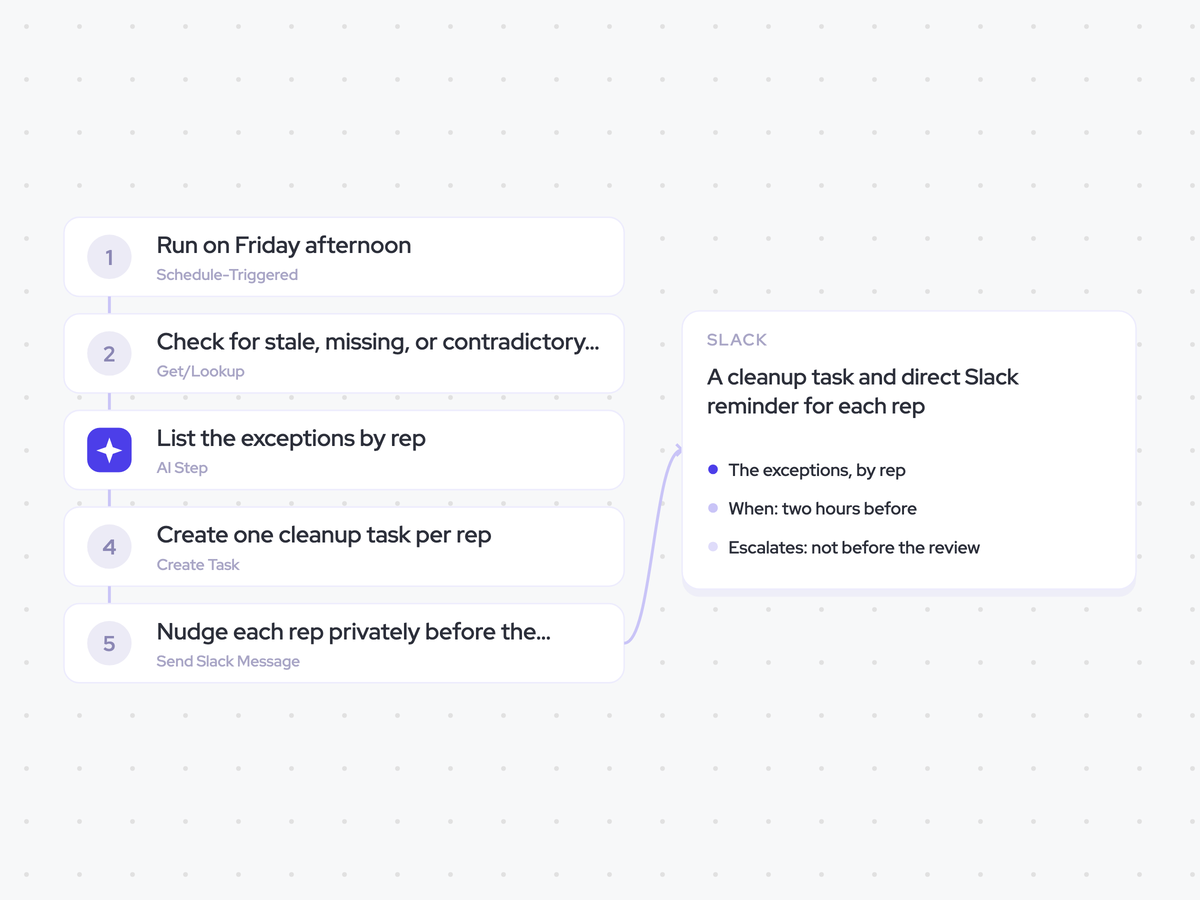
Jacco van der Kooij: So I come back, let's say that I agree and I know in Germany is a little harder, but let's say that I come back, I use Claude to record some calls, right? And transcribe calls, right? I feed the calls back. I now determine which one of these were the successful ones with some manual add Oh, that was successful. My Claude skill or my Grok action now becomes a repeatable action. Next event that come up, it looks at my calendar and says, you got an event coming up in two weeks which you want me to kickstart the process. Like this is the world we're in today. And I am asking myself if I'm sending one of my sellers to a trade show or to a meeting, why you're not, I feel I'm completely okay to ask Why are you not doing this? I'm paying for you. Why are you not doing this? Like you could have set this up two weeks ago with two hours worth of AI time, you could have set this up.
Janis Zech: Yeah, I mean, I think maybe you should hire more RevOps people, Jacco, right? So, you know, whoever listens to this, right? Like winning by design, you know, VP of RevOps, you know, like Jacco is hiring now, not just joking, but no, no, I fully agree. I think, you know, and I think this is the point Philipp made earlier, and I think that's very on point, Like, is this a decentralized approach? Is this a centralized approach, right? And we've seen this again and again, right? Like large companies, the biggest, you know, private companies in the world saying, okay, this is our AI mandate, everybody uses it. And then they basically have use case champions and then they centralize it into RevOps or AI operation groups that then build out the core capabilities, the core function. One of those could be this, could be other things, right? RFP, there's so many different examples of agents you can build that are recurring, you know, more and more fully automated and have the right data sources to actually be fed with. So it is an architectural shift, right? That you need to go if you want to do it at scale in companies for like, you know, a thousand, 5,000, 10,000 sellers. But I think that's exactly right. Like that's exactly what we are exploring here in the, in the podcast. Like, you know, what are those things and what is, what is the expectation? Where are we in the market and where are we going? How do we go there faster? because I think it is very, very important to everybody to jump on this. And I think most listeners hopefully already do, I would assume, but yeah, not sure.
Jacco van der Kooij: I hope so. Look, we got SKO season coming up in January. Like if you, as a listener to this podcast, listen to this and go like, what are we doing differently this SKO season than last year, right? And you don't see a major Delta. Like, I can tell you, the world has changed significantly between these two. But if you think you're just going to go, oh, it's all about meeting people, I'm telling you, you're misjudging what 2027 will be about. It's turning into an honest, you know, you now have to go out and you have to compete for business. You can't out buy your way with ads. You can't manipulate AI, it's not working yet, it will get there eventually and then you're being outbought, but 2027 is like, who has the best sales team and the best hustlers show up, please, right? Like that's going to be 2027. And I can tell you, if you are using AI to do that, now, when do you set that stage? You set that stage at the SKO. Like if you're not doing that, then what are you going to wait till next year's SKO? You're going to be another year behind. That's the sense of urgency and everybody just mocking along and going like, yeah, it's going to be fine. It's not going to be that bad, right? No, it's not going to be that bad. I'm not saying that, hey, the winners are going to enjoy all the spoils regardless. right? Like, and you will eventually change job and lose a job from one company and join a winning company. I get that. I'm saying is if you want to structurally tackle this problem right now, right, you have the next couple of months to install the process. Does your sellers have access with MCPs to call recordings to analysis then? Are you teaching them how to do this properly? Right? Not like they have access. Look, tools without process could lead to bad stuff, right?
Janis Zech: Yeah. So, so Jacco, it feels like, you know, you've been here now twice, right? Like the next one we do like with a hot sauce or something, you know? Yeah, I want to see. But no, I mean, first and foremost, you know, like, thank you so much. I have one closing question. But I don't know if it actually applies here, because, you know, I think, to a certain extent, you're always, you know, thinking in the future, you're living in the future. And so that's, that's obviously pretty cool. But what's an unpopular opinion about RevOps or go to market that you have I mean I don't know I think some you know that listen I don't know if the I think our audience would probably say that's a very popular opinion use your voice but I think it's a very real one not that a lot of people like yeah what what is what is an unpopular opinion
Jacco van der Kooij: It's a popular unpopular, however you want to call it. If your customer is not willing to meet with you, they are probably not going to buy from you.
Janis Zech: Yeah, I mean, that's fair, we have some signals for that.
Philipp Stelzer: Yeah, that's good.
Jacco van der Kooij: So now, what is the goal of sales? Go meet with your customer online, in person, over coffee at their office, whatever. Make meeting your customer the number one goal of your sales team. I love that. Look, I come from that world, I love that task. Let's do it. Yeah. and then use AI to offload all the stuff that we, you know, like we didn't have all this overhead other than receipts. The receipts was always a bottleneck. But all this overhead of CRM entry and stuff like that, that is only something over the last five to ten years, right? Like in all this management, middle management, focus, this and that. Like let AI take care of all of that. All this, let's go back that salespeople meet customers and have conversations. And what I mean of a conversation, I don't mean talk. So let me describe the difference. And sorry for the analogy, but sex and making love is not the same thing. And I'm talking about a conversation is between two human beings. Making love is something between two human beings. A conversation is between two human beings. Not between a human being and an AI system. Like, that's the mindset. Let's go back to have human conversations. And so my unpopular popular or whatever you want to call it is, if the customer doesn't want to meet with you, they most likely are not going to buy with you. So you better go meet with them.
Janis Zech: We're going to clip that. Thank you so much.
Philipp Stelzer: Back to reality. Thank you. Yeah. Awesome.
Learn more about GTM & revenue operations
RevOps Lab Podcast


Free Forecast Cheat Sheet

AI Agent Templates