#124 Why Token Maxing Is Only Phase One
with
Avtar Varma
,
VP RevOps at Chainguard
October 5, 2026
·
33
min.


Key Takeaways
- Token maxing is a necessary evil, not a strategy. Giving everyone access to AI tools in phase one generates real use cases and buy-in, but without replicability — different prompts, data sources, and context mean one person's ROI can't be transferred to another. The goal is to mine that chaos for patterns, not celebrate the spending itself.
- Usage leaderboards reward the wrong behavior. Incentivizing token spend pushes people to invent artificial AI use cases rather than solve real problems — a direct application of Munger's "show me the incentive, I'll show you the outcome." A time-boxed hackathon with a crowdsourced vote on best ideas generates far more actionable ROI than a consumption leaderboard.
- Phase two is about centralizing within functions, not across the company. The right move is appointing an individual or small team inside each function — RevOps, engineering, finance — to capture what's working, build replicable prompt templates and agent workflows, and coach the broader team on adoption. A company-wide AI czar before this step is premature.
- The phase three AI ops team looks like a centralized data engineering org. The model Avtar envisions has function-specific liaisons (GTM, product, finance) embedded in a central AI ops team — similar to how enterprise data engineering teams own the stack but serve federated stakeholders. They'd own model selection, cost optimization between open-source and frontier models, and cross-functional agent infrastructure.
- GTM is the best place to prove AI ROI and earn organizational credibility. Revenue impact is measurable in dollars and cents, making it the easiest function to demonstrate value and justify expanding AI ops scope beyond go-to-market into finance, product, and engineering over time.
- RevOps has a real path to owning company-wide AI ops — but only if it reports to the COO, not the CRO. A CRO-aligned RevOps function is too narrow to credibly own cross-functional AI infrastructure. COO alignment gives RevOps the organizational standing to expand from GTM workflows into a broader AI ops mandate, as Avtar has seen play out with peers like Kyle Wakefield.
- "Go-to-market engineer" is a branding success masking a skills gap. Most RevOps practitioners lack the technical depth to build the deep integrations and agentic workflows that actually maximize AI ROI. Avtar's unpopular take: you need an actual software engineer embedded in RevOps for this role — not a Clay-proficient operator with vibe-coding skills.
Hosts and Guest

Janis Zech
CEO at Weflow
Janis Zech is co-founder and CEO of Weflow, after previously scaling his last B2B SaaS company from $0 to $76M ARR as CRO. In this episode, he weighs in on where AI ops should live, how to prove ROI in go-to-market, and why leaderboard metrics miss the bigger adoption story.

Philipp Stelzer
CPO at Weflow
Philipp Stelzer is co-founder and CPO of Weflow, where he focuses on how revenue teams capture activity, inspect deals, and forecast inside Salesforce. In this episode, he digs into the mechanics of AI ops, the data infrastructure behind it, and what it takes to turn usage into something the business can trust.

Avtar Varma
VP RevOps at Chainguard
Avtar Varma recently started as VP RevOps at Chainguard after building RevOps functions from Series A startups to Stripe. In this episode, he outlines three stages of enterprise AI adoption and shares his perspective on AI ops ownership, data infrastructure, and proving ROI through go-to-market.


Full Transcript
Janis Zech: Hello, and welcome to another episode of the RevOps Lab Podcast. I'm here with Philipp. Hello, hey. How's it going? It's Friday.
Philipp Stelzer: Yeah. Yeah. It's been a great week, great Q3. Excited about Q4. But, we are here with Avtar Varma. I hope I pronounced correctly. I butcher every name. So, yeah, awesome to have you. You know, who are you? What do you do?
Avtar Varma: Yeah. So Avtar Varma, I just started as of this week, so it is a good week, at a company called Chainguard. But over the last ten to fifteen years, I've been responsible for building out from the ground up, RevOps functions at a number of companies ranging from small kind of Series A startups to organizations as well as Stripe. And prior to that, was an engineer for a very, very brief stint, just enough to be dangerous, and also had, you know, five to ten year stint in management consulting where, you know, led the kind of stereotypical strategic management projects across, you know, various large scale enterprises.
Janis Zech: You went from theory to reality.
Avtar Varma: Yes. Kinda fell into it, but it's been a lot of fun.
Philipp Stelzer: Yeah. Awesome. I mean, so loved our, you know, prep talk. Congrats on the new role. I know you work with Pam, so that's awesome. Really, really awesome. So our title today is From Token Maxing to Value Creation.
Janis Zech: Yeah. I know it's a great title.
Philipp Stelzer: I know you've had, you know, various experiences witnessing how, you know, larger companies introduce AI initiatives and run AI initiatives. We wanna talk about that. And so, yeah, maybe what were some of your experiences? We start high level, and then, as always, dive deeper into it.
Avtar Varma: For sure. So, you know, this last couple of years since the big ChatGPT moment has been obviously super interesting, and there's been a flurry of changes going on across all different industries, across all different functions within businesses. But what's been really interesting, feel like in 2026, is this movement from the beginning of the year where we had this idea of token maxing. Right? Like, give all the AI to everyone and just let them max out as much as possible, which is kind of what I feel like is stage one in the value creation process, where you try to give everyone access to all the different tools and just see what they do with it. And, you know, most large organizations that you've, I'm sure, read about online, some of the organizations that I work with even went so far as to say, like, hey. We'll have a leaderboard of who is spending the most money on these tools, and the people that were spending the most money got some sort of a prize, whether it was you got recognition or, you know, some of the organizations that I worked with, you actually got to go and present to senior leadership on how you were using the tools, what you were seeing, what the ROI was of that. The problem with this phase though is that because everybody is doing their own thing, something different, it's very difficult to actually, number one, prove that ROI because everyone is doing something unique. And so while you, Janis, might be getting value from it in one way, if I try to replicate that, I might not get value because I don't have the same context that I provided to my model. I'm not using the same data sources. I'm not using the exact same prompts. It's not replicable. And so that phase ends up, one, costing a ton of money, and two, when you go to the CFO to say, hey. We wanna re up on our, you know, multimillion dollar spend, it's really difficult to get buy in there unless you're, you know, an organization that just doesn't care about burning cash, which maybe in this, you know, venture capital market isn't too much of a problem, but I feel like eventually reality has to kick in. And that's where stage two comes up, where you really wanna create centralization within functions. So not like a centralized AI czar or board within the organization, but just like within go to market operations, within engineering, within finance. Create a team or an individual at the very least that is responsible for centralizing all the goodness that we're seeing from the use of the AI tools and create kind of centralized templates or skills or agents that you can say, hey. We know this works because we've given it the right data, the right context. We formulated things in a particular way, and we can actually then go out and coach the team on how to use that skill and what value should be derived from it. What's required to get to that though is number one, creating kind of a laundry list of tasks or workflows first, and then seeing in that first phase what were the things that Janis or Philipp or Joe, Jane, what was the value they were getting? How were they using it? How creative were they getting? And kind of, like, taking the goodness from that, and then creating centralized repositories of specific skill sets or workloads, and then rolling that back out to the team. And the last phase that candidly I have not actually seen successful yet, but I think is the next step in the evolution, is to create kind of a centralized AI czar function within the organization more broadly, where you actually give power to that team to say, hey. Here's all the different ways that the different functions in the organization are using AI or agents, and to kind of combine them all together so that you remove the silos within the organization, and you ensure that everyone is using the same context, the same data sources, etcetera, across the board. So you're getting kind of consolidated ROI results.
Janis Zech: Yep. One question regarding phase one. So I know Uber burned through four to six billion in one quarter. Yep. That included, you know, I think also Claude Code, right, like engineering. So it wasn't just, you know, like, maybe the core, but, you know, various different models. But, like, obviously, it's a huge sum. So do you feel like, you know, phase one, I mean, is necessary to go to phase two, or should you rather skip it?
Avtar Varma: I think there is a necessity there to go through phase one. Maybe not to go spend four to six billion dollars, but, like, have some sort of caps there. But without getting individuals to see what's possible, it's really difficult to get their buy in. Otherwise, it's just another tool that's being pushed on to them, and they don't actually know if they're gonna gain value from it or not. And there's some people within every organization that I've worked with that are gonna be really bought in and really curious and really try to, like, push the frontier of what you can do with different tools. And that then ends up being your kind of idea house, right, of places to start and say, hey, like, I really saw that Philipp was doing this thing that he got a ton of value from. How do we replicate that across the entire field? That kinda becomes your source. Also, that phase is where whoever the, you know, kind of centralized team is within each function can use that time to start creating that laundry list of tasks or workflows that you want to try to automate and figure out where you can get ROI from.
Philipp Stelzer: What's your view on, like... So I assume, right, like, if you have fifty thousand people, everybody suddenly has, you know, a leaderboard in front of them. It's very motivating to, you know, be recognized. Like, do you feel like it's defocusing in an organization outside of the token cost?
Avtar Varma: Yeah. Personally, I... In phase one, I don't see the point of the leaderboard. I'm very curious to see, hear your guys' take in terms of the organizations you're working with. Like, what is the value of the leaderboard outside of just, like, a vanity metric, a very strange vanity metric?
Philipp Stelzer: Yeah. Yeah. I mean, maybe one story here. So, no leaderboards here, but, like, one of the things we are doing, of course, is recording calls, meetings, etcetera, for customers. And then, you know, the point, of course, is not just to capture that there was an interaction but what was actually said in the interaction and then derive insights from this, you know, like, do we have certain objections we're not handling well? Is this something we can improve with the onboarding process? Whatever it is, right, like feature requests, etcetera. And we definitely see, like, a strong interest in the leadership teams at those companies that are customers of ours to understand, hey, Weflow, like, how much are they signing in to the platform? How much are they using this? Because they wanna see... Like, they're pushing for adoption. Right? Like, they wanna see, you know, their employees using our product because they believe that it will create value, but they also wanna measure the usage of that, and they also wanna message... Sort of like the outcome. So it is like a recurring theme, and we've started to build like reports that kind of just create that insight and transparency into how the different features we're building and shipping are being used across the board. Because, I think it's, you know, you buy these tools, they cost money, and you expect some kind of outcome from them, but how do you validate that? How do you verify that outside of just anecdotes? Right?
Avtar Varma: Well, also, feel like the difference is for... And I don't know your guys' pricing model directly, but for most kind of traditional SaaS models, it is a per seat or, you know, something to that effect. So whether they're using it or not, they're paying for it for your organization. The difference with, you know, Claude and ChatGPT, if it's not being used, it's not costing the business anything. And so that's where it's like the vanity metric of, like, okay. You use more. Great. What did you get for that? For Weflow, I imagine it's you bought it, we want you to use it because we believe that the more you use it, the more value you get from it.
Janis Zech: Yeah. I mean, it's... So I think it's like multiple layers here. Right? So I think the token maxing idea is essentially interesting because, like, it gives, you know, the use cases into a democratized, you know, like, group of people so that you quickly learn what is, you know, actually valuable. Right? The buy in aspect is interesting. But the question is really like, do you want to incentivize people in a way that they then, you know, have leaderboards? I'm not a big fan of that. Right? Like, I think that's a behavior that influences, you know, the Uber behavior. Right? I think that's, like, extremely strange to me. But I do like, and I've actually seen that, I do like this idea of, like, look, we take, you know, three or six months. Everybody is incentivized to come up with really good ideas and use cases and then share this out so that we know what are the high impact things. And for example, like, we had a meetup in Munich, and there was, like, a RevOps leader from one of the, you know, high scale German hyperscale companies. And he was like, look. We actually found out that one of the biggest use cases was meeting prep. And I was like, wow. I mean, that's, like, super simple. Right? Like, we do this every day, all day long, you know, including the product. Doesn't cost much. But that's something where he said, look. I mean, we have, like, you know, a hundred fifty reps. They have, you know, eight to ten meetings a week, and they typically spend, you know, fifteen to twenty minutes. And we basically, you know, not only made that more efficient, he was more interested in the effectiveness. Right? So he was more interested in streamlining that behavior because, yes, the top ten percent, the top twenty percent, they do this anyway and it's great. But how do you then level up the rest of the organization so that quota attainment, you know, rises? Right? And so I think there's many of those type of, you know, workflows that you can identify. And one thing he said, and, you know, for example, we built into our product afterwards, was it needs to live in the Google Calendar. Right? So if you open your Google Calendar, you should have a prep link there, and you should just click it, and the AI should prep it for you. Right? And I think that's also something we are seeing is like it needs to be headless. So, yes, it's great if you have to go back and, you know, you go into a chat interface. But also, ideally, AI does things for you wherever you are, whether that's Slack, Teams, email. Right? And I think that is super interesting. But I'm also known not only for butchering names, but also going off topic, so going back to topic.
Avtar Varma: That is super interesting, Janis. I think it's related. Right? Because in this, like, token maxing era, the leaderboard to me, it reminds me of Munger's quote of, like, tell me the incentive, show me the incentive, and I'll tell you the outcome. All that's gonna happen, I feel like, is people are gonna invent weird ways to use the AI on an ongoing basis as opposed to doing like a hackathon where, like, hey. Bring your best ideas. We'll do a, you know, crowdsource vote of who the top three ideas are, and they get some sort of a reward. That to me has a huge amount of ROI as opposed to just, like, putting people up for spending the most money.
Philipp Stelzer: Yeah. This was a bit my question earlier. Right? Like, I mean, my assumption would be, okay. You have fifty thousand people. They now see that leadership recognizes the leaderboard. Right? So what do I do during my day? Right? Like, I wanna rise in my career, so I spend a lot of time doing stuff that is actually not my job. And that's great, like, you know, to a certain extent, but if that becomes thirty percent across fifty thousand people, I don't know. I mean, that's like an interesting thing. Right? So you could also do like a two day hackathon, you know, and then there's a prize and, you know, I don't know, maybe at a big enterprise, you go to Hawaii or so. At a startup, you know, you get a big Xbox.
Avtar Varma: I think for most people, though, the intrinsic value of just feeling like you won and then that your tool is getting pushed out to the entire organization, like, the intrinsic value of that is enough. I suppose a trip to Hawaii wouldn't hurt.
Janis Zech: I think in the end, right, like, the idea of the leaderboard is just like to apply pressure to actually start using AI. And my feeling is, like, for most people, like, who are really good, like, and the people you wanna have in your company anyway, right, like, they understand that there is value with using AI for my own sake, right, like, to do the work with me or for me, right, I think both things are true. And so I think what you really wanna say is like, hey, guys, like, here's AI, like, we have tokens for you or we have a good subscription for you that covers, like, your daily work and that you can work with. And we understand this is new technology. We want you to be open. We want you to be using it. If there's like a mistake, right, we're not gonna punish you for it. Right? We need to learn and we need to become better at this because, like, we don't want this to become like a strategic advantage of our competitors if we kind of like sleep on it. Right? So we need to be at the forefront of it. And I think actually, like, the phase two, right, like, stage two, like, that you talked about, that's sort of like this thing where you say, hey, you know, let's think about this from a sensible perspective. Like, what are the things in your team you could automate with an AI so that you actually can focus on better stuff to work on? And I think if, you know, like, if a leader would come in and say to, like, I don't know, to the customer success team, hey, think about, like, three things we could automate, like, next week. Right? Whatever it costs in terms of, like, tokens, we'll pay for it. We'll cover it. Right? And just start with the most tedious work. Right? To me, I think that's the incentive. Like, speaking for myself. Right? That would be the incentive for me, not doing the tedious work anymore.
Avtar Varma: Yeah. No. And actually, when you're talking about, like, the intrinsic value of, like, we all believe, most people believe that if you don't get upskilled on AI, you're gonna fall behind right now. During my interviews with Chainguard, actually, the CEO, Dan, walked me through how he is, like, inspecting how his team is using AI, and his expectation is that for the engineers, they're spending a certain amount of time with AI specifically. And if anyone is below the average on a given team, the manager is supposed to work with them and coach them on how to use AI better to make them more efficient. And it is, like, one, it's good for the individual because they're getting upskilled by their manager on how to make better use of their time. But then two, for the organization, like, if, you know, you keep reading all these things that seventy percent of all enterprise code is now written by AI, like, the faster we can write good code using AI in a productive manner, the more efficient the organization's gonna be, the faster we're gonna be able to move. And so, like, that to me is a good use of a leaderboard of sorts of, okay, looking at usage and figuring out, okay, is someone not using it to the best, in the best way possible, and trying to upskill them as opposed to using it as a, you know, carrot of, okay, you use a bunch, then you get some sort of reward.
Philipp Stelzer: Yeah. Yeah. I like that. Yeah. One question. So I think you talked about, so going from basically decentralized to centralizing within functions. I mean, I assume that's where most of the listeners are in, right? You specialize in, you know, maybe like RevOps, you focus on the customer side, or it's like engineering ops, right, or often that's handled within the engineering org, I would say. I don't know if there's a specific ops function for that or finance ops, right, that basically identify the core use cases and try to capture them. Right? You mentioned a third phase. Right? And I'm curious, you know, how you think about that. Like, essentially, the way I understood it is you essentially then have one central AI operations team across the company that would essentially work with these functions, or would they own the functions? Or, you know, like, would you go from RevOps to AI ops, you know, company ops or, yeah, biz ops? Curious how you think about that.
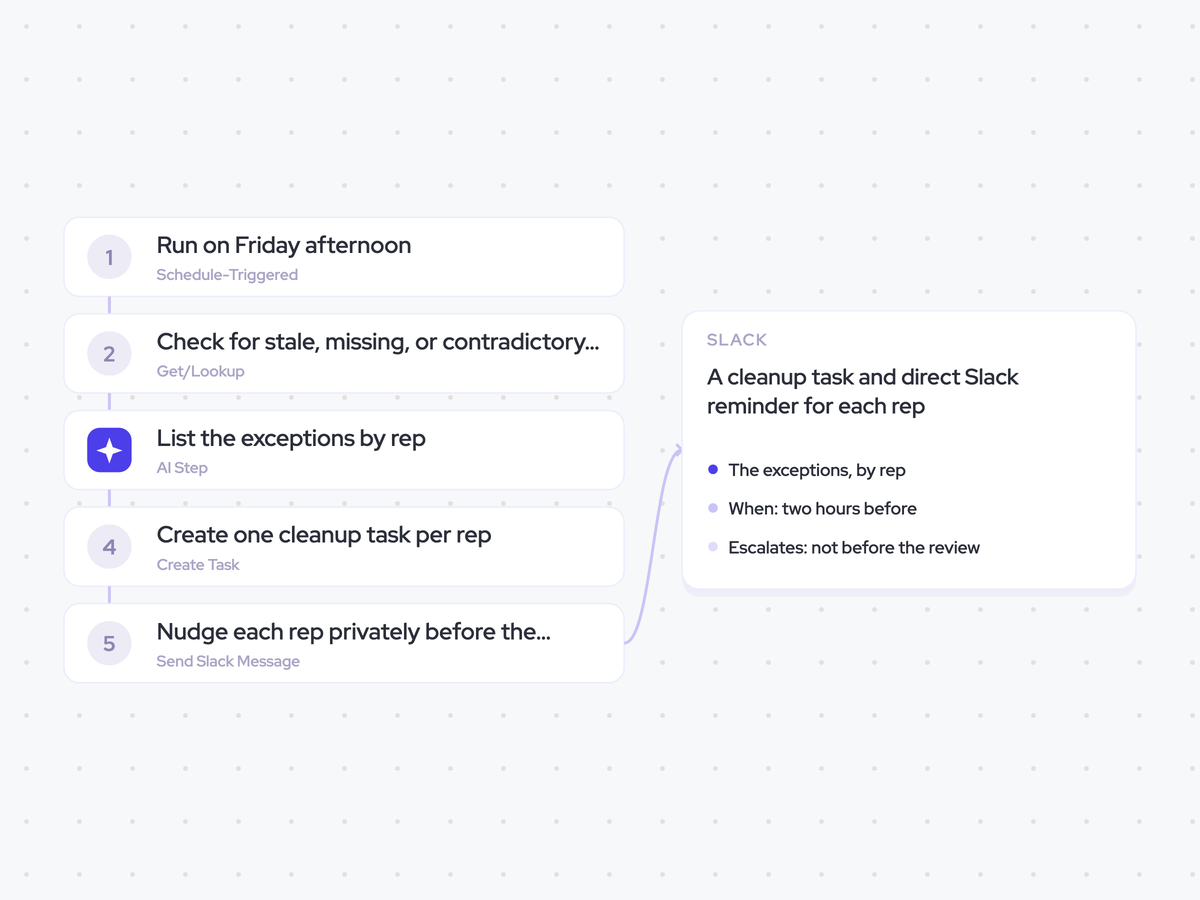
Avtar Varma: Yeah. The way that I've been thinking about that is it's very similar to... In large organizations when you have kind of, like, a centralized biz ops function or a centralized data engineering team, where that organization is responsible for, like, let's use data engineering as an example, where they own the entire stack for how all federated data models are created and consolidated across the entire organization. Data from product, data from systems, data from the go to market org, kind of combining all of that together such that you have a holistic view of the entire internal organization as well as your customer base, you know, Zendesk tickets, all of it, all consolidated in one place, where then you can have specific people in the team that are the, you know, the go to market liaison, the product liaison, the finance liaison, and those people work with their go to market or finance or, you know, product counterparts to create the specific dashboards, reports, analysis, all the, like, core analytics workloads. They kind of, like, specialize in each of those functions, but they report into a centralized data organization. And that's kind of what I'm thinking about in terms of, like, okay, this next phase within, you know, AI operations, to use your term, Janis, so I like it. You're the marketing guy, man. Like, you got the name brands down. But, like, yeah, AI ops where you have a centralized team, and then within the team, they have specific people that specialize in each of the different functions. So the functions can say, hey. To run our business, we need to have these specific skills, these specific agents, these agentic workflows built, and you have like an engineer, an AI engineer that is building those out, but in a way that is conforming to the way the organization holistically wants to deploy AI across the board.
Philipp Stelzer: Follow-up question on this. Would they own the data infrastructure and the stack? Would that sit with IT? And then, yeah, how do they interact with, for example, a RevOps team? Right? I'm super curious how you think about that.
Avtar Varma: Yeah. So I'll be honest. I have not implemented this yet, and so I'm sure as I go through it, I would learn a lot, and there would be a lot of things that I get wrong. Off the top of my head, the way that I would think about it is that this would be a counterpart. Right? So they would be cross functional partners with biz ops that would own systems, with the, you know, data engineering team that would own the actual, like, data infrastructure, with RevOps that owns kind of the go to market playbooks and workflows and all those elements. And so, like, those kinda become a core operational infrastructure for the organization that either sits under the COO. I could see a lot of those functions besides RevOps sitting under the CIO as well, depending on, you know, the organization and how they wanna arrange it all.
Janis Zech: No. No. It makes a lot of sense to me, and I think, like, if you're, like, a big organization. Right? Like, there's, like, a dedicated team that works on, like, data infrastructure. Like, you don't want, like, AI engineering or AI ops to, like, start owning that. I think that would just create, like, massive mess. And you actually might find that, okay, hey, let's do certain things. The first thing we need to actually do is we need to, like, take the different data sources we have available, but then restructure them and, like, create, you know, like, just like an adjusted version of that, like, that means, like, a different schema or whatever, so you can feed it into the system in an efficient kind of way. Because I mean, like, realistically, I mean, I'm hearing this a lot. I've started to play with that myself, like, you know, on weekends, in the evenings, is also just running my own, like, local AI. Like, I think businesses are gonna start doing that. I think that's then, like, something that AI ops, like, can own. Like, okay. You have that infrastructure to host your own models. Like, you have different models for different use cases, you switch stuff around, you have like testing systems and security systems, right? These things will just become more prevalent, like, you know, as they become more powerful, and you just need to make sure like that's all like secure and safe, right. You know, Jensen Huang, Bill Gates, right, they all talk about that at the moment for good reason. I think actually it's good if you give them like, hey, like, here's like this new, like, sort of, like, area of responsibility. Like, take the data, right, from elsewhere, restructure it. That's your area of, like, ownership here.
Avtar Varma: Yeah. Exactly. And it can be actually a cost saving function. Right? Where instead of using the leading edge language models, like, you know, Claude or ChatGPT, to your point, Philipp, what are the open source models that we can run on our own servers for specific functions or use cases, and where do we actually need the best in class, latest, and greatest models. And using that kind of, like, token optimization could be one of their core responsibilities outside of the, you know, like, building out the actual skills and agents, but where can you get cost savings? Where can you make things more efficient? Where can you, you know, structure the data in such a way that it's actually easier for the AI LLMs to parse?
Janis Zech: Yeah. Yeah. I mean, I think the whole system side is completely restructured right now. So, like, the whole stack. Right? Like, you have ERP, CRM, you know, kind of, and then you look at companies like Snowflake and Databricks having huge tailwinds right now because, you know, you start centralizing data as another layer to then run agents on top of that data instead of actually plugging directly into the core system of records, right, where, you know, like, these, you know, data warehouses are a lot more flexible to, you know, group data from different data sources into one. And that's, I think, a huge trend we are also observing, especially in enterprise. So it's very interesting, actually, because I think it means that the system side is changing, the organizational side is changing, and kind of the roles and responsibilities are changing. And I think what we are always trying to figure out here is in this podcast is, like, what does this mean for RevOps? So maybe my question to you, do you think that RevOps would be, you know, actually potentially elevated into a biz ops function? Right? Like, if you're a VP of RevOps today, should you shoot for being the VP of biz ops or even the COO one day? Like, how do you think about that evolution? Or is that something that is a completely different role and responsibility?
Avtar Varma: I think it can fit under a RevOps organization. The only challenging part, though, is if you go to a fully centralized kind of AI ops organization, because it's so cross functional in terms of the things that you're gonna be touching within finance, within product engineering, I think it might be a little bit odd to sit under a CRO, which is typically where you see RevOps. If RevOps sits under a COO, I think that makes a lot more sense. Right? And I have seen that at some organizations, and there's some folks that I've worked with historically. Actually, one of my own friends and mentors, Kyle Wakefield, has done an exceptional job of elevating RevOps and actually becoming that AI ops czar within his organization. And he's really taken the mantle of, like, okay. We're gonna build all of the AI functionality, skills, workflows, etcetera, within ops, and then start sharing that more broadly with the organization. And that then, because they're seeing such an ROI there, has elevated ops from just being, like, specifically go to market oriented to being more broad based within the organization. So I think it takes a little bit of ownership for the individual that's, you know, heading up the ops team to start dabbling in these things and show the ROI. But I do think there's a path there to say, okay. We can, you know, start with go to market ops, you know, specialize on the sales, marketing, CS side of things, and then start elevating to the rest of the organization once you start seeing them over the way.
Philipp Stelzer: Yep. Yep. Yeah. I think that makes total sense, and honestly, I think GTM is such a great function to start with there, you know. Yeah. I mean, the ROI is like very dollars and cents, right? It's like, okay, are we able to increase productivity and like show it so easily if it's working that it's a pretty great place to start.
Janis Zech: Yeah. And you have content pieces as well that play, like, a huge role and add creative. I mean, there's just so much, like, you can just automate, like, really, really well, similar to engineering, obviously. All right. Yeah, Avtar, thank you so much. I think a really, really good episode. Really appreciate it.
Avtar Varma: I appreciate it.
Philipp Stelzer: Always like to end our podcast with one final question. Switched it around just recently, and that is, what is like a really unpopular opinion you have in the realm of revenue operations?
Avtar Varma: Yeah. So maybe counterintuitive to the conversation we're having here, the idea of go to market engineering, and maybe it's just the marketing around it, is something that I really don't agree with. Where I think, you know, Clay's done an exceptional job of branding go to market engineers, and I think that Clay is a really great tool for, you know, what the use case is. I do not think that traditional operators should be the engineers building out the AI agentic workflows and skills and things of that nature. Unless someone's, like, super technical and they were an engineer and they went into go to market ops or RevOps, I think most people in go to market operations, myself included, are not technical enough to do the, like, deep integrations and implementations that you need to actually make these agents as productive as you possibly can make them. And so the idea of, like, go to market engineering, like, I want an actual engineer to be the go to market engineer within RevOps. And I think that that's not the way that it's currently being talked about. It's like, hey. Like, take someone in go to market and, like, give them some tools to be able to vibe code an application or, you know, build some workflows, and that's not quite the way that you're gonna get the most ROI out of it.
Janis Zech: Yeah, yeah, yeah. It's more like a GTM orchestrator or architect, maybe.
Avtar Varma: Yeah. They should have picked maybe architect. I don't know. But it's definitely an unpopular hot take.
Philipp Stelzer: Maybe not unpopular, but definitely a hot take. Love it. Thank you.
Janis Zech: Yeah, look, best of luck in your new role. I'm rooting for you, and thank you so much for joining RevOps Lab.
Avtar Varma: Yeah. Thanks for having me. It was awesome. Thank you so much.
Learn more about GTM & revenue operations
RevOps Lab Podcast


Free Forecast Cheat Sheet

AI Agent Templates