#120 How to become the AI Orchestrator of the GTM org
with
Mollie Bodensteiner
,
VP RevOps at ZoomInfo
September 7, 2026
·
39
min.


Key Takeaways
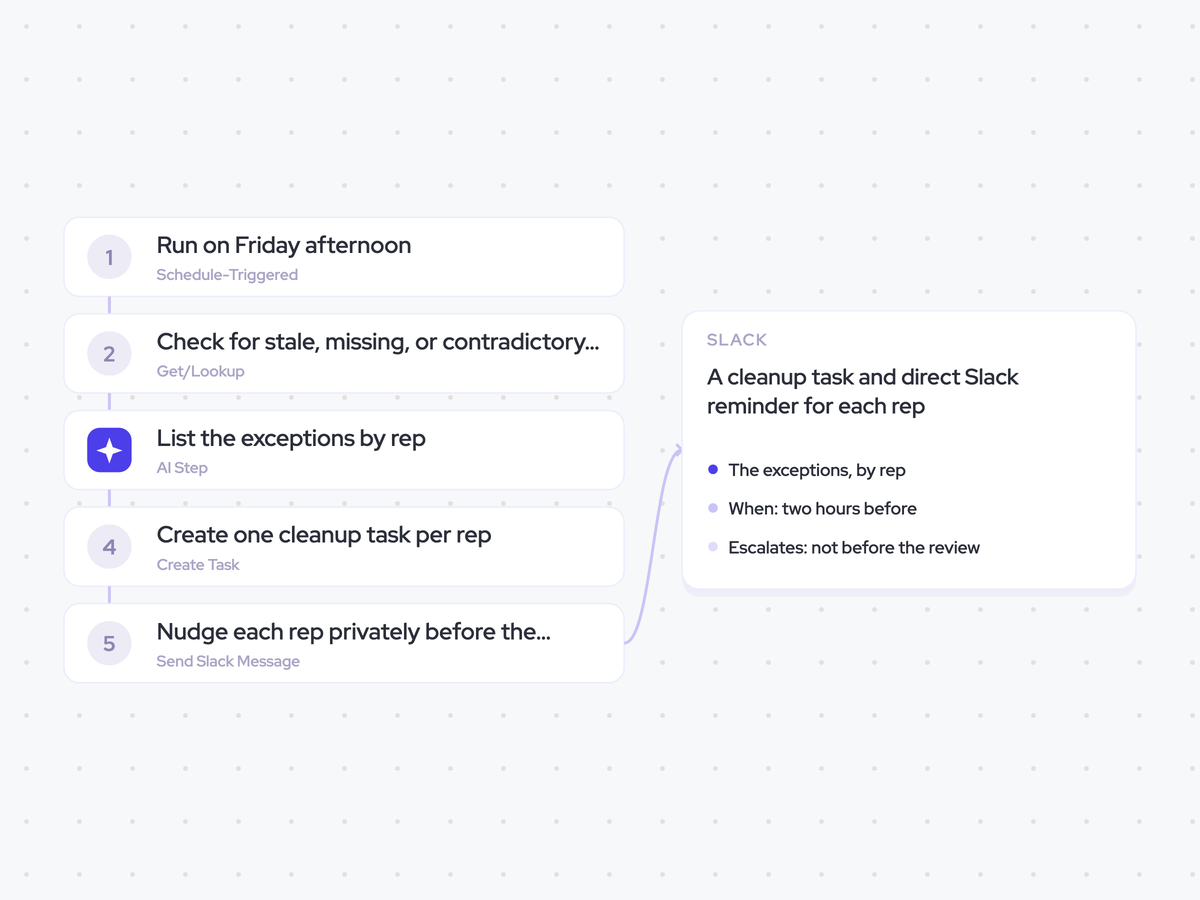
- RevOps has shifted from reporting on the business to building and governing the systems that run it. The old model was reactive — triaging requests, pulling data, managing pivot tables. Now the function owns the infrastructure, the agent workflows, and the intelligence layer that the entire GTM motion runs on.
- The go-to-market engineer role is being wildly misrepresented on LinkedIn. Mollie's definition goes far beyond outbound sequencing — it's someone who can sit with a sales rep to understand their workflow, then go build the data models, prompt engineering logic, and system integrations that support that motion end-to-end.
- Agent operations is becoming a core RevOps competency, not a separate job title. Just as DevOps monitors software uptime, RevOps operators will increasingly own the health of an agent fleet — monitoring drift, managing LLM consumption costs, QA-ing outputs, and deciding what stays human-first versus agent-first.
- Career ladders in RevOps are turning into portfolios. The path from analyst to manager to VP based on headcount is breaking down. Seniority will increasingly be defined by the scope and consequence of the systems you own — not the number of people reporting to you.
- Ungoverned AI adoption creates a new kind of sprawl that RevOps will have to clean up. When every rep builds their own follow-up agent or MCP connection, you lose visibility into what's running, costs inflate, and when someone leaves or an LLM goes down, customer experience suffers. Centralized governance isn't optional — it's the next big RevOps mandate.
- Mollie killed the case study in her hiring process because AI makes them meaningless. Instead, she puts candidates in a room with their future peers, gives them a real problem, and watches how they work through it together — because the ability to disagree, contribute a perspective, and collaborate under ambiguity is what actually matters now.
- The "librarian" is the most underrated role in any AI transformation. Before you build an agent, someone needs to document the process deeply — the variables, the edge cases, the outliers, when it shouldn't fire. Without that context layer, you're building on a foundation that will confidently produce wrong outputs at scale.
Hosts and Guest

Janis Zech
CEO at Weflow
Janis Zech is the co-founder and CEO of Weflow, and previously scaled his last B2B SaaS company from $0 to $76M ARR as CRO. In this episode, he brings a founder-operator perspective on how AI is changing RevOps, from the systems teams use to the way they build careers.

Philipp Stelzer
CPO at Weflow
Philipp Stelzer is the co-founder and CPO of Weflow, where he focuses on how revenue teams capture activity, inspect deals, and forecast inside Salesforce. In this episode, he adds a product lens to the discussion on AI in RevOps, including the tools, workflows, and team structures that are being reshaped.

Mollie Bodensteiner
VP RevOps at ZoomInfo
Mollie Bodensteiner is the VP RevOps at ZoomInfo and a returning guest on the podcast. In this episode, she discusses how AI is reshaping RevOps roles, team structures, and career paths, including the go-to-market engineer role, the shift from career ladders to portfolios, and her approach to hiring.


Full Transcript
Janis Zech: Hello, and welcome to another episode of the RevOps Lab Podcast. My name is Janis. I'm unfortunately not with Philipp today because he's too busy doing other stuff. But more importantly, I'm here with Mollie Bodensteiner. I hope I pronounced this correctly.
Mollie Bodensteiner: You got it. I got it okay.
Janis Zech: I butchered all the names. So welcome back. You were here before. We had a fantastic chat, and this is the V2. So how are you?
Mollie Bodensteiner: Good. Good. Thanks for having me today. And Philipp, you're missing out.
Janis Zech: Yeah. Philipp is definitely missing out. I remember last time we spoke was one of my most favorite episodes. You were at Engine. Now you're the VP of RevOps at ZoomInfo. I think everybody knows ZoomInfo, over a billion revenue. So yeah. And we're gonna talk about, you know, how AI is changing RevOps teams and roles, which is I think it is a big topic. Been thinking a lot about it, posting a lot about it on LinkedIn lately. And I know you think about it very deeply, a lot more deeply than me. So I'm super excited to, you know, have you on the pod. But maybe for the folks who don't know you, who are you? What do you do?
Mollie Bodensteiner: Yeah. Absolutely. So Mollie Bodensteiner, I like to joke that I have been in RevOps before it was cool. I've been in operations some way, shape, or form on a go-to-market team, whether that's sales, marketing, etcetera, for the last fifteen plus years, so, you know, you never know what's on your bingo card. I'm not sure, you know, six years ago I would have said we would have been in this transformation that we're in today, but we're here for it, and I think it's one of the most exciting times that I've probably had professionally, being able to get into this world of just agentic workflows, automation, agent builds, etcetera. And I have led revenue operations at six organizations now, most notably Deal Engine, and now at ZoomInfo. So it's been a fun ride.
Janis Zech: Well, I'd say we all know these companies, so let's learn as much as we can. I'm just curious, like, how have the jobs to be done evolved over the last, you know, three years? Right? Like, with AI coming on board.
Mollie Bodensteiner: Yeah. I think even if you go probably three to four years ago, you know, RevOps was still in that support function type of mindset. Right? It was a lot of triaging, manual work, you know, working to, let's call it, you know, the reactive, you know, help desk type components. And, you know, it started to become more of like a change agent, especially as, you know, more technology came onto the space. We started leaning in on better process, workflow automations. Right? And now we're in this really fun, like, scalable component where we are using, you know, more AI, more automated workflows, more intelligence versus just analysis because the access to the information that, I'd say, like, four years ago that took us so much time to get to be able to just execute, we're now able to extract that information, that insight, and, like, make decisions off of it way faster than we ever have been. And with that, right, your org is ultimately changing. Right? The skill sets that you need, the work that people are actually doing is getting elevated. And I think that that's just a really fun time. Right? No one on my team is like, oh, I sit in Excel spreadsheet all day calculating, you know, things now. You can use Gemini to use that as just such a low lift. Right? So I think, like, RevOps, you know, used to be the team that, like, reported on the business. Now it's, like, becoming the team that's starting to build and govern the systems that are really running the business.
Janis Zech: Yeah. Yeah. Yeah. I think we're entering this, like, right, we went from kind of rule-based workflows to sort of intelligence to orchestration. Right? And I think that's actually quite an exciting journey. I talk to a lot of folks right now. It's an exciting journey. It's a stressful journey. I feel like everybody's like, you know, also really stressed out, given that there's high expectations, and sometimes a big disconnect between, let's say, the board and executive layer and the reality on the floor. Is that something you're seeing as well?
Mollie Bodensteiner: Absolutely. I think, you know, when we look at the maturity on this, and you're seeing this on the news, you're seeing this everywhere, and, like, even myself as I've, you know, presented to boards and that, right, it's like, how are you using AI? How are you using AI? How are you using AI? And, like, you know, it's like, oh, we're doing these fifty million things all the time with no — let's call it like no strategy necessarily other than use. Right? Like the strategy was use. Use use use. Adopt. Right? Now it's actually like, what's the ROI? What's the impact? How are you making sure your consumption makes sense? I think for organizations that took the approach of like, give everyone access — I think that was a — I mean, I think that's still the right approach to get people comfortable, but now you're overcoming the, like, I now have to, like, govern this access. Right? And, like, we're in this world of sprawl because every sales rep could, you know, connect their MCP where they wanted to within their Slack or build their own, you know, agents to run. And now you run the risk of harder ability to, like, report on what's working because you don't necessarily know everything that's going on. It's not centralized. You have, you know, inflated costs because you likely have inefficiencies in the way people have built and architected and governed. And again, you just go back to like the sprawl because now no one is managing those things. So like in a traditional sense, you know, you would have your automation, your workflow, it'd be centrally managed. And kind of what you're running into in today's market — like everyone has their follow-up agent. They're controlling it. You don't know what it's actually doing. And you run the risk of again if a person leaves, if an LLM goes down, if, you know, you have hallucinations, your customer experience suffers.
Janis Zech: Yeah. Yeah. Yeah. Yeah. I mean, we see this all the time. Right? Like, data infrastructure compliance, you know, governance is one of the biggest challenges for the AI transformation. Like, being able to centralize data, reducing silos. Similar to, you know, it always reminds me of this, like, reality in BI, right, like, oh, yeah, it's great. Everybody has a dashboard. Everybody can build their own thing, but then, you know, everybody comes back to reference and asks, okay, why is this number how it is, that doesn't make sense? And everybody has their own definition of the number and tweak the number to their own needs. Right? Like now you have LLMs where suddenly, you have a similar realization if you don't do the foundations well. And I think that's something that I think certainly a lot of folks are still trying to figure out. But, you know, that's actually not the topic of today. We'll probably find more.
Mollie Bodensteiner: It's a great topic, though. It's a great topic.
Janis Zech: But I'm curious because you're so close. Right? Like, I think ZoomInfo was a very, like, AI-first organization, like embracing a lot of things. I know you've been in that for a long time, and you think deeply about, like, you know, like the RevOps organization and the evolution of the organization. So, like, maybe let's kick off with, like, what are some of the new roles you are seeing taking place, you know, and what do they actually do?
Mollie Bodensteiner: Yeah. Absolutely. I mean, I think, you know, it's a newer role, right, is like the go-to-market engineer. And, you know, I think there's some maybe, like, fanfare around what that role, like, actually is and how it's, you know, perceived in the market. Right? To me, it's truly an engineer. Right? It's the person who is doing the development, managing the workflows, like the integrations, right, getting things connected in the right way, but understands the business really well. And I think those are, like, the things that will continue to persist within revenue operations, right, is like, it's now gonna be this balance of, like, the technical, but also the business acumen. And that's how we make things come together really well. Right? And so this builder mindset, I think everyone who comes into my org as an operator is a builder as well. Right? Like, you have to be able to build, but you have to understand the business to be able to do that. And I think those are really where, like, the strongest go-to-market engineers come in — are the ones who know how to sit on the floor with the sales rep and understand their workflows, identify where those opportunities are, work cross-functionally, but have that API fluency, that system integration fluency, and that way to really build, you know, a product behind supporting kind of the go-to-market motion. So again, I think that role will continue to expand. It's not just outbound email marketing in my opinion. Like, I think what is coming a lot on, like, LinkedIn around a go-to-market engineer — like, it is truly somebody who can manage, like, the data modeling, the prompt engineering as a craft, like, the right logic behind the infrastructure that's, like, needed to support the motion.
Janis Zech: Yeah. Yeah. Yeah. I mean, I find this interesting because, you know, I think the ability to go from — let's stay in the outbound example because I think it's the most used example here, and it obviously, like, I think has a lot of application. Right? Like, to really understand, okay, what is a good message? Right? Like, how do you mirror the signal? Right? The intent and the message, which is very much centered around, like, what I think the kind of SDR managers used to do. Right? Being really good at understanding that, measuring that — with the ability to then actually build the system end to end. And to a certain extent, you could say there's certain channels that are easier to automate these days, right, like email where it's more automated. There's others where you hand over to an SDR that sits in Nooks or so and just parallel dials, right, and like building that end to end and going from, you know, the very beginning to the very end, I think that to me is very, very powerful. And it's very hard to do, to be honest. Right? Like, and I would say, you know, like, certainly cannot see this BS on LinkedIn anymore, you know, that, like, I just, you know, get a reply rate of nine percent and I'm like, no. No one's sending a million emails a month, like, unless you're B2C. It's like, I don't know where you get your nine percent from, but definitely not emailing me. But no. I mean, like, right. Like, I think that's just so interesting. Maybe, you know, what are some of the other roles you're observing?
Mollie Bodensteiner: Yeah. Absolutely. I think, you know, one of the other roles that, you know, I'm bullish on is like, you're gonna start to see — let's call it what it is. Right? Like, orgs are gonna start to get a little flatter. Right? You're not going to be having probably as much of like the span — you know, you're gonna have larger spans of control. You're not gonna have these like smaller sub-pocket, like truly functional-led teams. With that, though, you're going to have more of, like, humans that are gonna manage people but also manage agents. Right? And I think we already see that, but we're gonna start to see that named in this concept of, like, digital workforce. And so I think there's this agent operations type concept where, you know, your operators are going to really manage the day-to-day health of, like, your agent fleet. Right? I think it's the same way, you know, DevOps manages, like, uptime on software, but, like, you're gonna monitor your drift. You're gonna look at, like, just skill shifts that need to happen and your QA. And you're gonna — you know, it's, like, funny to say this, but, like, you're gonna manage the cost. Right? So the same way, like, I manage a budget of software, right, and tech and tooling, like, you're gonna monitor consumption. You're gonna have budgets around these. You're gonna always have to be looking to optimize costs as well as making sure, like, you're getting on the right back end and, like, your prompts are adjusting and, like, ultimately building that within parallel to, like, the jobs to be done and making those critical decisions of, like, what is human-first versus, like, what is agent-first and how do those come together. So I do think, like, that's gonna be this, like, agent ops role that I think businesses are starting to try to figure out, but, like, it's likely gonna — you know, I don't know that it's a net new person that's coming in. In my opinion, it's a lot more of a skill set you're building within your existing operators that are the ones that are really excited about building, right? Back to like, you're gonna be a builder. And, like, you might — you know, and it's hard, right? Because I think historically we've worked in kind of the environment where like growth is managing people, right? Like, you know, it's this ladder career path of like, I go from being an analyst to being a manager, to being a director, to being a VP, etcetera. Like, and that means I have bodies under me. I think that's going to change. Right. I think it's going to actually start to look more like a portfolio. Right? So it's gonna be less of like this, like, laddered career path. And it's gonna be more of like the person who's, like, overseeing the most, like, consequential systems and, like, business operation components are gonna be those, like, senior people.
Janis Zech: Yeah. Yeah. I mean, I think it's already happening in the engineering org, right? Like, you basically have an engineer who runs various different, you know, agents overnight and then, you know, orchestrates them, almost doesn't code anymore, has basically a team. Right? Like and, yeah, there also needs to be operations around that, right, that you don't burn through three billion of, you know, tokens like Uber did. But, you know, in the quarter. Whoops. That just happened. But then also being very aggressive, right, on it. So you could look at it either way. But like, I think the point being, right, like, my question here on the agent operations, right, like, is that something, right, like, you're in, let's say, sales operations today or you're in CS operations. Right? Like, you're a business partner to the team. Right? Like, is that just another skill set you need to learn, or is that something that would be your new job title? Right? Like, would it be like a sales agent operations? Or how do you think about that now?
Mollie Bodensteiner: I think it's just more of a skill set that you learn. Right? Like, I think you are — you know, operators do this today, right? You're going in and you're, you know, defining a sales methodology and alignment. Now you're putting, like, the automation and like the AI behind it. You likely now have this, like, this agent component. Like you're now accountable and responsible for like managing that agent in the right way. Like that is part of the process. It is now just not a human-led component of it. It is an agentic-led. So, like, you still need to be monitoring, defining, iterating, improving, controlling kind of that agent, but it's now, like, named and managed. It's just managed in a different way.
Janis Zech: Yeah. Yeah. That makes a ton of sense. That's exactly how I think about it. And, like, what's what's happening to the analyst role? What's your take on that now?
Mollie Bodensteiner: Yeah. I mean, I think, like, the traditional analyst, which, you know, historically have been more reactive in nature, lot more, you know, let's call it spreadsheet, pulling data, manipulating, managing pivot tables, sending a file that, you know, most people can't open because half the business has Excel and the other half doesn't — you know, that's always the fun problem, right — is like you're gonna see, again, back to like maturity and like that curve, right? Like you're gonna go from insights to hopefully intelligence. And I think a lot of organizations still have work to do on this, especially within their data models and getting to those, like, semantic layers that, like, truly unlock self-serve analytics. I think when you look at a lot of, like, what traditional analysts are doing, it is a lot of, again, reactive, the firefighting, like the ad hoc of just trying to get to the right data because they've historically been more of like the keeper of the actual data. The plumbing's not necessarily been there — like businesses — well, you know, I think Salesforce's kick — what? — however many years ago was like customer 360. Right? Like, sure. But, like, there's so much more data. There's so many more places. Like, having that infrastructure is what will unlock that intelligence layer because you're going to free more of your analysts up to do that proactive work versus the like, just let me get this data pack out every week. Like, all of that stuff should be automated. But you have to make the investment obviously to have that foundation. Right? Like, I can tell you, like, having self-serve analytics is like one of my favorite things where the team can go in and ask the questions and get the data that they need to. And I know it's pulling from a shared layer on our back end, which is saving me time from just the random requests that I'd get on like, hey, why'd this happen? Or what's happening here? Right? And being able to unlock that into your field is huge.
Janis Zech: For sure. I mean, I think obviously as long as you have the definitions and the infrastructure and the data model right, you almost democratize the insights, and you enable folks to get to these insights. And so the analyst can go more into being really, like, proactive intelligence, you know, like, a keeper that spends more time on thinking about what is the business, what does the business need from an analytics intelligence perspective, and then go out and see, okay, where are some of those gaps and how do we present that back, right, which I think has always been the idea of many. But because of, you know, the data, plumbing, infrastructure, warehouse, and then analytics, reporting took almost all of the time. You almost never have time to do that strategic work. Right? And I think that's, like, at least a lot of the analysts I talked to, like, it's been always a key challenge for them.
Mollie Bodensteiner: Yeah. You sit in these, like, secular — like, put the board deck together, put this — you know, like, you're just constantly in kind of that motion. And again, I think the more you can free up that right capacity, you're gonna get more of the ability to model the data. And like, again, being able to do more of that — I'd say like that hybrid between analyst and engineer and scientist has, like, been a lot easier now for somebody to come in and build their own models directly and, like, freeing up that capacity for the person who truly understands the data. It's gonna be a huge unlock.
Janis Zech: So question for you. I know that in larger companies, there's these, like, AI transformation teams, center of excellence. Right? Like, do you feel there's a political — and I'm not referring to ZoomInfo now specifically, but more like in general. Right? Like, you talk to people, like, is there this, like, you know, battle within organizations who owns AI, who's in charge of this, and then also who gets the promotion when it goes well or not. Right? Like, do you see that happening? And what do you think, like, you know, who's best positioned to do that? Is that, you know, the RevOps teams? Is it the IT teams? Right? Like and, yeah, how do you see that topic?
Mollie Bodensteiner: Yeah. I'm gonna say, like, you know, the fun answer of, like, it depends. Right? So I've sat in an organization where, you know, when I ran operations at Engine, like, digital transformation sat under me across the business lens and then worked really closely on the product and engineering side to make sure we were in support of each other in terms of, like, our strategy of, like, which tooling we were gonna use and our spend and our costs there. At ZoomInfo, we have a little bit more of — I'd call it the center of excellence type from, like, a collaboration standpoint, but, like, each team has their ability to execute within, you know, their function versus, like, strong governance oversight there. I've worked with and talked to a ton of other companies that are taking, you know, a lot stricter approaches with it being really, really centralized and controlled, almost through like a PMO type function, right, where somebody is going in, embedding into an org, then stepping out, right, and helping to execute the roadmap. And I don't know what the right way is. I think there's probably not a right way. I think the right way is the one that's generating probably results for the business more than anything. But I do think there's such a learning curve that if you aren't educating and, like, bringing your field and your team along with you, which is where I do think some of that, like, center of excellence can come in, like, you're gonna keep people behind on things and you're, like, likely not gonna get the best outcomes. So when somebody is coming in from a decentralized team to say like, okay, we're gonna go improve all this stuff — like finance is a great example. You're seeing a ton out there of like, how do we improve closing the books? Like really building a lot more automation into historically what have been super manual processes. If the person can't come in and understand what they're building and why they're building and the best way to build it and not write collaboration, like, you're gonna get crap built. And so I think there's just a huge component of you have to balance, like, the skill sets that you have within the function who may or may not be able to build with the context of understanding kinda what the business needs and is doing with somebody who might not know that, but has the hard skills. And that's an investment. And I think a lot of organizations just think that they can just flip the switch and turn everything on. And one of the key roles that I think companies are missing is that — I'm gonna call it the librarian, right? And that process doc, you know, because, like, you don't know what you're building on. Right? And I think it's like, oh, it's so easy to be like, just, yeah, flip a switch and create this follow-up agent. Right? But, like, what are the variables that go into it? What are the outliers? Like, when shouldn't it work? Right? And getting the true understanding of the process, of the data model, all of that has to go in to success on this. Because we all know, Claude — love it — confidently wrong a lot. And, like, you have to make sure you're building on, again, good data, good context, everything, so you're confidently right.
Janis Zech: Yeah. Yeah. Yeah. A hundred percent. Yeah. Someone just walked in. So, you know, keep doing the tech fun. It's live, guys.
Mollie Bodensteiner: It's live. Right? I'm sure I'll have a kid run behind me at some point.
Janis Zech: So yeah. No. I mean, I think look. I think the reality is, right, like, if your infrastructure, the data model, the data infrastructure, the labeling, like, isn't right, right, like, outputs isn't right. I think that's as true as always. It's almost more amplified these days, I feel. I mean, we deal with that every day, you know, with our customers, so we see this a lot. You know, I wanna switch gears a bit, like, you know, just another, you know, thing. And you already mentioned this, and I think you rattled off a few things. But, like, in your mind, right, like, how are the team structures changing? Right? You already mentioned that, you know, that orgs are gonna get flatter. Right? Like, spans of control get wider. But, like, yeah, what are some of the other things you're seeing currently? And especially with regards to RevOps. Right?
Mollie Bodensteiner: Yeah. Absolutely. Like, I think, again, you're gonna see — we're gonna see teams — you know, I wish I could sit here and be like, RevOps teams are gonna just get way bigger and it's gonna be a huge investment area. Like, I'm not actually sure that will be the case. I think for organizations that have ran a little, like, leaner, there likely will be more investment because of the fact of needing more of, like, these technical type roles to come in. But I do think, like, team sizes will likely stay in the same, like, ratio mindset, but they're going to produce more output because they are going to have more of that infrastructure behind them. I think that will still continue to keep that flatter organization because you're likely not going to need three analysts to do kind of this business as usual work. Right? You're probably gonna need one — you know, whether it's an analyst or an intelligence or whatever the title is — who's managing a fleet of x number of, like, agents. Right? I think there will also be probably a unique shift of, like, right now, everything tends to be very vertical in terms of function. Right? Like, marketing ops, sales ops, CS ops. Right? You might get more flat in that. Right? And, like, have more of an end-to-end across, like, the entire customer experience and journey, and have more of these, like, horizontal layers around, like, the architecture, the engineering, and, like, the governance components.
Janis Zech: Yeah. That's fascinating to me. I mean, I think we went through this, like, you know, low interest rate era where suddenly a lot of things got pretty bloated, I would say, with a lot of handovers and I think in tool language, more silos. And I think we are doing the reverse both on all the go-to-market teams. Right? Like, you have one person in AEO that runs, you know, like twenty-five different workflows instead of a team of fifteen freelance writers, right, on the SEO side. You have somebody who is very senior on the, you know, paid marketing side, SDRs — you know, I think you see a lot more full-cycle AEs that rely on lower ratio to SEs, you know, and then there's, like, implementation, CSM expansion, renewal specialist. Right? Like, I think, like, less people, you know, broader capabilities, and also all very amplified with agents, you know, helping them automate a lot of the annoying workflows ideally. So I think that's a — you know, I think it's a bit like, you know, you did engineering twenty-five years, and you joined Google, and you're an IC. And that's totally fine, and you might be paid a lot better than, you know, being an engineering manager before. Hey, why not? Right? Like, so I think what's the takeaway here? Right? Like, you have to find something you love doing. Right? Like, where you wake up in the morning and you do something the whole day that, you know, fires you up, and then you become really good at it, and then you can grow without having a big team. And I think that's something that's definitely worth finding out for anyone in life, I guess.
Mollie Bodensteiner: You know, one other thing — sorry to cut you off there, but, like, I think your impact now becomes far more measurable than it ever has been before too. Right? So like when you think about like what's firing you up and like you coming in — like, you know, four years ago, was like, man, I did fifty-two Jira tickets. Right? Like what the heck does that even mean? Right? And it's like now I have an orchestrator that's driving this productivity here, and I'm seeing my demos per rep increase by x, y, and z. Like, I think you can quantify impact far more than you ever have been able to historically.
Janis Zech: And this is — I think this is sometimes getting forgotten in RevOps a bit. Right? Like, that's exactly why we do it. Right? Like, we should look at these measurable results. And if they're not there, right, we should fight very hard to get them. Right? And and I think, like, if you think of ICP, right, it's not just this fun exercise. It's basically you orchestrate where a lot of people actually work on. Right? Like, if you score and prioritize accounts, it's where a lot of SDRs and AEs will spend their time on. Right? So actually, right, like, these things, they matter deeply, and they should have a big impact. And, you know, ideally, you have more leverage these days. And that means, you know, you might have less headcount for yourself, but, like, you know, a lot more higher impact. I think that's always worth striving for. Which personally I — you know, I mean, as a founder, you know, somebody who's, like, you know, deeply passionate about product and go-to-market, I feel like, you know, it's also how you build different type of companies. Right? Like and there's a huge complexity to organizational size. Right? Like and huge cost to that that's very hidden. I think a lot of people refer to it and, like, you know, oh, I sit in so many meetings and I don't get anything done. Right? Like, I think these times are very much over, and they've been over for a while, but I think it's more severe now. And I think it's right, like, you either embrace it or it embraces you at some time where it's very uncomfortable. And so I think, you know, it's just something that, you know, I think deeply about when building Weflow, for example.
Mollie Bodensteiner: Yeah. And I think the expectations for people are changing. Right? Like, and this is, you know, one of the reasons, like, I was really bullish when I came to ZoomInfo is, like, I am a builder. Right? My background has been in being able to do development and architecture and engineering components from an operational lens, and, like, I wanted to stay close to the work. And I think, like, anyone who's in even just, like, the operations leadership roles, like, you're gonna need to know how to build. Right? And, like, and not just, you know, I can go in and, like, vibe code something — like, really understand, like, how to productize, like, what you're building and what's going into the field and, like, own and manage that too. And it's not, you know — and it's not because it's downgrading, like, the work. It's actually up-leveling the impact and the value that you're able to provide. And I think those that aren't willing to, like, embrace that are gonna be the ones that are gonna fall behind professionally too.
Janis Zech: Yeah. Yeah. So last — or last two questions for you. Start with the first. So I mean, I don't know how big your team is now, but I assume it's probably, you know, fifteen, twenty people or so.
Mollie Bodensteiner: It's about a little shy of thirty people right now.
Janis Zech: Almost thirty people, so you're hiring a lot, I assume, right? Like, there's people coming and going. Like, how has hiring changed? What have you adjusted?
Mollie Bodensteiner: Yeah. Yeah. I think, you know, anytime that I'm hiring a new role, really thinking about, you know, what's the future kind of skill that it's gonna need to have and not hiring for today, but hiring for tomorrow, I think is really key. One of the main things that I've changed recently in like my hiring process is like I no longer do case studies. I think that quite frankly, they're bullshit. Sorry for swearing on this. Like, anything you give to somebody, they're going to put it into AI and they should. Right? Like, I would expect them to. I'd probably actually be disappointed if they didn't. Like, I think that's a natural thing. But when I look at, like, who I'm going to hire and why I'm hiring them, it's how they can work with the team. So instead of that, I usually send a simple — here's the topic we're going to talk about — and put them in a room

Learn more about GTM & revenue operations
RevOps Lab Podcast


Free Forecast Cheat Sheet

AI Agent Templates