
Segment Definition Agent
Define customer segments using the account attributes that predict win rate and retention, rather than generic criteria that do not explain the outcome.
- Trigger: at each go-to-market strategy refresh
- AI steps: rank the attributes that predict outcomes, then define the segments
- Output: a segment model saved as a report for each refresh
Agent breakdown
A blueprint to adapt, not a fixed recipe. Set the trigger, thresholds, and methodology that fit your team, and each step builds on the last, using the conversation and CRM context you already capture.
Run when go-to-market strategy is refreshed
At each go-to-market strategy refresh, the agent runs before the new segments are set. Keeping this work to the strategy refresh avoids redefining segments mid-year and invalidating the reports that use them.
- Trigger: Each go-to-market strategy refresh
- Timing: Redefine segments when strategy is set, not mid-year
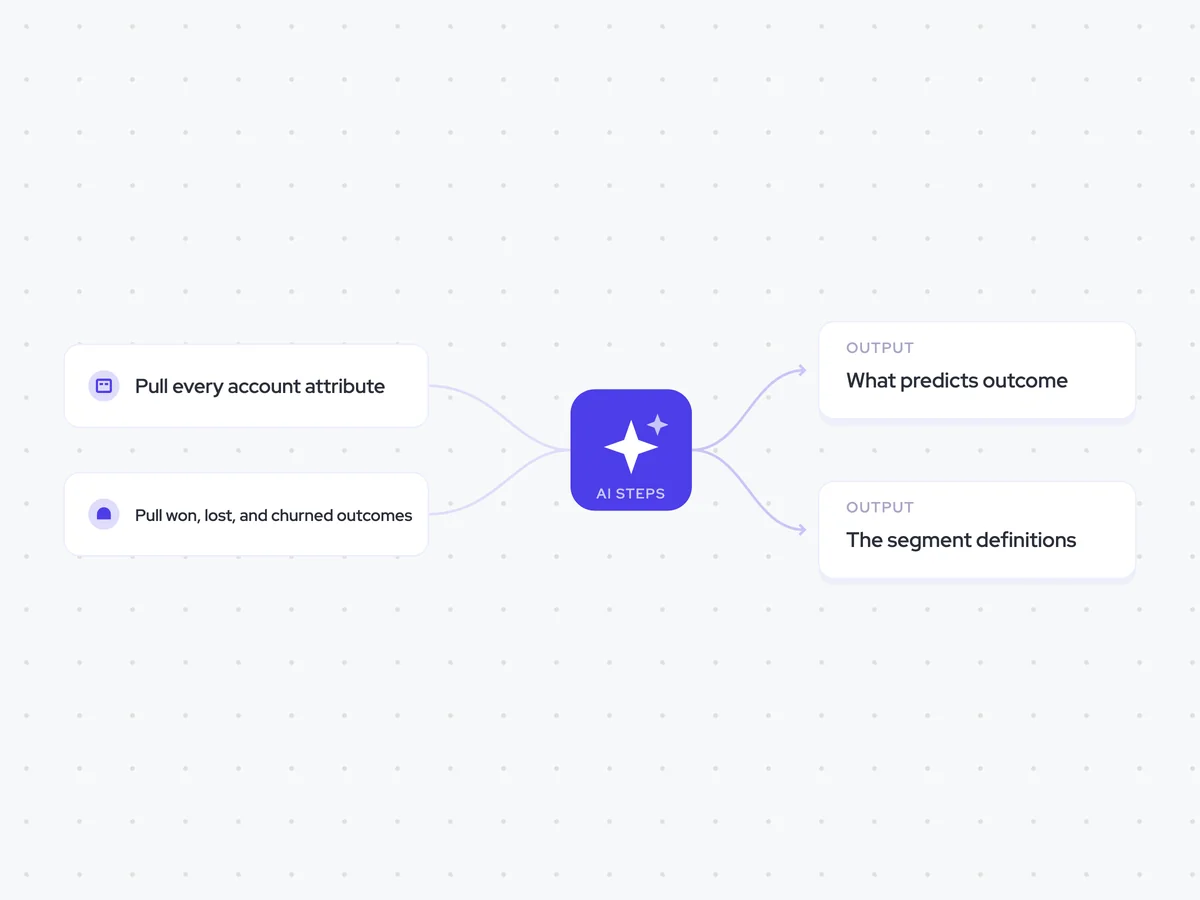
Pull every account attribute
Next, the agent pulls every attribute held on each account. Starting with the full set lets it find which attributes predict outcomes, rather than only checking the criteria already used in your segment definitions.
- Fields: Every attribute held on the account
- Selection: Do not limit the lookup to attributes used in the current segments
Pull won, lost, and churned outcomes
To match those account attributes with real outcomes, the agent pulls won, lost, and churned records together. Including churn shows where a segment may win initially but fail to retain customers.
- Include: Won and lost outcomes
- Include: Churned outcomes
Find the attributes that predict outcomes
Using the account attributes and outcomes, the agent ranks each attribute by how well it predicts win rate and retention. It includes the weak attributes as well, so RevOps can see which familiar criteria do not explain the outcome.
Rank the account attributes by how well each one predicts win rate and retention.
Input: every attribute held on the accounts, together with the won, lost, and churned outcomes linked to those accounts.
- Compare each attribute with win rate and retention.
- Rank the attributes from strongest to weakest based on how well they predict those outcomes.
- Report the weak attributes as well as the strong ones.
- Describe whether each attribute predicts win rate, retention, or both.
Return a ranked list of the attributes, showing how well each predicts win rate and retention.
Define the customer segments
From the ranked attributes, the agent clusters the customer base around the characteristics that predict winning and retention. It names each segment by the attributes that define it, rather than by company size.
Cluster the customer base using the account attributes that predict win rate and retention.
Input: the customer accounts and the ranked attributes from the previous step.
- Build the segments around the attributes shown to predict win rate, retention, or both.
- Do not use an attribute simply because it is a common segmentation criterion.
- Name each segment by the attributes that define it, not by company size.
- State the defining attributes for each segment.
Return the segment definitions, with a name and defining attributes for each segment.
Create the segment model report
Finally, the agent creates a report containing the segment model. It creates one record for each strategy refresh, so RevOps can compare this year’s definitions with last year’s outcomes.
- Creates: The segment model
- Records: One separate record for each strategy refresh
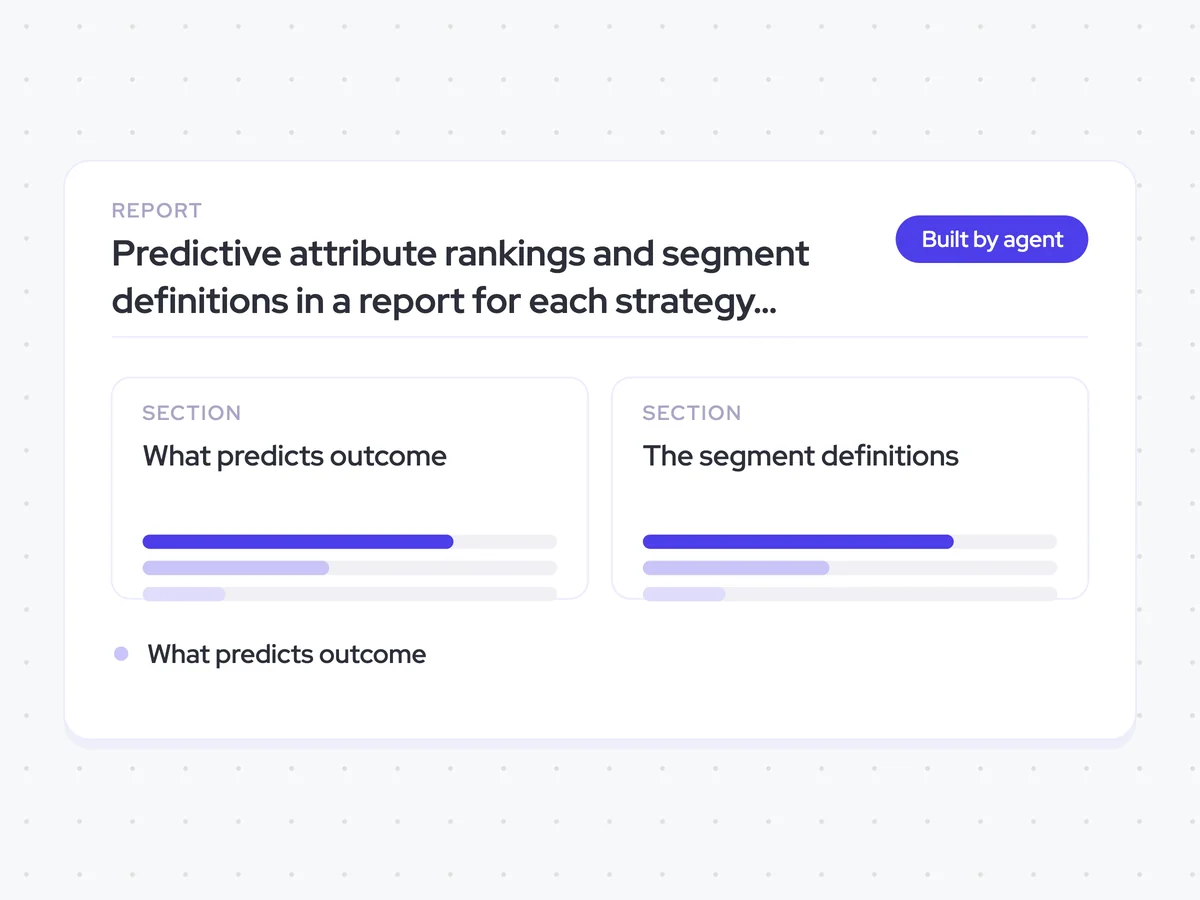
Predictive attribute rankings and segment definitions in a report for each strategy refresh
Get a segment model built from the account attributes that predict win rate and retention. Each refresh has its own report record, giving RevOps the current segment definitions alongside the earlier models and their outcomes.
- For RevOps: Use the ranked attributes to see what predicts winning and retention, then compare each year’s segment definitions with the outcomes that followed.
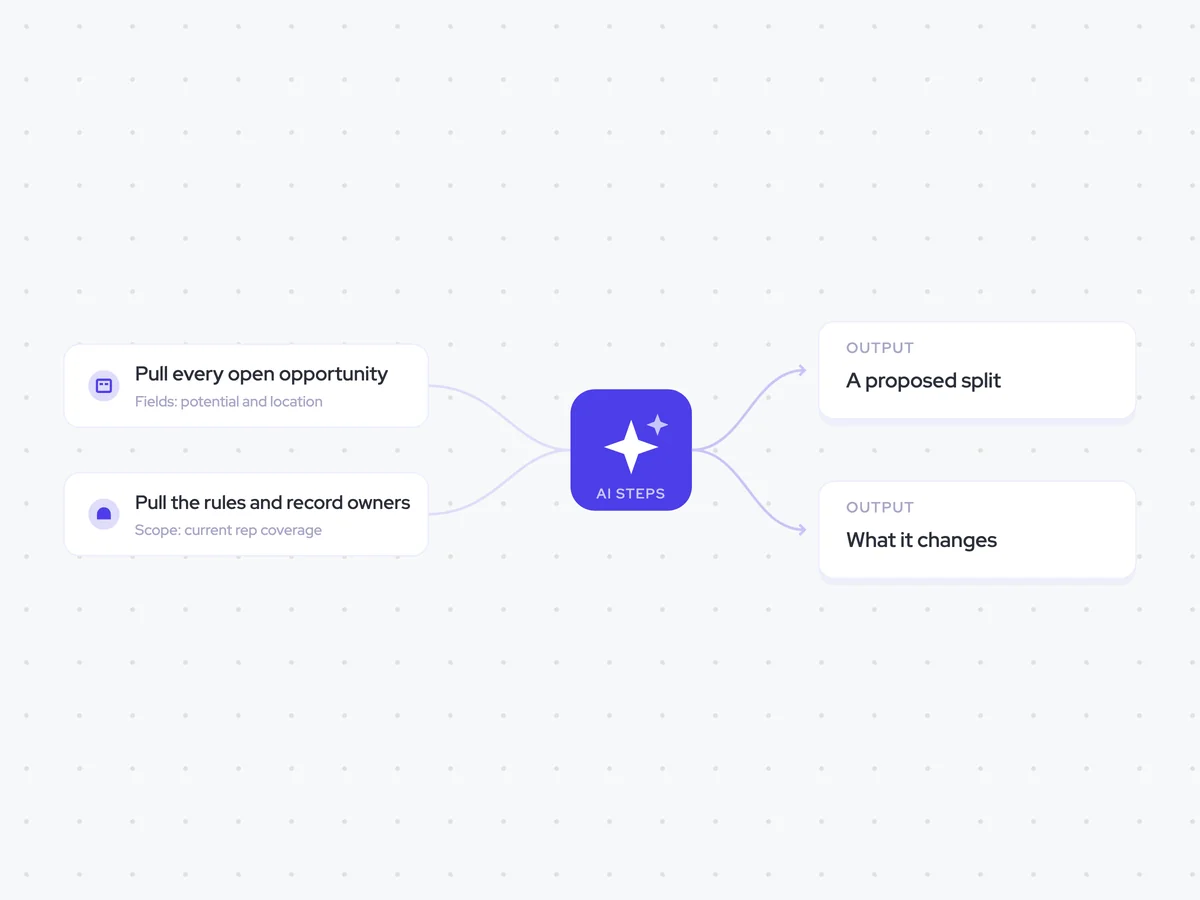
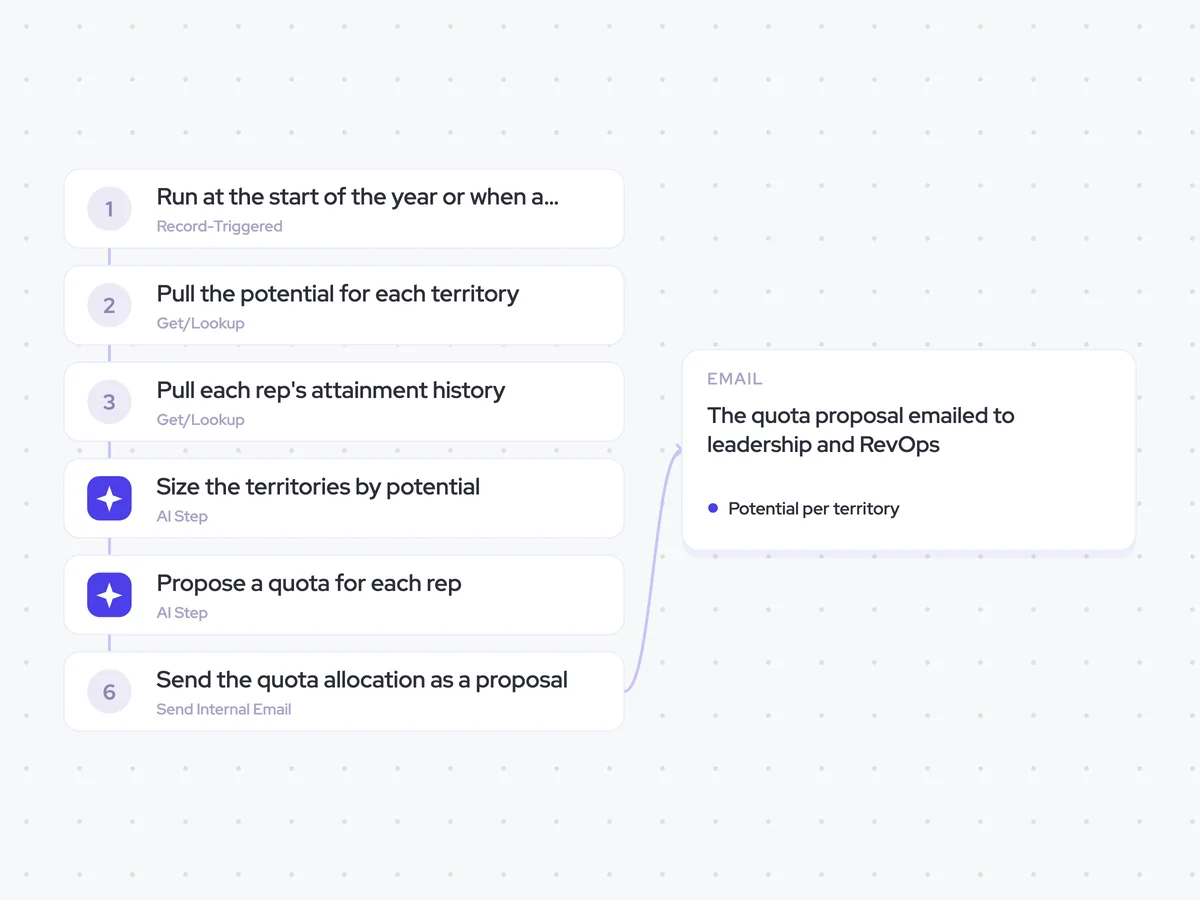
AI Agents that pair well
Same data, different jobs. Run them together for a fuller picture.

Learn more about GTM & Revenue Operations
RevOps Lab Podcast


50+ Free GTM & RevOps Cheat Sheets

Free RevOps Community (1k+ members)
.webp)