
Objection Tracking Agent
Record every objection in the buyer’s own words, classify it, and keep track of the ones that are still open as the deal progresses.
- Trigger: a call transcript finishes processing
- AI steps: classify each objection, then find which ones are still open
- Output: the updated objection register emailed to the rep
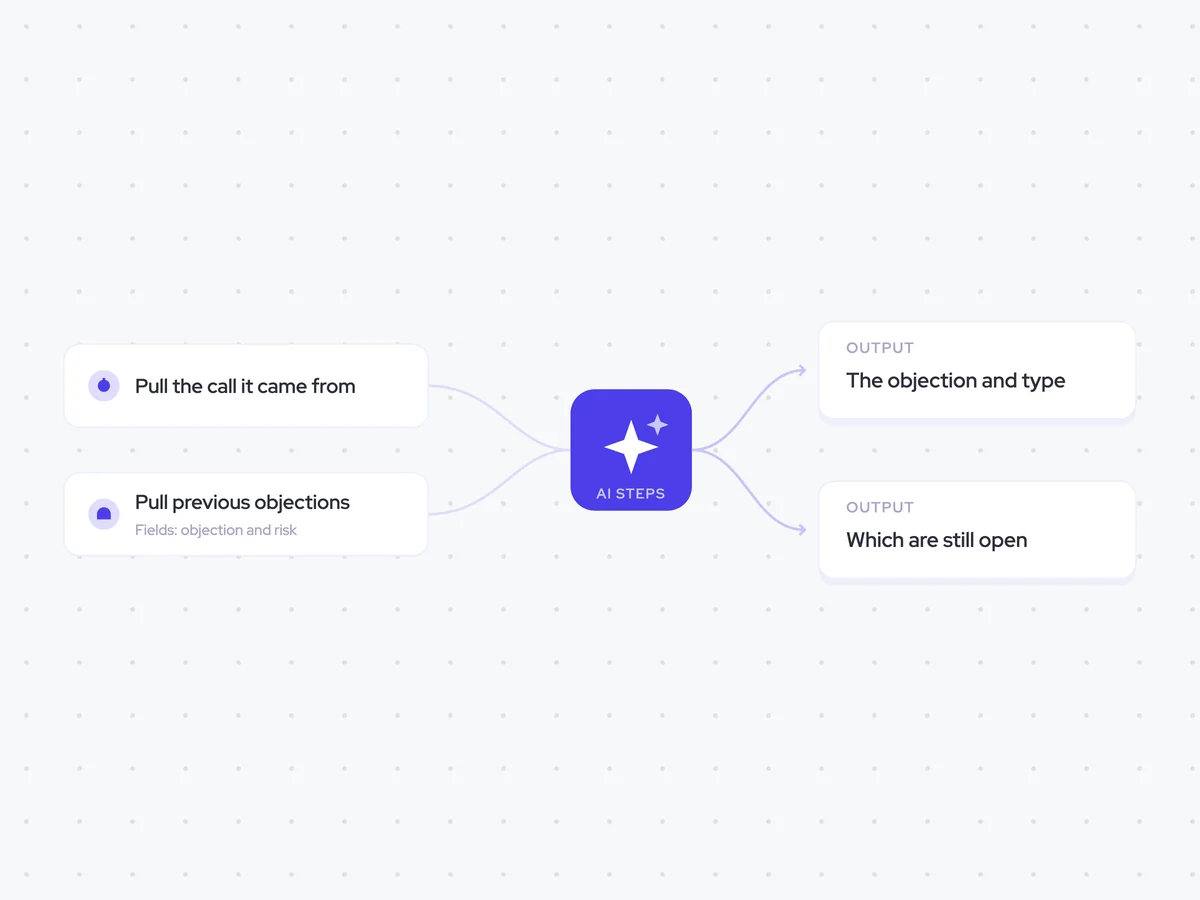
Agent breakdown
A blueprint to adapt, not a fixed recipe. Set the trigger, thresholds, and methodology that fit your team, and each step builds on the last, using the conversation and CRM context you already capture.
Run once the call transcript is ready
The agent runs as soon as a call transcript finishes processing. It records every objection from the call, including those the rep answered on the spot, so the deal keeps a complete history.
- Trigger: A call transcript finishes processing
- Include: Every objection, whether it was answered on the call or not
Pull the call it came from
Next, the agent pulls the transcript that triggered the workflow and keeps each objection exactly as the buyer said it. The original wording matters because objections that sound similar, such as price and budget, can need different answers.
- Source: The call transcript that triggered the workflow
- Wording: Keep each objection in the buyer’s own words
Pull previous objections
To spot repeat objections, the agent checks the opportunity’s objection and risk fields alongside earlier call transcripts. This shows whether the buyer has raised the same concern before or whether it is new to the deal.
- Fields: Objection and risk
- Calls: Past transcripts
Classify the objection
The agent records each objection in the buyer’s own words and classifies it as price, product, timing, authority, or risk. It also compares the objection with the deal’s earlier objections to identify whether it is new or a repeat.
Find and classify every objection raised by the buyer on the latest call.
Input: the latest call transcript, the opportunity’s objection and risk fields, and past call transcripts for the deal.
- Record each objection exactly as the buyer said it.
- Classify it as price, product, timing, authority, or risk.
- Mark whether it is new or a repeat of an objection raised earlier in the deal.
- Include objections the rep answered during the call.
Rules: do not rewrite, summarize, or soften the buyer’s wording. Do not infer objections that the buyer did not state.
Return a list with the buyer’s wording, objection type, and whether it is new or a repeat.
Find what is still open
For every objection in the deal register, the agent checks the transcripts and marks it answered or still open. A repeated objection stays open unless the conversations show that somebody answered it.
Update the deal’s objection register and identify which objections are still open.
Input: the classified objections from the latest call, the existing objection register, and the call transcripts for the deal.
- Review every objection in the register.
- Mark each one answered or still open.
- Keep an objection open if it was raised more than once but never answered.
- Preserve the buyer’s original wording and the objection type.
Rules: only mark an objection answered when the transcripts show that somebody answered it. Do not treat repetition as an answer.
Return the updated objection register with the buyer’s wording, objection type, and status for every objection.
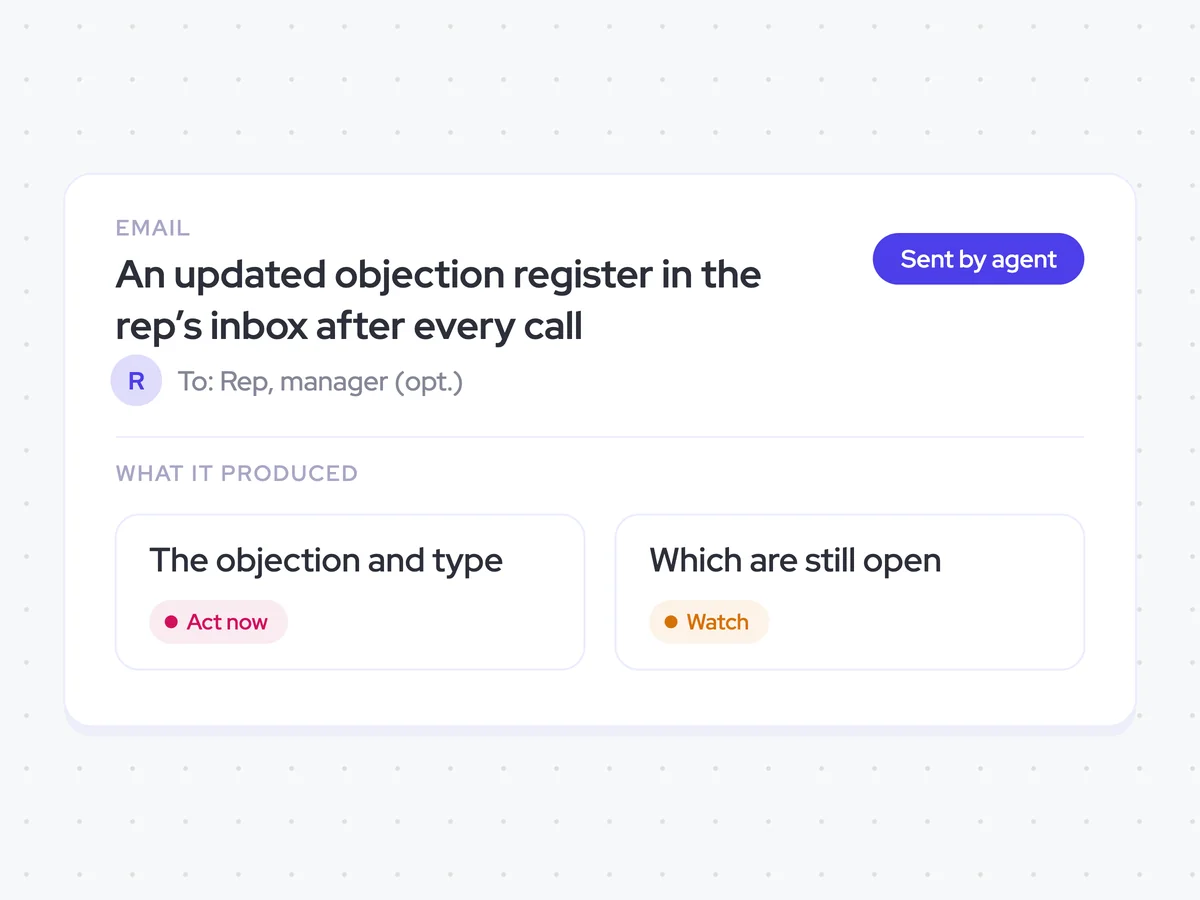
Nudge the rep
Finally, the agent emails the rep a nudge showing which objections are still open, together with the updated register. It keeps one register for the whole deal, so an objection raised during discovery remains visible when the deal reaches close.
- Recipient: The rep on the deal
- Optional recipient: The rep’s manager
- Scope: One objection register per deal
An updated objection register in the rep’s inbox after every call
See every objection in the buyer’s own words, how it was classified, and whether it has been answered. The register stays with the deal across calls, so objections raised earlier remain visible until somebody answers them.
- For reps: Check the open objections before the next buyer conversation and prepare the right response.
- For managers: If included, see which objections keep returning and which ones still need an answer.
AI Agents that pair well
Same data, different jobs. Run them together for a fuller picture.



Learn more about GTM & Revenue Operations
RevOps Lab Podcast


50+ Free GTM & RevOps Cheat Sheets

Free RevOps Community (1k+ members)
.webp)