
Multi-threading Agent
Check whether a deal reaching proposal still depends on one engaged contact, flag the stakeholder gap, and suggest who the rep should bring into the deal next.
- Trigger: a deal reaches proposal
- AI steps: check the stakeholder gap and pick up to three contacts to engage
- Output: a task with the suggested contacts assigned to the deal owner
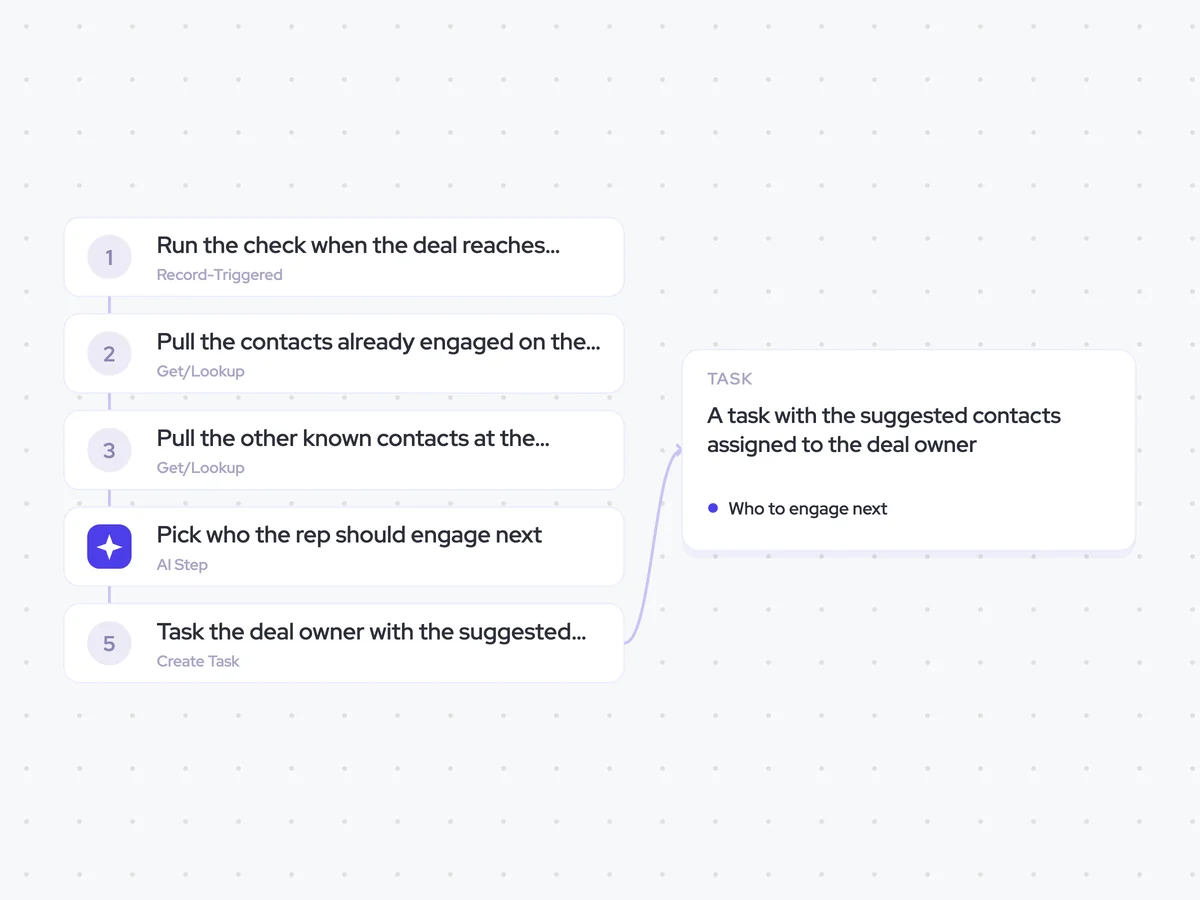
Agent breakdown
A blueprint to adapt, not a fixed recipe. Set the trigger, thresholds, and methodology that fit your team, and each step builds on the last, using the conversation and CRM context you already capture.
Run the check when the deal reaches proposal
When an opportunity reaches proposal, the agent checks whether the rep is still working through a single engaged contact. Proposal is late enough for that gap to matter, but early enough to bring another stakeholder into the deal before the proposal is sent.
- Trigger: An opportunity reaches proposal
- Exclude: Opportunities at earlier stages, where a single engaged contact is still normal
Pull the contacts already engaged on the deal
Next, the agent pulls the contacts who have replied to the rep or joined a call on this deal. It does not count someone as engaged just because they were copied into an email thread, so the check reflects who is actually involved.
- Include: Contacts who have replied or joined a call
- Exclude: Contacts who were only copied into an email thread
Pull the other known contacts at the account
The agent then pulls every known contact at the account who has not been approached on this deal. This includes people connected to earlier opportunities, giving it a wider list of possible stakeholders to consider.
- Include: Known contacts who have not been approached on this deal
- Include: Contacts from earlier opportunities at the account
Pick who the rep should engage next
With the two contact lists, the agent checks whether the deal depends on a single engaged contact and names up to three other people worth bringing in. For each suggestion, it explains why that person matters to the deal and leaves out anyone already engaged or anyone who declined a meeting this quarter.
You are checking for stakeholder gaps on an opportunity that has reached proposal and choosing who the rep should engage next.
Input: the contacts already engaged on the deal and every other known contact at the account, including contacts from earlier opportunities.
- State whether the deal currently depends on a single engaged contact.
- Name up to three other contacts at the account worth engaging on this deal.
- For each contact, explain in plain language why that person matters to the deal.
Rules: treat a contact as engaged only if they have replied or joined a call. Being copied into an email thread does not count. Skip anyone already engaged and anyone who has declined a meeting this quarter. Use only the contact information provided.
Return the stakeholder gap, followed by up to three suggested contacts and the reason for engaging each one.
Task the deal owner with the suggested contacts
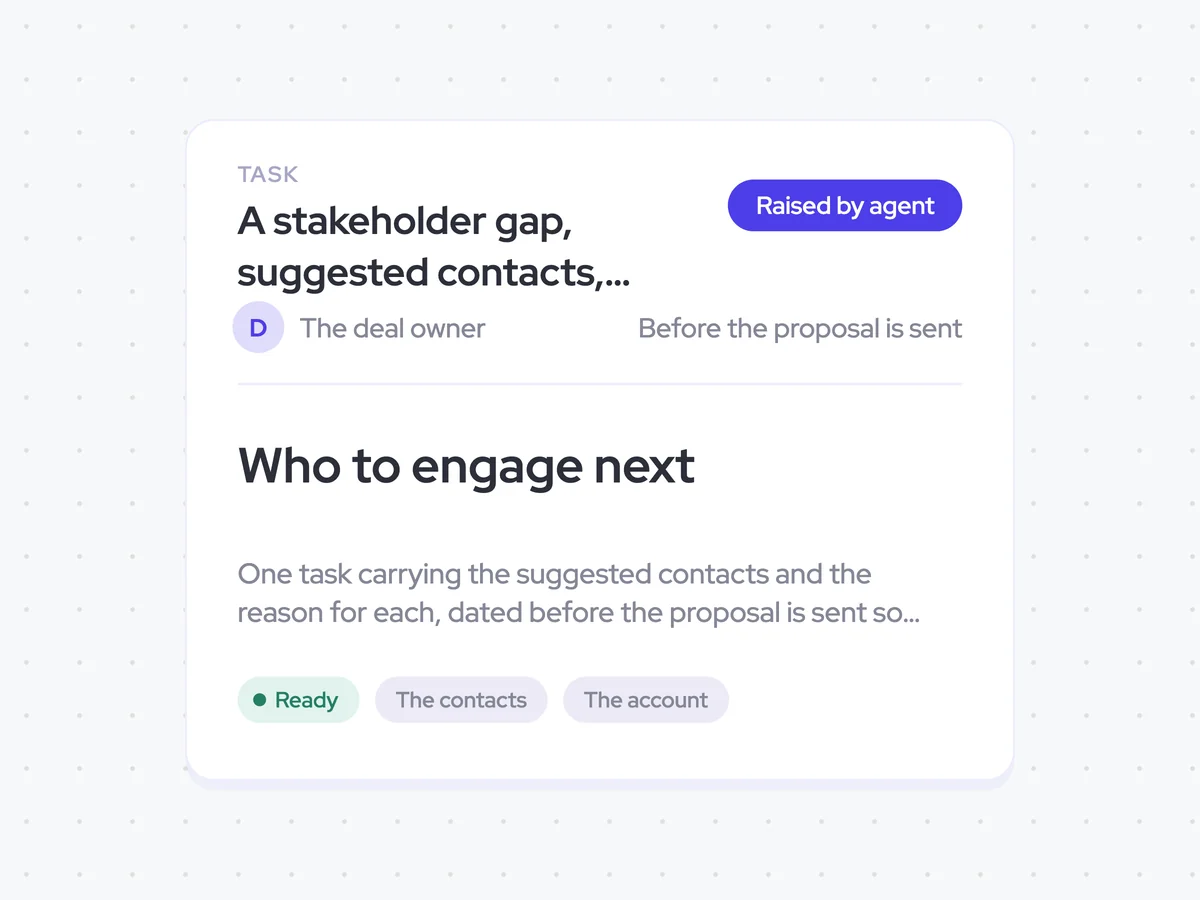
Finally, the agent creates one task for the deal owner with the suggested contacts and the reason for engaging each one. It dates the task before the proposal is sent, while the rep still has time to bring those people into the deal.
- Assigned to: The deal owner
- Due: Before the proposal is sent
A stakeholder gap, suggested contacts, and reasons in a task for the deal owner
See when a deal reaching proposal still depends on one engaged contact, along with up to three people at the account worth bringing in next. The deal owner receives one task with each suggested contact, why they matter, and a due date before the proposal is sent.
- For reps: Review the suggested contacts and bring the right stakeholders into the deal before sending the proposal.
AI Agents that pair well
Same data, different jobs. Run them together for a fuller picture.



Learn more about GTM & Revenue Operations
RevOps Lab Podcast


50+ Free GTM & RevOps Cheat Sheets

Free RevOps Community (1k+ members)
.webp)