
Loss Reason Agent
Separate the reasons you lose to each named competitor, check the rep's stated reason against the calls, and share recurring patterns with sales and product.
- Trigger: a deal is lost with a rival named
- AI steps: find the real loss reason, then compare it with previous losses to that rival
- Output: deal-level loss reasons and recurring competitor patterns shared in Slack
Agent breakdown
A blueprint to adapt, not a fixed recipe. Set the trigger, thresholds, and methodology that fit your team, and each step builds on the last, using the conversation and CRM context you already capture.
Run when a deal is lost to a named rival
The agent runs when an opportunity is marked lost and a competitor has been named. It leaves losses without a named competitor for the general win-loss agent, so this analysis stays specific to each rival.
- Trigger: An opportunity is marked lost with a competitor named
- Include: Losses to a named rival
- Exclude: Losses without a named rival
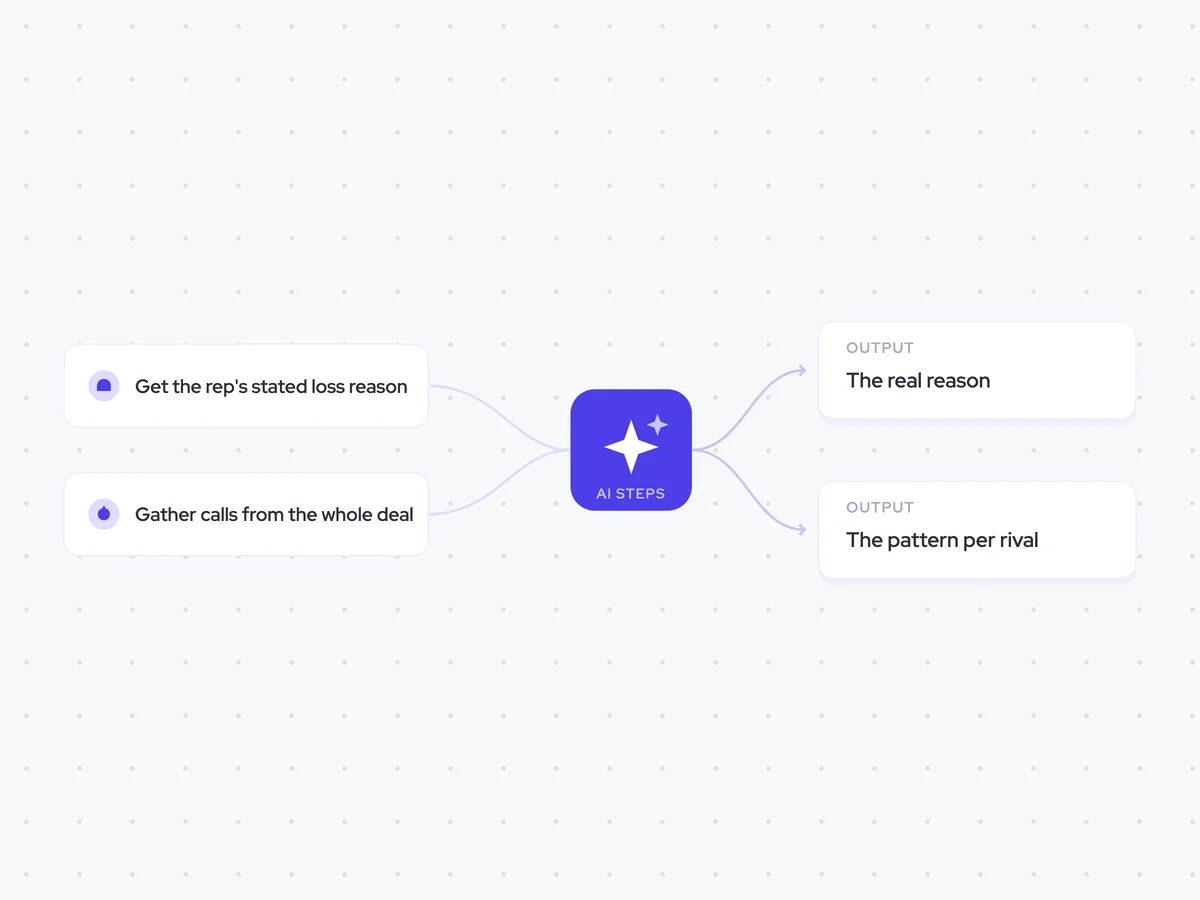
Get the rep's stated loss reason
Next, the agent pulls the competitor, stage, and loss reason from the opportunity. The stated reason captures what the rep entered, which the agent will compare with what buyers said throughout the deal.
- Fields: Named rival, stage, and stated loss reason
- Source: The lost opportunity record
Gather calls from the whole deal
The agent pulls calls from the whole deal, not just the final conversation. The reason a buyer chose a competitor is often visible weeks before the opportunity closes, so the earlier calls matter when checking the stated reason.
- Include: Calls linked to the opportunity
- Time range: The whole deal
Find the real reason the deal was lost
Using the calls from across the deal, the agent identifies the reason the buyer chose the named competitor and quotes the moment that supports it. It then compares that reason with what the rep entered on the opportunity and points out any difference.
Find the real reason this opportunity was lost to the named competitor.
Input: the named rival, the opportunity stage, the rep's stated loss reason, and calls from the whole deal.
- Identify the reason the buyer chose the competitor.
- Quote the moment in the calls that best supports that reason.
- Name the speaker and the call where the quote appeared.
- Compare the real reason with the rep's stated loss reason.
- Say clearly when the two reasons differ.
Rules: base the reason on evidence from the calls. Do not infer a reason that the conversations do not support.
Return the real loss reason, the supporting quote and source, the stated loss reason, and whether they differ.
Find the recurring pattern for that rival
The agent compares this loss with previous losses to the same competitor. It groups the evidence by rival and names any loss reason that keeps recurring, instead of pooling different competitors into one report.
Compare this loss analysis with previous losses to the same competitor.
Input: the named rival, the real reason for the current loss, its supporting evidence, and the previous loss analyses for that competitor.
- Group the losses for this competitor by reason.
- Name any reason that recurs across the losses.
- Show which losses support each recurring reason.
- Keep this competitor's pattern separate from losses to other rivals.
Rules: only call a reason recurring when it appears in previous losses to this same competitor. Keep the wording grounded in the loss analyses.
Return the competitor, the current loss reason, and the recurring reasons found across losses to that rival.
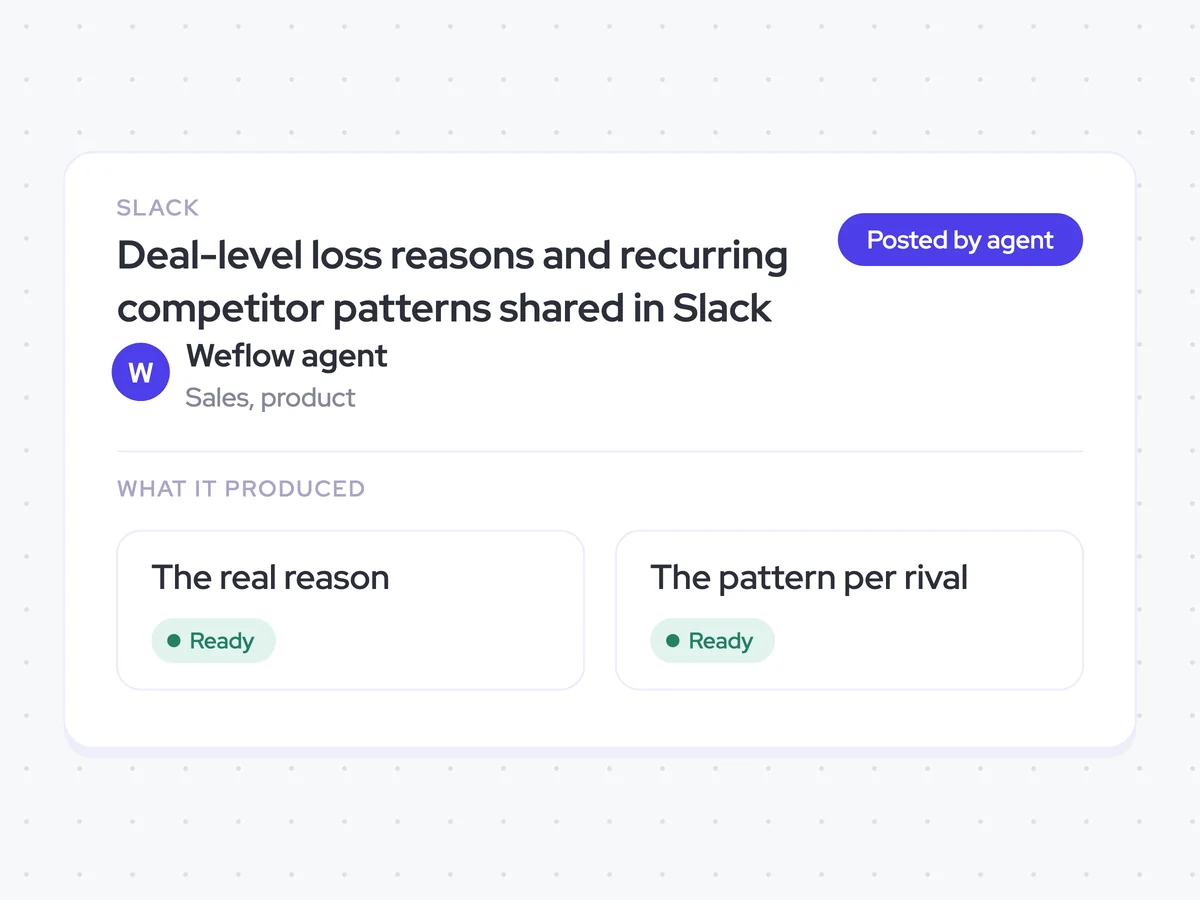
Share the loss analysis with sales and product
Finally, the agent shares the deal-level loss reason and the recurring pattern for that competitor in Slack. Sales and product can use the same evidence to adjust sales conversations, enablement, and product feedback.
- Destination: Slack
- Recipients: Sales and product
- Content: The real loss reason, supporting evidence, and recurring pattern for the named rival
Deal-level loss reasons and recurring competitor patterns shared in Slack
See why buyers chose each named competitor, where that reason differs from what the rep entered, and which reasons keep recurring for the same rival. Sales leaders get deal-level evidence without pooling every competitor into one loss report, while sales and product receive the analysis in Slack.
AI Agents that pair well
Same data, different jobs. Run them together for a fuller picture.


Learn more about GTM & Revenue Operations
RevOps Lab Podcast


50+ Free GTM & RevOps Cheat Sheets

Free RevOps Community (1k+ members)
.webp)