
Kickoff Prep Agent
Prepare the kickoff agenda and give your Customer Success team a clear brief on who they are about to meet, what was promised during the deal, and anything they should handle carefully.
- Trigger: a kickoff meeting is booked
- AI steps: write the kickoff agenda and internal brief from the closing calls
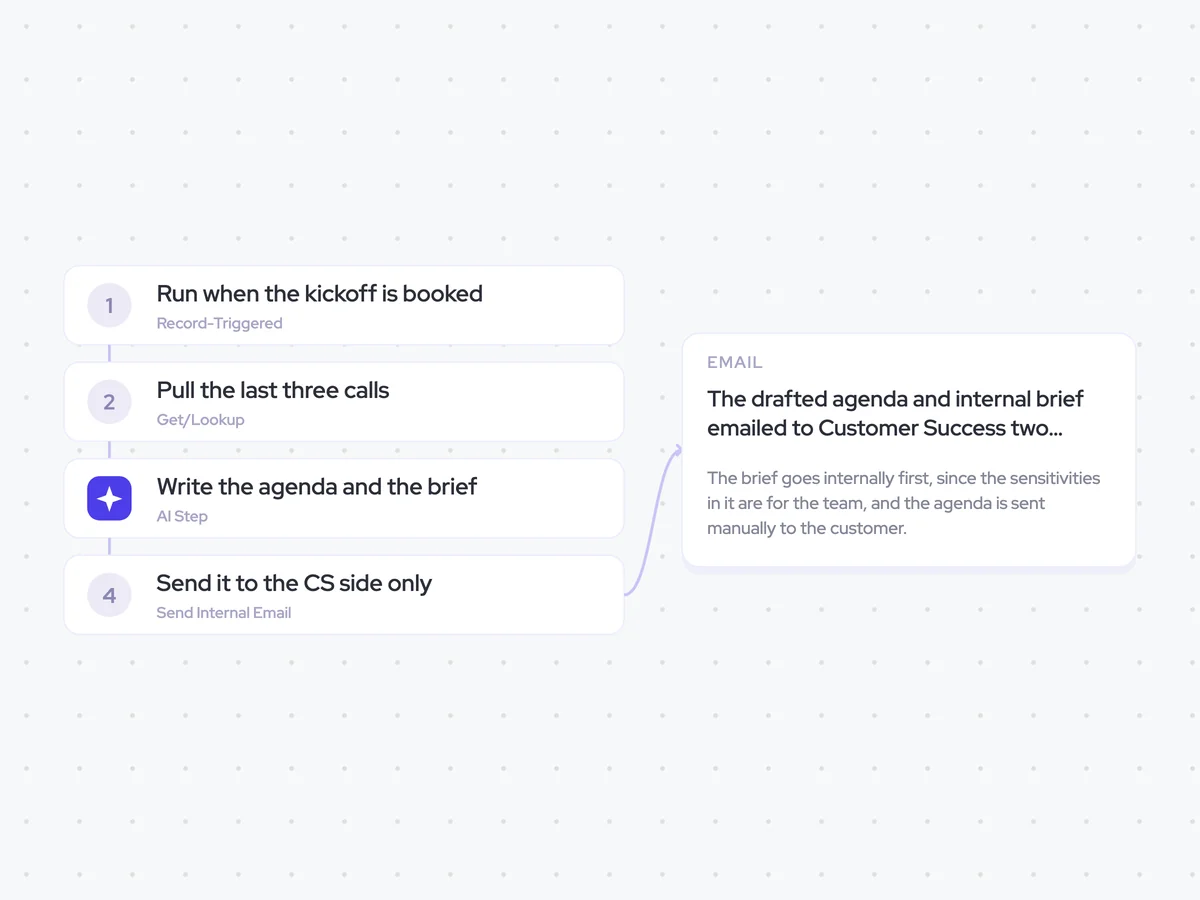
- Output: the drafted agenda and internal brief emailed to Customer Success two days before kickoff
Agent breakdown
A blueprint to adapt, not a fixed recipe. Set the trigger, thresholds, and methodology that fit your team, and each step builds on the last, using the conversation and CRM context you already capture.
Run when the kickoff is booked
The agent starts as soon as the kickoff meeting is booked. Running it at booking gives the CS team time to review and change the agenda before it reaches the customer.
- Trigger: A kickoff meeting is booked
- Timing: As soon as the booking is created
Pull the last three calls
Next, the agent pulls the last three calls from the deal. These closing conversations show what the customer negotiated hard, what the team conceded, and what the customer was still unsure about when they signed. It can also pull the onboarding plan created by the other agent.
- Includes: The negotiation
- Excludes: Internal reviews
- Optional context: The onboarding plan created by the other agent
Write the agenda and the brief
The agent writes a kickoff agenda for the customer and a separate internal brief for the CS team. The agenda covers the kickoff discussion, while the brief explains the stakeholders involved, what was promised during the deal, and anything the team should handle carefully.
Write a kickoff agenda for this customer and a short internal brief for the Customer Success team.
Input: the last three calls from the deal, including the negotiation and excluding internal reviews, plus the onboarding plan if one was provided.
For the kickoff agenda:
- List the topics the team should cover with the customer.
- Reflect the priorities, commitments, and open questions discussed during the closing calls.
- Keep the agenda suitable to share with the customer.
For the internal brief:
- Summarize the stakeholders and who the CS team is about to meet.
- List what was promised or conceded during the deal.
- Explain what the customer negotiated hard and what they were still unsure about when they signed.
- Keep sensitive details in the internal brief and out of the customer agenda.
Rules: use only the information in the calls and onboarding plan. Do not invent stakeholders, promises, concerns, or agenda topics that the source material does not support. Keep the brief separate from the agenda.
Return the kickoff agenda first, followed by the internal brief.
Send it to the CS side only
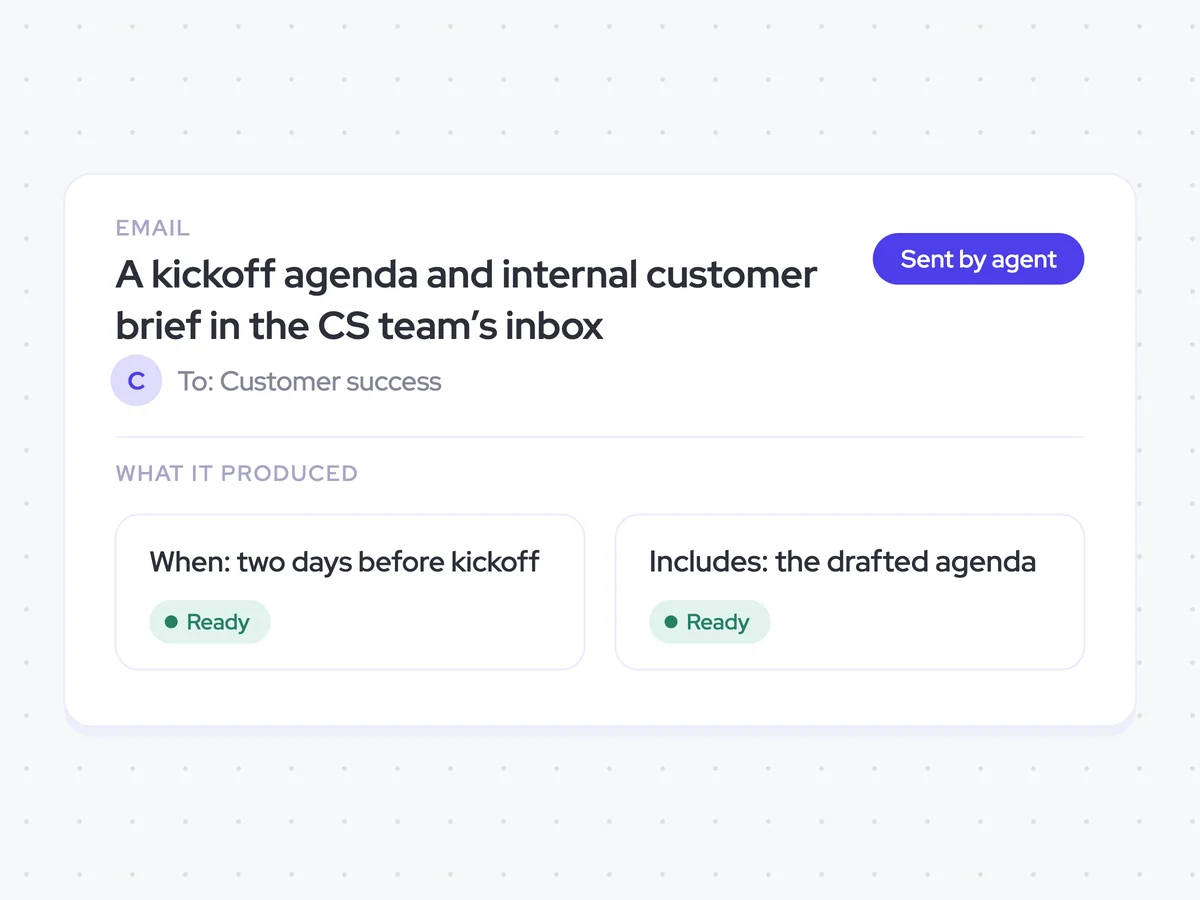
The agent emails the drafted agenda and internal brief to Customer Success two days before the kickoff. Nothing goes to the customer automatically: the brief stays internal, and the CS team reviews and sends the agenda manually.
- When: Two days before kickoff
- Includes: The drafted agenda
- Brief: Internal only
A kickoff agenda and internal customer brief in the CS team’s inbox
Get the drafted kickoff agenda and a separate internal brief two days before the meeting. The brief tells your CS team who they are about to meet, what was promised during the deal, and what they should handle carefully before sending the agenda to the customer.
- For Customer Success: Review the internal brief, adjust the agenda where needed, and send the agenda to the customer manually.
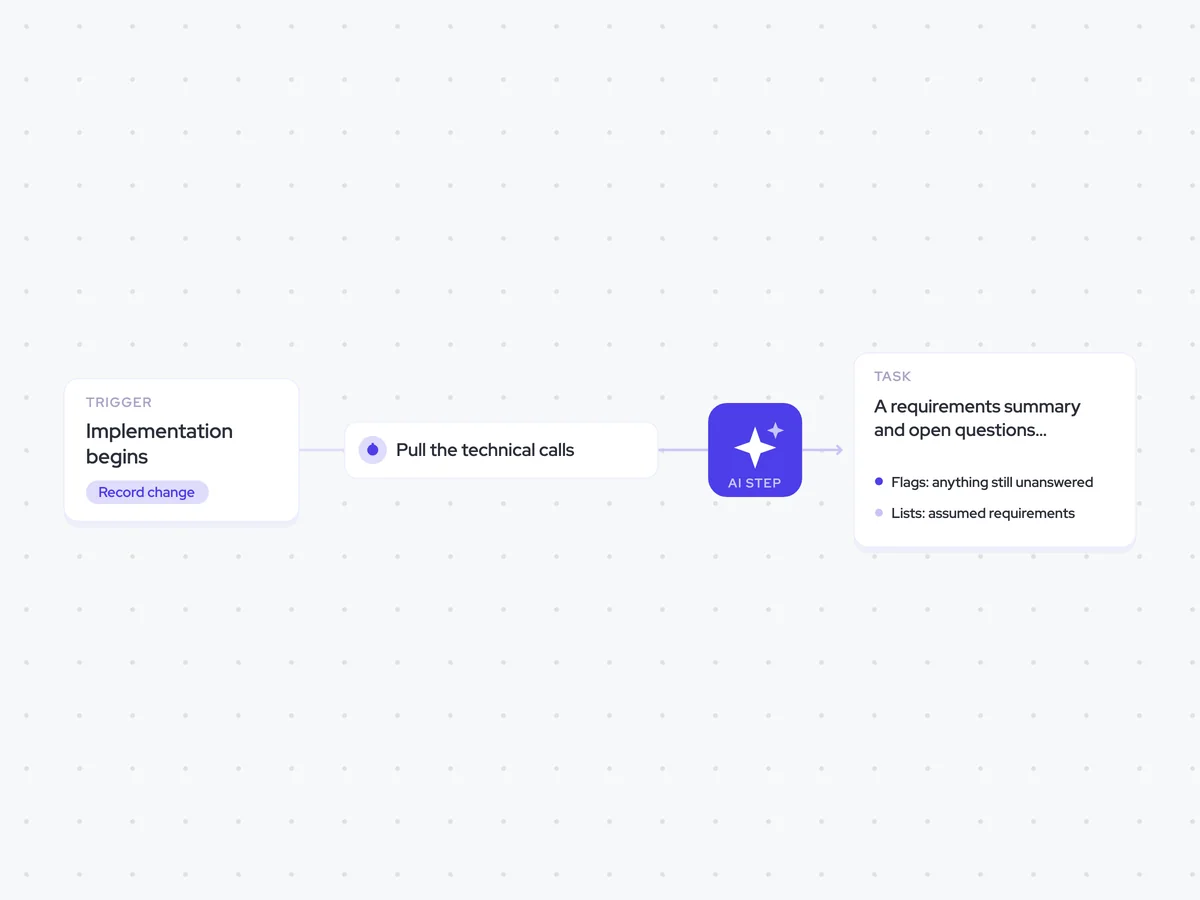
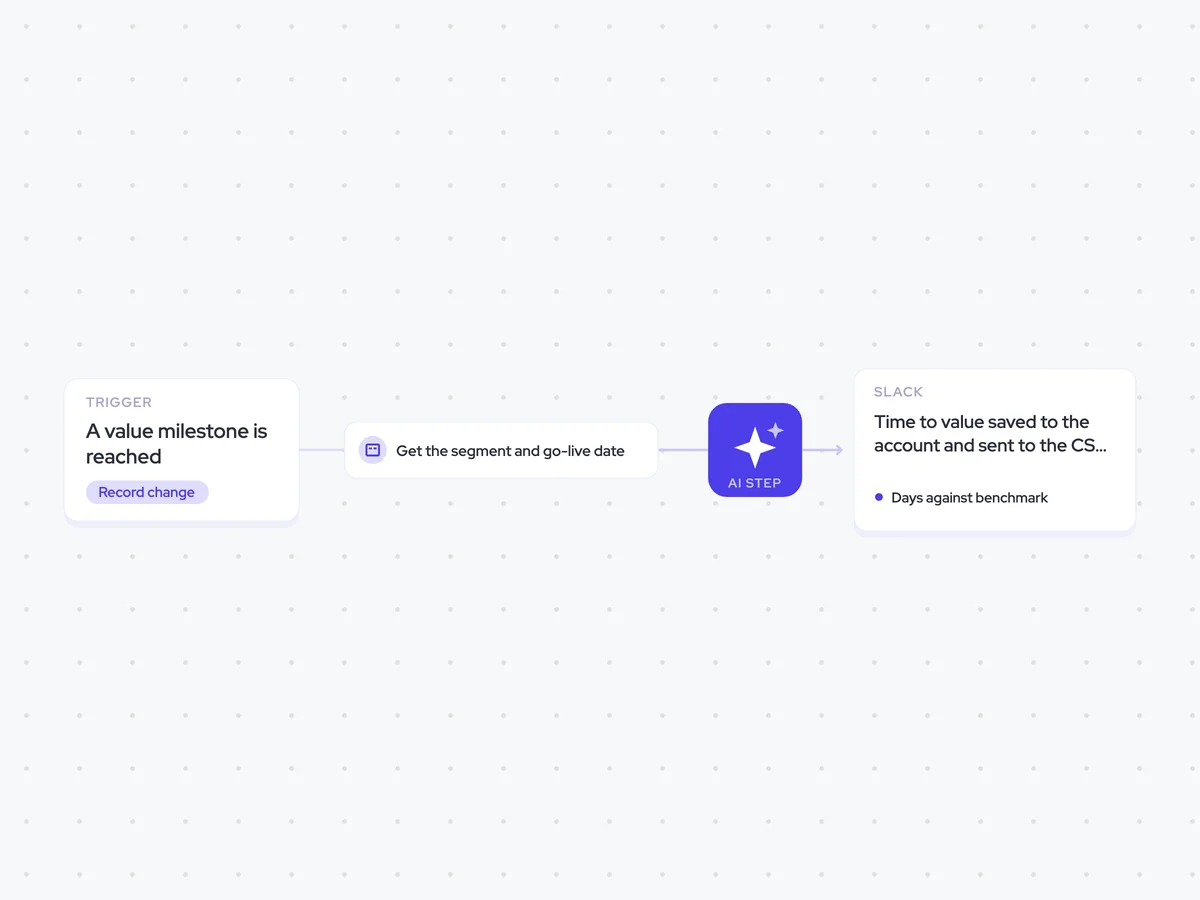
AI Agents that pair well
Same data, different jobs. Run them together for a fuller picture.


Learn more about GTM & Revenue Operations
RevOps Lab Podcast


50+ Free GTM & RevOps Cheat Sheets

Free RevOps Community (1k+ members)
.webp)