
Follow-up Email Agent
Draft the follow-up email in the rep’s own voice, quote the commitments made on the call, and leave it in their inbox to edit and send.
- Trigger: a sales or CS call ends and its transcript is ready
- AI steps: draft the follow-up from the transcript, deal context, and earlier emails
- Output: the draft emailed to the rep, never to the buyer
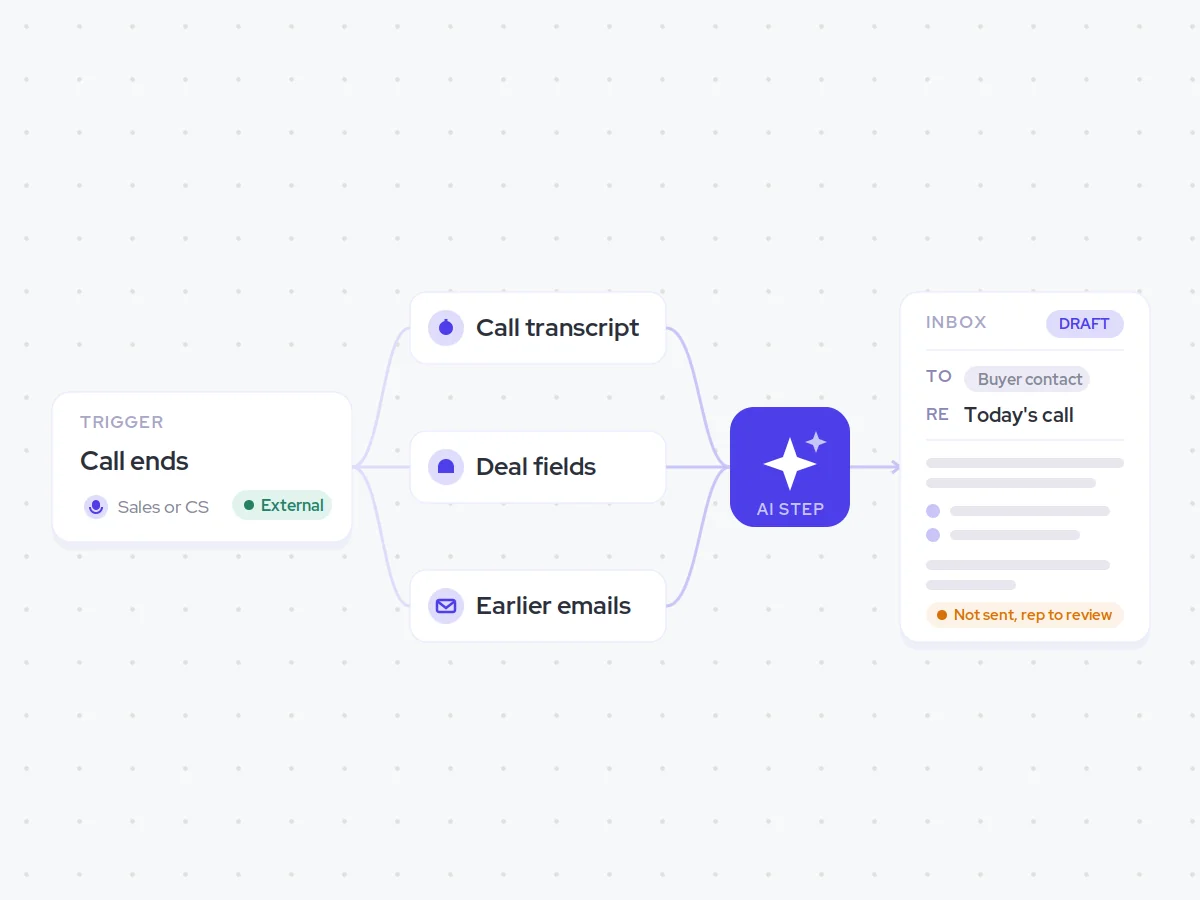
Agent breakdown
A blueprint to adapt, not a fixed recipe. Set the trigger, thresholds, and methodology that fit your team, and each step builds on the last, using the conversation and CRM context you already capture.
Run after the transcript is ready
Once the transcript is ready, the agent runs for the sales or CS call that just ended. Waiting for the transcript means the draft is based on what was actually agreed, rather than what was planned before the call.
- Trigger: A sales or CS call ends
- Condition: The call transcript is ready
Pull the call transcript
Next, the agent pulls the transcript from the call that triggered the workflow. It skips anything logged as an internal-only call, so reps only receive drafts for conversations with buyers or customers.
- Include: External calls only
- Exclude: Calls logged as internal-only
Get the deal and account context
The agent then pulls the deal and account context, along with the rep’s earlier emails on the deal. This gives the draft the information behind the conversation and a clear reference for how the rep usually writes.
- Pull: Deal and account context
- Context: The rep’s earlier emails on the deal
Draft the follow-up email
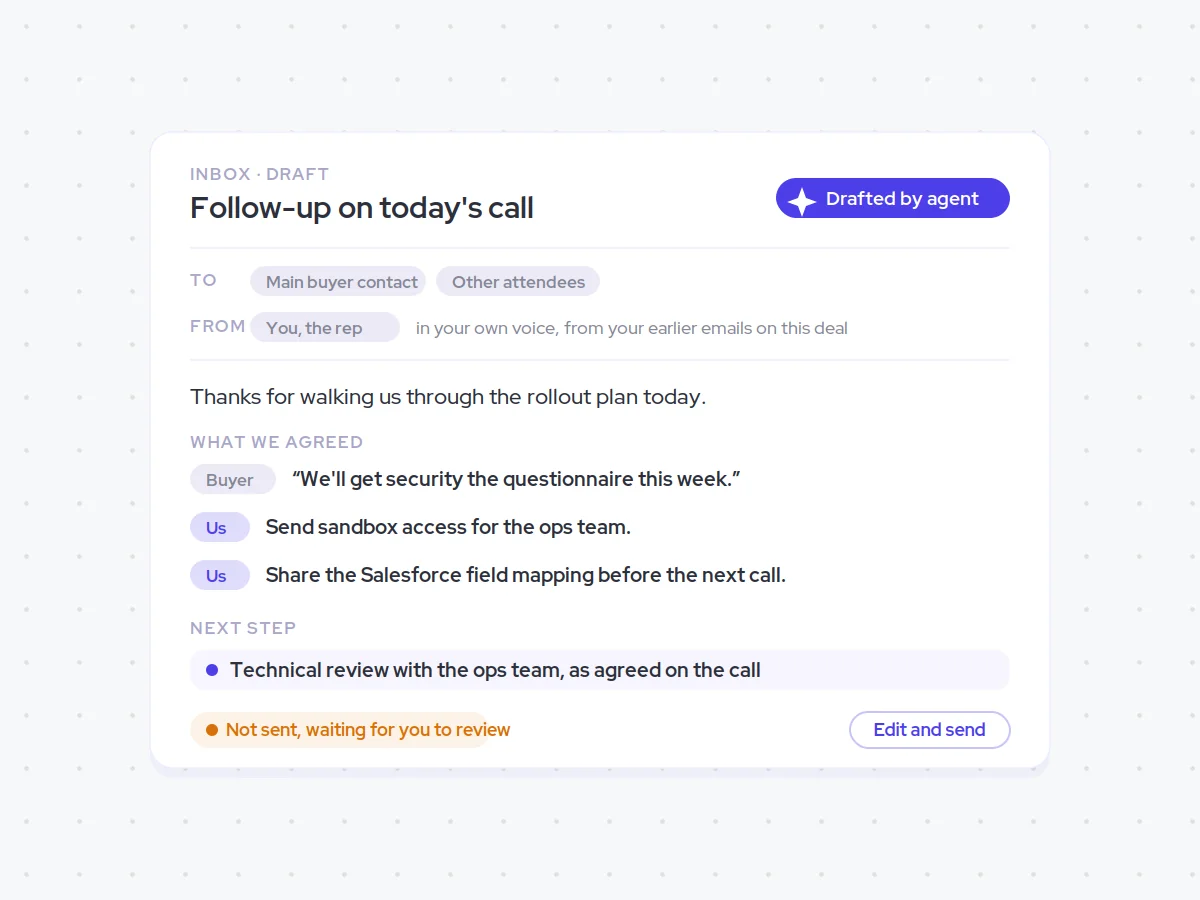
Using the transcript and deal context, the agent drafts a follow-up email in the rep’s own voice. It quotes each commitment made on the call, names the person who made it, and keeps the email focused on what both sides actually agreed.
Draft a follow-up email for the call that just ended, written in the rep’s own voice. Use the rep’s earlier emails on this deal as the reference for tone and wording.
Input: the call transcript, the deal and account context, and the rep’s earlier emails on the deal.
The email should:
- Quote or closely paraphrase each commitment made on the call.
- Name the person who made each commitment.
- State the agreed next step, if one was agreed on the call.
- Match the tone of the rep’s earlier emails on the deal.
Rules: keep the email under 150 words. Do not invent a commitment or next step that was not agreed on the call.
Return the subject line and the email body, ready to edit and send.
Send the draft to the rep
Finally, the agent emails the draft to the rep who ran the call. It arrives in their inbox ready to edit and send, but nothing reaches the buyer automatically, however confident the agent is in the wording.
- Recipient: The rep who ran the call
- Subject: Follow-up draft
- Sends externally: Never
A ready-to-send follow-up email in the rep’s inbox after every external call
Get a follow-up draft in your inbox after each external sales or CS call, written in your own voice and based on what was actually agreed. The draft quotes each commitment, names who made it, and leaves the final edit and send with you.
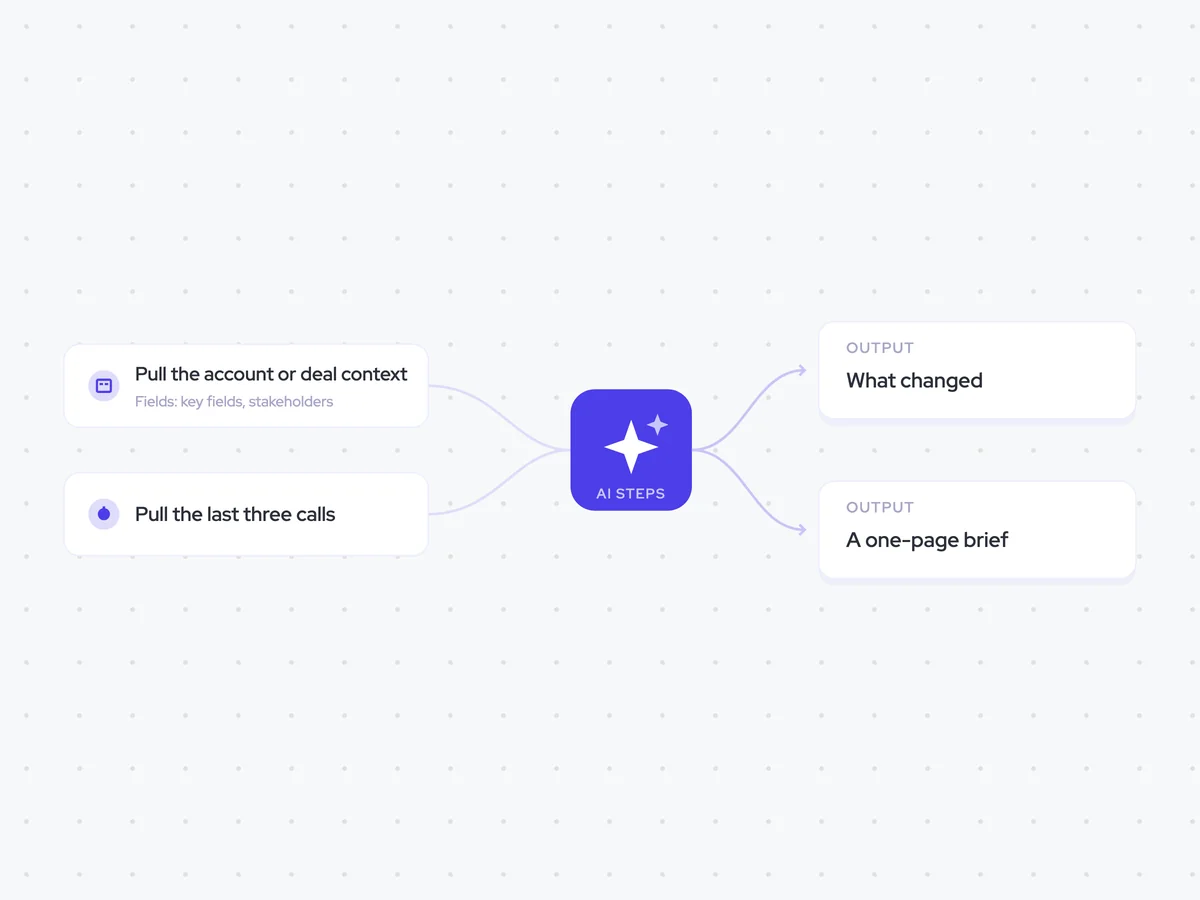
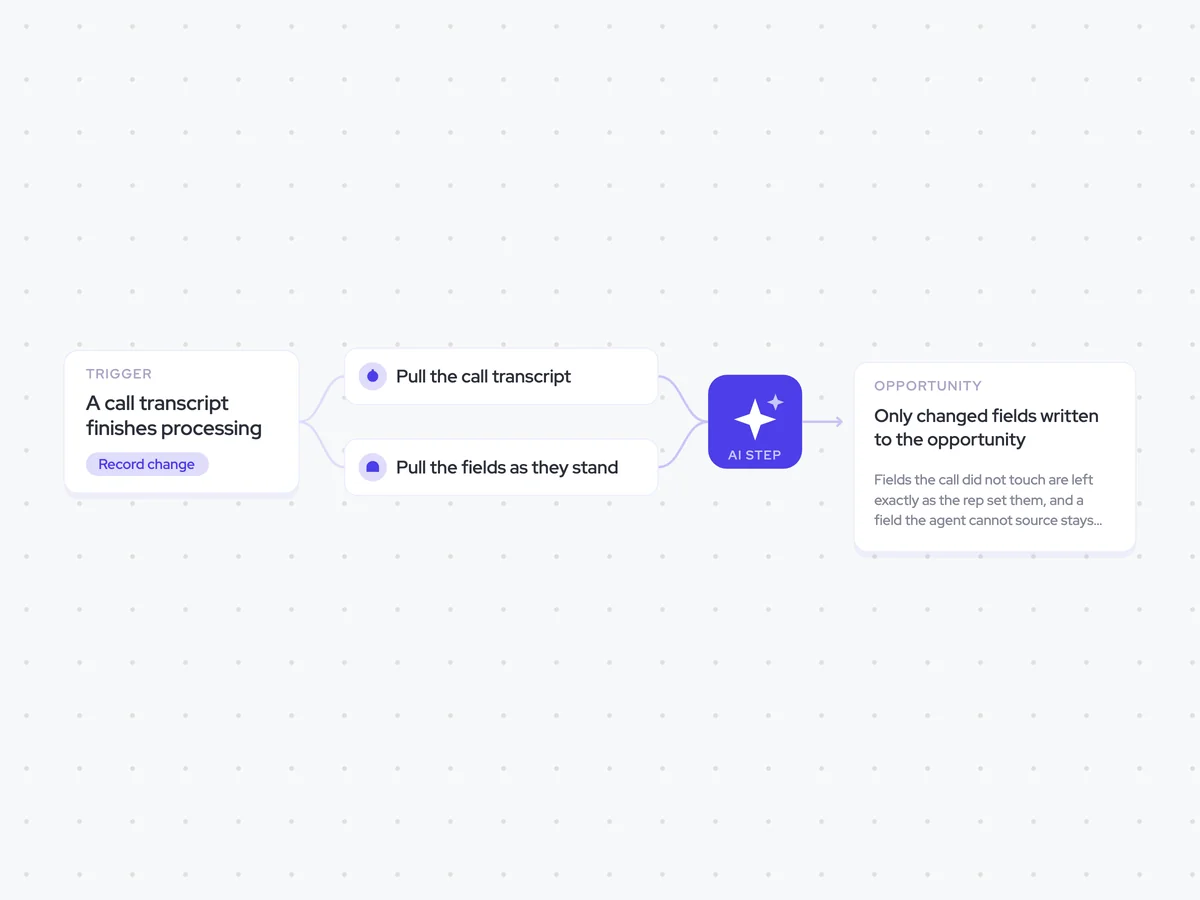
AI Agents that pair well
Same data, different jobs. Run them together for a fuller picture.


Learn more about GTM & Revenue Operations
RevOps Lab Podcast


50+ Free GTM & RevOps Cheat Sheets

Free RevOps Community (1k+ members)
.webp)