
Call Scoring Agent
Score every processed call against your methodology rubric, then give the rep one specific change that would most improve their next call.
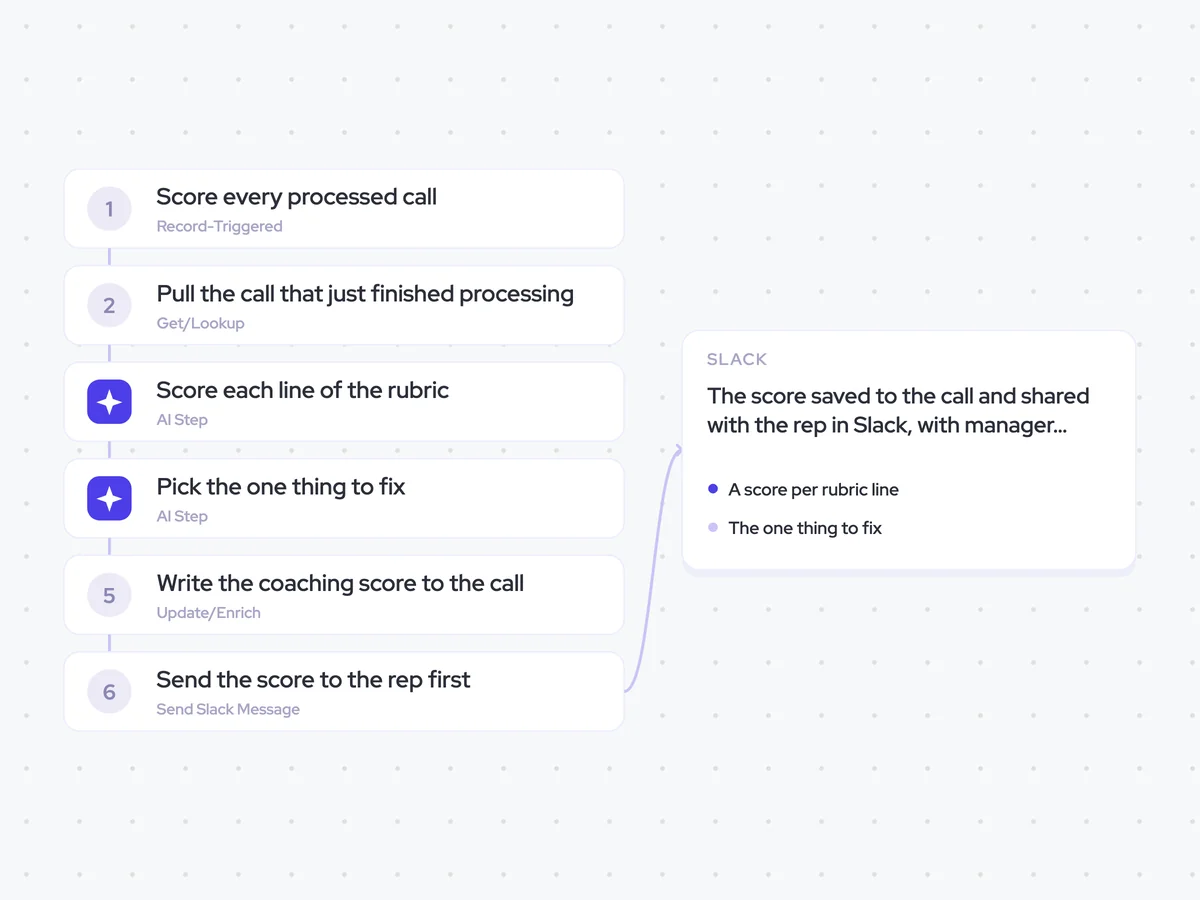
- Trigger: a call finishes processing
- AI steps: score the rubric, then pick the one thing to fix
- Output: the score saved to the call and shared with the rep in Slack, with manager escalation for consistently low scores
Agent breakdown
A blueprint to adapt, not a fixed recipe. Set the trigger, thresholds, and methodology that fit your team, and each step builds on the last, using the conversation and CRM context you already capture.
Score every processed call
The agent runs whenever a call finishes processing. Scoring every call rather than a sample gives reps and managers a complete view over time, so coaching is not based on one bad week.
- Trigger: A call finishes processing
- Coverage: Every processed call
Pull the call that just finished processing
Next, the agent pulls the call that just finished processing, along with its transcript and talk-ratio data. These give the scoring steps the conversation itself and the measured balance between the rep and the buyer.
- Call: The one that just finished processing
- Include: The transcript and talk-ratio data
Score each line of the rubric
The agent scores the call against each line of the methodology rubric, covering discovery depth, talk ratio, and how much of the framework the rep covered. It quotes a moment from the call for each line, so the rep and manager can see what led to the score.
Score the processed call against the methodology rubric.
Input: the call transcript, the talk-ratio data, and the methodology rubric.
- Score each rubric line according to the rubric.
- Cover discovery depth, talk ratio, and framework coverage.
- For each line, quote a moment from the call that supports the score.
- For talk ratio, include the measured talk-ratio data and quote a moment that shows how the balance affected the conversation.
Rules: use only the transcript, talk-ratio data, and methodology rubric. Do not infer something was covered unless it appears in the call.
Return each rubric line with its score, the supporting moment, and a short explanation.
Pick the one thing to fix
Using the rubric scores, the agent picks the single change that would most improve the rep's next call. It points to the moment that shows why this change matters, giving the rep one clear thing to work on rather than a list of every issue.
Review the call scores and choose the single change that would most improve the rep's next call.
Input: the scored methodology rubric, the supporting moments, and the call transcript.
- Name one specific change the rep should make.
- Quote the moment from the call that best shows why this change matters.
- Explain briefly how the rep should handle that moment differently on the next call.
Rules: choose only one change. Base it on the call and its rubric scores.
Return the single change, the supporting moment, and a short explanation of what to do differently next time.
Write the coaching score to the call
After scoring, the agent writes the coaching score to the call record. Keeping it with the recording makes it available for later reference alongside the transcript and talk-ratio data.
- Update: The coaching score
- Destination: The call record
Send the score to the rep first
Finally, the agent sends the coaching feedback to the rep in Slack, so they see their own score first. When scores are consistently low, it also sends the feedback to the manager so they can follow up with coaching.
- Recipient: The rep
- Optional recipient: The manager
- Manager escalation: Consistently low scores
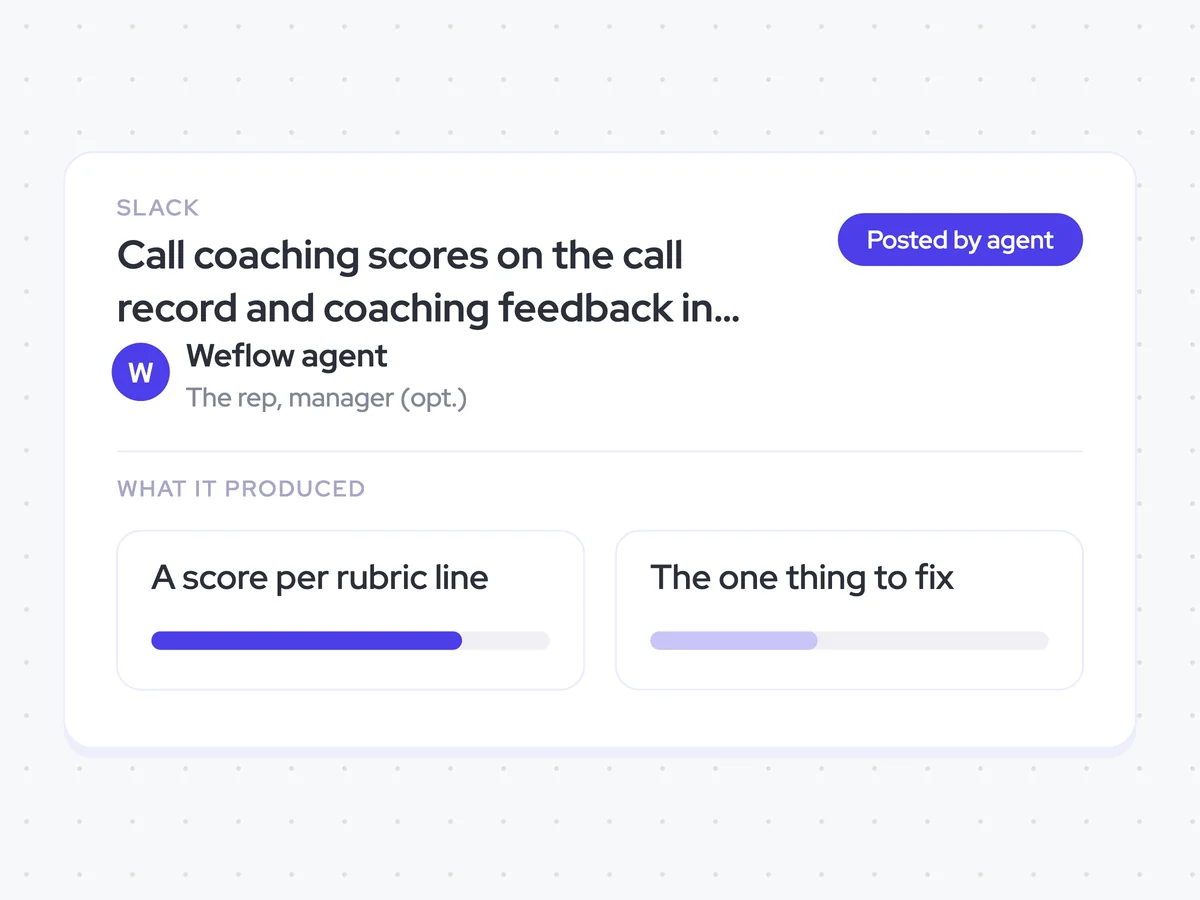
Call coaching scores on the call record and coaching feedback in Slack
See how each processed call scores against the methodology rubric, the moments behind each score, and the single change that would most improve the next call. The score stays attached to the call record, while the rep receives the coaching feedback first in Slack.
- For reps: Review the supporting moment and focus on the one suggested change in your next call.
- For managers: Receive escalations for consistently low scores and use the call evidence to guide coaching.
AI Agents that pair well
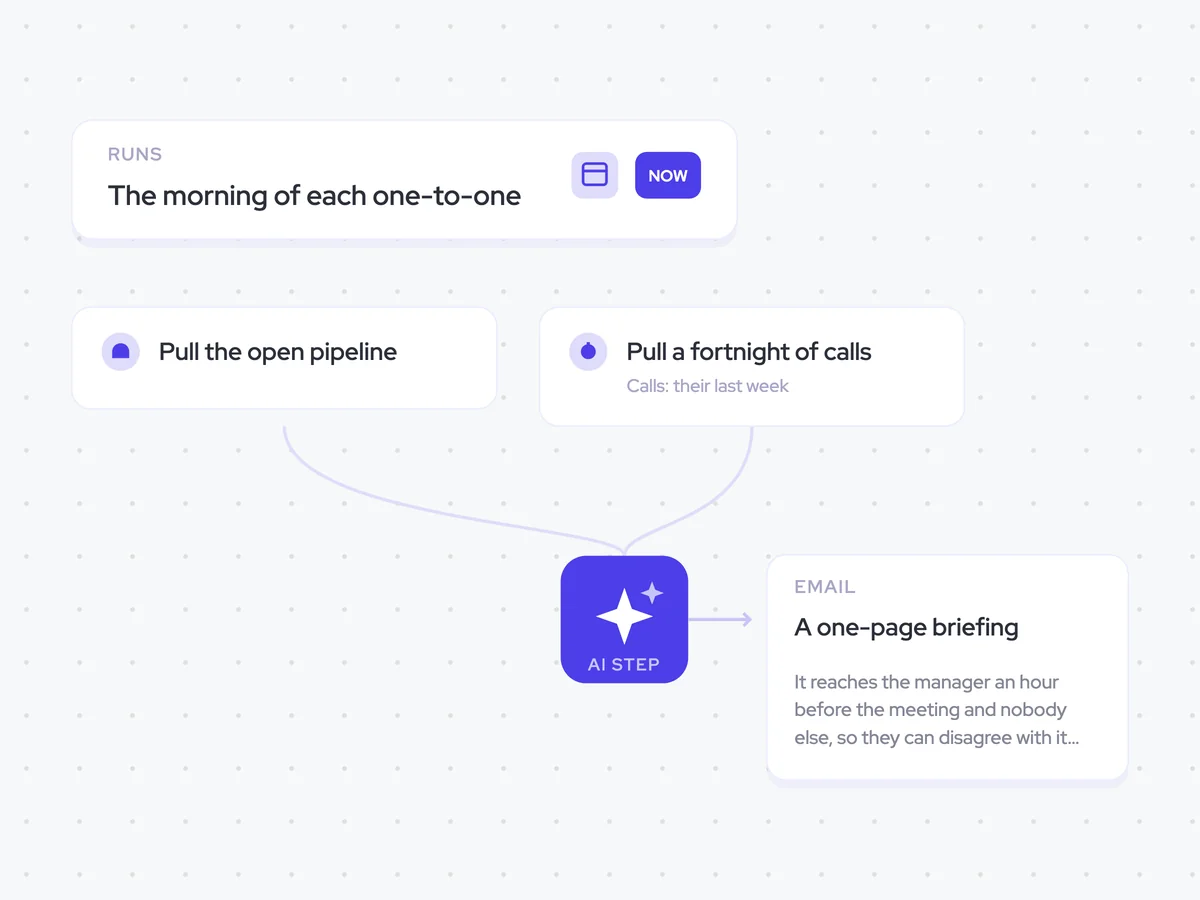
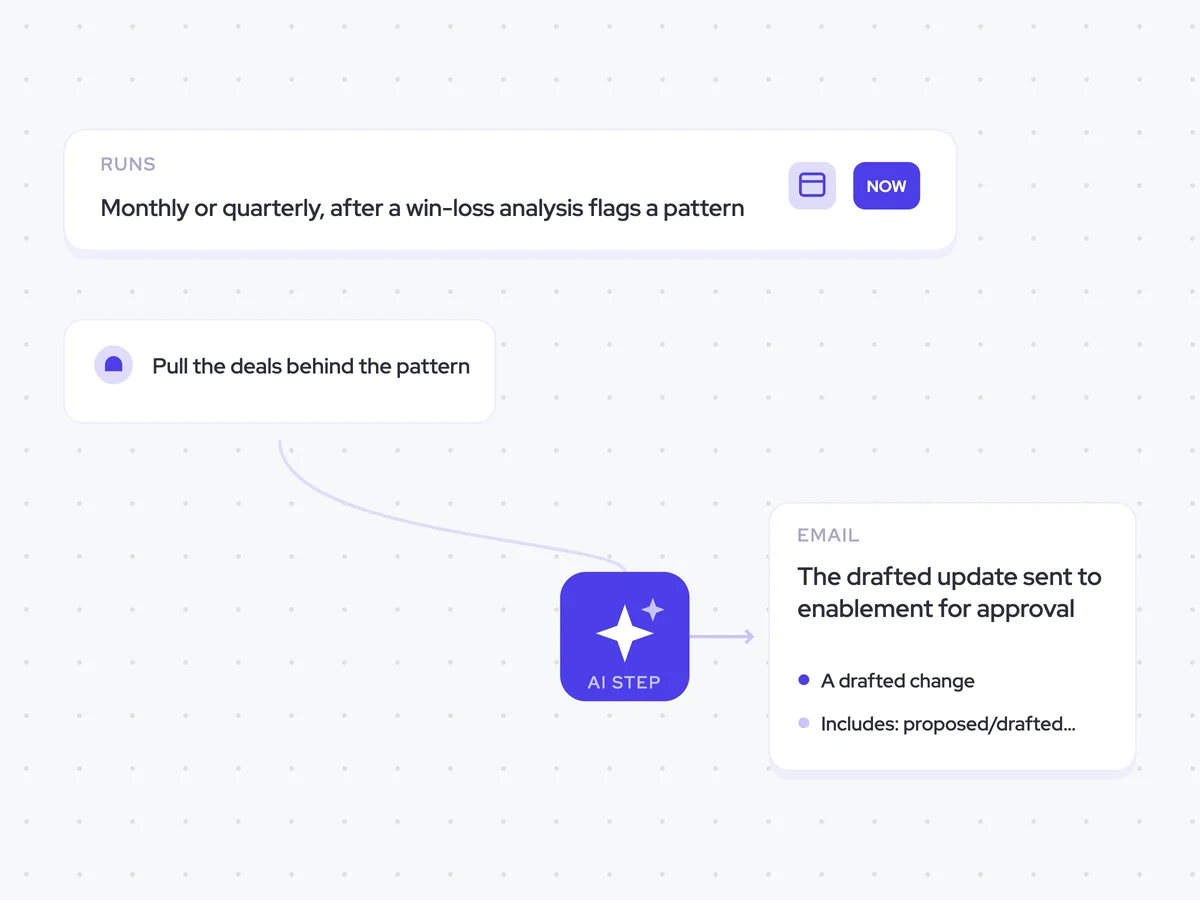
Same data, different jobs. Run them together for a fuller picture.

Learn more about GTM & Revenue Operations
RevOps Lab Podcast


50+ Free GTM & RevOps Cheat Sheets

Free RevOps Community (1k+ members)
.webp)