
Slipped Deal Agent
Catch a close date moving, explain what changed between the original date and the new one, and send the sales manager the evidence behind the push.
- Trigger: a close date moves
- AI steps: explain why the date moved and quote the moment it changed
- Output: the explanation sent to the sales manager in Slack

Agent breakdown
A blueprint to adapt, not a fixed recipe. Set the trigger, thresholds, and methodology that fit your team, and each step builds on the last, using the conversation and CRM context you already capture.
Run when the close date changes
The agent runs the moment an opportunity's close date moves. Starting on the date change itself means the manager gets the explanation when the push happens, rather than finding it later in the pipeline.
- Trigger: An opportunity's close date changes
- Timing: As soon as the date moves
Pull the original and new close dates
Next, the agent pulls the date the deal was originally committed to close and the new close date. Comparing both dates shows how far the deal moved, which forms part of the explanation sent to the manager.
- Fields: The original close date and the new close date
- Include: The size of the date push
Pull the calls between the two dates
The agent then pulls every call linked to the opportunity since the original close date was set. This covers the conversations where the timing changed, so the next step can find and quote the moment the original date stopped holding.
- Calls: All calls linked to the opportunity
- Time range: Since the original close date was set
Explain why the deal moved
The agent compares the original and new close dates with the calls between them, then explains what changed. It quotes the moment the timing shifted and distinguishes a deal that genuinely slipped from one that was never going to close on the original date.
You are explaining why an opportunity's close date moved.
Input: the original close date, the new close date, and every call linked to the opportunity since the original date was set.
- State the original and new close dates and the size of the push.
- Explain what changed between the two dates.
- Quote the moment in the calls when the timing changed, including the speaker, call, and date.
- Distinguish a deal that slipped from one that was never going to close on the original date.
Rules: use only the supplied dates and call transcripts. Do not infer a reason that the conversations do not support.
Return a concise explanation with the original and new dates, the size of the push, what changed, the supporting quote and source, and whether the deal slipped or was never going to close on the original date.
Inform the sales manager
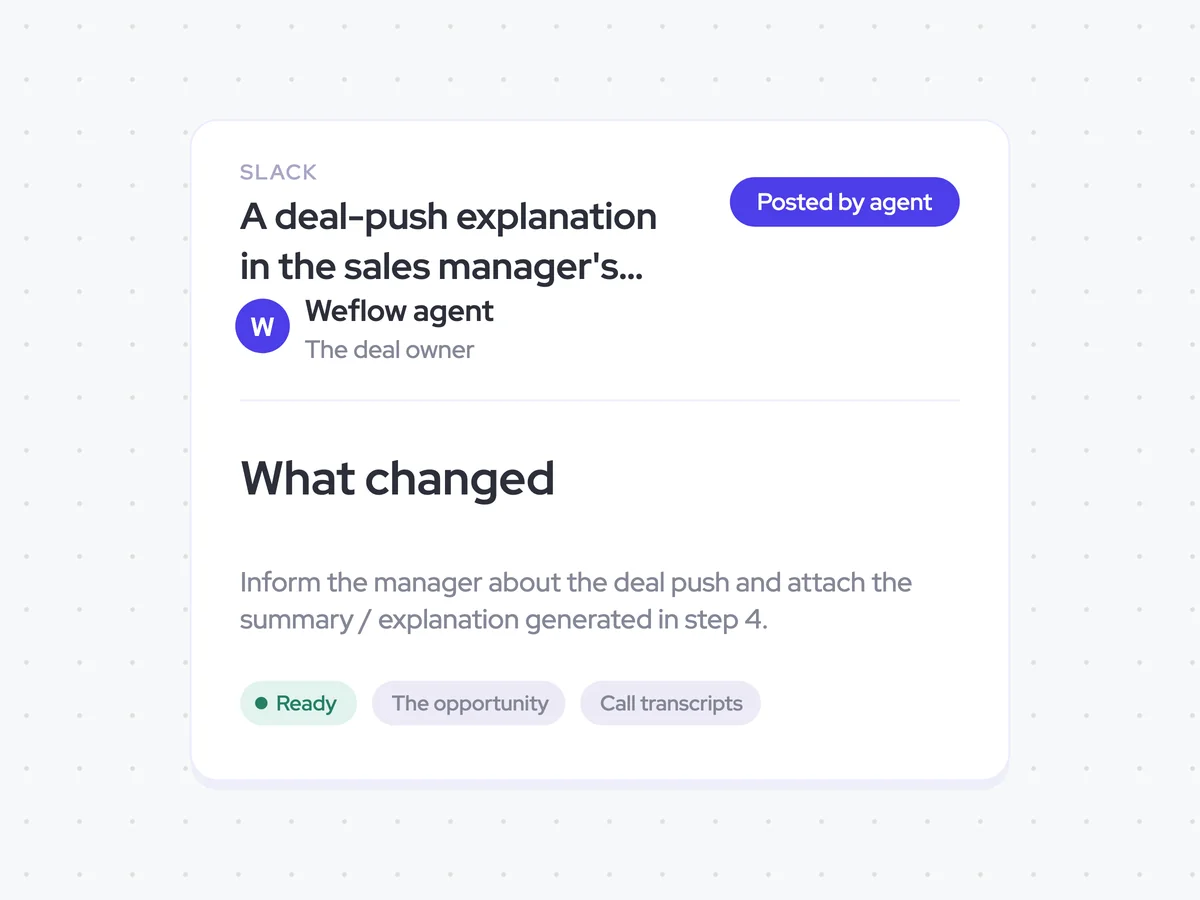
Finally, the agent sends the sales manager a direct message in Slack about the deal push. It includes the summary and explanation from the previous step, so the manager can see what moved, why it moved, and the call evidence behind it.
- Recipient: The sales manager
- Channel: Direct message in Slack
- Include: The deal-push summary and explanation
A deal-push explanation in the sales manager's Slack messages
See when a close date moves, how far it moved, and what changed in the conversations between the two dates. The Slack message includes the supporting quote and distinguishes a deal that slipped from one that was never going to close on the original date.
- For sales managers: Review the explanation and call evidence as soon as the close date changes.
AI Agents that pair well
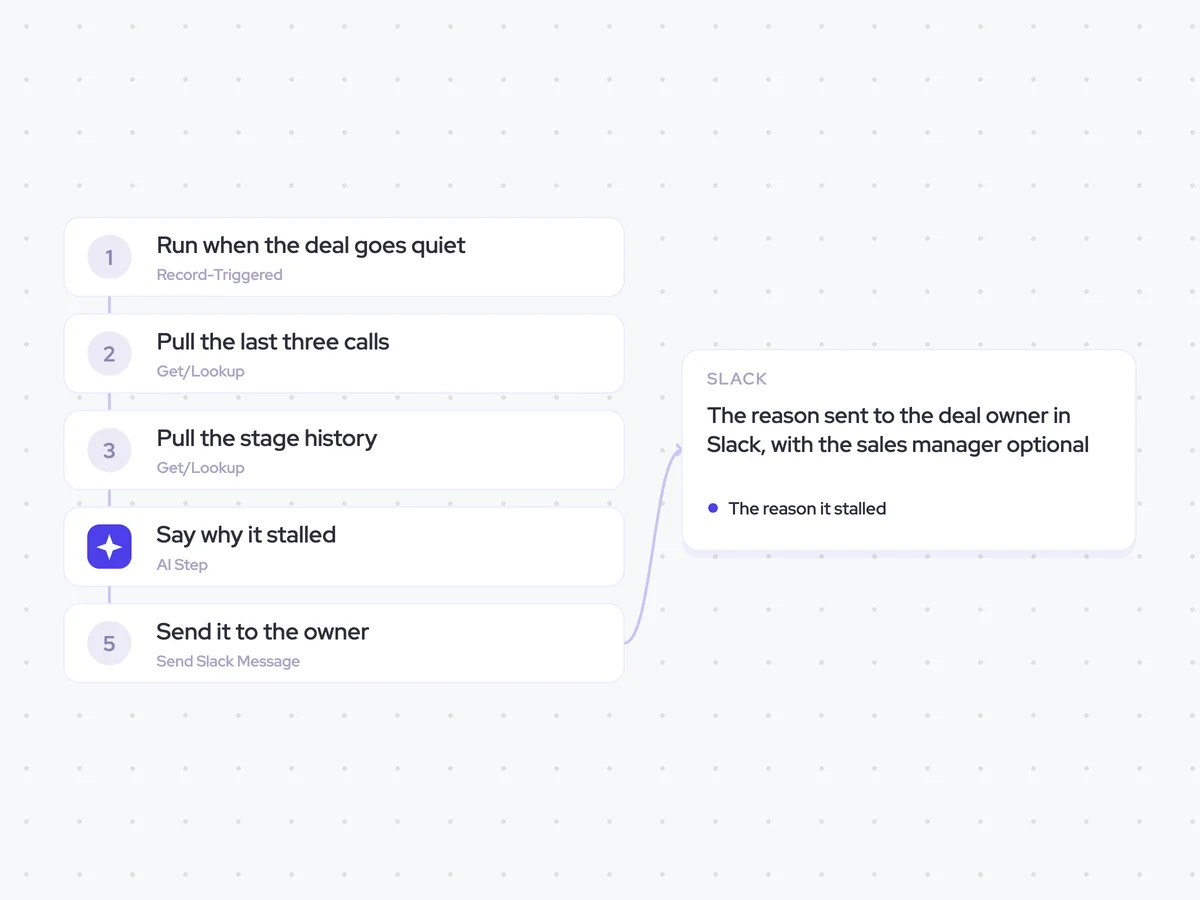
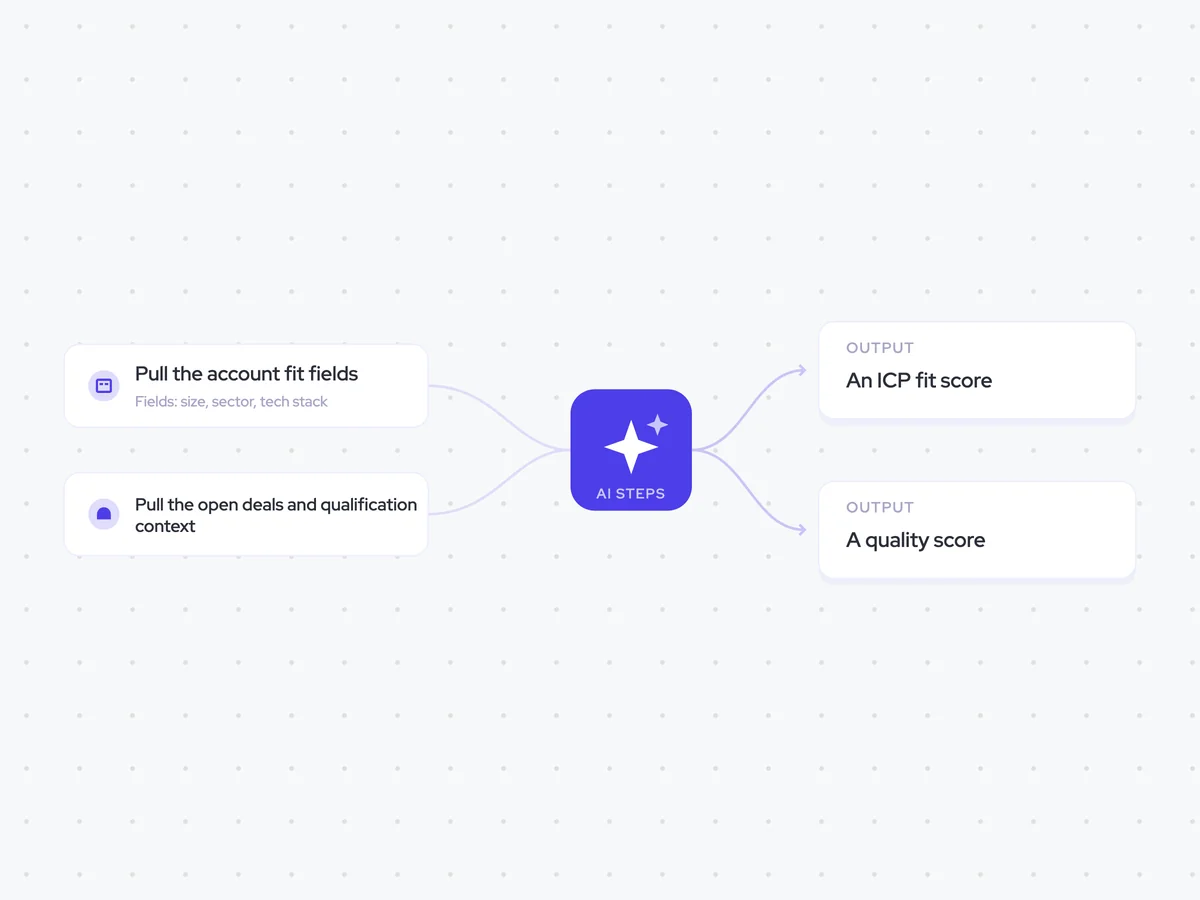
Same data, different jobs. Run them together for a fuller picture.


Learn more about GTM & Revenue Operations
RevOps Lab Podcast


50+ Free GTM & RevOps Cheat Sheets

Free RevOps Community (1k+ members)
.webp)