
Productive Capacity Agent
Turn a proposed headcount plan into the capacity your team can actually sell this quarter, after accounting for ramp, attainment by tenure, attrition risk, and roles that are still open.
- Trigger: a headcount plan is proposed
- AI steps: weight capacity by ramp, then discount attrition risk and open roles
- Output: a capacity model stored for each proposal
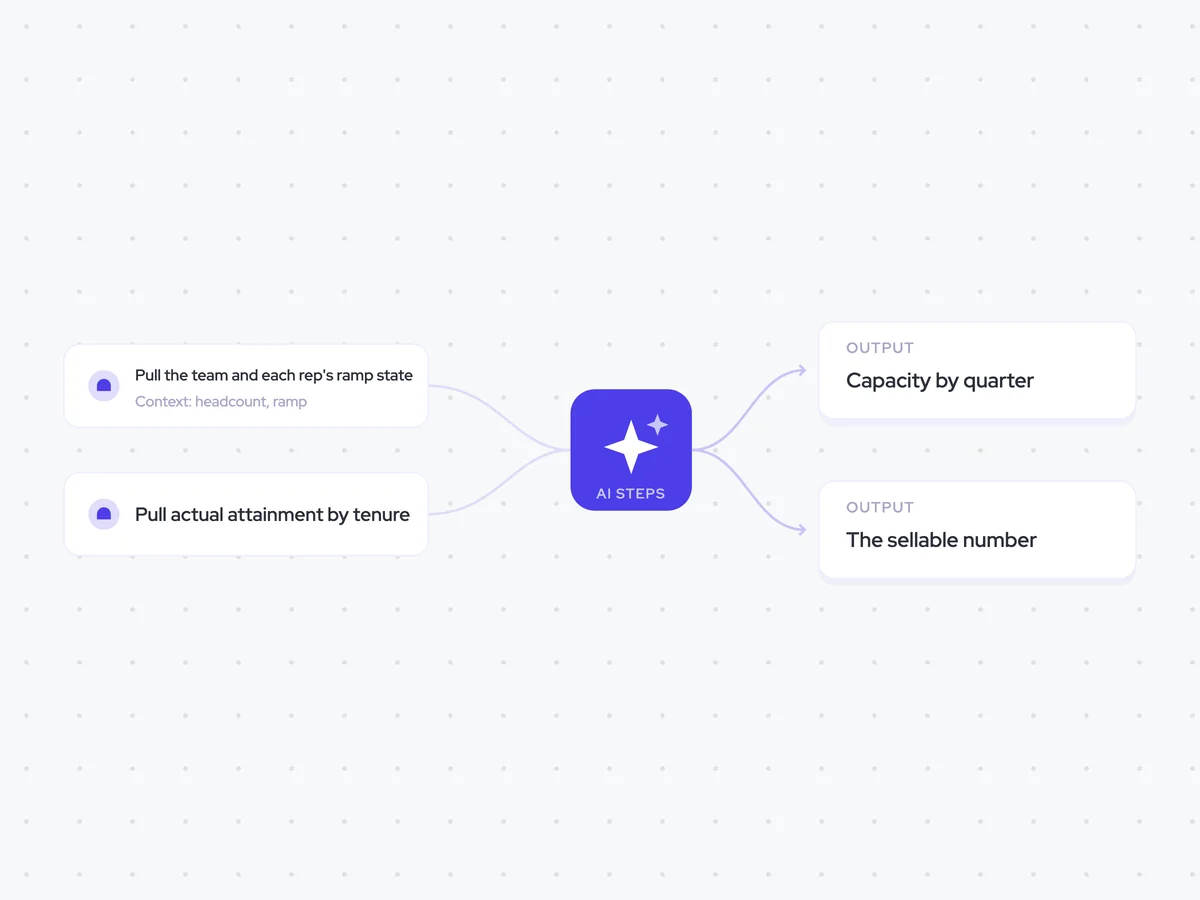
Agent breakdown
A blueprint to adapt, not a fixed recipe. Set the trigger, thresholds, and methodology that fit your team, and each step builds on the last, using the conversation and CRM context you already capture.
Run while the headcount plan is still a proposal
When a headcount plan is proposed, the agent starts the adjustment while the assumptions can still change. This gives RevOps the productive capacity behind the plan before it becomes the operating target.
- Trigger: A headcount plan is proposed
- Condition: The plan is still a proposal
Pull the team and each rep's ramp state
Next, the agent pulls who is on the team and where each rep sits in ramp. This separates total headcount from productive headcount, since a full team does not contribute full capacity from day one.
- Include: The current team and headcount in the proposal
- Ramp context: Each rep's current ramp state
Pull actual attainment by tenure
To turn ramp into a capacity number, the agent pulls actual attainment by rep tenure from opportunity records. This shows what reps at each point in ramp tend to deliver, rather than treating every role as fully productive.
- Source: Opportunity records
- Scope: Attainment grouped by rep tenure
Calculate productive capacity by quarter
Using the team, ramp states, and attainment by tenure, the agent calculates productive capacity for each quarter. It weights each rep by where they are in ramp and does not treat a planned start date as productive capacity.
You are calculating productive sales capacity by quarter for a proposed headcount plan.
Input: the proposed headcount plan, who is currently on the team, each rep's ramp state, planned start dates, and actual attainment by rep tenure.
- Calculate capacity for each quarter covered by the proposal.
- Weight each rep's capacity according to their ramp state and the attainment delivered by reps at that tenure.
- Use a planned start date to determine tenure and ramp state, not as capacity on its own.
- Do not count a new hire as fully productive from their start date.
Return capacity by quarter, showing each rep or planned role, their ramp state, their weighted capacity contribution, and the total productive capacity.
Discount attrition risk and unfilled roles
The agent then discounts the quarterly capacity for attrition risk and roles that have not been filled. It produces the sellable number and states plainly how much of the proposed plan still depends on people who have not been hired.
You are adjusting productive sales capacity to show the amount the team can actually sell.
Input: the capacity by quarter from the previous step, the proposed headcount plan, attrition risk, and the roles that remain unfilled.
- Discount the quarterly capacity for attrition risk.
- Remove capacity that depends on roles that have not been filled.
- Calculate the sellable capacity for each quarter after both adjustments.
- State plainly how much of the proposed plan is not yet hired.
Return the capacity by quarter before risk, the attrition discount, the capacity tied to unfilled roles, the final sellable capacity, and a plain-language statement of how much of the plan is not yet hired.
Store one capacity model for each proposal
Finally, the agent creates one capacity model for the proposal. Keeping the model with the plan means RevOps can later compare the proposed headcount with the productive capacity and sellable number behind it.
- Creates: One capacity model per proposal
- Includes: Quarterly capacity, risk adjustments, the sellable number, and the amount not yet hired
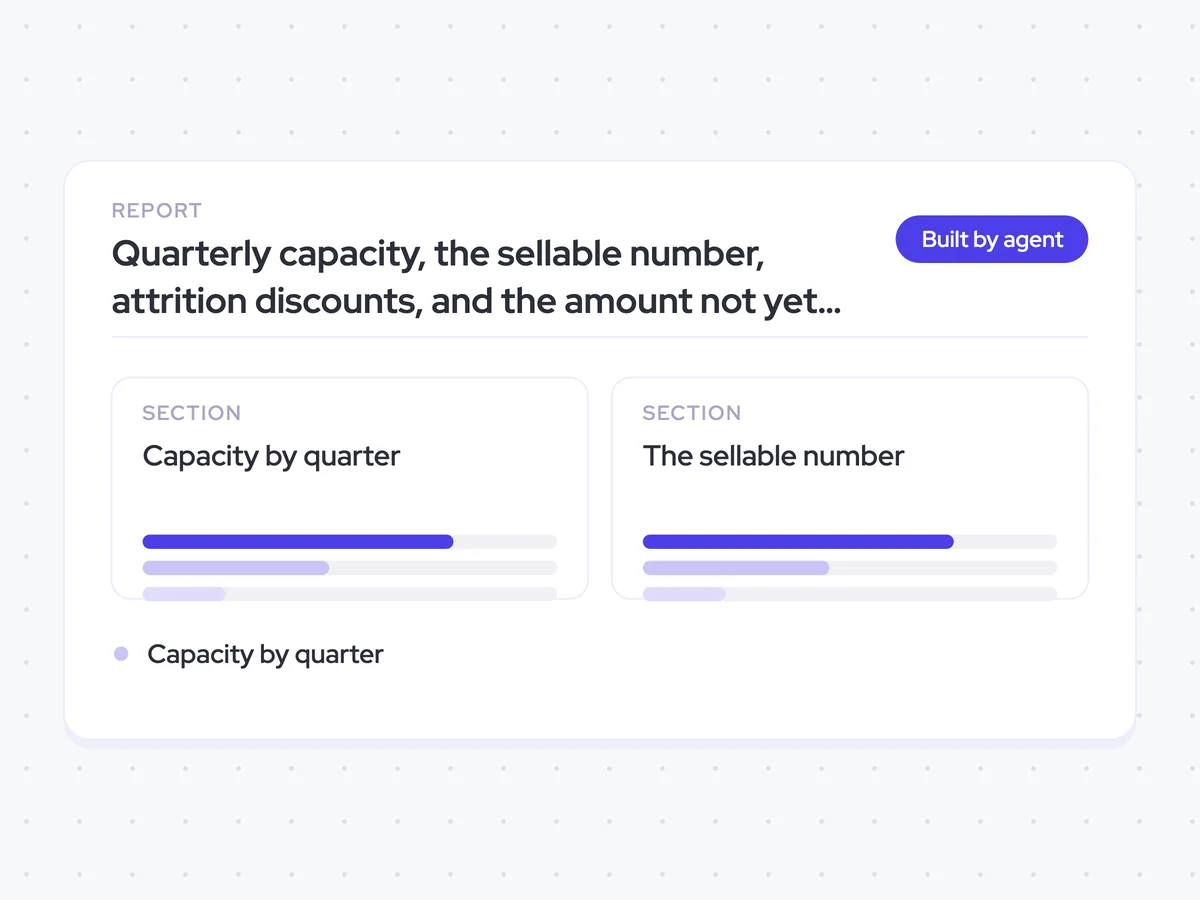
Quarterly capacity, the sellable number, attrition discounts, and the amount not yet hired in each proposal's model
See how much productive capacity sits behind each proposed headcount plan after ramp, attainment by tenure, attrition risk, and open roles are accounted for. The model shows the quarterly capacity, the final sellable number, and how much of the plan still depends on hiring.
- For RevOps: Compare the headcount proposal with the capacity it can actually deliver before the plan is finalized.
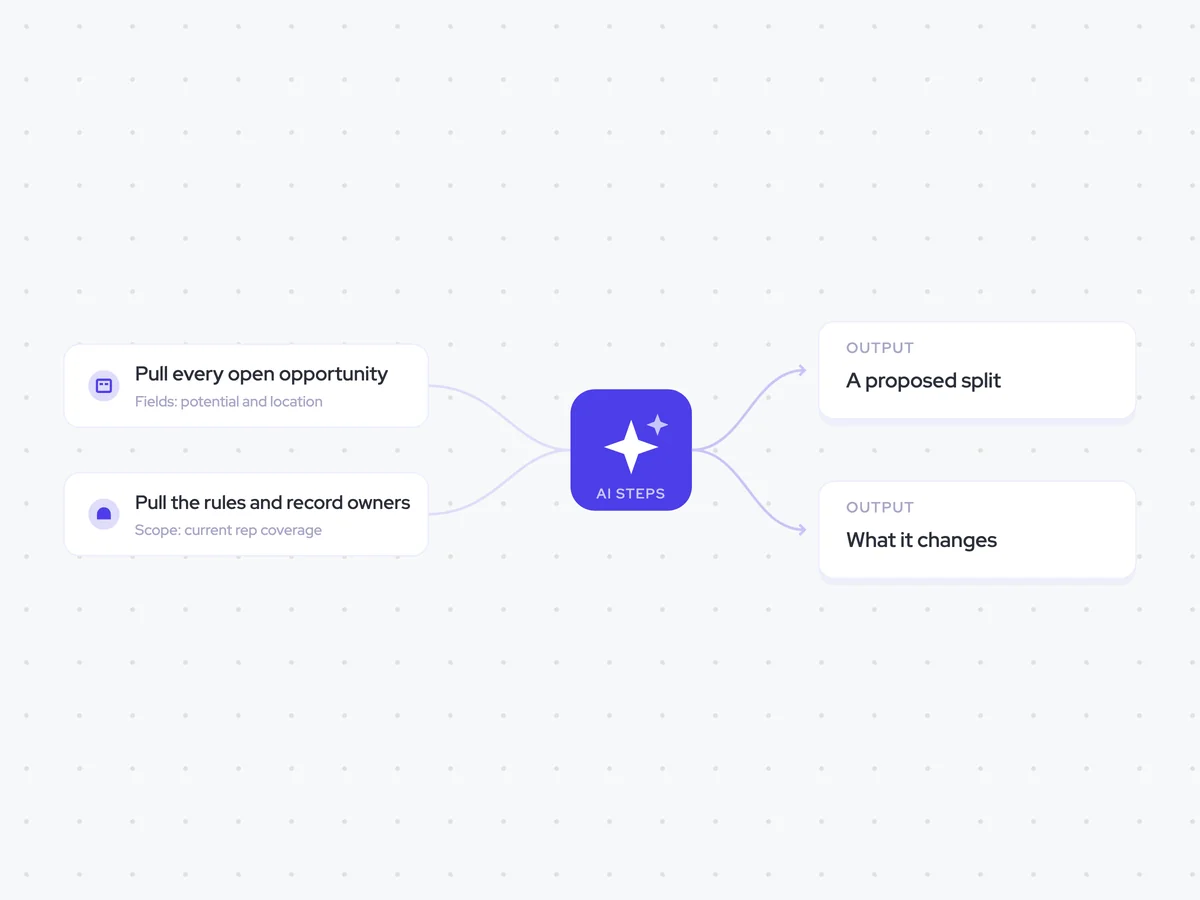
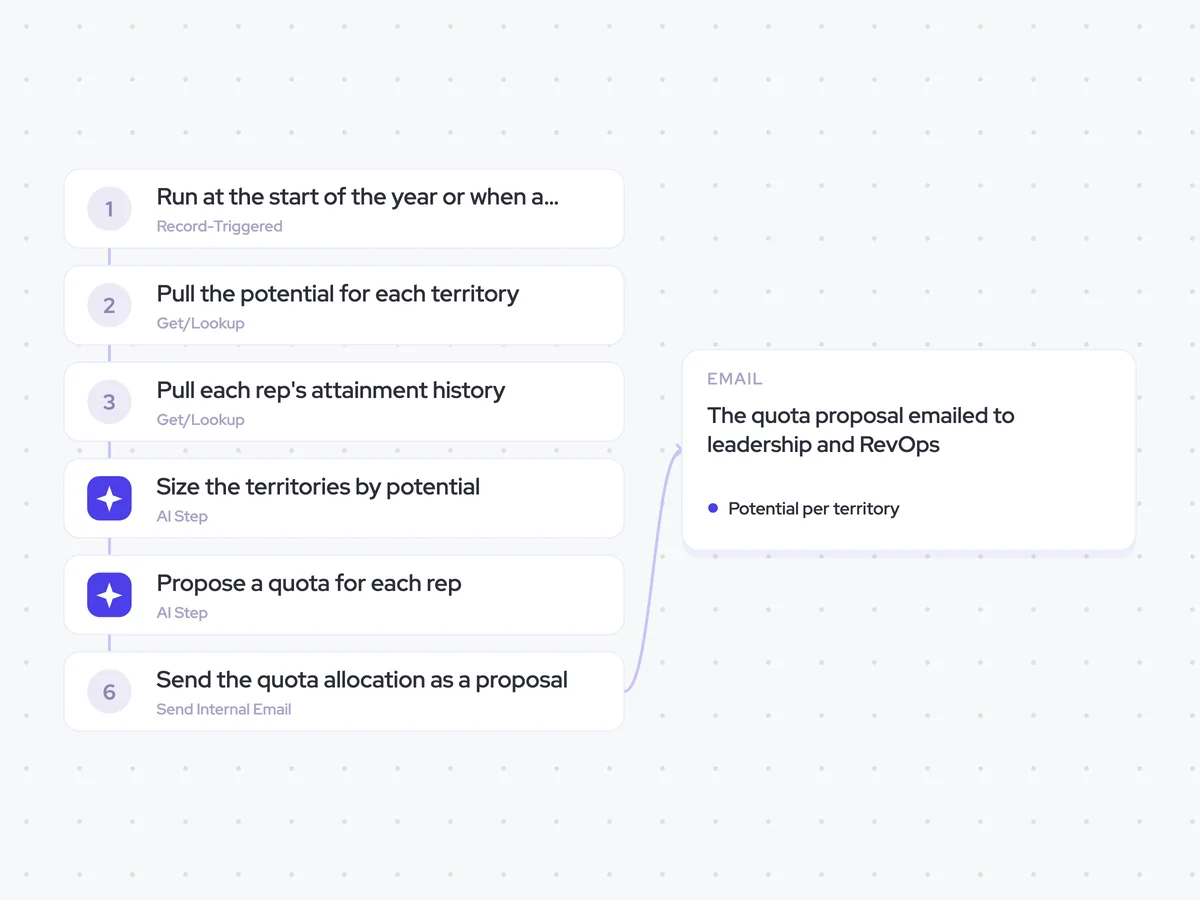
AI Agents that pair well
Same data, different jobs. Run them together for a fuller picture.

Learn more about GTM & Revenue Operations
RevOps Lab Podcast


50+ Free GTM & RevOps Cheat Sheets

Free RevOps Community (1k+ members)
.webp)