
Decision Criteria Agent
Extract the decision criteria buyers state on evaluation calls, record who raised each one, and flag criteria shaped by competitor influence or unlikely to be met.
Trigger: a deal reaches evaluation
AI steps: extract the criteria and source, then flag competitor influence
Output: the criteria map written to the opportunity and sent to the owner and manager
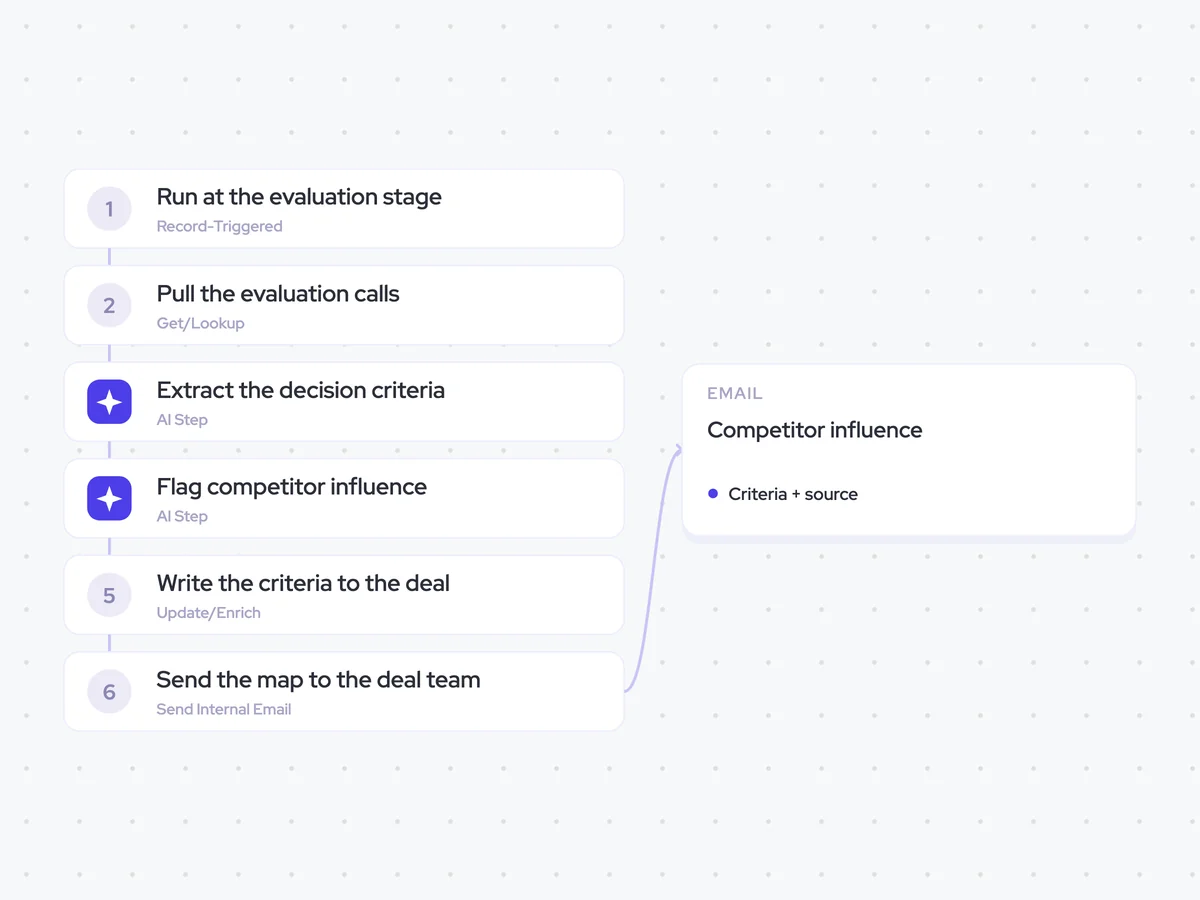
Agent breakdown
A blueprint to adapt, not a fixed recipe. Set the trigger, thresholds, and methodology that fit your team, and each step builds on the last, using the conversation and CRM context you already capture.
Run when a deal reaches evaluation
When a deal reaches evaluation, the agent starts building the criteria map. It begins at this stage because criteria raised earlier are usually aspirations rather than firm requirements.
Trigger: A deal reaches the evaluation stage
Timing: Start when the buyer moves into evaluation
Pull the evaluation calls
Next, the agent pulls the call transcripts from the evaluation stage onward. These are the conversations where buyers state the requirements they will use to compare their options.
Include: Call transcripts from the evaluation stage onward
Exclude: Calls that took place before evaluation
Extract the decision criteria
From those transcripts, the agent extracts every decision criterion the buyer states. It records who raised each criterion and the moment it came up, so the rep can trace it back to the original conversation.
It keeps separate criteria as separate entries rather than combining them into a general summary.
You are extracting the decision criteria buyers have stated during an opportunity’s evaluation calls.
Input: every call transcript from the evaluation stage onward.
For each decision criterion the buyer states:
Write the criterion in clear, concise language while preserving the buyer’s meaning.
Name the buyer who raised it.
Quote the relevant statement from the transcript.
Record the call, date, and moment when it was raised.
Rules: use only criteria stated by buyers. Do not treat our team’s claims, suggestions, or internal comments as buyer criteria. Do not combine separate requirements. Do not infer a criterion that the buyer did not state.
Return a list with the fields: decision criterion, raised by, buyer statement, call, date, and moment raised.
Flag competitor influence
The agent then checks how each criterion was introduced and flags language that appears to come from a competitor. It also flags criteria that the evaluation calls indicate are unlikely to be met, helping the rep see where the buyer’s requirements may favor another option.
A criterion receives a competitor influence flag when it uses a competitor’s language or the buyer introduces it without explaining where it came from.
Review the decision criteria and their source statements from the previous step for signs of competitor influence.
Input: the extracted decision criteria, the buyer statements that support them, and the evaluation call transcripts.
For each criterion:
Mark whether it is phrased in language associated with a competitor.
Mark whether the buyer introduced it without explaining its source.
Identify any competitor named in the same part of the conversation.
Flag the criterion as unlikely to be met only when the evaluation calls contain evidence that it will be difficult or impossible for us to meet.
Quote the statement that supports each flag and record who said it.
Rules: use only the evaluation call transcripts. Do not infer that a competitor influenced a criterion solely because the criterion is specific. Do not name a competitor unless the buyer named it or the criterion uses that competitor’s identifiable language. Do not flag a criterion as unlikely to be met without supporting evidence from the calls.
Return the criteria list with the fields: decision criterion, competitor influence flag, reason for flag, competitor named, unlikely to be met, supporting evidence, and speaker.
Write the criteria to the deal
Once the map is complete, the agent writes the decision criteria to the opportunity. It keeps each criterion with the person who introduced it, its source, and any flag for competitor influence or risk that it will not be met.
Update: Decision criteria, who introduced them, and their source
Update: Competitor influence and unlikely-to-be-met flags
Send the map to the deal team
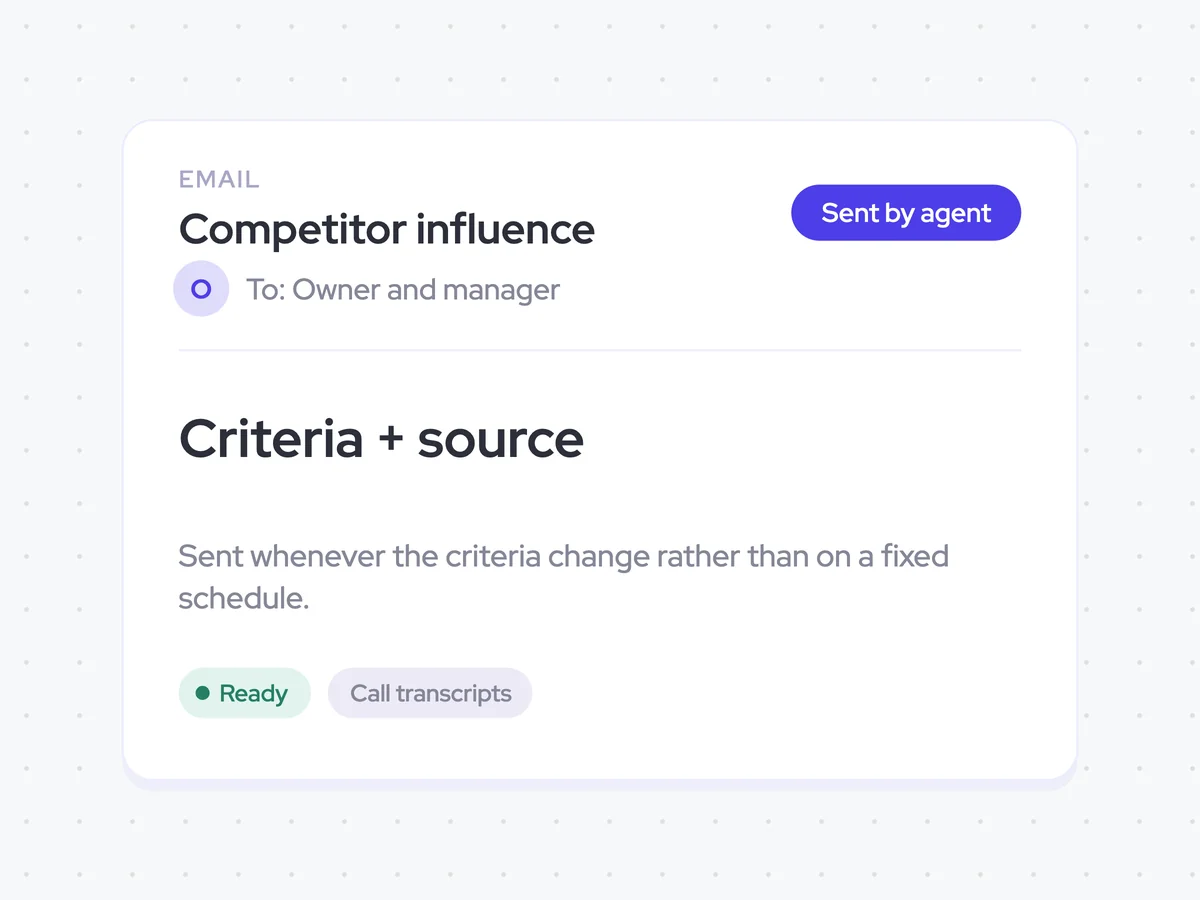
Whenever the criteria change, the agent emails the updated map to the opportunity owner and their manager. This gives the deal team the latest requirements and flags without waiting for a fixed schedule.
Recipients: Opportunity owner and manager
Send when: The decision criteria change
Schedule: No fixed schedule
Decision criteria, sources, and flags on the opportunity and in the deal team’s inboxes
See the criteria buyers will use to evaluate the deal, who introduced each one, and when it first came up. The map highlights competitor influence and criteria the calls indicate may be difficult to meet, then updates the owner and manager whenever the criteria change.
For reps: Check which buyer raised each requirement and prepare for criteria that may favor another option.
For managers: Review the criteria and flags with the owner while there is still time to address them.
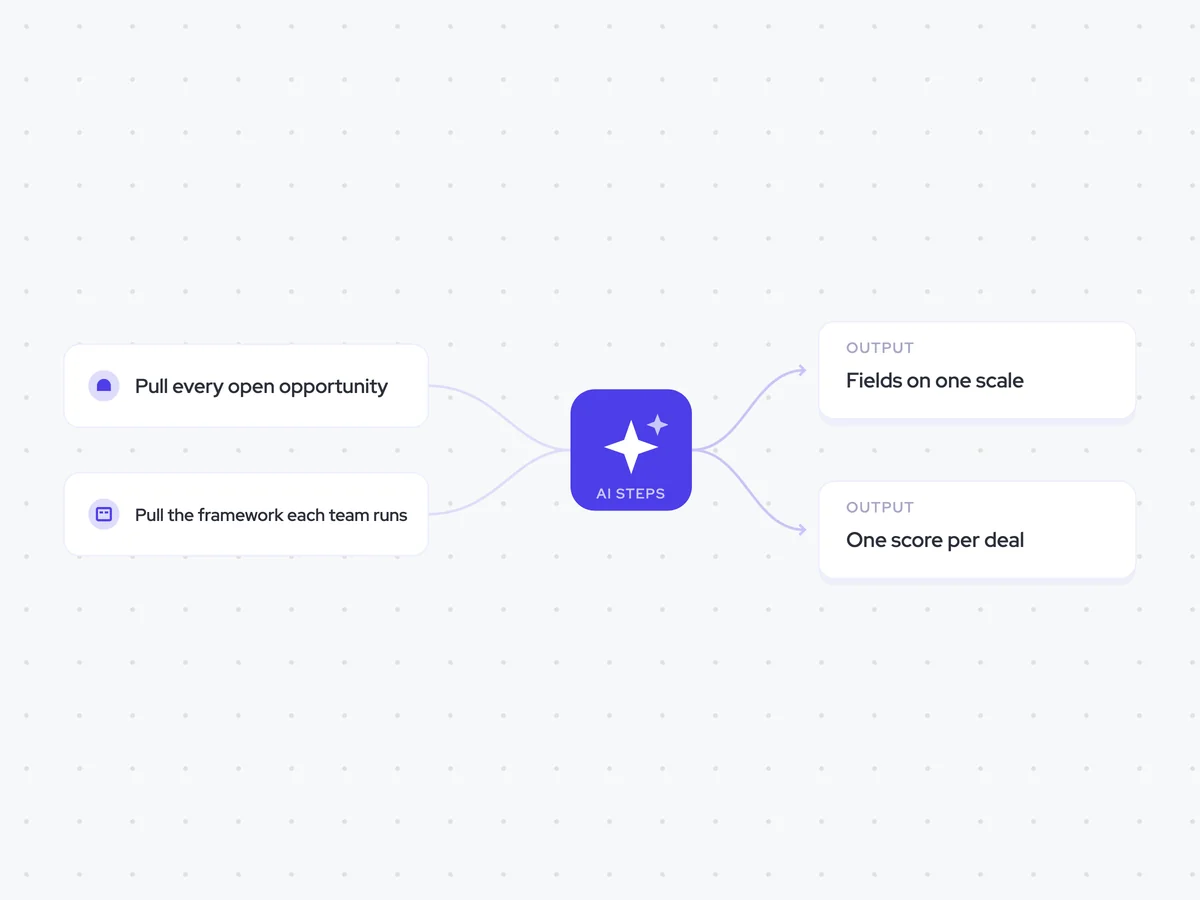
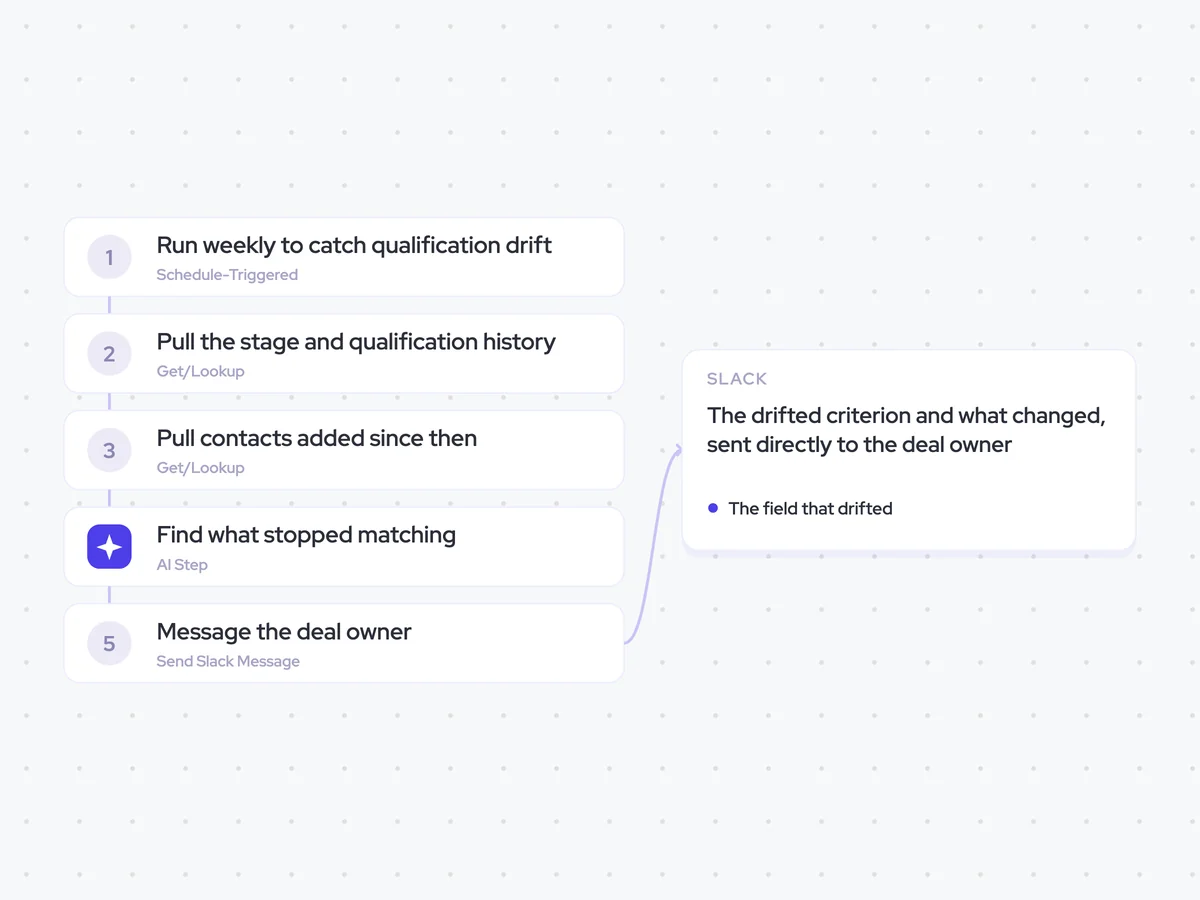
AI Agents that pair well
Same data, different jobs. Run them together for a fuller picture.

Learn more about GTM & Revenue Operations
RevOps Lab Podcast


50+ Free GTM & RevOps Cheat Sheets

Free RevOps Community (1k+ members)
.webp)